- Category
- War in Ukraine
Ukraine Tests Space-Interceptor Weapons to Stop Russia’s Oreshnik Missiles
 Prefer U24 Media on Google
- Authors


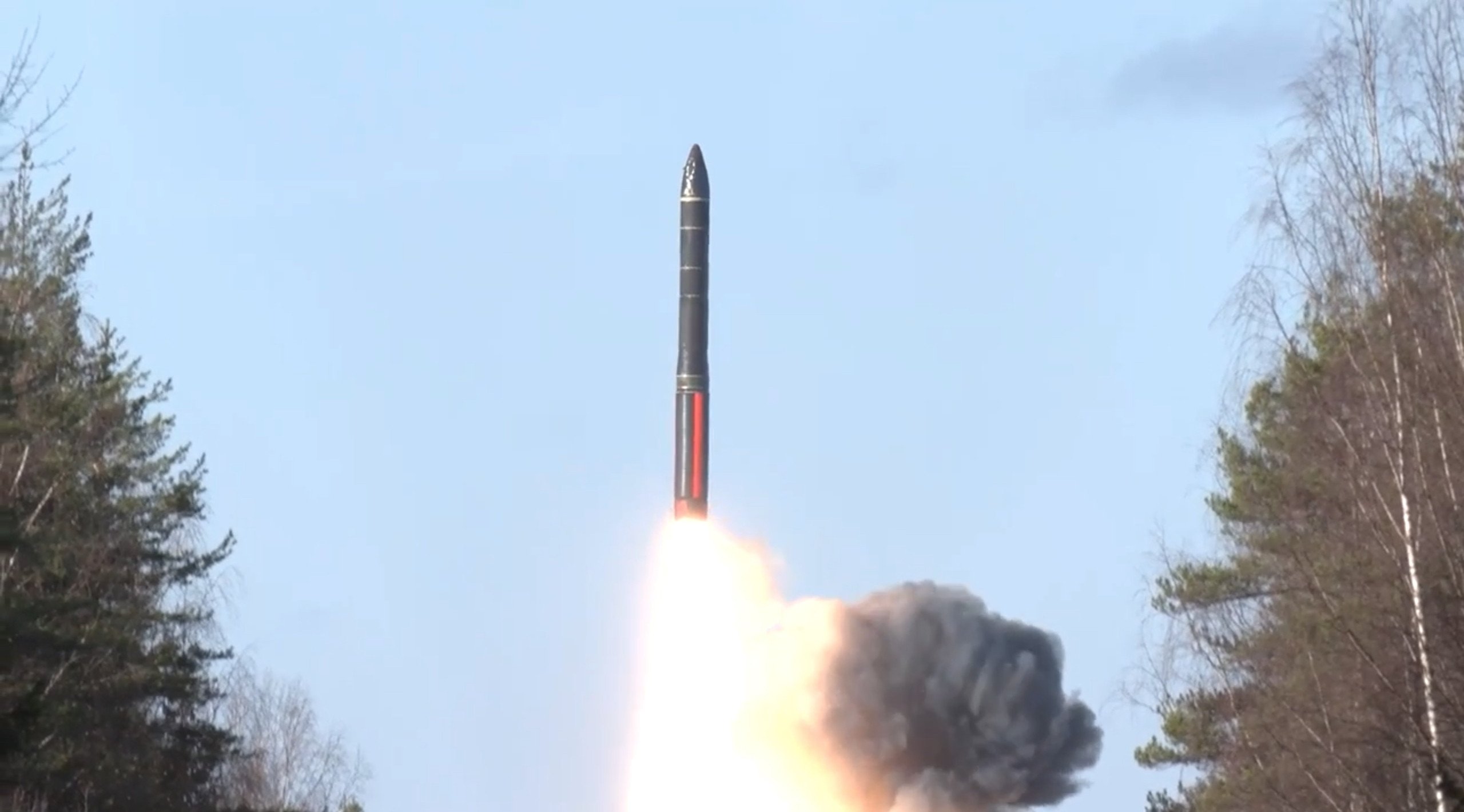
Ukraine has conducted three tests of exo-atmospheric interception systems designed to counter Russian ballistic missile threats, including the Oreshnik missile, as Kyiv seeks to develop its own capabilities to intercept weapons traveling through near space.
We bring you stories from the ground. Your support keeps our team in the field.
According to The Guardian on November 8, Ukrainian lawmaker Fedir Venislavskyi, who heads the state security subcommittee of parliament’s defense committee, confirmed that the country has already demonstrated launches of experimental interception systems and is exploring options for their serial production.
The tests included launching interceptor weapons from high-altitude aircraft, potentially allowing Ukraine to engage ballistic missile threats beyond Earth’s atmosphere.

The initiative comes as Russia has used its Oreshnik ballistic missile against Ukraine on at least three occasions. The missile travels through near space before releasing multiple warheads, which were originally designed to carry nuclear payloads.
“With Russian launch sites now beyond the range of Ukraine’s longest-range missiles,” The Guardian reported, Kyiv has increasingly focused on developing systems capable of intercepting such threats during their flight.
Venislavskyi described the development of exo-atmospheric interception technology as a priority for Ukraine’s defense industry. “We’ve already demonstrated launches of exo-atmospheric systems and we are working to see if we can get that in production,” he told The Guardian.
However, the lawmaker acknowledged that securing sufficient funding remains a major obstacle, given the substantial resources required to sustain Ukraine’s ongoing military operations.
The development is part of a broader effort to strengthen Ukraine’s independent space capabilities and reduce its reliance on foreign satellite infrastructure.
In October, Ukraine and Danish satellite manufacturer GomSpace announced the successful launch of Obria Nano, a test satellite intended to support the development of an independent Ukrainian communications network. The proposed constellation could eventually comprise approximately 245 satellites.
According to The Guardian, Ukraine’s push toward greater technological independence has also been influenced by recent restrictions affecting Starlink communications, which have raised concerns about the reliability of military command-and-control systems.
Meanwhile, Russia is expanding its own satellite communications infrastructure through the Rassvet project, designed as an alternative to Starlink.
Ukraine has also targeted facilities associated with Russia’s space industry, including the Progress Rocket and Space Centre in Samara, which manufactures Soyuz-2 launch vehicles used to deploy satellites.
Discuss this article: