- Category
- War in Ukraine
Ukraine’s Drones Hit Giant Russian Refinery Processing 6.6% of Nation’s Oil
 Prefer U24 Media on Google
- Authors


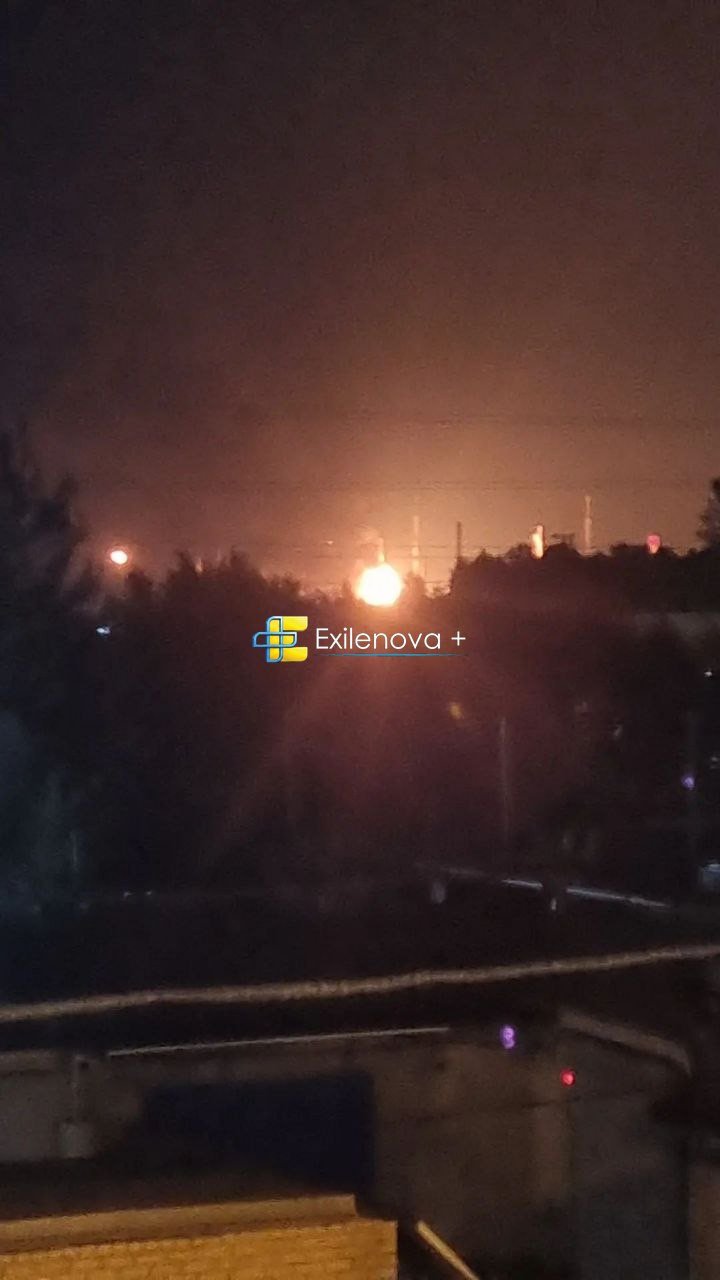
Ukrainian drones struck the massive KINEF oil refinery in Russia’s Leningrad region, hitting a facility that accounts for roughly 6.6% of the country’s total oil refining, Ukrainian defense technology company Fire Point confirmed on August 30.
The Kirishi refinery, formally known as Kirishinefteorgsintez, is controlled by Russian oil company Surgutneftegas and ranks among the country’s largest refining facilities.
We bring you stories from the ground. Your support keeps our team in the field.
Located in the city of Kirishi more than 900 kilometers from Ukraine’s state border, the plant is also the only major oil refinery in northwestern Russia.
The reported impact area was near several important processing units at the refinery.
Among the equipment operating at the complex are L-35-11/600, LCh-35-11/600 and the larger LCh-35-11/1000 units. These catalytic reforming systems are used to produce high-octane gasoline components that are subsequently blended into motor fuels.
— Fire Point (@FirePointUA) August 30, 2026
A drone warning was issued in the Kirishi area at 2:48 a.m. ahead of the attack and remained in effect until 5:58 a.m. local time.
KINEF has an annual design processing capacity of roughly 20 million metric tons of crude oil, making any sustained disruption at the facility potentially significant for Russia’s refining industry.
In 2024, the refinery processed approximately 17.5 million metric tons of crude, equivalent to around 6.6% of Russia’s total refining volume.
Kirishi — local residents report a strike on the Kirishinefteorgsintez oil refinery. pic.twitter.com/pWZd3hdkp6
— Exilenova+ (@Exilenova_plus) August 30, 2026
That year alone, KINEF produced roughly 2 million metric tons of gasoline, 7.1 million metric tons of diesel fuel, 6.1 million metric tons of fuel oil and around 600,000 metric tons of bitumen.
The refinery also produces aviation fuel and a wide range of other petroleum products.
Its sprawling industrial complex includes primary crude-processing units, catalytic reforming systems, hydrotreatment facilities and other equipment required to turn crude oil into finished fuels.
Previously, reports emerged that a record wave of Ukrainian strikes on Russian oil refineries triggered renewed fuel shortages across Russia. Crude processing has fallen to near its lowest level in more than two decades, while motorists face growing gasoline shortages and queues.
Ukrainian forces struck refineries at least 21 times in August—the highest monthly number recorded so far.
Discuss this article:




-80134f2dc17b4a887d01513a1c7bc929.png "Illustration of Russian military infrastructure targeted by Ukrainian strikes in temporarily occupied eastern Ukraine. (Source: General Staff of the Armed Forces of Ukraine)")