- Category
- War in Ukraine
Ukraine’s New AI-Powered Turret—Sky Sentinel—Is Already Shooting Down Russia’s Fastest Drones
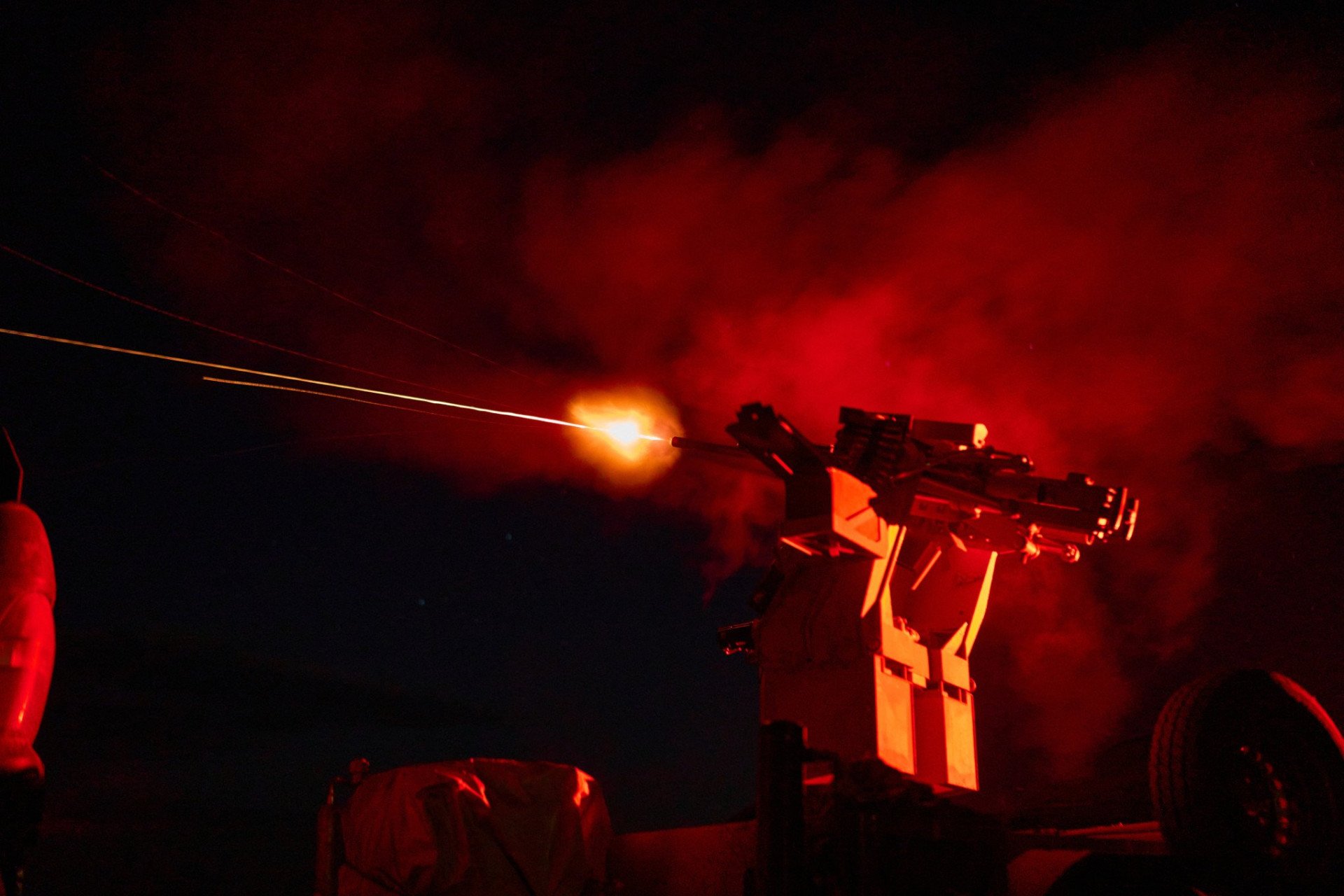
In May 2025, Ukraine’s AI-powered Sky Sentinel turret was still in the early stages of combat testing. Just 17 months later, it was shooting Russia’s jet-powered drones out of the sky.
 Prefer U24 Media on Google
- Authors


More than 12 Sky Sentinel turrets are now on combat duty in Kyiv alone, and their targets have expanded to include Russian jet-powered drones.
Ukrainian Sky Sentinel turret downs Russian drones captured in rare video footage. pic.twitter.com/YDfWgqRjvh
— UNITED24 Media (@United24media) April 18, 2026
The need for such a system emerged from the sheer scale of Russia’s mass attacks. In the first nine months of 2026 alone, Russia launched more than 2,100 missiles of various types and 63,000 attack drones against Ukraine.
Russia can launch dozens or even hundreds of attack drones in a single night, seeking to exhaust Ukraine’s air defenses both operationally and economically.
The problem is that using a scarce air defense missile against every relatively inexpensive drone is a poor trade-off. That is why, alongside missile systems, aircraft, electronic warfare, mobile fire teams, and interceptor drones, Ukraine needs another layer of protection: automated short-range fire.
A modern Russian jet-powered Shahed/Geran drone can cost between $100,000 and $200,000, Ukrainian experts say. By comparison, a single reusable Sky Sentinel system costs around $150,000. Its developers estimate that protecting one city requires approximately 10 to 30 such installations.
How does Ukraine’s Sky Sentinel turret work?
The concept of an automated anti-aircraft gun predates Russia’s war in Ukraine by decades. The American shipborne Phalanx system, which entered production in 1978, was already capable of automatically detecting, evaluating, tracking, and engaging targets. Today, it is installed aboard hundreds of ships operated by more than 20 countries worldwide.
But Phalanx is a six-ton naval system equipped with a 20mm cannon. Ukraine’s approach is different: combine a relatively affordable heavy machine gun with precision mechanics, optics, radar data, and Ukrainian-developed software to create an effective component of its air defense network.
UNITED24 Media first introduced Sky Sentinel to a wider audience in detail on May 26, 2025. At the heart of the system is a turret equipped with a heavy machine gun, including the 12.7mm M2 Browning, capable of rotating 360 degrees.
First, Sky Sentinel has to distinguish between a bird and a Shahed. Once a threat is identified, the system must respond without delay.
After receiving radar data, the optical system acquires the target, while the software tracks it, determines its speed and trajectory, accounts for wind resistance, and calculates the necessary lead.
A human operator does not need to manually keep the drone in the sights: the operator simply monitors the system, while the turret handles aiming and ballistic calculations.
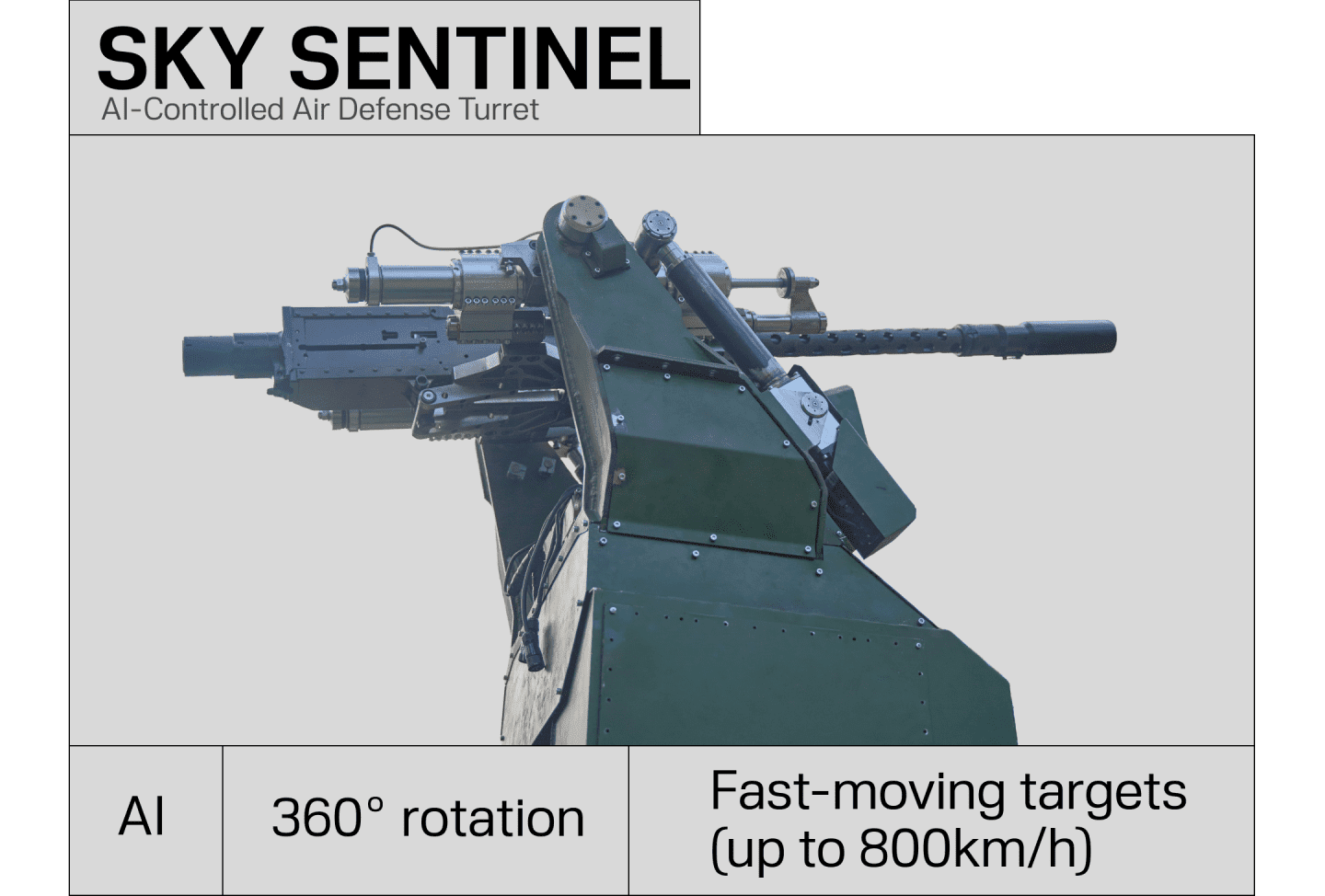
Precision became one of the project’s biggest engineering challenges. The developers told UNITED24 Media that even a millimeter of mechanical play in a moving assembly could translate into tens of meters of error at a distance. And the turret does more than move: it must also withstand recoil. Other challenges include optical quality, ammunition consistency, adverse weather conditions, and operating in an environment affected by electronic warfare.
The first combat trials demonstrated that the concept worked. By the time the system was unveiled, one prototype had shot down four Shahed drones. Shortly afterward, the commander of a Ukrainian air defense unit told Business Insider that the system had destroyed six Shaheds in six combat engagements. During testing, Sky Sentinel also struck targets significantly smaller than a Shahed. Some targets reportedly traveled at speeds of approximately 800 km/h (500 mph).
Who helped bring Sky Sentinel from prototype to production?
Fundraising efforts began to play a major role. UNITED24 launched a $1.5 million campaign on May 26, 2025, for the first ten Sky Sentinel systems. The campaign was subsequently extended, attracting support from NAFO, Uklon, ANC, Reddit communities, Toonie Tuesday, Saint Javelin, Ukrainian artists, and donors worldwide. UNITED24 announced the final result in February 2026: $3.3 million raised for 22 systems. The NAFO community alone funded three turrets.
And this was not simply a matter of purchasing a finished product. UNITED24 explicitly states that the platform’s support helped advance the system during its early research and development stages. Mass production presents a separate engineering challenge for a weapon like this: what can be manually fine-tuned to perfection in a single prototype must be reproduced dozens of times without sacrificing precision.
What can Sky Sentinel shoot down?
Sky Sentinel can detect and destroy various types of Russian drones, including FPV drones, Shaheds, and jet-powered Gerans, said Ukrainian military personnel. Under certain conditions, the system can also engage cruise missiles.
In May 2025, UNITED24 Media described a mobile trailer-mounted system. By spring 2026, Sky Sentinel turrets were already being installed on dedicated towers. The systems transmit video feeds to operators who can be located hundreds of kilometers away. This makes it possible to protect facilities without requiring personnel to remain physically stationed beside the machine gun.
In August 2026, the 636th Separate Anti-Aircraft Machine Gun Battalion in Ukraine’s Sumy region received five Sky Sentinel systems. UNITED24 reported that the systems could operate around the clock and detect aerial targets even in challenging weather conditions.
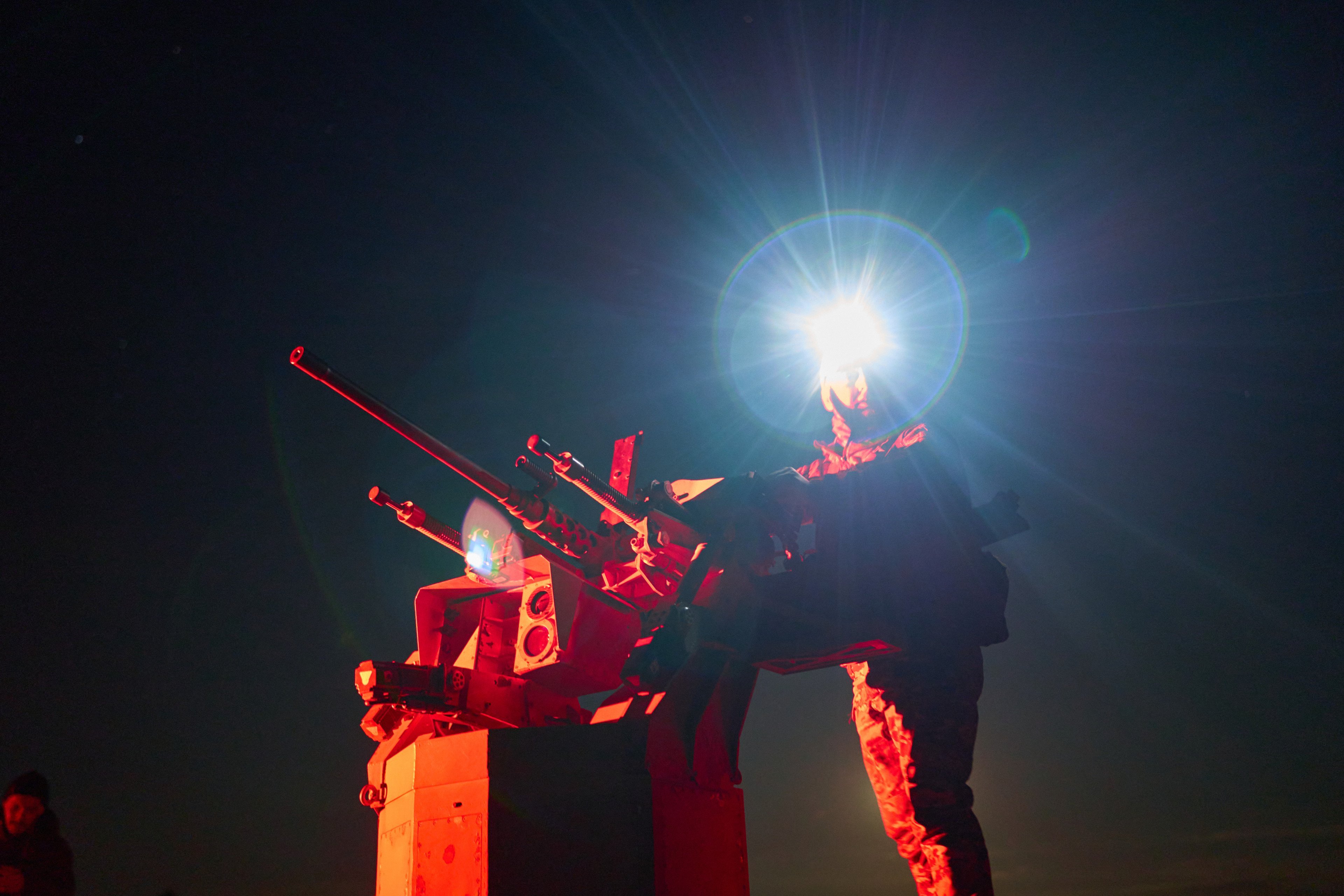
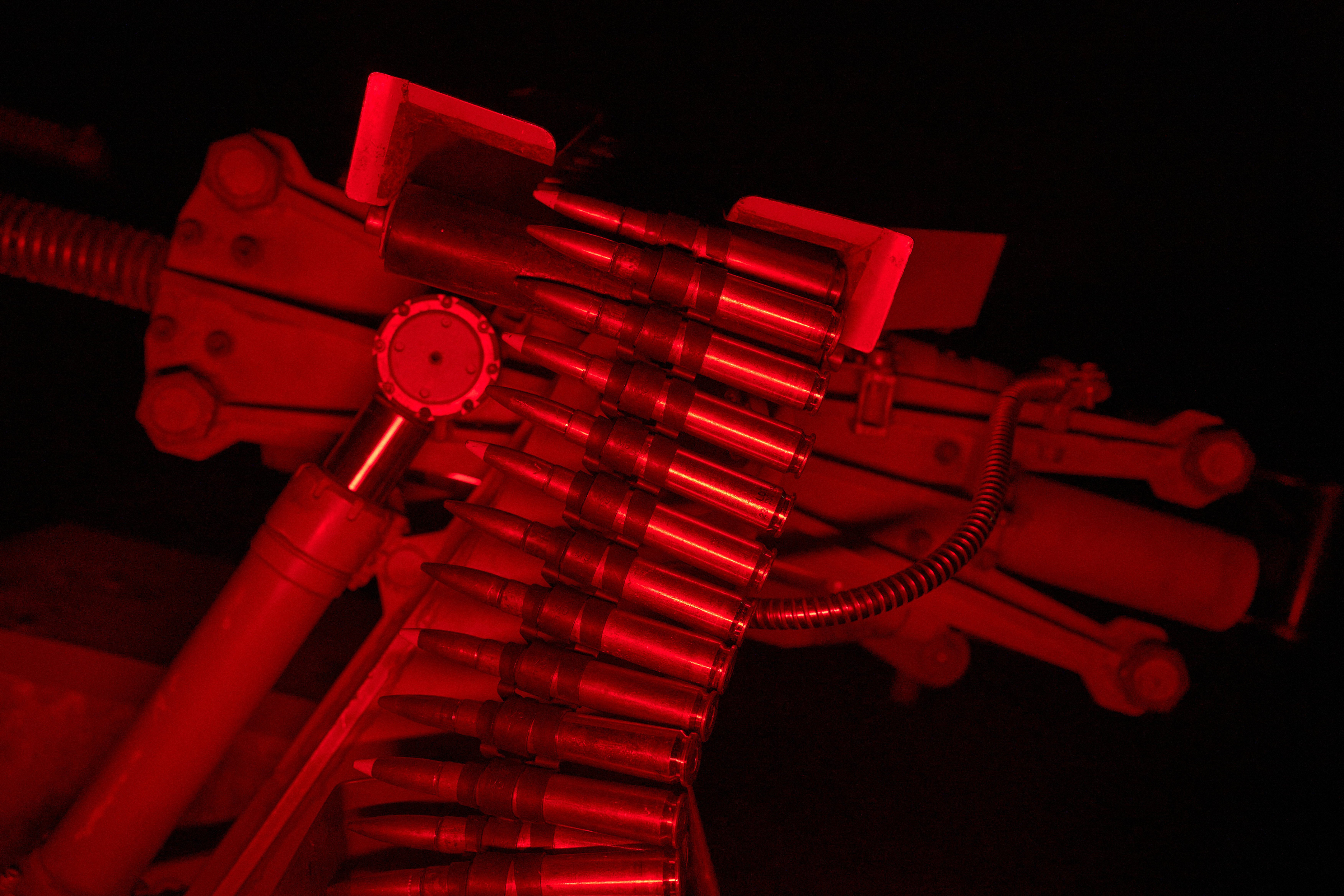
Sky Sentinel also began operating as part of Ukraine’s emerging “private air defense” system, in which certified teams from private companies operate within the Ukrainian Air Force’s unified command-and-control structure.
The most important test came with the emergence of a new Russian threat: jet-powered attack drones. These are significantly faster than conventional Shaheds, leaving much less time to react. Sky Sentinel systems were already on combat duty in Kyiv and had successfully shot down Russian jet-powered drones, “even the Geran-5,” Ukrainian Air Force spokesperson Yurii Ihnat said on October 5, 2026.
Sky Sentinel does not replace Patriot systems, fighter jets, interceptor drones, or mobile fire teams. Its role is different: to provide relatively inexpensive short-range protection around cities, infrastructure, and critical facilities, preserving costly interceptors for more complex threats.
What began as a handful of experimental turrets is now an expanding layer of Ukraine’s air defenses. Backed by UNITED24 donors, Sky Sentinel has gone from shooting down conventional Shaheds in its first combat trials to intercepting Russia’s faster, jet-powered drones.
Discuss this article: