- Category
- War in Ukraine
Ukraine’s Strike Leaves Russia Facing a Crimean Bridge Repair Job That May Outlast the War
 Prefer U24 Media on Google
- Authors


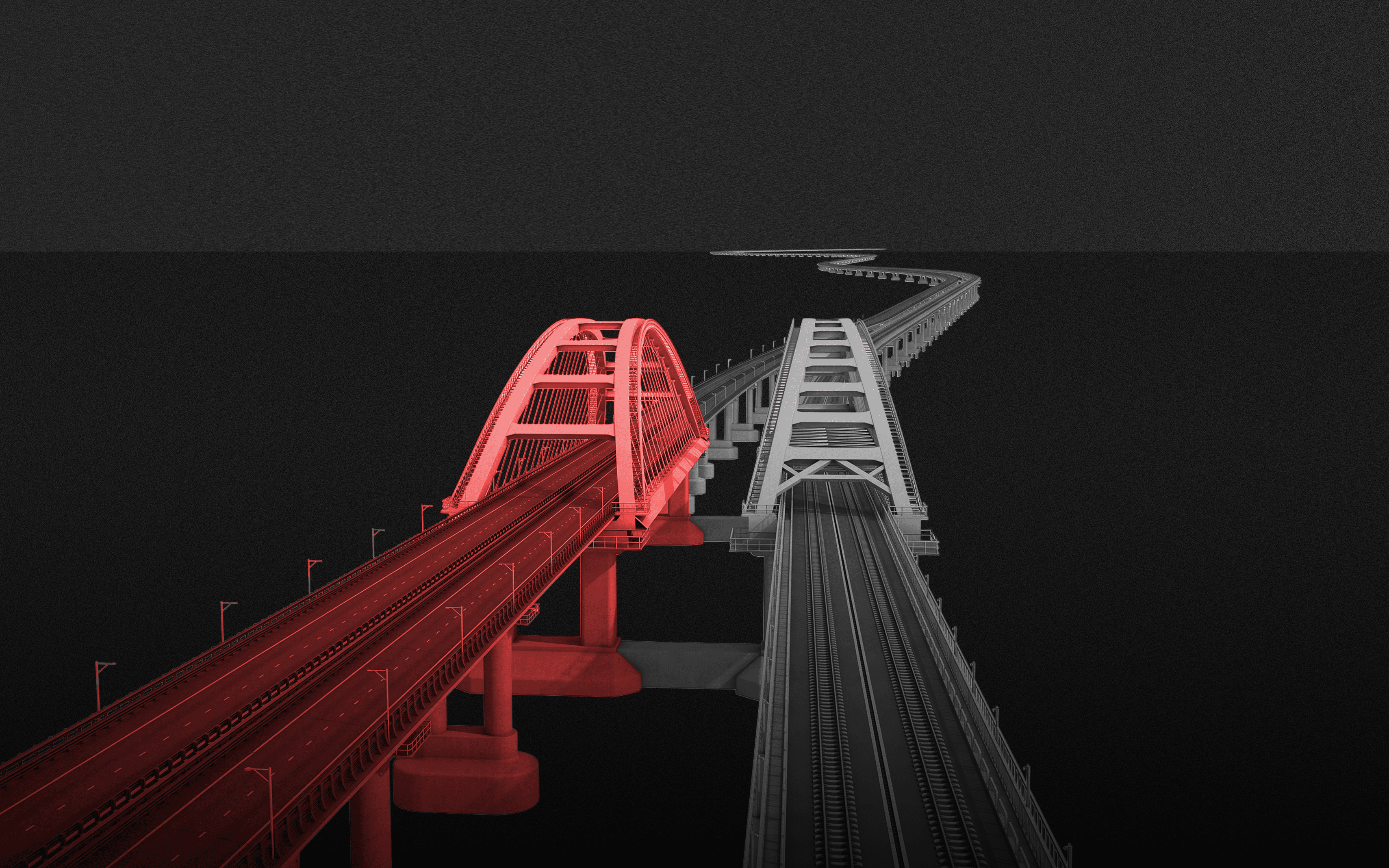
Russia could face years of reconstruction work following Ukraine’s devastating strike on the Crimean Bridge, which destroyed a massive 227-meter (745-foot) steel arch weighing more than 5,000 metric tons, according to an analysis published by Defense Express on November 18.
Although restoring the crossing remains technically possible, the scale of the destruction raises serious questions about how long repairs could take and whether Russia will be able to complete them before the end of the war.
We bring you stories from the ground. Your support keeps our team in the field.
The Ukrainian attack overnight on November 16–17 caused the road bridge’s main arch to collapse into the Kerch Strait, while the railway section also sustained damage to its arch and an adjoining span.
The condition of the railway bridge remains uncertain, making it difficult to determine whether rail traffic can be fully restored. However, Defense Express assessed that the visible damage would prevent the railway from operating normally.
Let's record for posterity the moment Putin soiled himself before today's high-level meeting with the leaders of China and the United States, November 17, 2026, in China.
— Exilenova+ (@Exilenova_plus) November 17, 2026
We've brought you exclusive footage of Ukrainian-made aerial weapons striking Putin's temporary crossing,… pic.twitter.com/S0e1ANXsw0
The situation is even more complicated for the road bridge. According to the publication, vehicle traffic cannot resume until an entirely new arch is manufactured and installed to replace the destroyed structure.
Unlike previous Ukrainian attacks in 2022 and 2023, which damaged supporting structures and brought down conventional roadway spans, the latest strike destroyed a unique component that would be considerably more difficult to replace.
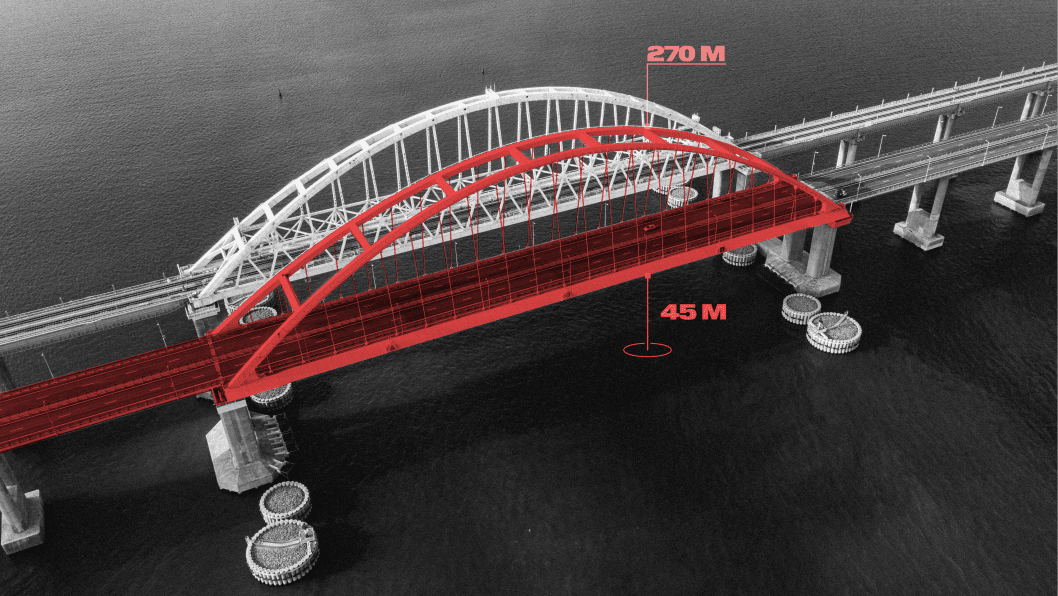
Russia previously managed to restore the bridge’s road sections within several months following those attacks. The damaged spans were standard structures that required relatively limited manufacturing and installation work compared with the bridge’s enormous central arch.
The arch destroyed in the latest strike stretched 227 meters across the navigable channel and weighed more than 5,000 metric tons. Its collapse not only severed the road connection but also blocked the only navigable passage between the Sea of Azov and the Black Sea, Defense Express reported.
Footage shows a train crossing the rail section of the Crimean Bridge after the attack. The video shows that the arch and a span of the road bridge are both gone.
— Exilenova+ (@Exilenova_plus) November 18, 2026
Despite the powerful explosions and extensive damage to the adjacent road bridge, rail traffic has resumed,… pic.twitter.com/IrJlvA70zt
To assess the likely reconstruction timeline, the publication examined how the original Crimean Bridge arches were manufactured and installed.
During construction, both the road and railway arches were assembled at a dedicated facility on land before being transported as complete structures and lifted into their final positions above the Kerch Strait.
The assembly of the arches alone took approximately 11 months, beginning in August 2016 and continuing until late July 2017.
Completing the structures, preparing them for transportation, and installing them on their supports required another three and a half months, with the process finishing in mid-November 2017.
In total, more than 14 months passed between the beginning of assembly and the final installation of the enormous structures.
However, this timeline did not include the earlier stages of production, as steel and other structural components had been ordered and manufactured well before assembly began.
Additional time was required to construct a specialized assembly platform and prepare the equipment needed to transport, lift, and position the massive arches.
According to Defense Express, the entire process, from the initial design and preparation stages to the final installation, took approximately two years.
Rebuilding the destroyed road arch today could prove even more complicated and expensive, particularly given the restrictions imposed on Russia by international sanctions.
Defense Express also added that reconstruction would take place under the continuing threat of Ukrainian long-range drone and cruise missile attacks. Further strikes against construction facilities or the bridge itself could repeatedly interrupt repair work, potentially making full restoration impossible before the war ends.
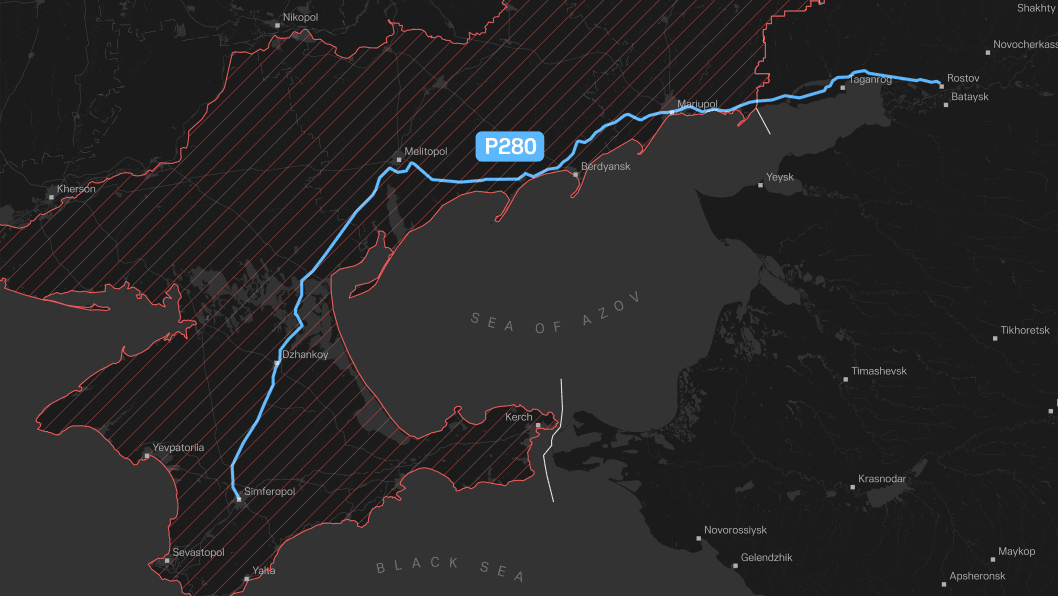
With the road connection severed, Russia is left relying on alternative routes to reach occupied Crimea, including a limited number of ferry crossings and the overland corridor through Russian-occupied Ukrainian territory.
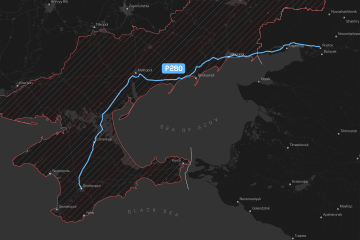
The remaining ferry infrastructure has repeatedly been targeted by Ukrainian forces, while the R-280 Novorossiya highway, which runs through occupied areas of southern Ukraine, remains vulnerable to Ukrainian drone attacks.
Discuss this article: