- Category
- War in Ukraine
Ukrainian Anti-Drone Turret Khyzhak Passes Critical Sea Trials on NATO Frigate
 Prefer U24 Media on Google
- Authors

-c439b7bd9030ecf9d5a4287dc361ba31.jpg "Photo of Katherina Popilnichenko")
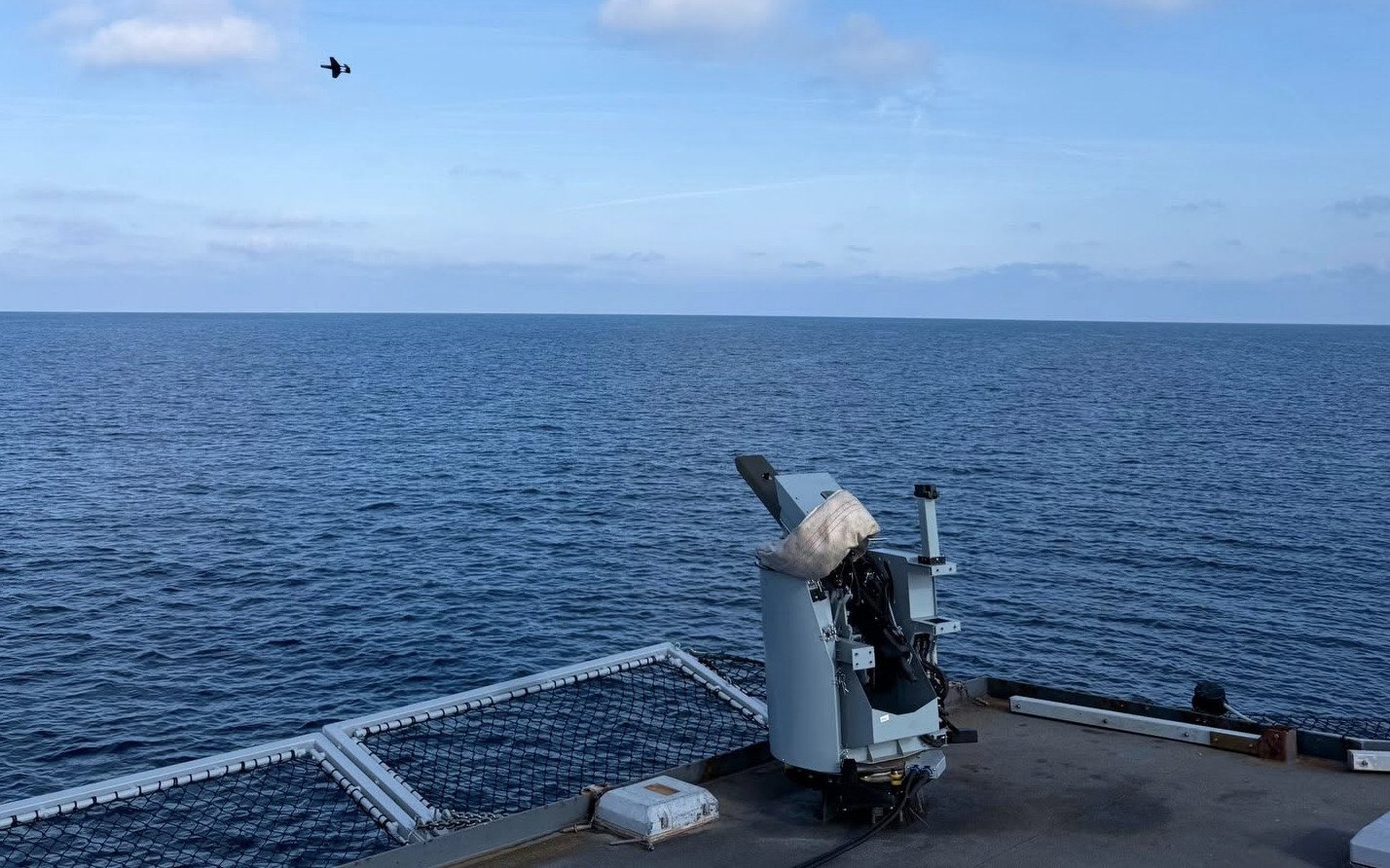
Ukrainian defense tech company UGV Robotics has tested a naval deck version of its Khyzhak turret aboard a frigate belonging to a NATO member nation.
The push to place remotely operated turrets on NATO warship decks arose after Ukrainian Magura maritime surface drones conditionally "sunk" a frigate during joint exercises, highlighting the urgent need for fast naval defenses against unmanned surface threats, according to Militarnyi on July 23.
We bring you stories from the ground. Your support keeps our team in the field.
To fulfill the testing parameters, UGV Robotics had to mount the system securely onto the ship without altering the vessel's original structure.
First introduced in November 2024, the light universal combat module features 360-degree horizontal rotation and vertical elevation angles from -12 to +80 degrees, with an extended depression down to -20 degrees.
Designed for stationary or mobile use, the system supports 7.62 mm caliber machine guns in both Soviet and NATO standards, and it was formally codified and approved for service by the Ministry of Defense of Ukraine in July 2025.
Using photos and dimensions taken on site, engineers created a specialized mounting platform adapted to the frigate's standard machine gun installation. The turret was armed with an FN MAG machine gun and equipped with mechanical safety limiters alongside a remote control station located inside the ship.
Setup and tuning were completed on the first day, followed by target brief updates the next morning. During live trials, the Khyzhak module successfully engaged both an aerial target and a simulated uncrewed surface vessel.
The module incorporates a stabilization mechanism that maintains targeting precision while in motion. Additionally, an integrated artificial intelligence system automatically identifies and tracks targets, allowing the turret to detect uncrewed aerial vehicles and engage close-range FPV drones.
At the NATO Defense Industry Forum in Ankara on July 7, Secretary General Mark Rutte announced the launch of Drone Edge, a $40 billion initiative designed to strengthen the Alliance’s counter-drone capabilities using lessons learned from Russia’s full-scale invasion of Ukraine and conflicts in the Middle East.
Under the five-year program, NATO member states committed to significantly expanding their ability to detect, identify, and neutralize unmanned aerial threats while establishing a dedicated marketplace to accelerate system procurement.
To address the need for trained personnel, Allies pledged to increase their drone operators fivefold, supported by the Alliance through the end of 2027 and backed by an expanded flight training program that added Finland, France, and Sweden to reach 20 participating nations.
Discuss this article:




-111f0e5095e02c02446ffed57bfb0ab1.jpeg "Photo of Roman Kohanets")


-7647a088f8ed2b81f52ab779f3a93cd0.png "Equipment and personal gear belonging to Ukrainian troops from the 425th Separate Assault Regiment “Skelya” are transported on a small wagon through an underground gas pipeline near Kupiansk. (Source: 425th Separate Assault Regiment “Skelya”)")
-72b63a4e0c8c475ad81fe3eed3f63729.jpeg "Photo of Cyril Barabaltchouk")