- Category
- War in Ukraine
Ukrainian Drone Strikes Send Russian Companies Searching for Data Centers Abroad
 Prefer U24 Media on Google
- Authors



Russian companies are increasingly looking outside the country for data-center capacity after major facilities were hit by drone attacks in October, turning what businesses once treated as a theoretical infrastructure risk into a real operational concern.
Demand for foreign data-center capacity has risen sharply, with Russian companies showing particular interest in facilities in Kazakhstan, ITGlobal.com Vice President for Cloud Services Yevgeny Svidersky told Russian media outlet Kommersant on November 10.
We bring you stories from the ground. Your support keeps our team in the field.
Two other industry sources confirmed that some companies have already begun migrating. Market participants said one of the main drivers is the growing risk of disruptions at Russian data centers.
“Companies are reconsidering their approach to business continuity and are looking for a backup site that does not depend on the network and energy infrastructure of the primary data center,” Svidersky said.
In October, data centers associated with Yandex, VK, Sberbank, and Russia’s Federal Tax Service were among the facilities targeted in Ukrainian strikes.
Ukraine hit key data-center sites across six regions in European Russia: Vladimir, Kaluga, Leningrad, Nizhny Novgorod, Ryazan, and Saratov.
The attacks have added pressure to an already strained Russian computing market.
The Russian government has begun considering the creation of artificial intelligence data centers in so-called “friendly” countries, particularly Belarus and Kazakhstan, RBC previously reported, citing sources in the IT sector.
Russia is also facing a domestic shortage of computing capacity.
In Moscow, only around 50 megawatts of data-center capacity reportedly remain available—enough for roughly two to four large commercial facilities.

Kommersant’s sources said available cloud resources inside Russia are already almost 90% occupied.
That combination of limited domestic capacity and rising infrastructure risks has increased interest in hosting data and backup systems outside Russia.
“In practice, this is about geographic redundancy rather than moving the main infrastructure. For example, some market players are already looking for backup sites simultaneously in Russia, Belarus, and Kazakhstan, while some cloud providers are discussing with clients the possibility of reserving capacity in friendly countries,” said Alexey Borshchov, an AI project business architect at the Avandok ecosystem.
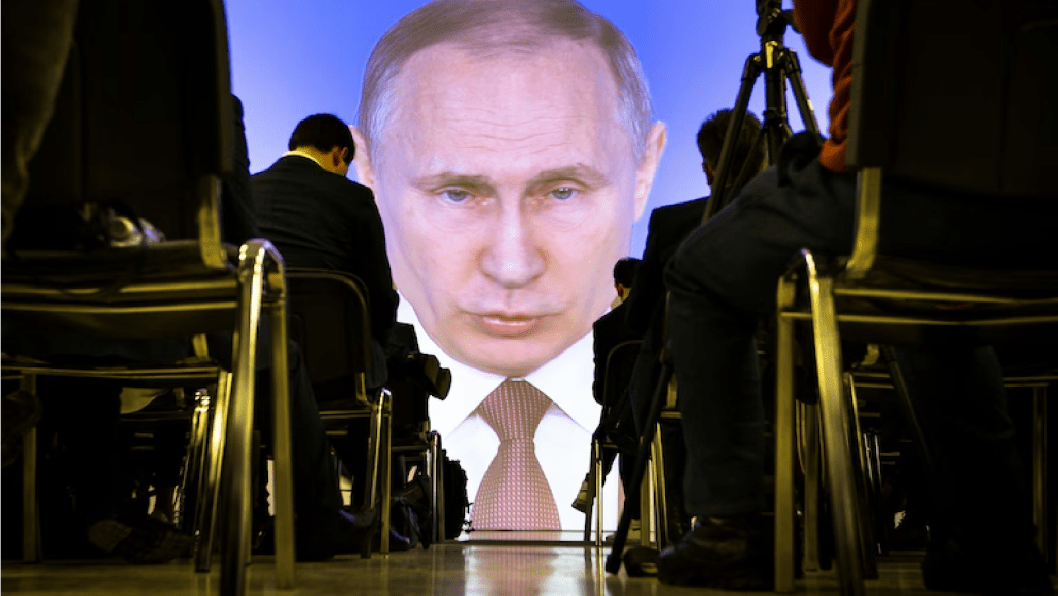
Earlier, Russian leader Vladimir Putin ordered privately owned data centers in Russia to reserve 10% of their capacity for supporting Russian information resources.
According to Astra, the decree was published on Russia’s official legal information portal and gives privately operated data centers 10 days to comply. The reserved capacity can continue to be used by its owners, but a special government subcommission will be able to order that it be made available for Russian information resources within 24 hours.
Discuss this article: