- Category
- War in Ukraine
Ukrainian Military and Intelligence Chiefs Plot Next Wave of Deep Strikes Inside Russia
 Prefer U24 Media on Google
- Authors

-72b63a4e0c8c475ad81fe3eed3f63729.jpeg "Photo of Cyril Barabaltchouk")

Ukrainian President Volodymyr Zelenskyy held a strategic meeting with top military and intelligence commanders on May 15 to outline the next wave of deep strikes against Russian infrastructure.
Meeting with the heads of the Armed Forces General Staff, the Main Intelligence Directorate (HUR), the Foreign Intelligence Service (SZRU), and the Security Service of Ukraine (SBU), Zelenskyy stated that the discussion focused on three key directions.
We bring you stories from the ground. Your support keeps our team in the field.
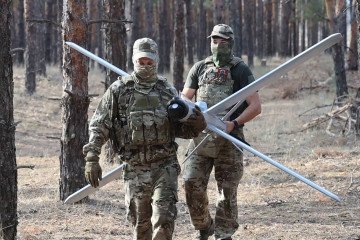
Outlining the priority, the president emphasized the need to determine new targets for Ukraine’s long-range drone operations, which he characterized as kinetic “long-range sanctions” against the aggressor.
“Ukraine will not leave without consequences for the aggressor every strike that takes the lives of our people,” Zelenskyy noted in a statement following the meeting.
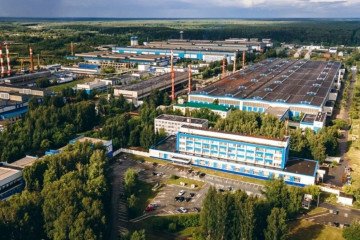
The president highlighted that Kyiv is fairly responding to the bombardment of Ukrainian cities by targeting the logistical and financial backbone of the Russian invasion. He explicitly pointed to the Russian oil industry, military production facilities, and individuals directly involved in war crimes as primary targets for these deep strikes.
Zelenskyy concluded by praising the coordinated efforts of the military and intelligence services in executing the operations within Russian territory.
-bd88b93a4c59e8b3dadbcecbe5eb8381.jpg)
“I am grateful to our warriors for their dedication to defending Ukrainian interests and to all involved Ukrainian structures for building a truly strong system of our long-range sanctions. This is what is tangible,” he stated.
The expansion of these “long-range sanctions” follows a sustained campaign that has significantly impacted Moscow’s primary revenue stream. It was recently reported that, since January, Ukrainian deep drone strikes on Russian oil refineries and infrastructure have resulted in an estimated $7 billion in lost revenues for the Kremlin.
The operations have targeted key export terminals and inland pipeline networks to maximize infrastructural damage and complicate repair efforts. As a result of these strikes, Russian oil processing volumes have fallen to their lowest levels since December 2009, restricting the financial resources available for Russia’s military operations.
Discuss this article:



-f8b795e6bf1d73fc2fdbfd74f5e7ea96.jpeg "Massive flames and thick black smoke rise from the Omsky Kauchuk chemical plant in Russia following a Ukrainian drone strike on October 24, 2026. (Source: Exilenova+)")