- Category
- War in Ukraine
War Deaths in Two Russian Regions Overtake Soviet Afghanistan Toll
 Prefer U24 Media on Google
- Authors

-c439b7bd9030ecf9d5a4287dc361ba31.jpg "Photo of Katherina Popilnichenko")
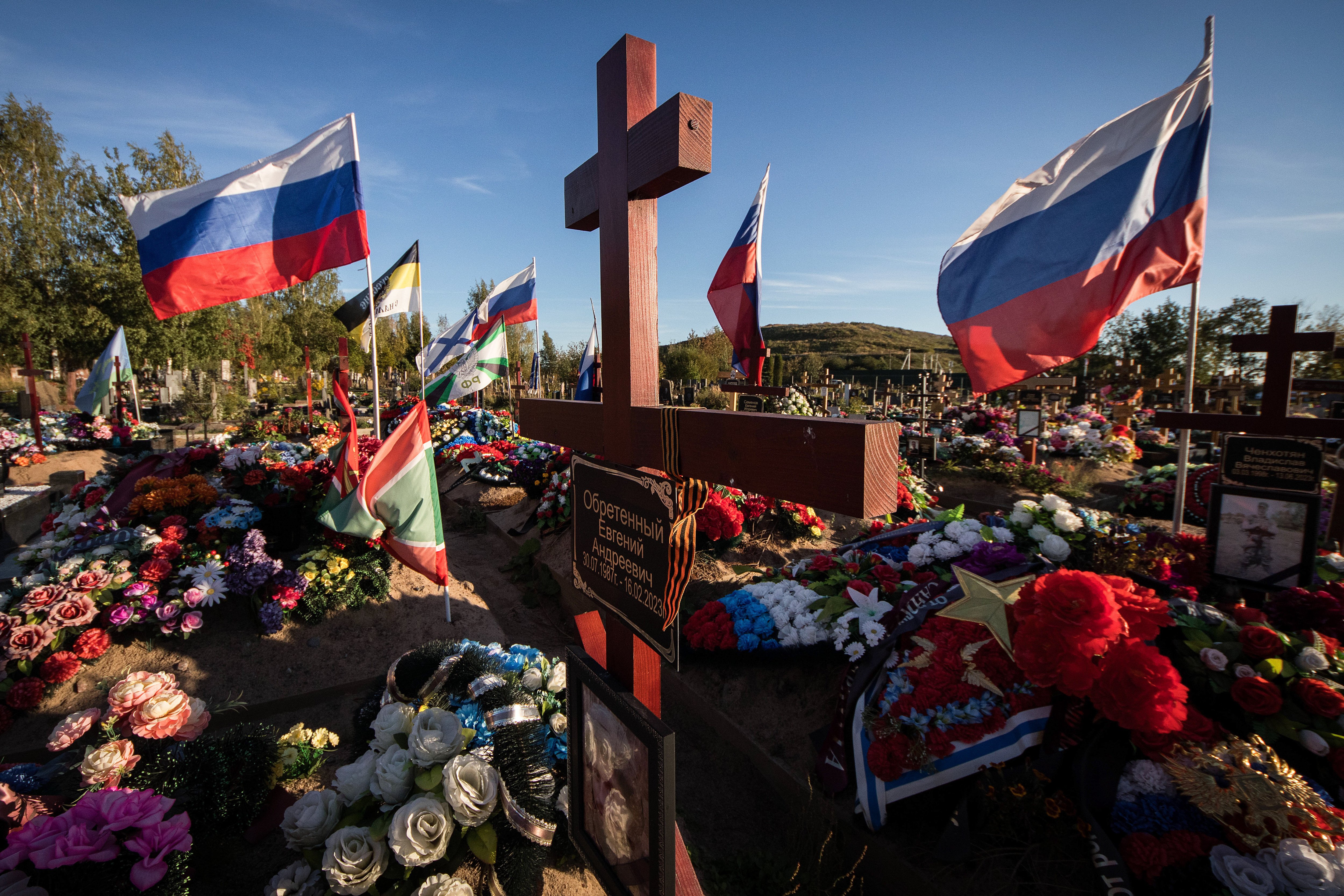
The combined confirmed deaths from Bashkortostan and Tatarstan, two constituent republics of the Russian Federation in the Volga-Urals region, have now exceeded the total losses suffered by the Soviet Union during its 10-year military campaign in Afghanistan , according to BBC on May 1.
We bring you stories from the ground. Your support keeps our team in the field.
Over the last two weeks, more than 4,600 names were added to the list. This increase is higher than the average growth rate observed last year. Many of the deaths confirmed in the past month involve service members who were previously missing since 2024.
These individuals were eventually recognized as deceased by the Russian side after bodies were located or through court decisions initiated by families and military units.
In Bashkortostan, the number of confirmed deaths has surpassed 9,500, while Tatarstan has recorded over 8,000 losses. Together, these two regions account for 18,116 confirmed deaths, which is 20% higher than the official Soviet death toll in Afghanistan. These regions consistently show the highest casualty figures, partly due to the active work of local volunteers who track and document this information.
When mortality data is adjusted for the density of the male population, regions such as Tuva, Buryatia, and Altai show the highest impact. Men from these areas are 20 to 30 times more likely to appear on the list of casualties compared to residents of Moscow.
Military contracts are primarily signed by residents of small towns and villages. In these locations, stable employment is often difficult to find, and local administrations conduct frequent recruitment campaigns.
-3dbcb2c773ebf83bf83f601d63aa63ec.jpg)
Military experts suggest the actual number of Russian losses is likely higher than what open-source records show. Current estimates indicate that monitoring cemeteries and public notices may only capture between 45% and 65% of the total deaths.
Challenges such as drone activity often prevent the recovery of bodies from the battlefield, and some deaths remain unrecorded by local authorities or families.
Bashkortostan and Tatarstan are two internal republics located in the Volga-Urals region of the Russian Federation. These regions hold strategic importance for Russia due to their vast natural resources, including substantial oil reserves and mineral deposits. Historically, both regions have maintained distinct cultural and ethnic identities, playing a major role in the industrial and economic landscape of the country.
Their modern political trajectories reflect long-standing tensions over autonomy within Russia. On August 30, 1990, Tatarstan declared its state sovereignty, a move that was later supported by a majority of the population in a 1992 referendum. Despite these efforts to establish independence, Tatarstan was ultimately incorporated into the Russian Federation in 2000.
A senior NATO official reported on February 11, 2026, that Russia had lost approximately 1.3 million troops killed or wounded since the start of Russia’s full-scale invasion of Ukraine. The official noted that around 400,000 of those casualties occurred in 2025 alone, highlighting that the Russian military sustained disproportionately high losses due to inadequate battlefield medical care.
Discuss this article:
-9a7b3a98ed5c506e0b77a6663f5727c5.png)