- Category
- World
Anti-Ukrainian Hate Crimes Surge by Over 30% in Poland, Police Data Shows
 Prefer U24 Media on Google
- Authors

-72b63a4e0c8c475ad81fe3eed3f63729.jpeg "Photo of Cyril Barabaltchouk")
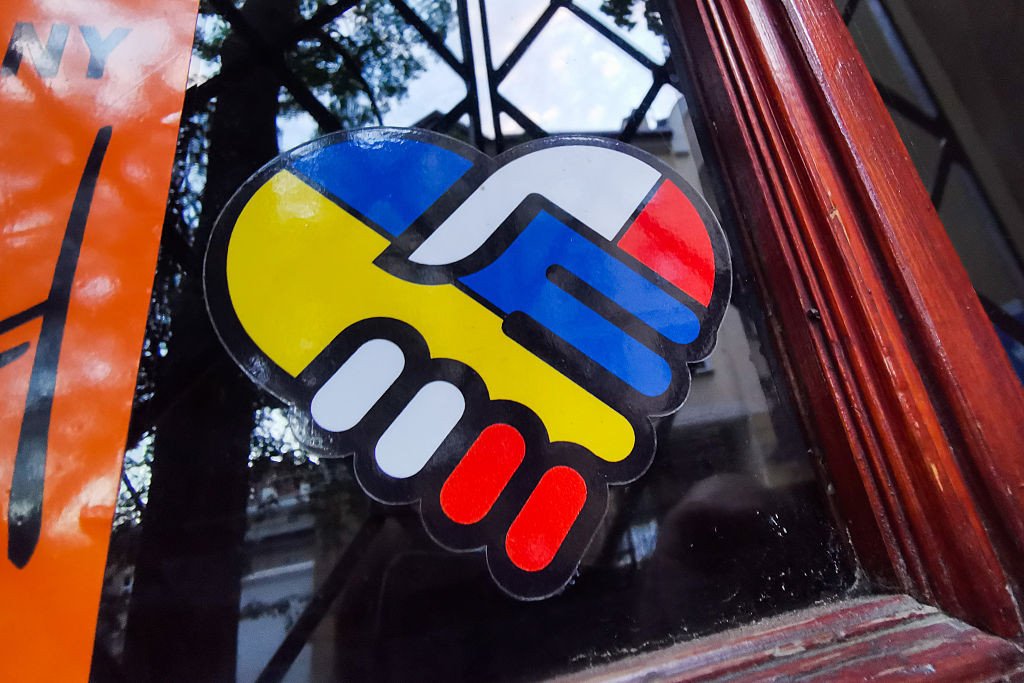
A sharp rise in hate crimes targeting Ukrainians in Poland has sparked a national political debate following the arrest of a municipal bus driver who verbally assaulted two 11-year-old Ukrainian girls in Bielsko-Biała, the Polish daily newspaper Rzeczpospolita reported on July 17.
The 54-year-old driver was detained and charged with public insult based on nationality after one of the victims recorded the abuse on her mobile phone. Rzeczpospolita reported that the suspect pleaded guilty and was immediately terminated by the municipal transport company, though prosecutors have declined to disclose his stated motives.
We bring you stories from the ground. Your support keeps our team in the field.
Under Polish law, public defamation based on national, ethnic, or racial identity carries a judicial penalty of up to three years in prison.
The high-profile assault coincides with a wide increase in hostility across the country. Data obtained by Rzeczpospolita from the National Police Headquarters (KGP) reveals that Polish authorities registered 180 hate speech and hate crime complaints targeting Ukrainians in the first half of 2026 alone.
This represents a year-on-year surge of over 30% compared to 2025—which saw 275 cases over the entire twelve months—and a 35% increase relative to 2024’s total of 267 complaints. If the current trajectory persists, total annual reports are projected to reach approximately 360 cases by the end of the year.
Sociologists warn that official statistics likely underrepresent the true scale of the problem due to systemic underreporting. Dr. Jacek Kucharczyk, a sociologist and president of the Institute of Public Affairs, told the publication that many victims refuse to file formal police reports out of fear, adding that a “toxic atmosphere” cultivated online and within political discourse is increasingly materializing in public spaces.
Kucharczyk noted that a dangerous “effect of permission” has emerged, where anti-Ukrainian hostility is no longer stigmatized but treated by some as a point of pride, a trend heavily amplified by coordinated Russian disinformation operations designed to destabilize Western societies.
Rzeczpospolita noted that the combination of political conflict and historical trauma has left a distinct mark on Polish public opinion. A July 2026 poll conducted by IBRiS for Rzeczpospolita found that 33.6% of Polish respondents reported their attitude toward Ukrainians had worsened recently, with 56% directly blaming Zelenskyy for the current diplomatic chill.
-119b9266c05e9a8575efe249010e5c46.jpg)
Commenting on the shifting dynamics, prominent criminologist Professor Brunon Hołyst observed that while the initial influx of refugees following Russia’s 2022 full-scale invasion was met with widespread solidarity, prolonged exposure and occasional highly publicized negative incidents involving foreign nationals have contributed to a growing undercurrent of public resentment.
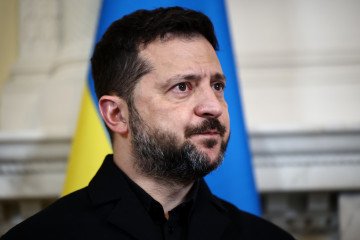
Despite these societal tensions, President Volodymyr Zelenskyy and Polish President Karol Nawrocki recently met face-to-face at the NATO summit in Ankara to address the diplomatic fallout and reinforce cooperation against Russia.
Discuss this article:
-9a7b3a98ed5c506e0b77a6663f5727c5.png)


-c439b7bd9030ecf9d5a4287dc361ba31.jpg "Photo of Katherina Popilnichenko")