- Category
- World
China’s Nuclear Buildup Pushes US Into Unprecedented Three-Way Arms Race
 Prefer U24 Media on Google
- Authors


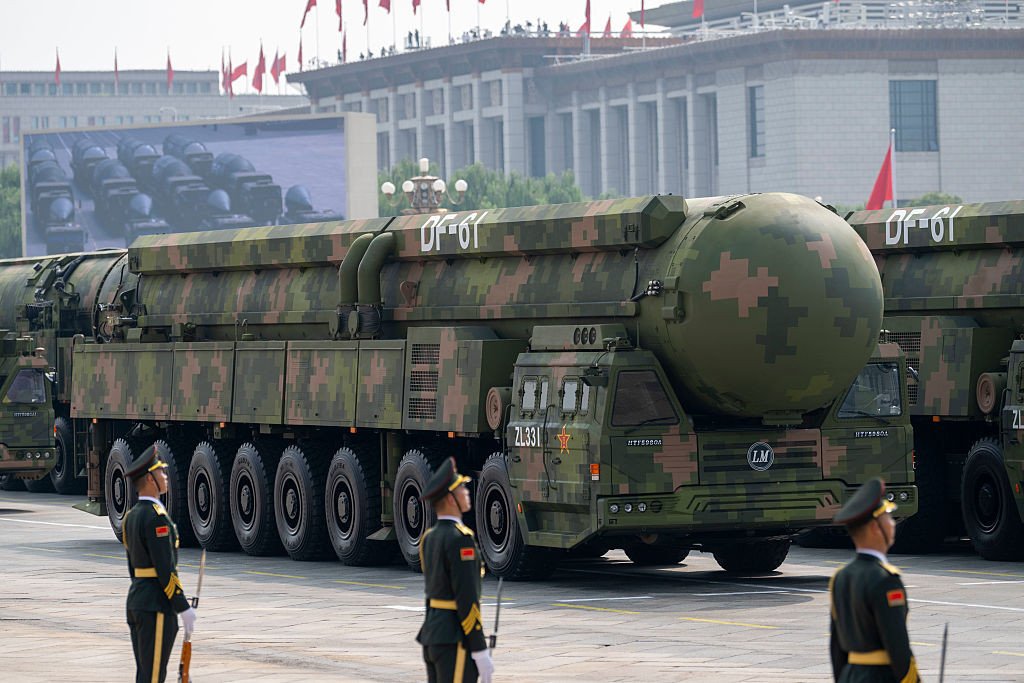
China’s rapid nuclear buildup is pushing the US into an unprecedented three-way strategic rivalry with Beijing and Moscow, forcing Washington to prepare simultaneously for two major nuclear powers, The Wall Street Journal reported on November 17.
China’s nuclear arsenal has expanded from the low 200s at the start of the decade to around 600 warheads. The Pentagon projects that Beijing could possess more than 1,000 by 2030, according to The Wall Street Journal.
We bring you stories from the ground. Your support keeps our team in the field.
The expansion is forcing US defense planners to reconsider a nuclear strategy historically built around deterring one principal rival, Russia. Arms-control specialists have described the emerging US-Russia-China dynamic as a “three-body problem,” reflecting the difficulty of predicting how three nuclear powers will react to one another.
“We’re on the precipice of what is looking like an action-reaction-driven arms race because of this tripolar nuclear environment,” Paul Dean of the Nuclear Threat Initiative told The Wall Street Journal.
The shift comes as US President Donald Trump prepares to meet Chinese leader Xi Jinping and the Russian leader Vladimir Putin this week. Trump plans to raise nuclear arms control during the three-way summit, The Wall Street Journal reported.
Beijing has repeatedly resisted joining negotiations that could constrain its arsenal, arguing that its nuclear forces remain substantially smaller than those of the US and Russia. China’s Foreign Ministry stated that Beijing maintains only the capabilities required for national security and does not intend to participate in a nuclear arms race.
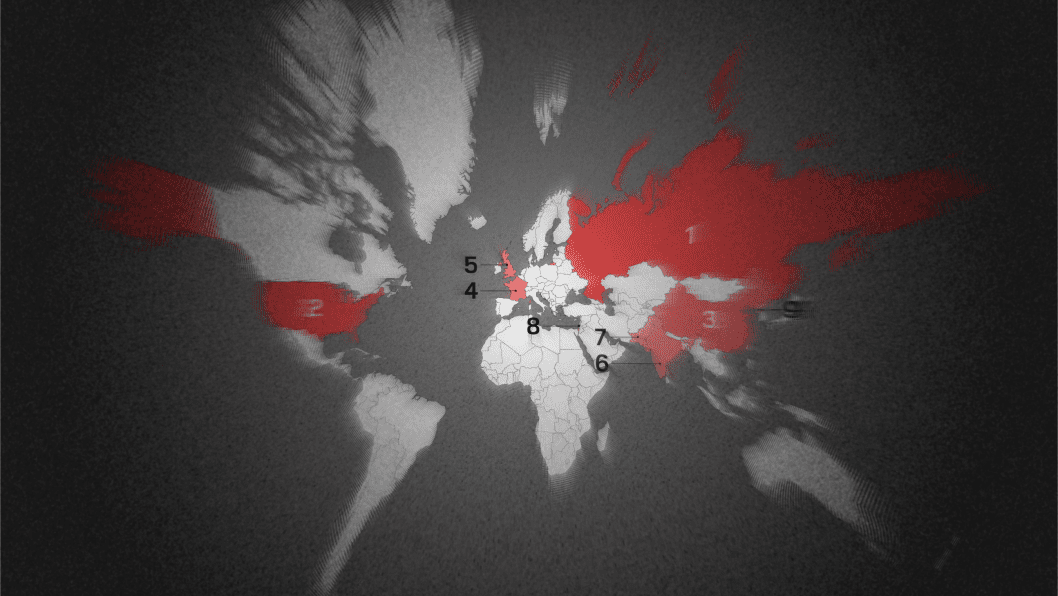
The strategic landscape has also changed following the expiration of New START in February 2026. The treaty had imposed legally binding limits on US and Russian long-range nuclear forces, but its expiration left the two countries without such restrictions for the first time in half a century, The Wall Street Journal noted.
US defense planners have discussed increasing warhead production and returning inactive weapons from storage to expand the number deployed on long-range delivery systems, according to the report.
China, meanwhile, has built three new fields of intercontinental ballistic missile silos over the past five years and is expanding its ability to launch nuclear weapons from land, sea, and air. The Wall Street Journal reported that Beijing also fired a ballistic missile from an advanced submarine into the Pacific earlier this year.
China’s uranium enrichment capacity has doubled over the past six years and now exceeds its civilian requirements, according to research cited by The Wall Street Journal. Arms-control specialist Hui Zhang assessed that facilities near Emeishan City could potentially produce highly enriched uranium for thousands of nuclear warheads.
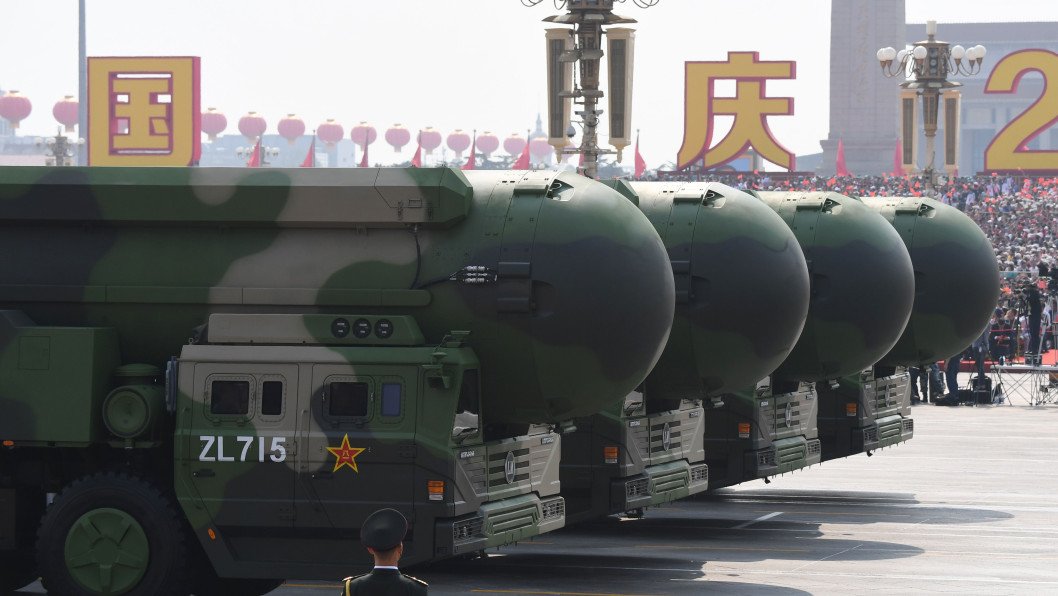
US missile-defense plans are also feeding Beijing’s concerns. Arms-control experts cited by The Wall Street Journal argued that Trump’s proposed Golden Dome system could encourage China to expand its arsenal further to ensure its missiles could penetrate US defenses.
A 2023 US congressional commission concluded that Washington could no longer assume that forces designed to deter Russia would also be sufficient to deter China at the same time. Expanding US nuclear forces, however, could encourage both Moscow and Beijing to respond with their own buildups, experts warned.
The Wall Street Journal noted that decades of US-Russian arms-control agreements had sharply reduced nuclear stockpiles from their Cold War peaks. With New START gone, the monitoring and verification mechanisms that previously gave Washington greater visibility into Moscow’s strategic forces have also disappeared.
Putin has proposed informally maintaining the expired treaty’s weapons limits for another year while discussions continue, while the Trump administration has argued that any future arms-control framework should include China.
The emerging three-way nuclear rivalry is also shaping diplomacy ahead of possible trilateral arms-control talks involving Trump, Xi, and Putin in China. Reuters reported on November 14 that Trump was interested in pursuing a trilateral arms-control framework, while Beijing had resisted nuclear negotiations with Washington and Moscow and remained wary of being treated as a nuclear peer alongside them.
Discuss this article: