- Category
- World
EU Adopts Defense Readiness Measures as Ukraine War Shapes Security Debate
 Prefer U24 Media on Google
- Authors

-111f0e5095e02c02446ffed57bfb0ab1.jpeg "Photo of Roman Kohanets")
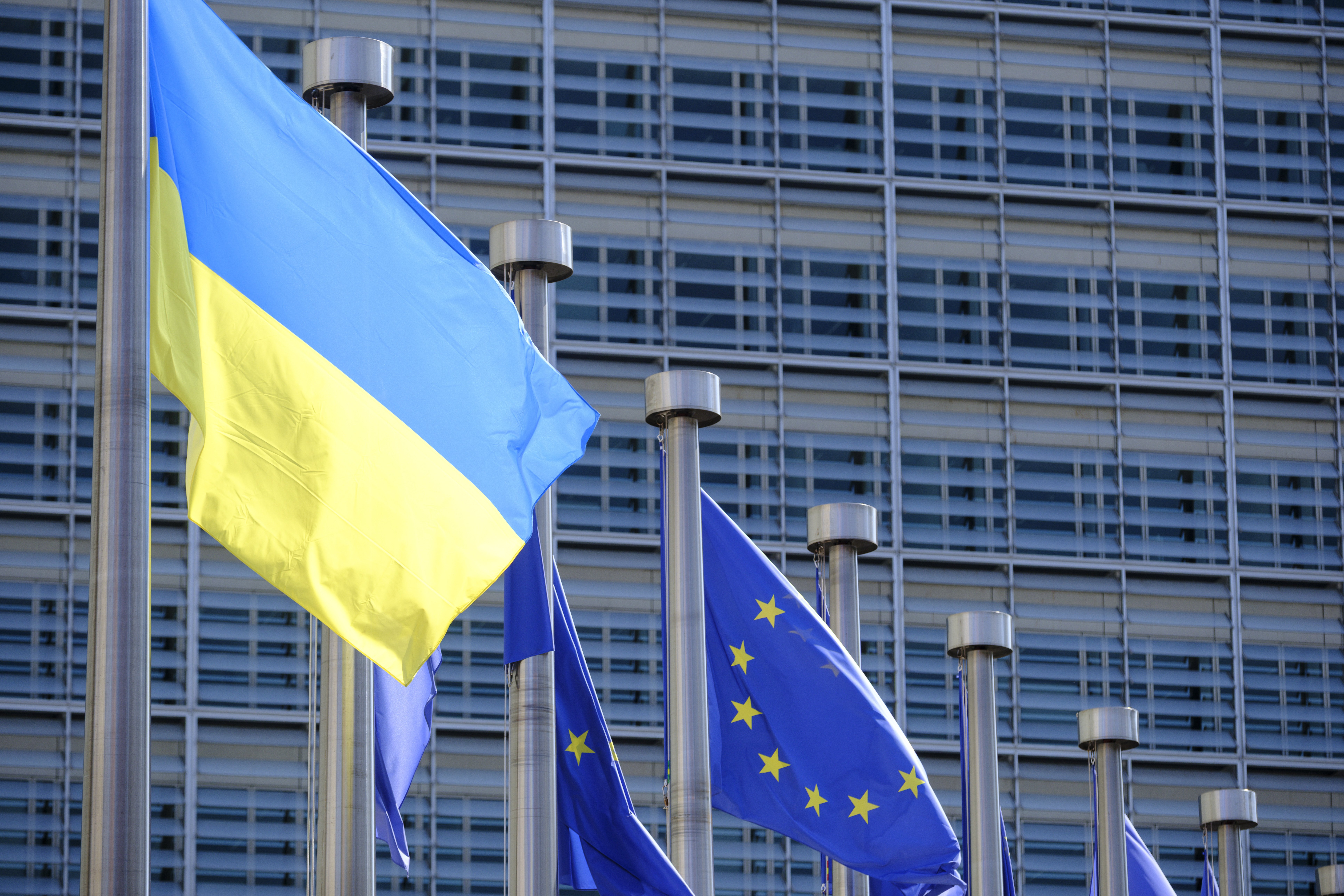
Russia's war in Ukraine framed the European Parliament's adoption of the Defense Readiness Omnibus on September 16, with lawmakers presenting the package as the bloc's answer to that war. Throughout the debate, according to the institution, the war remained the central justification for accelerating Europe's defense readiness.
This was reported by the European Parliament on its official website on September 16, following the plenary votes on the omnibus files.
We bring you stories from the ground. Your support keeps our team in the field.
According to the Parliament, the omnibus streamlines permit-granting for readiness projects, intra-EU transfers of defense products, procurement, and defense investment. The institution noted the measures are meant to expand production of the drones, sensors and ammunition that the war in Ukraine has shown Europe needs.
Security and Defense Committee co-rapporteur Pekka Toveri, of the EPP in Finland, anchored the vote squarely in the war. He observed, per the Parliament's account, that Europe had entered the fifth year of war and that the Russian threat to the EU was still climbing. Toveri argued the bloc had to show unity and prove it was serious about its defense.
Internal Market Committee co-rapporteur Anna-Maja Henriksson, of Renew Europe in Finland, cautioned that the danger would outlast the fighting.
-be12baa581b8208e77d61528e09c1250.jpg)
"Russia will remain a long-term threat to Europe, even after the war in Ukraine ends," she stated in remarks carried by the Parliament. Henriksson described the omnibus as only a starting point for a defense-ready single market.
Borys Budka of the EPP in Poland, who chairs the Industry, Research and Energy Committee, told the chamber that the war had already reached the Union's frontiers.
He noted that a Russian drone had been recovered from the Baltic off the Polish coast, describing it as physical hardware crashing into shared borders rather than an abstract theory. Budka added that Russia was modernizing its war machine and reorienting its economy onto a war footing.
-b0aaa0ed29a891f480c1e0b019675335.jpg)
Industry, Research and Energy co-rapporteur Aura Salla, of the EPP in Finland, tied the package to the technologies the war has made essential. She emphasized, according to the Parliament, that
Europe's security would come from turning industrial know-how into real capabilities—the drones, sensors and ammunition the moment demands.
With the rules adopted, the Parliament indicated that delivery now rests with national governments. Security and Defense co-rapporteur Lucia Yar, of Renew Europe in Slovakia, added that the outcome depends on how quickly the 27 capitals put the measures to work.
-18c8b7fe1b5fa5887e16c3a8eb915cba.jpg)
The vote followed a wave of airspace violations along NATO's eastern flank, incidents that flow directly from Russia's war on Ukraine. Overnight on September 15, NATO fighter jets shot down an unidentified drone over Lithuania's Kaunas region. Italian aircraft flying from Šiauliai Air Base carried out the interception, and preliminary findings indicated the drone had crossed from Belarus.
The same night, Poland scrambled fighter jets and placed air defenses on heightened readiness as Russian strike drones hit western Ukraine. A week earlier, on September 8, Romania deployed two F-18 jets after radar detected an aerial object near the town of Roman. Minutes before, a suspected Shahed drone had crossed into neighboring Moldova.
Discuss this article:

-c439b7bd9030ecf9d5a4287dc361ba31.jpg "Photo of Katherina Popilnichenko")