- Category
- World
Why Europe Needs a Defense Union
Europe is spending more on defense than at any point in recent history. But bigger budgets alone will not solve its biggest strategic problem. The debate is increasingly turning toward a European Defense Union. Here’s why.
 Prefer U24 Media on Google
- Authors

-b4369e8f26220e0f00ca16ef1955af34.jpg "Vadym Kovalenko")
Russia’s full-scale invasion of Ukraine has fundamentally altered Europe’s security landscape. Assumptions that shaped the continent after the Cold War, from stable borders to predictable deterrence and a lasting peace dividend, have been replaced by the reality of prolonged high-intensity warfare and growing geopolitical competition.
The European Union now faces a fundamental task: aligning its security architecture with the EU’s new geopolitical scale. This means searching for a model that would allow Europe to act as an independent security center.
This article explores why Europe’s existing defense model is increasingly ill-suited to new challenges, how defense integration has already begun, and what a future European Defense Union could look like.
How Europe’s security environment has changed
“The EU and its member states can unfortunately no longer fully rely on the United States’ government to defend our shared values and interests, but must take their defence and security into their own hands,” a 2025 European Parliament resolution declared, succinctly capturing Europe’s new security reality.
This is not only about the United States' position. The very tasks facing Europe have changed.
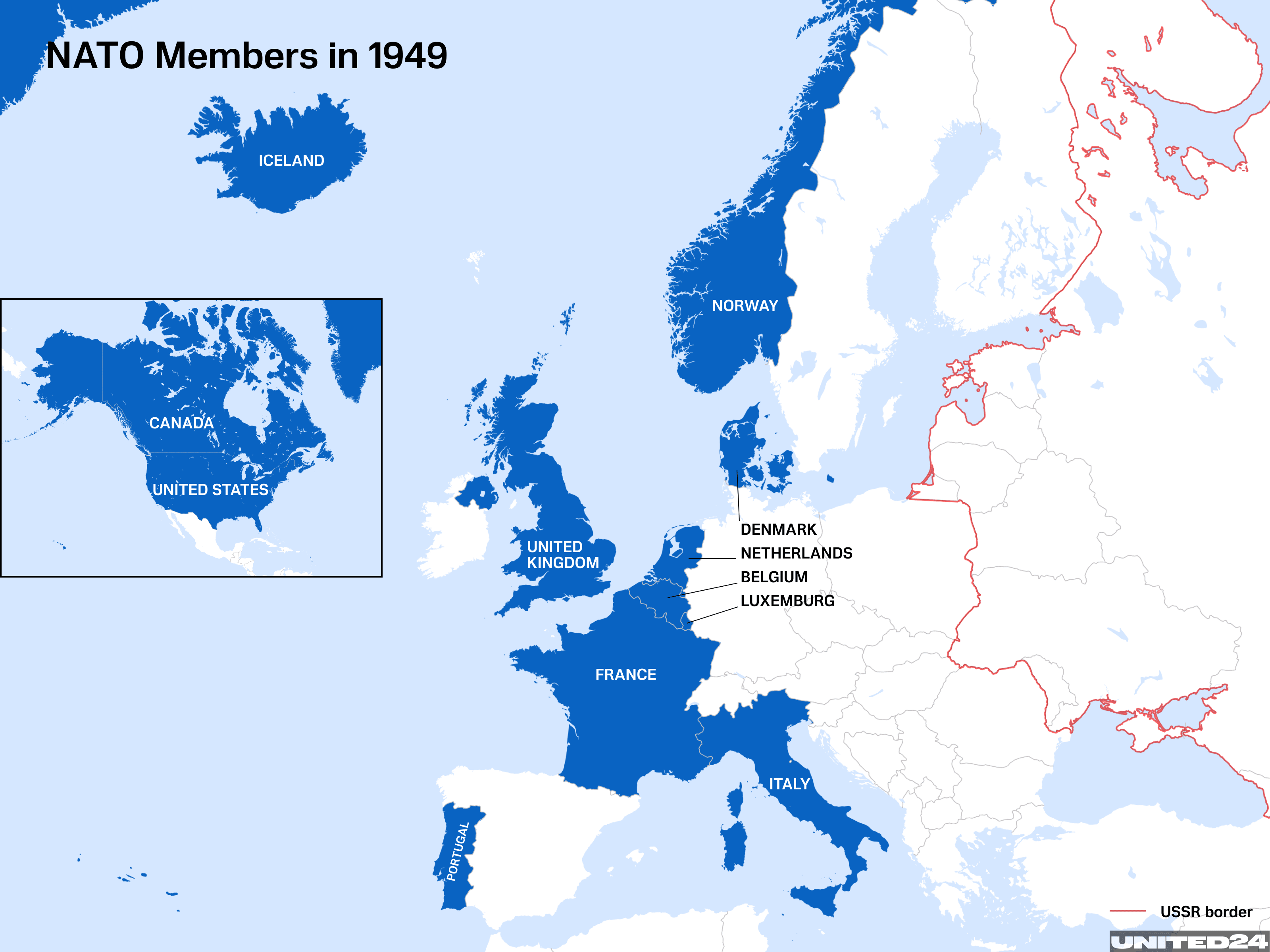
After the Cold War, NATO brought together a relatively small group of European countries. In their view, the primary function of European security was to deter a single major adversary.
Today, Europe faces a much broader range of challenges: a high-intensity war in the east of the continent, instability in the Black Sea and Mediterranean regions, competition over the Arctic, hybrid threats, and the protection of critical infrastructure and logistics routes.
It is important to understand that the European Union has expanded significantly in territorial terms, and with that expansion, both the geography of its challenges and the scale of its security interests have changed substantially.
Europe’s own understanding of its interests has also changed. A Europe built on the idea of compromise, peaceful dispute resolution, and economic integration now faces a global reality in which the right of the strongest has returned.
Russia’s war against Ukraine dramatically accelerated this realization. In its White Paper for European Defence, the European Commission effectively acknowledges that Ukraine’s defeat would create an existential threat to the European Union itself. That is why, at a time when Ukraine was closest to political capitulation, EU leaders carried out a radical European turn in the security sphere.
The ReArm Europe Plan/Readiness 2030, with potential funding of up to €800 billion ($913 billion), became the largest defense project in the history of the European Union. This moment can be considered a point of no return: too many resources are tied to this decision, and Europe’s strategic concerns have changed too fundamentally.
However, an increase in defense spending alone does not answer the strategic question: what kind of security model does Europe want to build? It is impossible to determine what future military capabilities should look like without first understanding which political objectives they are meant to support.
What are the biggest security threats facing Europe today?
The new strategic reality is defined not only by growing military risks but also by a shift in the sources of those risks. In the 20th century, European security was largely about defending the continent’s own territory. Today, Europe faces challenges across multiple regions, meaning its security increasingly depends on shaping a stable environment beyond the European Union's borders.
That is why Europe’s strategic task is increasingly to create its own European security belt.
East: Russia and the war in Ukraine
Ukraine has become the cornerstone of Europe’s eastern security. By absorbing the bulk of Russia’s military power, it is effectively protecting NATO’s eastern flank. Europe must secure transport and energy corridors linking it to Central Asia through the Black Sea and the Caucasus.
South: The Mediterranean and North Africa
Security in the Mediterranean now extends well beyond maritime control. Europe increasingly needs a level of political, economic, and security influence in North African and Middle Eastern countries to prevent these territories from becoming footholds or spheres of influence for external forces hostile to European interests.
North: The Arctic
As Arctic competition intensifies, Europe must prevent Russia or other non-European powers from gaining a strategic advantage that could threaten the continent’s northern flank.
The case for European strategic autonomy
For the European Union, it is critically important that neighboring regions remain spaces of partnership rather than turning into staging grounds for states whose interests run counter to European security. And within its borders and its defined security belt, Europe must be capable of projecting power independently. In effect, the European Union must evolve from a “security space” into a “security provider.”
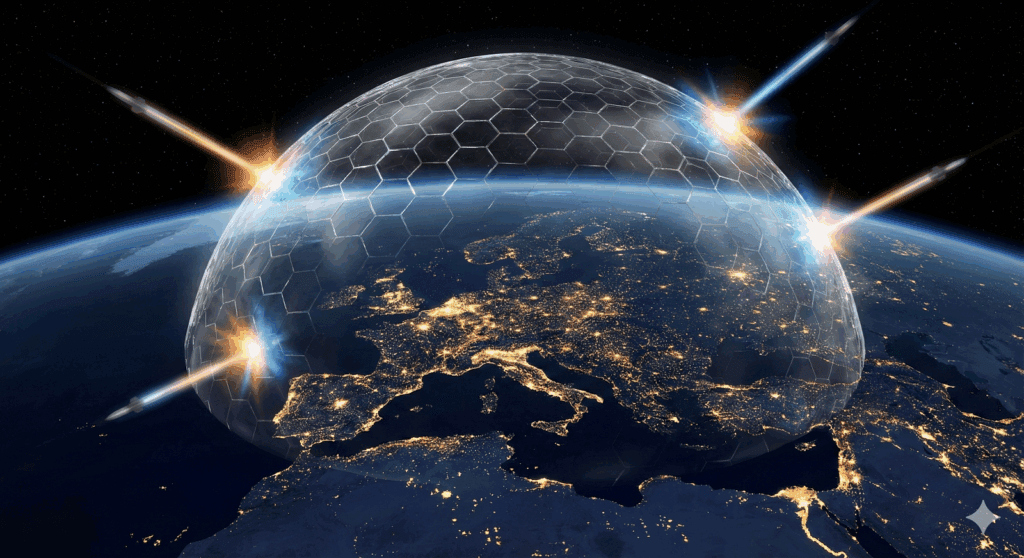
However, implementing such a strategy requires two preconditions.
1. Pooling resources. No European state on its own is capable of simultaneously maintaining a military presence in several strategic regions, sustaining a modern defense-industrial complex, developing space, cyber, and naval capabilities, and responding swiftly to crises around the entire perimeter of the continent. The scale of the new challenges increasingly requires joint planning, centralized management of specific areas, and the consolidation of defense resources.
2. Greater strategic autonomy. As geopolitical ambitions grow, situations will inevitably arise in which Europe’s security interests do not fully coincide with the priorities of even its closest allies. In such cases, Europe must be able to make decisions independently and implement them without the risk of political obstruction. But this is where the paradox of modern European security emerges.
The paradox of European military power
At first glance, Europe has no reason to speak of a shortage of military strength. The combined armed forces of European Union member states exceed two million service members. But the problem is not the number of soldiers; it is how that force is organized.
The EU has nearly 30 separate armies, each built according to its own national priorities, budgetary capacities, and defense doctrines. They procure different weapons, use different standards, and have separate systems of logistics, command, military education, and defense planning. An even bigger problem is the speed of decision-making. Any large-scale military operation requires separate political approval from dozens of governments. As a result, the speed that could be decisive for success is fundamentally impossible.
So when the EU is discussed as a full-fledged geopolitical actor, a paradox emerges in the security sphere: Europe possesses an enormous military mass, but to a far lesser extent, it possesses military power.
This does not mean that national armies are weak. On the contrary, many of them are among the most capable in the world. But they were created primarily to carry out national tasks. A system capable of acting as a single military-political organism at the scale of the entire continent is still effectively absent.
Today, the European Union faces an institutional contradiction. It increasingly acts as a single geopolitical entity, shaping a common foreign policy, market, industrial policy, and sanctions policy. Yet in the field of defense, it remains a collection of separate national decisions. This creates a gap between the level of Europe’s political ambitions and its institutional ability to implement them through security instruments.
This gap has driven the search for a new model for organizing European defense. Increasingly, the creation of a European Defense Union—often referred to in public discourse as an “EU army”—is seen as the most comprehensive answer to this problem.
How European defense integration has evolved
It should be noted that the European Defense Union will not have to be built from scratch. Many of its elements already exist. Over the past two decades, the European Union has gradually developed a series of defense integration mechanisms that together form an unfinished framework:
Common Security and Defense Policy (CSDP): Gave the EU the ability to conduct civilian and military missions beyond its borders, supporting operations in the Balkans, Africa, the Indian Ocean, and the Mediterranean.
Permanent Structured Cooperation (PESCO): Enabled member states to develop joint defense projects. 72 programs are underway under the initiative.
European Defence Fund (EDF): Introduced the EU’s first mechanism for jointly financing defense research and development.
ASAP: As the pace of integration accelerated noticeably post 2022, this program focused on expanding ammunition production in response to increased demand following Russia’s full-scale invasion of Ukraine.
EDIRPA: Encouraged EU member states to procure defense equipment jointly.
ReArm Europe / Readiness 2030: Adopted in 2025, it envisages an unprecedented level of investment in the rearmament of European states.
The European Union already possesses individual elements of a future defense union: joint financing, defense programs, coordination structures, military missions, and elements of a defense-industrial policy.
Why current EU defense cooperation falls short
The elements listed above share one common feature: they remain instruments of coordination and do not create a single center for strategic planning, decision-making, or the use of military force. This is most evident during crises—whether Russia’s aggression against Ukraine or challenges related to the security of Greenland.
Joint financing does not guarantee the joint use of capabilities. And the development of the defense industry does not, by itself, create a mechanism for rapid political response. What is missing is the very thing that is essentially decisive in building any security system: a unified logic of command and control. This is the main institutional gap.
The European Commission itself is articulating this problem with increasing consistency. Commissioner for Defense and Space Andrius Kubilius is promoting the concept of a European Defense Union as a new level of European defense integration, one into which Ukraine should also be integrated. The architecture of such a union remains a subject of political debate, and its possible elements require separate analysis.
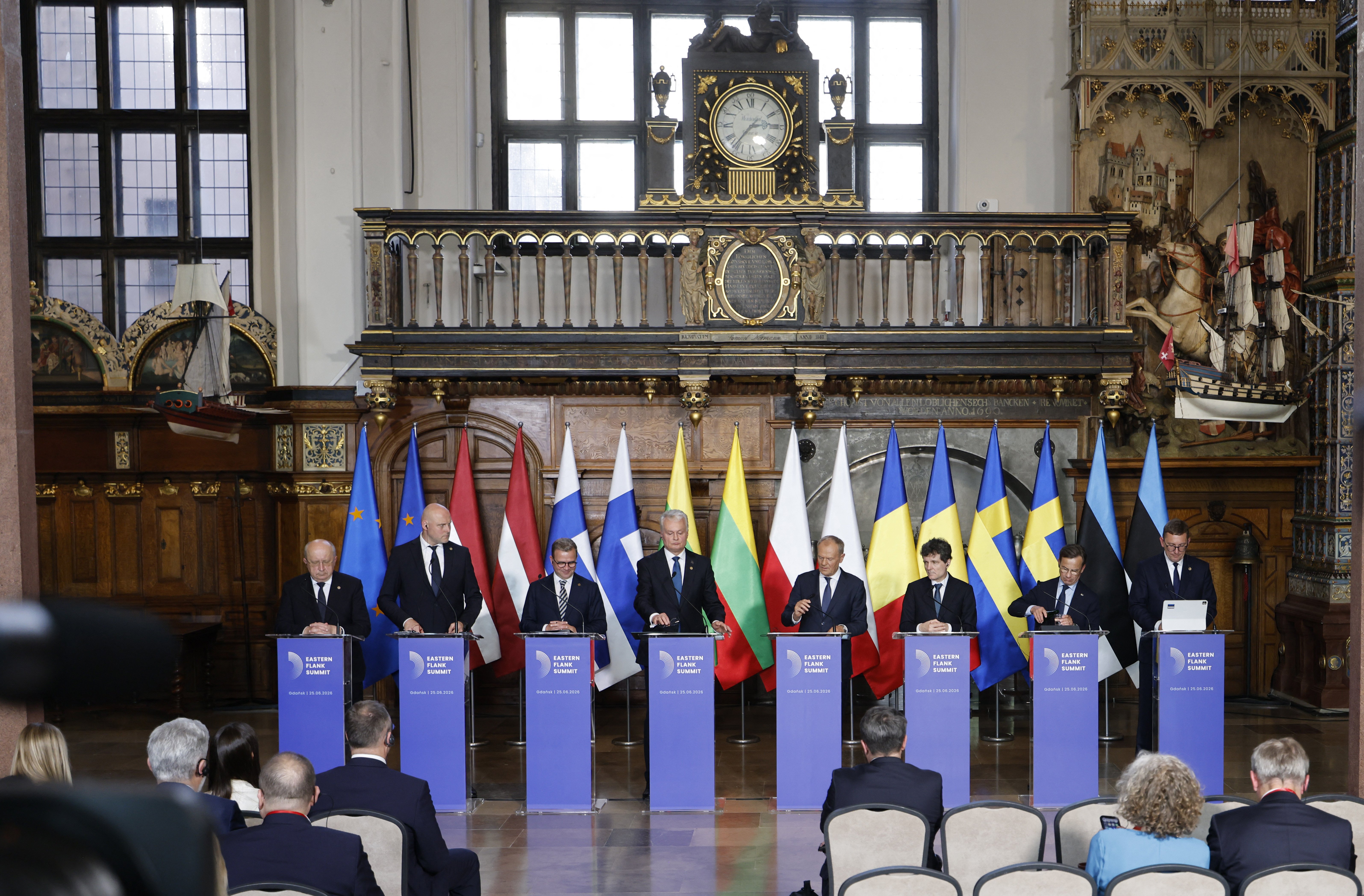
What a European Defense Union could look like
The most common understanding of an “EU army” is often mistaken. In public discourse, the concept is frequently associated with the creation of a new supranational army that would replace the national armed forces of member states. It is precisely this interpretation that generates the strongest political resistance, because it automatically raises debates about the loss of sovereignty and the transfer of control over troops to Brussels.
However, the logic of defense integration that is now in demand is moving in a different direction—toward the principles of delegation and integration. The foundation of a future European Defense Union could be a model of functional delegation, under which states retain their own armed forces but transfer to the common level those functions that can be performed more effectively collectively.
The logic of delegation has long been used by the European Union itself in other areas. Member states did not give up their own economies after the creation of the single market, nor did they lose their financial and energy systems after the creation of the Banking Union and the Energy Union. In each case, integration took place through the transfer of functions to a common level, producing an obvious economy of scale.
Key components of a European Defense Union
A permanent European military force
The proposed European Defense Union envisions a permanent military force of around 100,000 personnel. While that may sound substantial, it is relatively modest for a bloc of more than 450 million people—and the estimate does not even include the potential participation of Ukraine and Türkiye, whose armed forces are among the largest in Europe. Rather than replacing national militaries, the force would serve as a permanently ready core capable of responding rapidly to crises that affect Europe’s security.
The withdrawal from Afghanistan in 2021 illustrates why such a capability could matter. Once the United States decided to end its mission, European countries lacked an independent military instrument that would have allowed them to sustain the operation on their own.
A permanent European force would not necessarily have changed the political decision to withdraw, but it would have given Europe the option to act independently if member states had chosen to do so. The size of the contingent would have matched the scale of the challenge: Europe’s presence in Afghanistan was estimated at 30,000 to 40,000 troops.
A common military recruitment system
The creation of a permanent contingent inevitably raises the question of staffing. The simplest solution would be the periodic secondment of service members from national armies. But such a model would effectively only redistribute existing resources among states and would not create a new military capability.
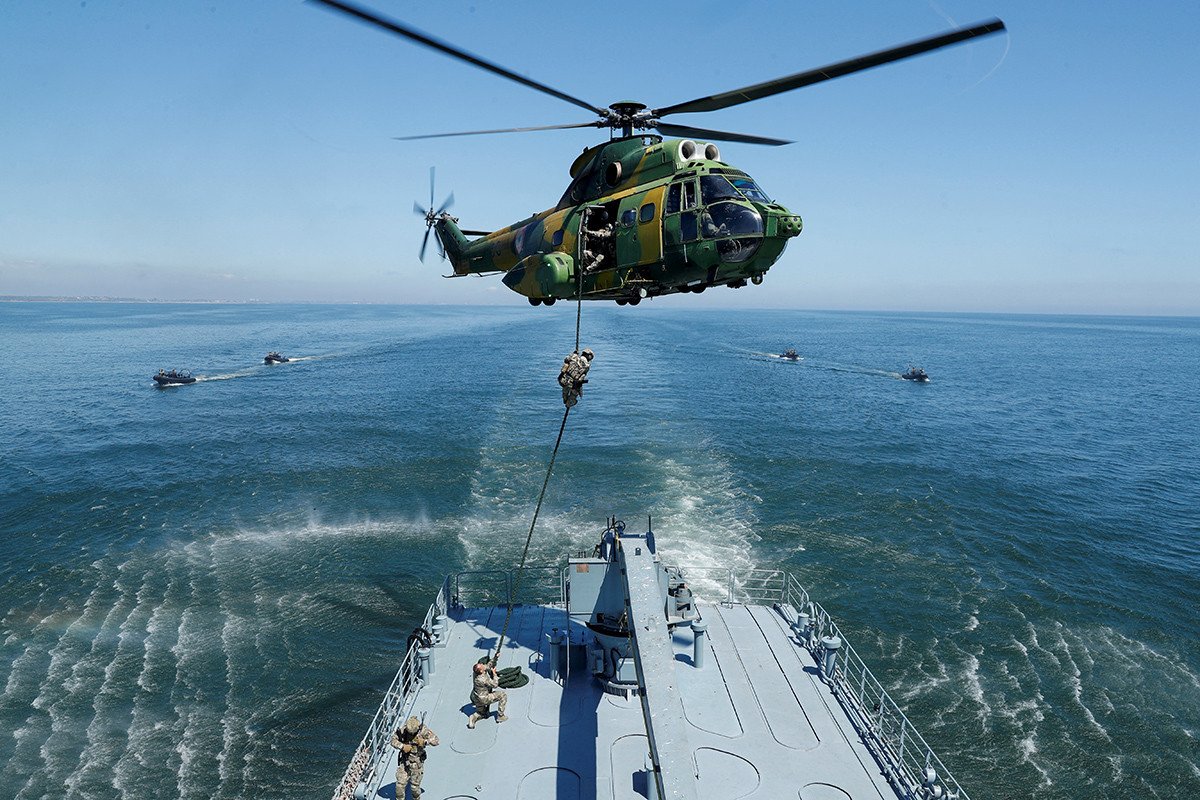
A model of European recruitment of its own appears far more promising. In the long term, an effective system would be one in which conscripts undergo basic military training not in national armies, but directly within the structures of the European Defense Union. This would make it possible to train service members from the outset according to a single doctrine and unified standards of command, logistics, and interoperability. According to estimates, the number of conscripts in European countries currently ranges from 200,000 to 350,000, which significantly increases the ability to staff an operational contingent in numerical terms.
Such a system could also perform another integrative function. Citizens of EU candidate countries could gradually be brought into the recruitment process. For them, service would become not only military training, but also a practical mechanism for integration into the European security space even before membership is granted.
A unified European military command
No military alliance can function without a single center for military decision-making. A permanent strategic command must therefore become a key element of the architecture.
When speaking about common institutions, the European Union is not starting from scratch. Over the past decades, a number of common institutions have already been formed in the areas of intelligence, situational analysis, satellite observation, and military planning. Today, however, they mostly perform support and coordination functions and remain dependent on information and the political will of member states.
The most difficult issue remains the command's independence, as it is intertwined with national political will. To guarantee independence, the command hierarchy of the European Defense Union would require a separate model of service, financing, and social support—potentially including lifetime pension provision funded by the EU.
Europe’s nuclear deterrence strategy
No modern European security architecture can be considered complete without an answer to the question of nuclear deterrence.
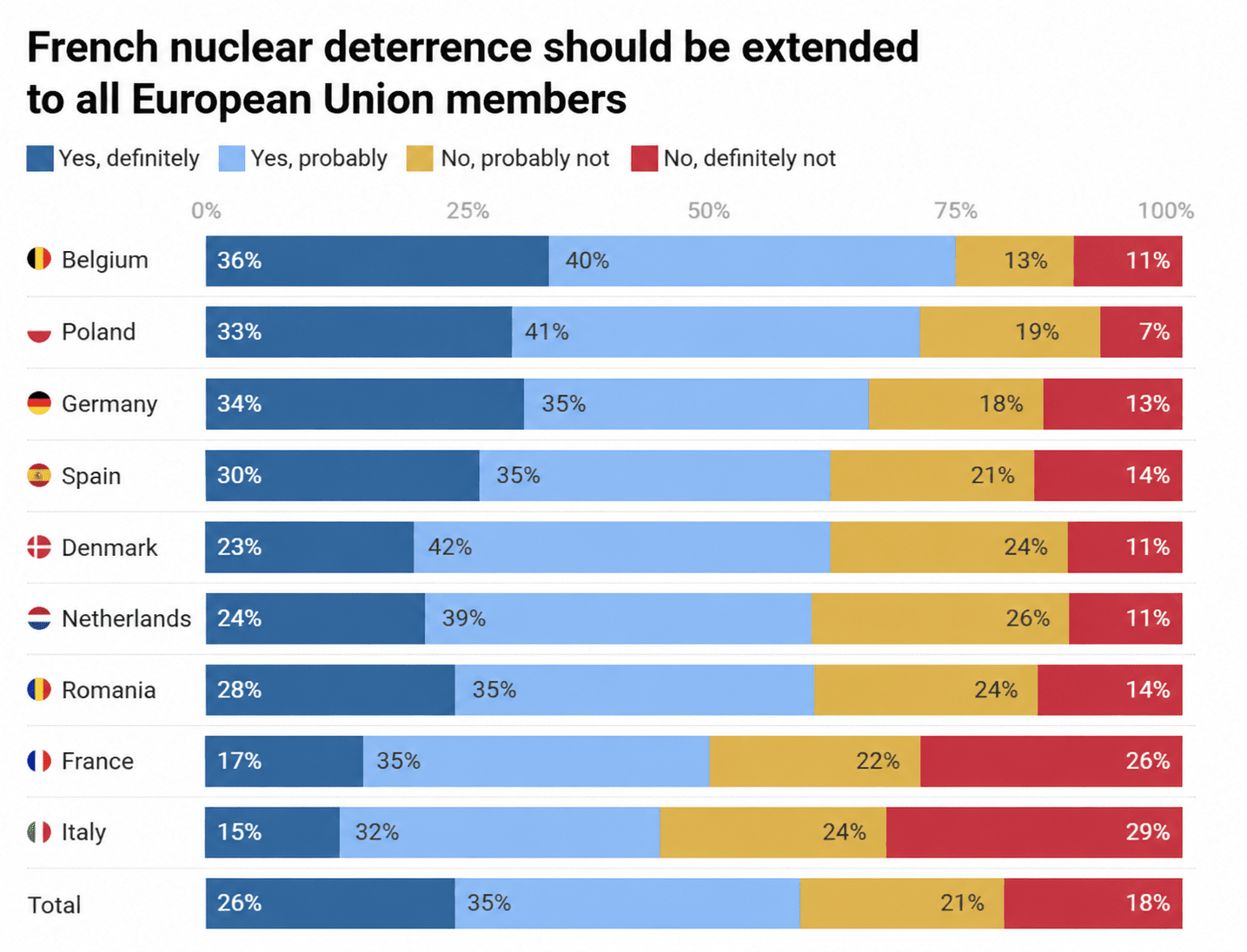
Since the start of Russia’s war against Ukraine, proposals to extend the French nuclear umbrella to other European allies have been heard increasingly often. Germany and Finland have already shown particular interest in such a model. Thus, we can see that the French deterrent—and, under certain conditions, the British one as well—is gradually acquiring a broader European consensus.
Notably, populations in EU countries view the extension of the French nuclear umbrella to other EU members positively.
Building a European defense industry
Of all the components of a future European Defense Union, the defense-industrial sphere has advanced the farthest. While the creation of a unified command or common military forces remains the subject of political debate, the course toward integrating Europe’s defense-industrial complex has effectively already become official Brussels policy.
The reason is clear: Europe’s defense market has remained one of the most fragmented in the world. States develop similar weapons systems in parallel, conduct procurements separately, and use different technical standards. As a result, Europe operates dozens of types of core combat equipment simultaneously, while the United States largely relies on one or two basic models in each class. European Union initiatives are aimed precisely at overcoming this problem. The SAFE program opens the possibility of raising up to €150 billion ($171 billion) in joint loans for defense procurement, while the European Defense Industry Programme (EDIP) encourages states to move from national contracts to joint production programs. In fact, these are the elements needed for a transition from coordination to integration.
The next logical step could be the emergence of a permanent European mechanism for financing strategic defense. Its task would be to invest exclusively in common European capabilities, with their development determined by the priorities of the European Defense Union rather than by separate national programs.
Beyond the EU: Europe’s wider security architecture
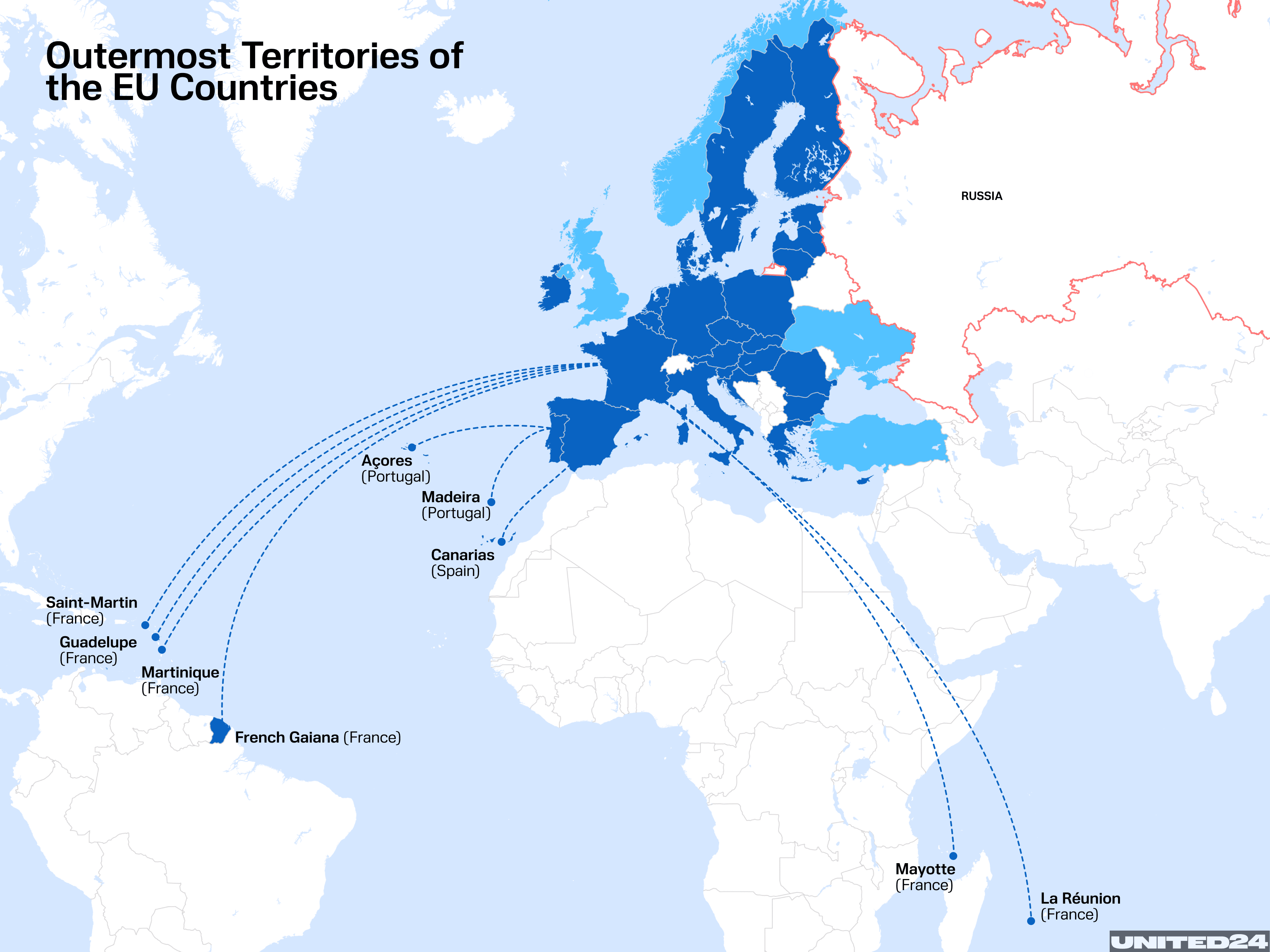
The challenges described at the beginning of the article show that, at the doctrinal level, Europe is close to developing the concept of a European Defense Space—a security space whose boundaries would be defined by the direction of the EU’s strategic interests. Such a space could include not only EU member states, but also the United Kingdom, Ukraine, Norway, Türkiye, and even Canada, as well as the outermost overseas territories of European states.
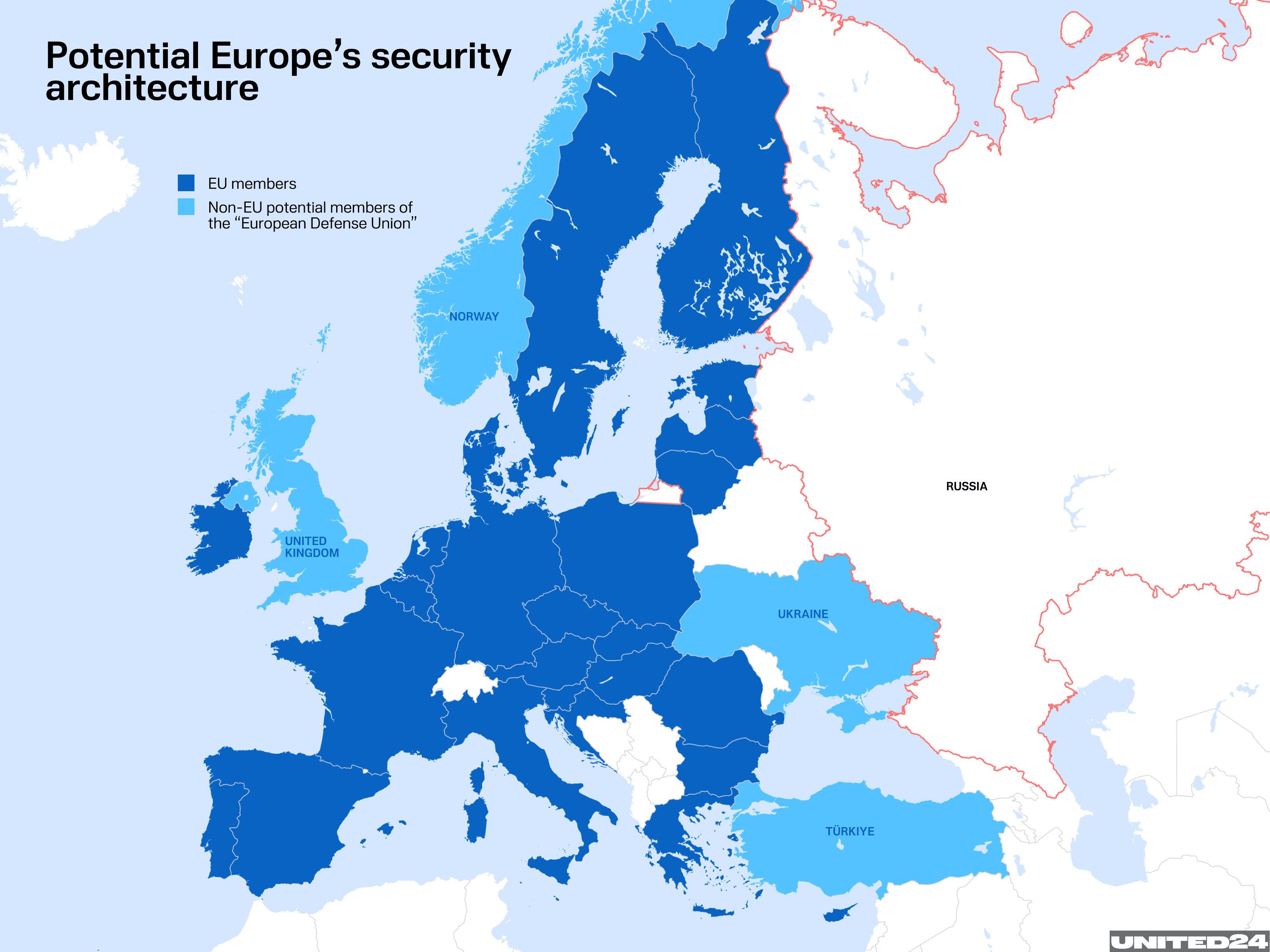
Depending on the level of integration, these countries could take part in weapons programs, recruitment, operations, intelligence sharing, or the development of the defense industry. The European security space could effectively become an environment in which common standards, mechanisms of interaction, and strategic goals are gradually formed, regardless of states’ formal membership in the European Union.
Each of these states can contribute to the European Defense Union capabilities that the European Union currently lacks. Without London’s participation, it is difficult to imagine a full-fledged European system of nuclear deterrence and a balance of power in the North Atlantic. Norway’s involvement would open the possibility for the European Defense Union to operate across the entire North Atlantic and Arctic theater.
Ukraine and Türkiye could potentially become the two main land pillars of the European Defense Union. Their armies are the largest on the continent and, more importantly, have unique experience in modern high-intensity warfare. Ukraine has effectively created Europe’s most combat-capable land army, gaining unprecedented experience in large-scale warfare, the use of unmanned systems, the integration of digital technologies, air defense, and the rapid adaptation of military doctrine. Türkiye, for its part, has maintained a high level of combat readiness for decades, conducted continuous military operations, built one of Europe’s most powerful defense-industrial complexes, and controls the Black Sea straits—one of the continent’s key geostrategic nodes. Together, these two states could become a kind of “bulldog” of European security.
European Defense Union vs. NATO: What’s the difference?
One of the most common arguments made by critics of the European Defense Union is that such a project would duplicate NATO’s existing structures. But this assessment greatly simplifies the nature of both organizations. NATO is primarily a system of collective defense among sovereign states. The Alliance does not have its own permanent army. The overwhelming majority of troops remain under national command and are transferred to NATO structures only after a political decision by member states. In other words, NATO coordinates.
The European Defense Union follows a different logic. Its task is not to organize interaction, but to gradually form Europe’s common defense capabilities. In other words, the European Defense Union should operate according to the logic of an integrated defense system.
The most important difference—and, in fact, the reason for the debate—is that NATO cannot serve as a mechanism for the political implementation of exclusively European strategic interests. But it is essential not to view this project as an alternative to NATO. On the contrary, if implemented successfully, it could significantly strengthen the Alliance itself. Today, NATO's military power is effectively built around the United States.
The emergence of a full-fledged European Defense Union could gradually create a second, equally significant pillar of military power within NATO. Some Western researchers even propose an interpretation of the Alliance’s future architecture that envisions the gradual formation of two complementary strategic dimensions: a European one, responsible for the security of the European continent, and an Indo-Pacific one, where American military and political resources will increasingly be concentrated.
The biggest obstacles to a European Defense Union
Despite the increasingly active debate around the European Defense Union, its creation will inevitably face serious political resistance. The sources of that resistance lie both inside the European Union itself and beyond it.
The most obvious challenge remains the question of sovereignty. For most states, defense has traditionally been one of the last areas in which they are willing to transfer authority to supranational institutions. And countries are not ready even for theoretical discussions about whether such a transfer of sovereignty is taking place. The question of priorities is no less complex.
For the Baltic states, Russia remains the primary threat. For Southern European states, the Mediterranean region and illegal migration are often priorities. France has traditionally paid more attention to Africa and its own global interests. Forming a common security policy will require the gradual alignment of priorities, which will demand extraordinary efforts to reach compromises.
The external dimension should not be ignored. Strengthening Europe’s defense autonomy will inevitably affect the balance of roles within NATO and change the established division of responsibility among allies. For the project to succeed, it is essential that it not be positioned as an alternative to NATO.
Can Europe actually build a defense union?
The creation of a European Defense Union does not necessarily have to begin with changes to the European Union’s founding treaties or with the full consent of all member states. The history of European integration shows that the most successful projects have often begun as initiatives by a limited group of countries ready to move faster than the others.
One of the most realistic scenarios could be the gradual formation of a defense union based on a “Coalition of the Willing.” A group of states with a similar view of security threats and a readiness for deeper integration could be the first to introduce individual elements of the future architecture. Such a model would make it possible to avoid blocking decisions by states that are not yet ready for this level of integration, while leaving open the possibility for other countries to join gradually. It is according to this familiar principle of “open architecture” that the European Defense Union could expand.
The security environment is changing faster than mechanisms of political consensus can operate. The history of European integration has repeatedly shown that the most far-reaching decisions were made only when old mechanisms ceased to correspond to new realities. It appears that the time is approaching when defense, too, will become the next sphere in which Europe will have to make such a choice.
The future of European defense
The European Union has reached a stage at which its economic and political integration is gradually failing to keep pace with the security challenges it faces. The geography of European interests is expanding, and the spectrum of threats is becoming more complex. Under these conditions, defense as a function of a single state is becoming less effective. Therefore, the key principle for building the future architecture should not be cooperation, but integration.
The creation of supranational European instruments to implement Europe’s strategic interests appears to be a logical step. The European Defense Union is unlikely to emerge all at once. Most likely, it will take shape gradually. This evolutionary model best reflects the logic of the European Union’s own development.
The European Union was historically created as a project of peace and economic prosperity. It was this model that ensured decades of stability for the continent. But the return of power politics to international relations means that rules alone are no longer enough. If Europe wants to remain one of the centers of global influence, it will have to learn not only to produce rules but also to guarantee their effectiveness with its own resources.
This material was prepared as part of the cooperation between UNITED24 Media and the international analytical and information community Resurgam.
Discuss this article:


-c439b7bd9030ecf9d5a4287dc361ba31.jpg "Photo of Katherina Popilnichenko")

-72b63a4e0c8c475ad81fe3eed3f63729.jpeg "Photo of Cyril Barabaltchouk")