- Category
- World
EU-Linked Turkish Firm Sent $5M in Banned Tech to Russian Missile Makers, Investigation Finds
 Prefer U24 Media on Google
- Authors

-111f0e5095e02c02446ffed57bfb0ab1.jpeg "Photo of Roman Kohanets")
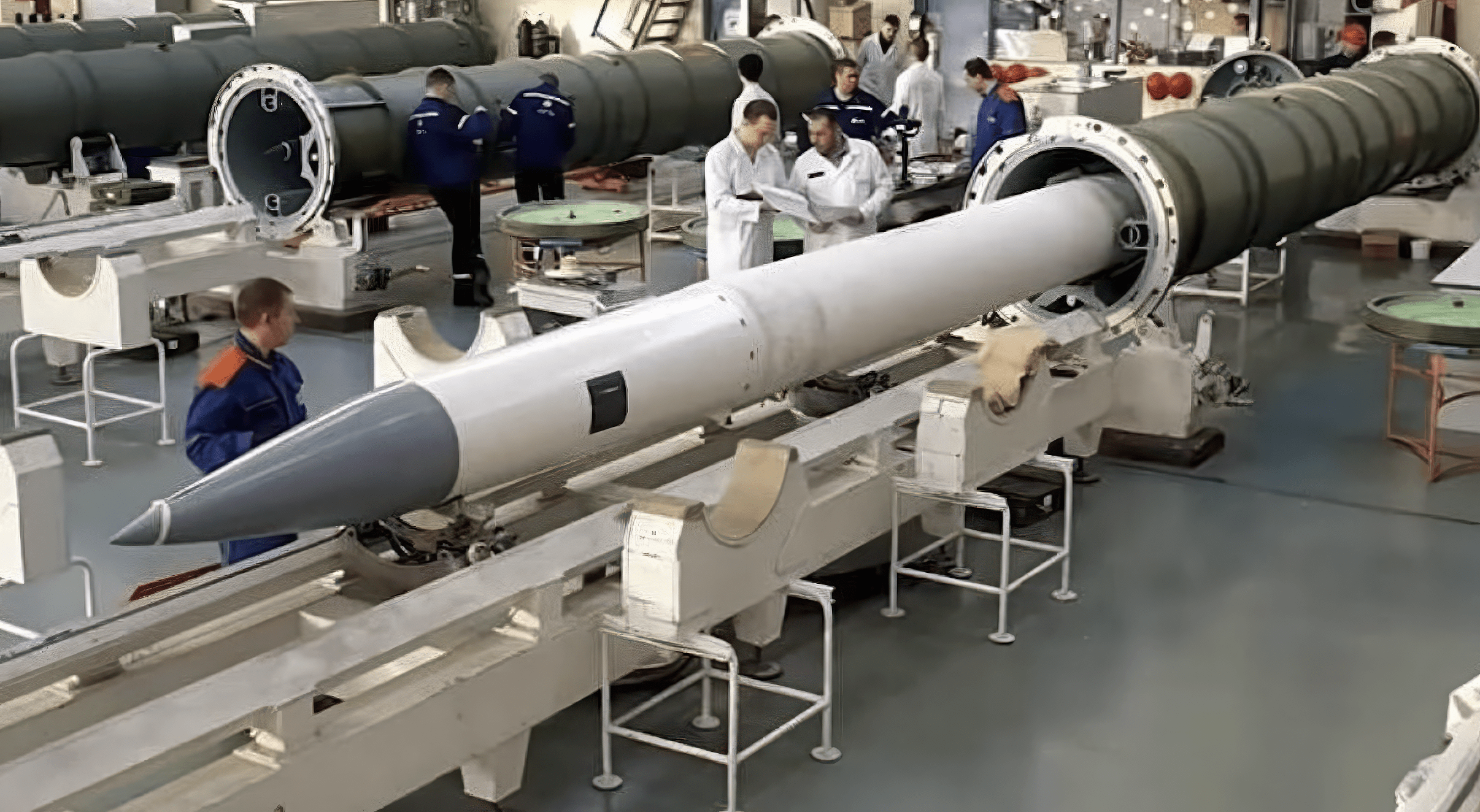
A Turkish intermediary co-owned by an EU national shipped roughly $5 million in banned European industrial equipment to Russian metallurgical plants that supply the country's missile and aircraft producers, according to customs records obtained by the Kyiv Independent and IrpiMedia.
The findings stem from a joint investigation by the Kyiv Independent, IrpiMedia, and the Organized Crime and Corruption Reporting Project, published June 19.
We bring you stories from the ground. Your support keeps our team in the field.
The records show that the Turkey-based company Redwing Metal delivered the equipment in 2023 and 2024 to Aluminum Metallurg Rus (AMR) and Stupino Metallurgical Company (SMK).
Both plants are controlled by Russian businessman Nikolay Timokhin, the son-in-law of Igor Zavyalov, the long-time deputy head of Rostec, Russia's state-owned defense conglomerate.
The shipments included CNC lathes , a metal heat-treatment furnace, a hydraulic press, an aluminum disc pre-assembly machine, and belt conveyors made by Italian, German, Spanish, and Czech manufacturers. The machinery produces the metal alloys that feed Russian missiles and fighter jets.
Alex Bashinsky, co-founder of the US-based Global Sanctions Training Institute and a member of the International Working Group on Russian Sanctions, reviewed the list of equipment. He described it as core capabilities for a modern metallurgical line that "can potentially support Russia's defense-industrial base."
-69d03af11a3e9f45431b68b50d18e51c.png)
A Kyiv Independent analysis of financial documents found that Timokhin's plants have supplied more than 40 defense manufacturers since the start of the full-scale invasion. The recipients include producers of Kh-59 missiles, munitions for S-300 and S-400 air defense systems, and fighter jets.
According to Ukraine's military intelligence, AMR produces metal parts for the Su-34 fighter-bombers and the Kh-101 cruise missiles. One such missile struck a residential building in Kyiv on May 14, 2026, destroying 18 apartments and killing 24 civilians.
EU export controls bar Russian plants from buying the equipment directly from the bloc. Roman Steblivskyi, director of policy and advocacy at the Economic Security Council of Ukraine, noted that purchasing CNC machines directly from the EU for delivery to Russia is impossible, leaving the sanctions effective on that front.
He explained that buyers instead route purchases through jurisdictions that maintain no restrictions on Russia. "Countries such as Kyrgyzstan, Uzbekistan, Hong Kong, and Turkey have no sanctions against Russia, making it far easier for companies based there to procure and re-export such goods," Steblivskyi added.
Redwing Metal was established shortly after Russia's 2022 invasion. It is co-owned by Alexander Tattersall, a Dutch national residing in Switzerland, who holds 40%, alongside a local lawyer, Veysel Cengiz Soylemezoglu, who holds 59.9%. Tattersall has long-standing ties to Timokhin's metallurgical group and once ran a network of AMR distributors across Europe and the United States.
Tattersall confirmed his co-ownership of Redwing Metal but distanced himself from its operations. "To the best of my knowledge, Redwing Metal has never been involved in any 'schemes' of shipping sanctioned goods to Russia," he wrote in response to questions, according to Kyiv Independent.
Customs records contradict that account, identifying specific models of EU-made machinery. Italian manufacturer M.C.M. confirmed selling four CNC lathes to Redwing Metal in 2023 under an agreement that explicitly barred re-export to sanctioned entities, and indicated it had no knowledge of any onward shipment to Russia. The other named manufacturers did not respond to written inquiries.
The customs data also showed $1.3 million in EU-made shipbuilding equipment— anchors, mooring winches, ventilation fans, and onboard wastewater treatment systems—delivered to a related Timokhin company for installation on two Russian Navy vessels. One of them, the Mikhail Kalashnikov, was completed in mid-2025.
Sanctions experts told the reporters that routing the prohibited goods through Turkey amounts to circumvention of EU restrictions. Erlend Bjortvedt, founder of the Oslo-based advisory firm Corisk, noted that the items' declared identifications matched those explicitly banned from export, some of which have been banned since the first half of 2022.
A European Commission spokesperson indicated that countering circumvention through third-country jurisdictions is among the Commission's priorities, while emphasizing that member states are responsible for identifying breaches and imposing penalties. AMR, SMK, and Redwing Metal remain free of EU or US sanctions, despite supplying Russia's defense industry and receiving the banned machinery during the war.
Ukrainian officials have repeatedly warned that Russia's newest precision weapons remain dependent on foreign supply chains. Following the May 14 Kyiv strike, they assessed that the missiles used had been manufactured in 2026 and could not have been built without electronics sourced from companies in Europe, Japan, and the United States.
Discuss this article:


-c439b7bd9030ecf9d5a4287dc361ba31.jpg "Photo of Katherina Popilnichenko")