- Category
- World
Extreme Housing Prices Force Russians Into Garage Apartments
 Prefer U24 Media on Google
- Authors

-c439b7bd9030ecf9d5a4287dc361ba31.jpg "Photo of Katherina Popilnichenko")
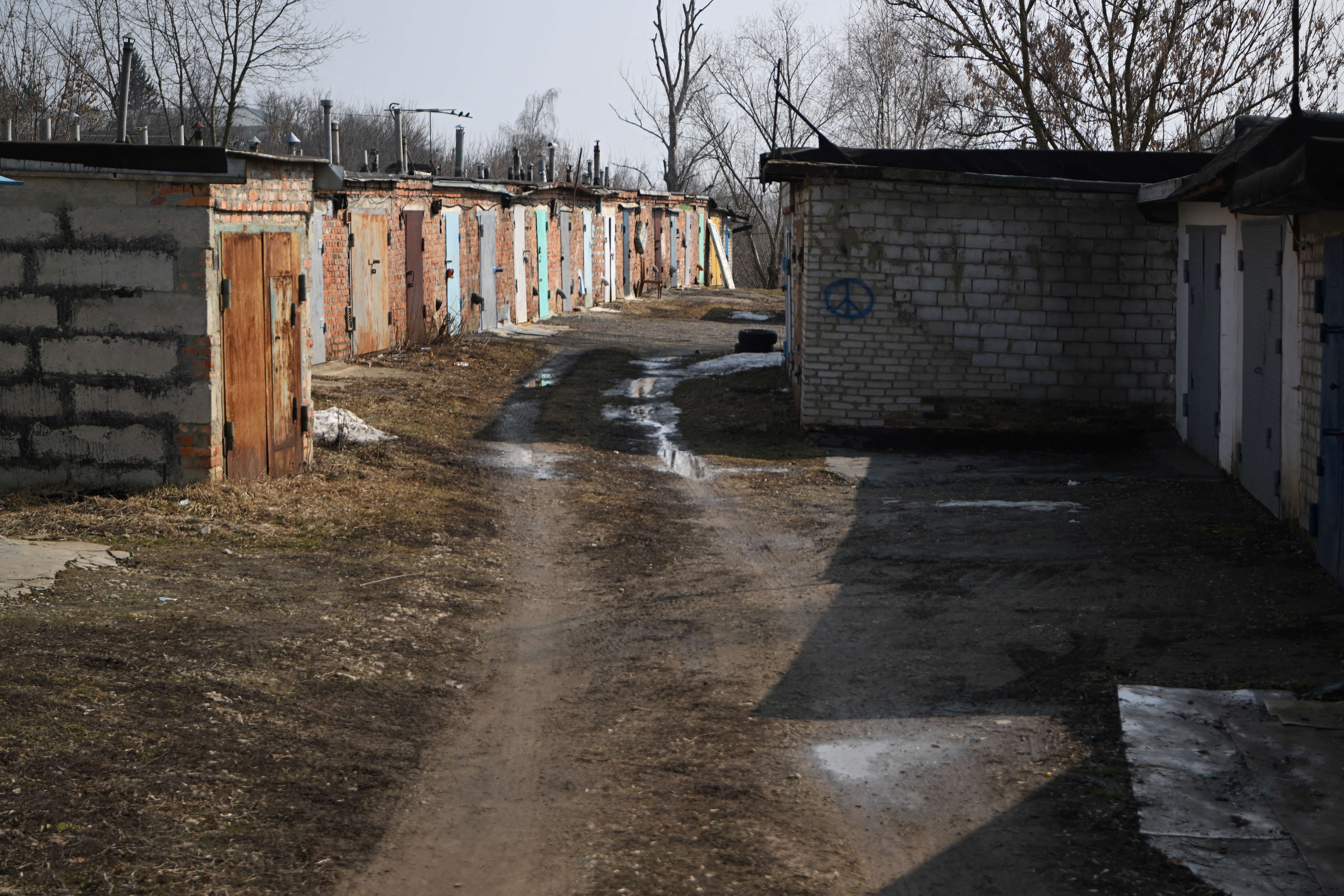
An increasing number of Russian citizens are moving into garages modified for residential use due to skyrocketing apartment prices, according to reports from the Russian Guild of Realtors.
Real estate costs across major Russian cities continue to grow, with the average price per square meter rising by 0.8% last month to $1,806, according to The Moscow Times on May 15.
We bring you stories from the ground. Your support keeps our team in the field.
The highest increases were recorded in the Moscow region, which grew by 3.5% to $2,231 per square meter, followed by Moscow itself with a 1.9% rise to $5,865 per square meter, and St. Petersburg with a 1.5% increase to $3,532 per square meter.
According to economic analysts and financial reports from The Moscow Times, this real estate crisis is directly tied to the broader economic strains caused by Russia’s full-scale invasion of Ukraine.
To fund its massive wartime budget, the Kremlin has reallocated public resources toward military production, driving annual inflation to 5.9%. In an effort to counter this overheating economy, the Russian central bank has kept its key interest rate at an aggressive 14.5%, making traditional bank loans and standard market mortgages completely unaffordable for average citizens.
Furthermore, the war has severely disrupted supply chains and created critical workforce shortages, which has dramatically escalated the cost of raw construction materials, labor, and equipment for property developers—costs that are ultimately passed down to consumers.
In 2025, primary housing prices within old Moscow boundaries experienced a five-year record annual surge of 29%, jumping from $8,505 to $10,992 per square meter, following earlier consecutive annual price increases of 21% in 2021, 5% in 2022, 15% in 2023, and 17% in 2024.
Konstantin Aprelev, the founder of the Russian Guild of Realtors, confirmed that listings for buying and renting these converted structures are appearing more frequently on popular online platforms.
"This is a gray market. Because, a person burns down in this garage, the owner will go to prison. In fact, these premises are not adapted for living, and naturally, this can only happen without any clear legal contractual relationship," Aprelev explained.
Hundreds of these residential garage listings are available online, with the largest volume concentrated in the Moscow region. In the resort area of Adler, a two-story garage covering 1,076 square feet is listed for rent at $550 a month, boasting amenities like a kitchen with a gas stove, a washing machine, a water boiler, air conditioning, heated floors, and a wardrobe.
In central Moscow, a converted garage unit transformed into an apartment with two bedrooms, modern finishes, and a private sauna is on sale for $112,631, while simpler alternatives on the city outskirts range between $41,206 and $54,942.
Residential structures near railway platforms are currently the most liquid segment because many are already two-story facilities equipped with water and basic utilities where people reside for months. Aprelev noted that this represents the cheapest segment of the market, competing directly with summer cottages and commercial apartments that lack official residential status.

However, utilizing a garage as a permanent home violates local regulations. Realtor Alla Georgieva warned that these units do not meet the legal requirements established for living spaces. Property owners face fines ranging from 0.5% to 1% of the land plot's cadastral value, with a minimum penalty of $137, and extreme violations can lead to the demolition or seizure of the property.
Despite the legal risks and lack of public services, buying these alternative units remains the only viable path to property ownership for many citizens unable to afford conventional housing in Moscow.
Due to a 29% spike in Moscow housing costs and average meter prices reaching $5,865, Russians are moving into converted garages costing from $41,206.
Earlier, Russian businesses reported record-high pessimism, with over 83% expecting economic conditions to worsen. A survey cited by the outlet found widespread declines in investment and profitability, as high interest rates and rising non-payments continue to strain the civilian economy.
Discuss this article:
-9a7b3a98ed5c506e0b77a6663f5727c5.png)



-111f0e5095e02c02446ffed57bfb0ab1.jpeg "Photo of Roman Kohanets")