- Category
- World
How a 900% Surge in Cyberattacks Is Forcing Europe to Rethink Its Tech Sovereignty
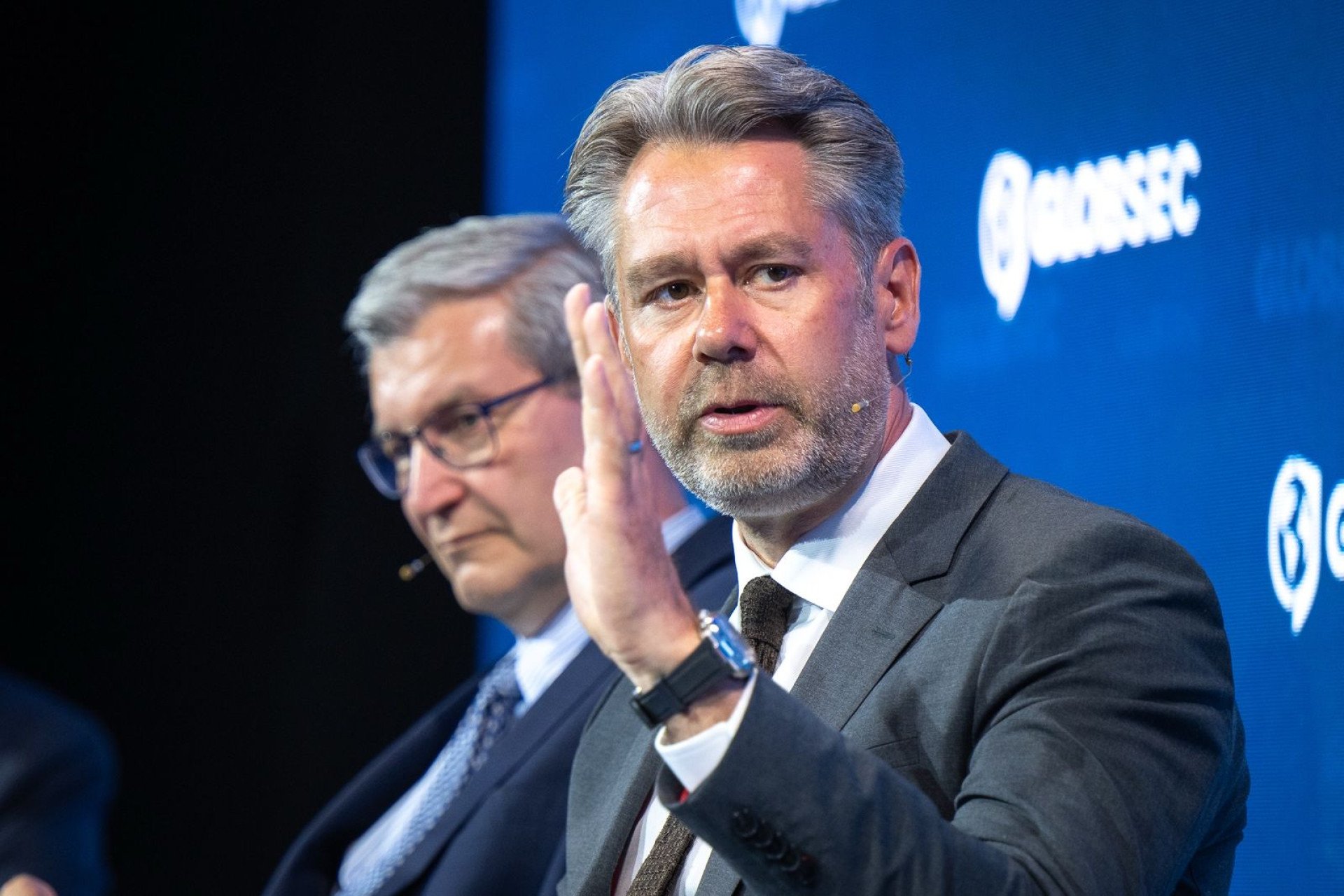
Europe is racing to reclaim control over its technology, but one of the continent’s former top cyber diplomats says the real test is whether it can survive the cyber war Ukraine is already fighting every day, as cyberattacks in Europe surge by as much as 900% in some sectors.
 Prefer U24 Media on Google
- Authors


Europe is preparing a new tech sovereignty package as cyberattacks surge across the continent. Still, sovereignty will mean little without stronger cybersecurity, Casper Klynge, former top European cyber diplomat and Vice President, Head of EMEA Government Partnerships at Zscaler, told UNITED24 Media in an exclusive interview at GLOBSEC 2026 forum on May 21.
Klynge said the cyber threat landscape has changed dramatically in recent years, with artificial intelligence now used both to defend networks and to attack them.
According to him, AI has made hostile cyber operations more sophisticated while also sharply increasing the volume of attacks.
We bring you stories from the ground. Your support keeps our team in the field.
Ukraine as Europe’s cyber frontline
He warned that some industries are seeing year-on-year increases in cyberattacks of “500, 600, 700, 900 percent,” while many organizations still operate under the assumption that they may avoid being targeted.
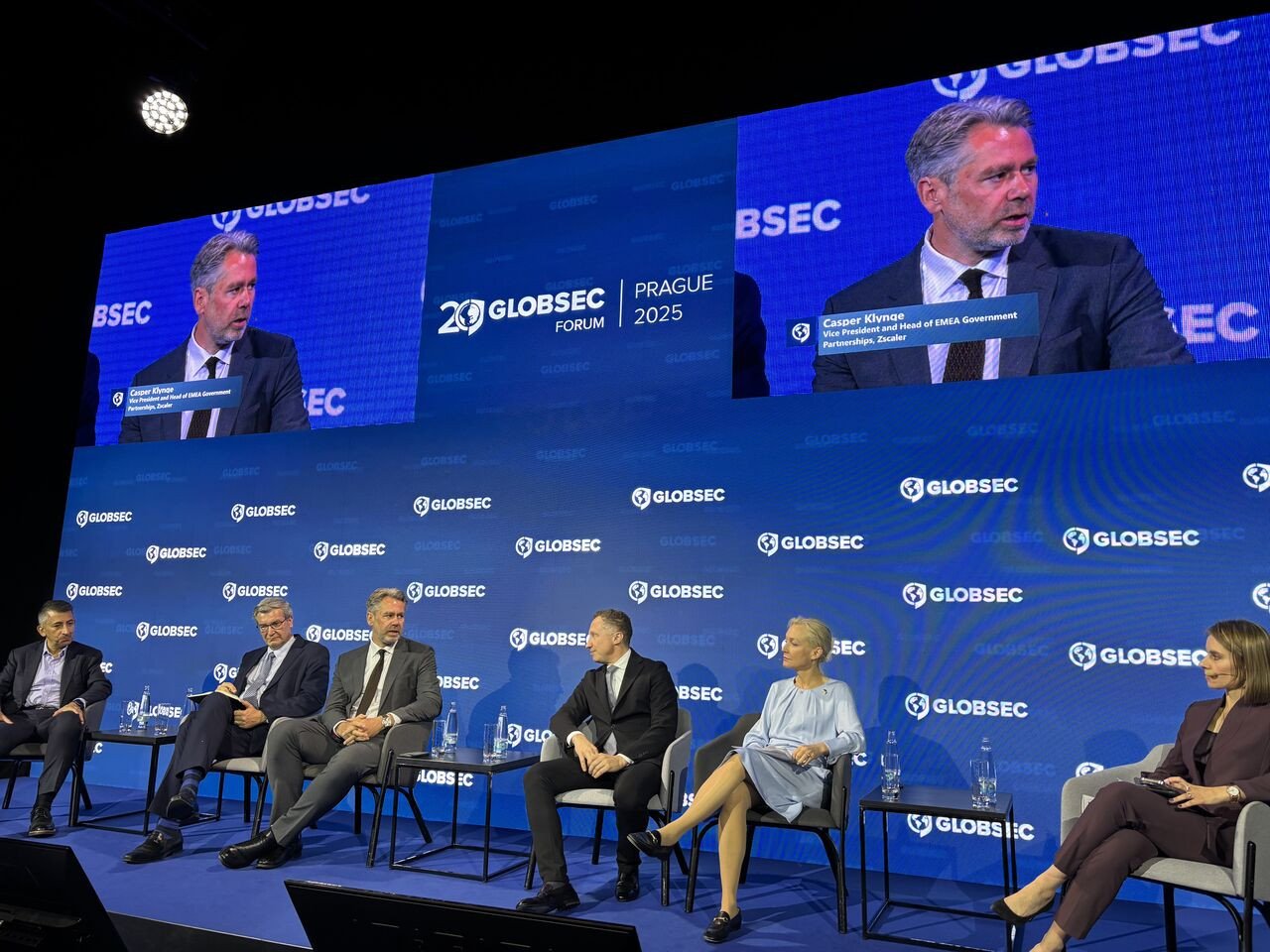
In some industries, in some areas, we’re seeing 500, 600, 700, 900 percent year-on-year increase in the number of attacks.
Casper Klynge
Head of EMEA Government Partnerships at Zscaler
“There is still, unfortunately, sort of this approach, almost hope it’s a strategy that hopefully we will not be attacked,” Klynge said. “But we unfortunately see that nobody is left untouched. And if you’re reachable, you’re breachable.”
Klynge said Ukraine has become a frontline example of what modern cyber and hybrid warfare now looks like. Russia’s war has shown how cyberattacks, physical strikes, drones, battlefield data, and broader hybrid operations increasingly merge into one threat environment.
“This is basically the frontier in terms of how cyber attacks are being conducted, but also the combination really of cyber attacks with physical presence, more kinetic activity. So really the essence of what hybrid warfare is about,” he said.
-06edd17576e8390bd2b40028a0890918.jpg)
And if you’re reachable, you’re breachable.
Casper Klynge
Head of EMEA Government Partnerships at Zscaler
While European governments have learned from Ukraine, Klynge said the continent still lacks the urgency needed to match the scale of the threat.
“I think a lot of European countries are trying to do that. Now, do I think we have the sense of urgency that is required to withstand what we’re experiencing? No,” he said.
The interview comes as Brussels prepares to unveil a tech sovereignty package, part of a wider European push to reduce dependence on foreign technology and strengthen strategic autonomy. Klynge said the debate has moved from theory into practice, especially as mistrust grows around non-European technology providers.
“Everybody wants digital sovereignty. And, you know, in a couple of weeks' time, we’ll see the European Commission come out with a tech sovereignty package,” he said.
For US technology companies operating in Europe, he added, the environment has become more difficult because customers increasingly ask where their data goes, whether they can trust foreign technology, and whether access could be cut off in a crisis.
-0fbfaea359cd2b00ddf9d206db1c87eb.png)
“When you represent a US technology company, I’d be lying to you if I told you that my life was easier today than it was two years ago. There is mistrust, and therefore we have to go the extra mile,” Klynge said.
He argued that companies must now deliver “sovereignty in practice” by giving customers control, choice, continuity, and security.
“We have to give control. We have to give choice. We have to give continuity to our customers. And if we don’t do that, it’ll be very difficult for us to withhold sort of our business opportunity in Europe,” he said.
Europe’s tech sovereignty push moves from theory to practice
Tech sovereignty refers to Europe’s ability to act independently in the digital world by developing, controlling, and securing key technologies, data, and infrastructure while reducing reliance on non-EU providers.
The issue has become increasingly urgent in Brussels. Commission President Ursula von der Leyen highlighted in her 2025 State of the Union address that Europe’s technological sovereignty is central to competitiveness, resilience, and strategic autonomy in a rapidly changing digital environment.
The EU currently depends on non-EU countries for more than 80% of key digital products, services, infrastructure, and intellectual property. Reducing that dependency is now seen not only as an economic priority, but also as a security requirement.
-ab26fdee551dadf40fa373afffd1d0f2.jpg)
For Europe, tech sovereignty is meant to strengthen competitiveness, resilience, and security; ensure strategic autonomy in key digital technologies; support open and fair digital markets; protect citizens’ rights and democratic processes online; and enable long-term innovation and technological leadership.
Klynge’s warning is that this push cannot succeed if sovereignty is treated only as a question of where technology comes from. Without cybersecurity, he argued, Europe risks building digital independence on systems that remain vulnerable to the very threats Ukraine is already facing every day, and sovereignty alone cannot protect Europe if it is not built on real cyber resilience.
When you talk about digital sovereignty, sovereignty without cybersecurity makes no sense whatsoever.
Casper Klynge
Head of EMEA Government Partnerships at Zscaler
Trust in non-European tech becoming a security question
He also pointed to another problem: geopolitical fragmentation is making some European organizations delay technology upgrades because they distrust non-European providers. That delay, he warned, can leave governments and companies stuck with outdated systems that cannot withstand modern cyber threats.
“Some European organizations still have legacy technology that is really not up to the task of defending against the kind of threats and the patterns that we’re seeing right now,” Klynge said.
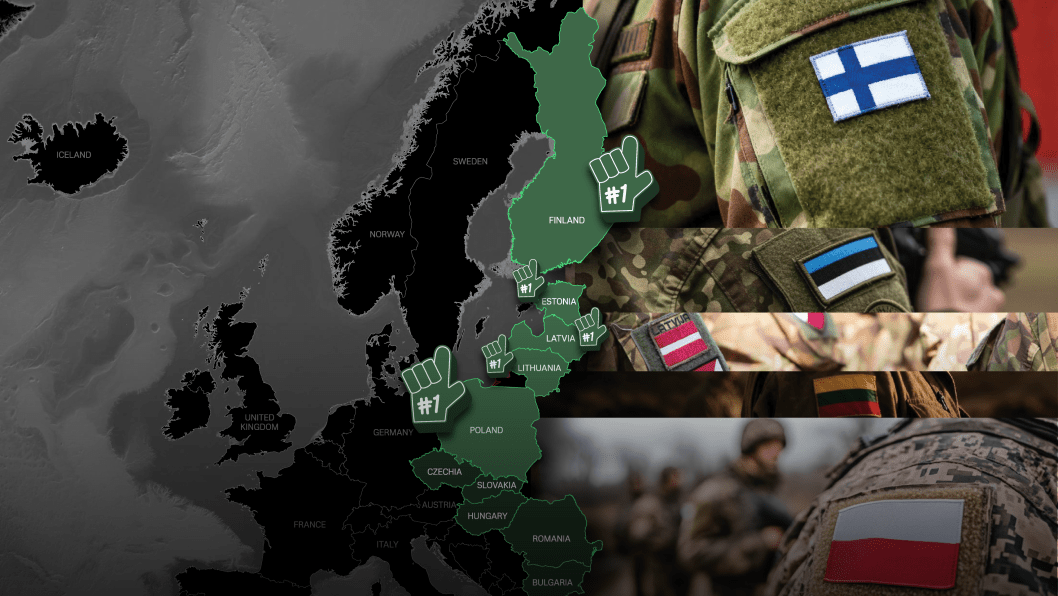
Klynge said Ukraine has also changed how governments, private companies, and technology providers interact. While most European states do not face the same direct military threat as Ukraine, many are now confronting cyberattacks and hybrid warfare as their most immediate security challenge.
Ukraine’s lessons for future wars
He said future wars may depend less on the size of traditional military forces and more on how quickly countries can adapt, innovate, and protect digital systems.
One of the biggest lessons, of course, from Ukraine, is that [in Europe] there is a tendency to plan for yesterday’s war rather than to plan for tomorrow’s war.
Casper Klynge
Head of EMEA Government Partnerships at Zscaler
Ukraine, he added, has become a “litmus test” for what future warfare may look like, with drones, cyber defense, autonomous systems, and data protection increasingly tied together.
For governments and civil society groups, including those documenting Russian war crimes through open-source intelligence, Klynge said data protection is now essential.
“Whether you are a small startup, an innovator in Ukraine or in Kyiv or somewhere else, or whether you are that in the West, your ability to be successful really depends on your ability to protect your data,” he said.
His core message for Europe is direct: the continent’s tech sovereignty ambitions will only matter if they are matched by speed, investment, trust, and cybersecurity strong enough to survive the threat environment Ukraine already faces every day.
Discuss this article:
-4a56a6b482ec132402c16ef6fcabf9a2.png)


-c439b7bd9030ecf9d5a4287dc361ba31.jpg "Photo of Katherina Popilnichenko")
-111f0e5095e02c02446ffed57bfb0ab1.jpeg "Photo of Roman Kohanets")
-a1738cb523135070a26ed61c09a8eb5e.jpg "Police stand in front of the Russisches Haus in Berlin, Germany. (Source: Getty Images)")
-72b63a4e0c8c475ad81fe3eed3f63729.jpeg "Photo of Cyril Barabaltchouk")