- Category
- World
Which European Countries Are Most Battle-Ready on the Eastern Flank in 2026?
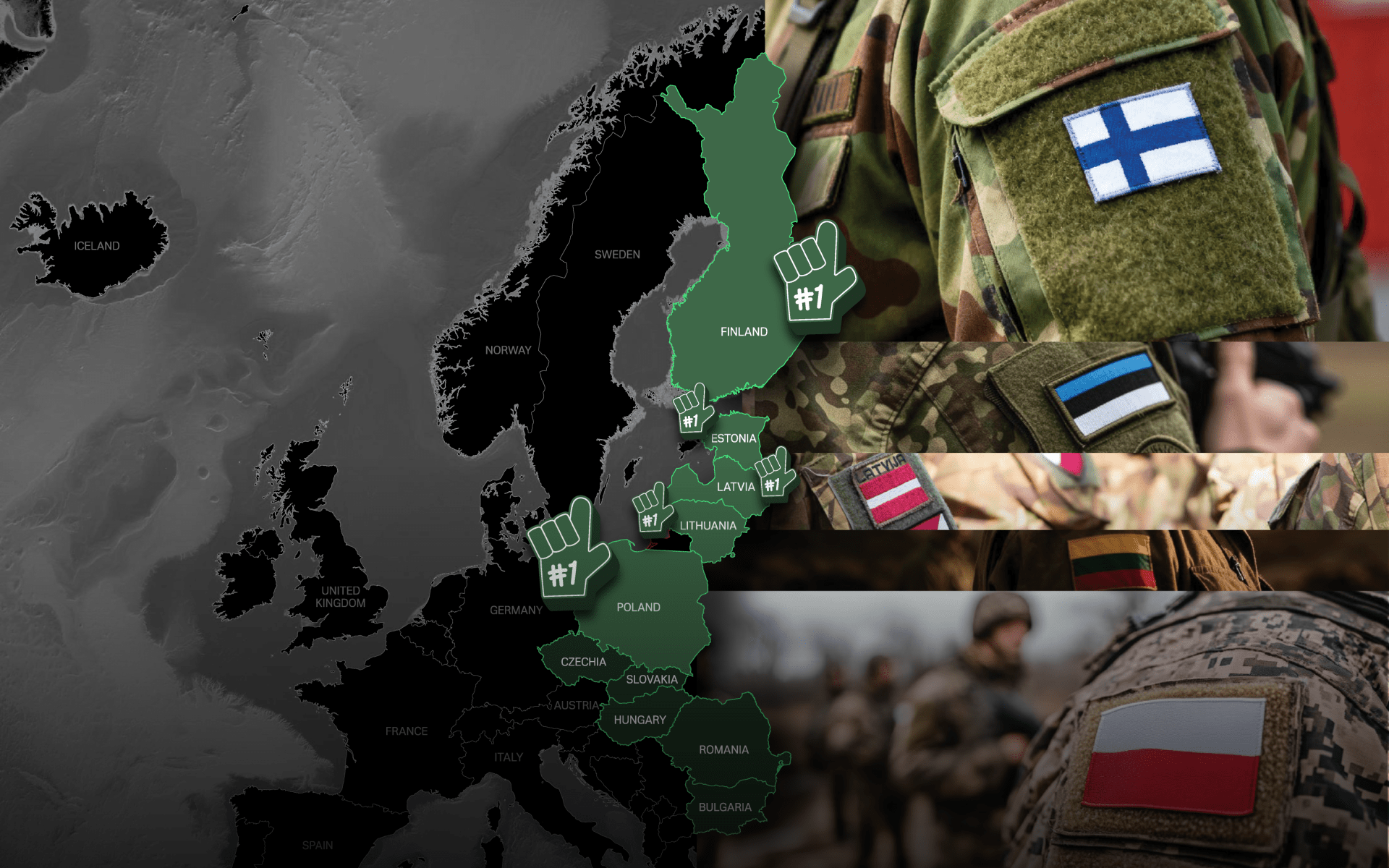
European defense capabilities are constantly changing and improving, but not at an equal rate. Across the eastern flank, some countries are building credible, layered deterrence, while others are still catching up. Who is actually ready, and what needs improving?
 Prefer U24 Media on Google
- Authors

-605be766de04ba3d21b67fb76a76786a.jpg "Joseph Place")
Since Russia launched its full-scale invasion of Ukraine, European countries, especially those bordering Russia, have had to accept a new reality—scaling up their armed forces, equipment, including tanks, investing more in defense, and taking security far more seriously. Some worry Russia may attack NATO soon—we’ve already seen cyber attacks and drones entering NATO countries' airspace. The question is, how defense-ready are these countries, and what can be done to improve the region’s security?
We bring you stories from the ground. Your support keeps our team in the field.
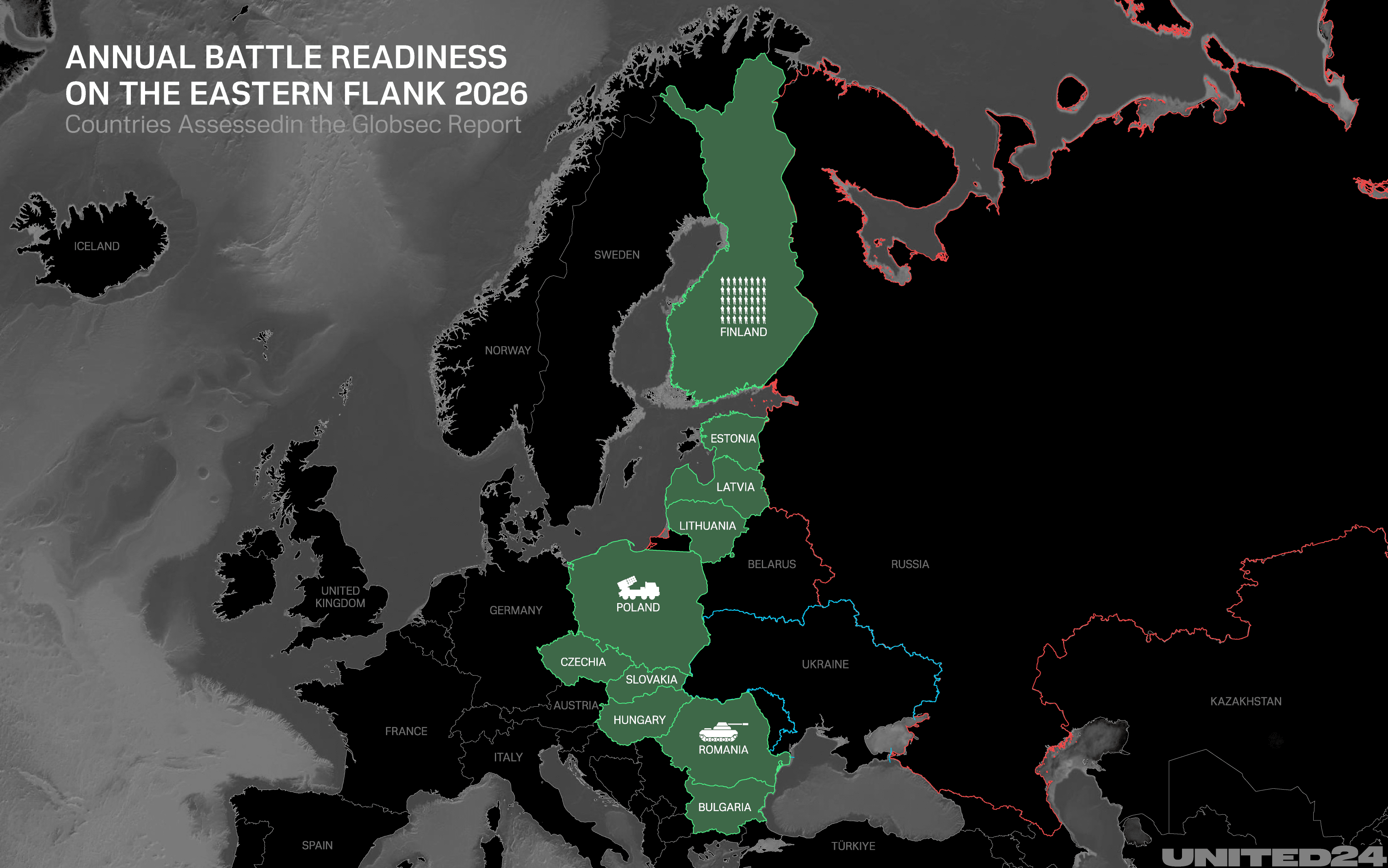
A recent report by Globsec outlined the different ways in which countries on the Eastern Flank of Europe, from Finland to Bulgaria, have increased readiness and outlined key challenges. We have put together some key findings to help understand the overall state of readiness across the region, who scores highest in which areas, and which challenges are most pressing.
Air defense
In air defense, Poland appears to be among the most ready, with combined air defense including Patriots and the Integrated Battle Command System (IBCS), which links radars to weaponry. “Warsaw’s NAREW short-range programme, developed in cooperation with MBDA UK, extends this architecture downward to create a basis for a future genuine multi-layered defence,” the report says.
What enabled Poland to become an “anchor” in the Integrated Air and Missile Defense model, which applies across NATO’s Eastern Flank, is partly because it “benefits from budgetary sources that other countries lack,” said Globsec researcher and contributor to the report Tomáš Nagy, “Poland is not only ‘plugging the holes’ on the capability map, but building up with a clear future reference architecture in mind,” he says. “The rest of the region is simply not there yet.” Poland and Estonia are also developing anti-drone technologies to deal with the realities of modern warfare.
That does not mean other countries lack capabilities, though there are stark variations.
“Every country in the region is enhancing its capabilities, including the Baltics that did not have much up to date,” said Nagy, “But only a few are looking at credible anti-ballistic capability. Certainly, Poland does, Finland and Romania as well, but Slovakia probably only to a limited degree, and Czechia or Hungary have shown little indication so far for this kind of protection.”
Romania has developed new facilities and acquired Israeli air defense systems, bolstering its capabilities. For example, there will be a €2.5 billion ($2.9 billion) expansion of the Mihail Kogălniceanu NATO base, making it the biggest in Europe. They are also developing a new Elbit Systems drone facility, and multi-billion-euro deals for Israeli Spyder and American Patriot missile systems.
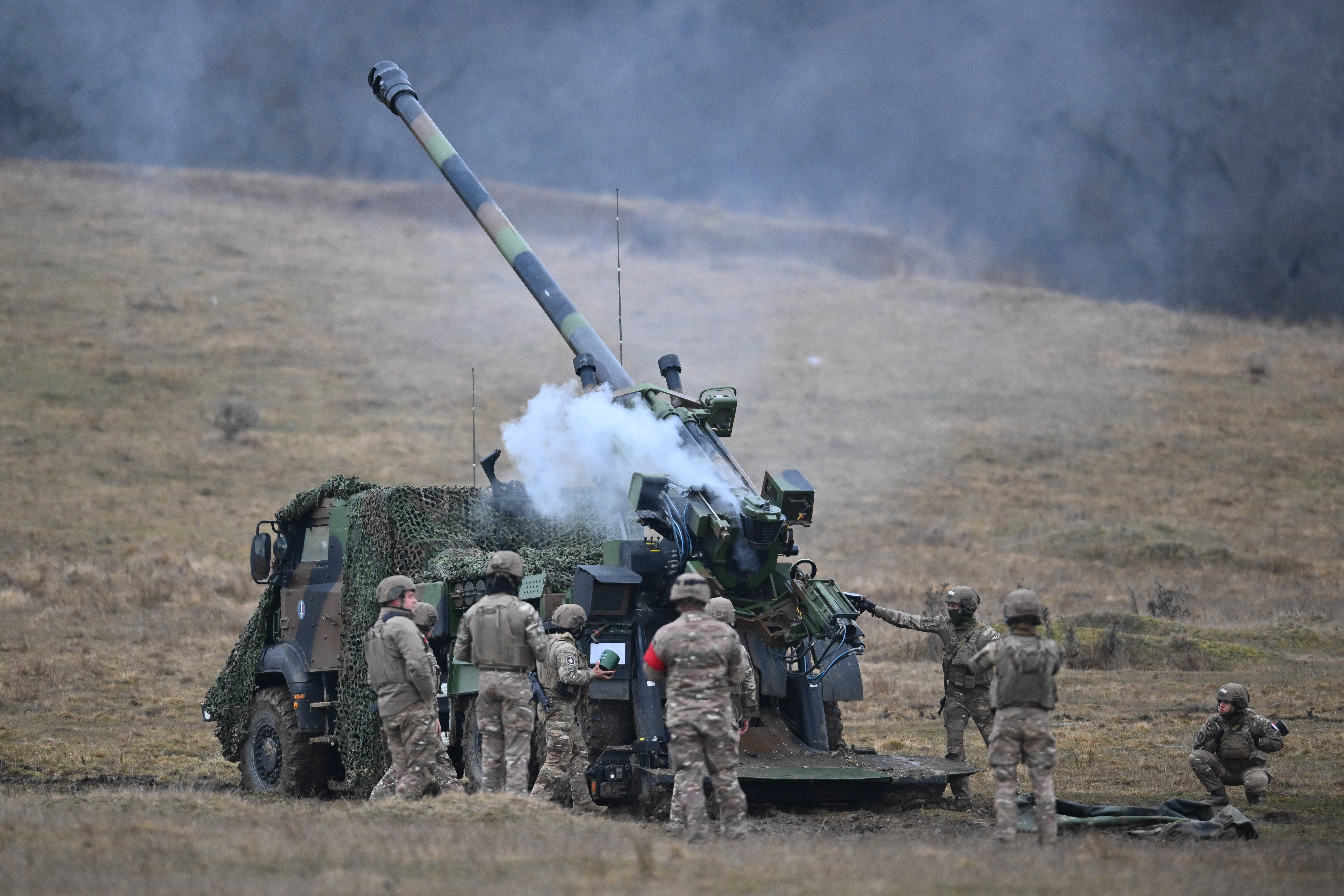
Finland has, over many years, developed a modern, multi-layered air defense model. It has long-distance capabilities, with a range of US and Israel-made air defense systems, as well as fighter jets. This has made Finland a core anchor in European security.
However, “significantly more work is needed,” says the report. “The current IAMD posture on the eastern flank still rests on fragile foundations: diverse procurement, limited interoperability, inadequate stockpiles, and a thin sustainment base.”
The biggest weaknesses, according to Nagy, are “the lack of capabilities to protect against more ambitious and complex attacks in the ballistic domain or even at the lower layer of one-way attack drones.” They are technically the easiest to address, he says, proving that countries defending themselves have the architecture to do so—sensors and effectors (interceptors, missile systems, and air-defense weapons).
“These censors and effectors are still missing from deployment, and not much will change in the timeframe of the next (potentially many) months,” says Nagy. “A functioning system of defense against Russia’s Geran drones is a realistic and achievable short-term priority, but it is clear that more than four years into Russia’s war against Ukraine, Europe is badly late even in this.”
The other key challenge and goal is interoperability and integration, and at the moment, air defense systems are “siloed.”
“Integration and interoperability are the functional means for achieving the most positive effect for the scale-up,” Nagy says regarding how to improve the situation. “I.e., using your resources wisely and thus offsetting the reality of not having ideal levels of capability. But this is easier said than done. Different countries are going for different solutions (US-made, European-made, Israeli-made), which will lead to sub-optimal end states in certain regards. Interchangeability of munitions, for example, among different states and operators will not be there.”
Defense industry
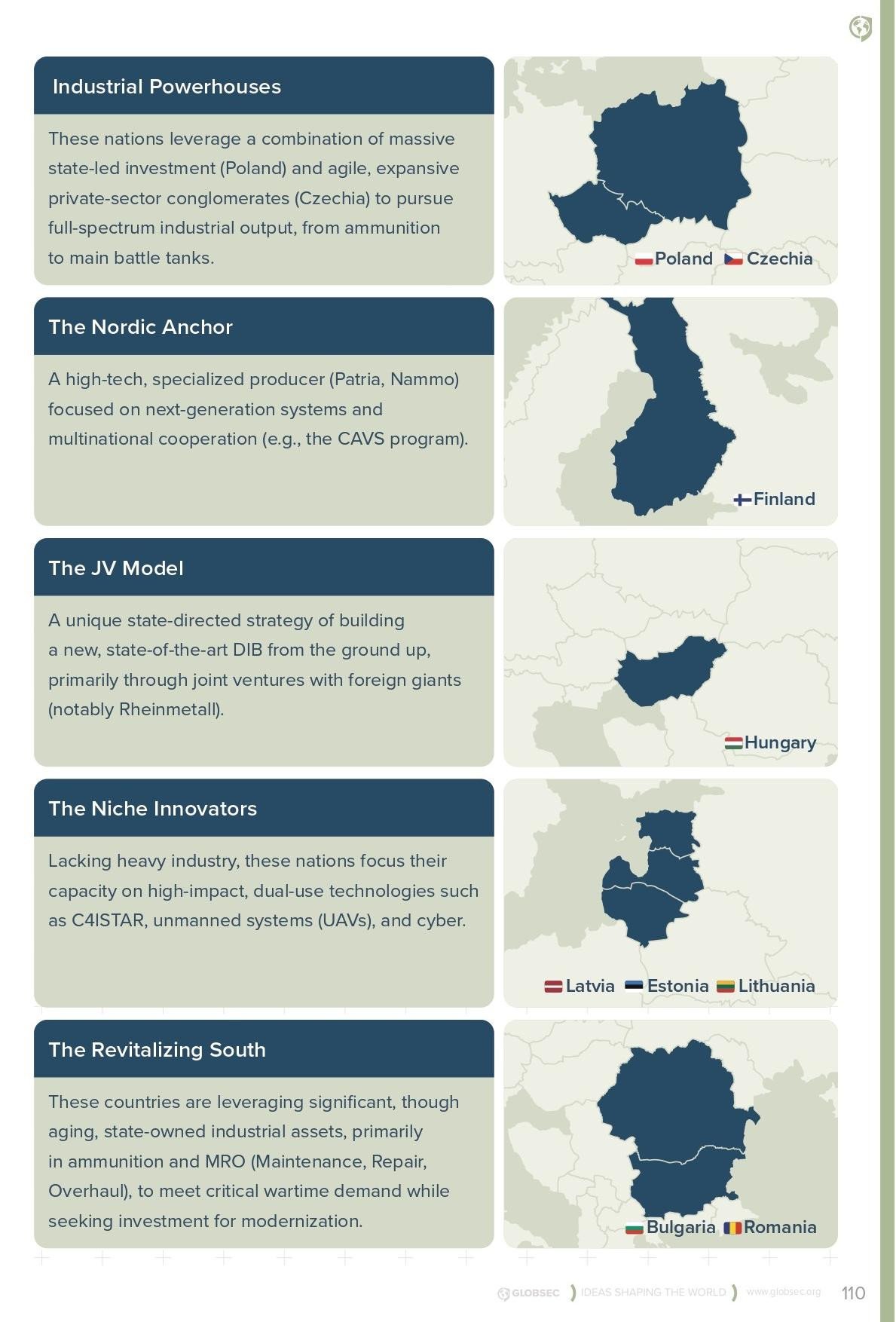
Every country has different assets regarding its industrial capabilities. For example, Poland and Czechia are both highlighted in the report as industrial powerhouses, though Poland is state-led and Czechia is private-sector led. Almost all nations in the report adopt one of these two approaches, but Hungary follows a Joint-Venture-Led model, as other countries’ companies, such as German Rheinmetall, use its infrastructure.
Finland prioritizes high-tech development, the three Baltic countries focus on cyber and dual-use technologies with high impacts, and Romania and Bulgaria mostly provide ammunition (though this is changing, as already discussed with the investment in Romania for drone facilities, and Rheinmetall is building a massive powder and drone factory in Bulgaria). It is noteworthy that Bulgaria has been critical in supplying Ukraine with ammunition for Soviet-style weaponry since 2022. Each country, therefore, has varying degrees of readiness; however, integration is key to ensuring that countries with lower investment, such as Hungary and Slovakia, are not left behind. The key problems facing Central and Eastern Europe’s defense industry are widespread, including shortages of artillery and manpower, dependence on nitrocellulose and its limited supply, and long lead times for ammunition production. These have to be tackled across Europe.
One key recommendation in the report is to look to Ukraine as a case study, as “the lessons from Ukraine offer a blueprint for scalable capabilities, resilient supply chains, fast innovation, and industrial diversification beyond traditional systems.”
Cybersecurity
Cyber threats are a major part of European security, as Russia’s cyberattacks have already targeted countries in Eastern Europe and are growing. It is a major part of Russia’s hybrid war against Europe. Russia also launched DDoS attacks against the European Parliament. It is one of the most common types of cyber warfare used in Russia’s war in Ukraine.
Czechia experienced a record number of attacks in January 2026, and Poland also saw increased cyberattacks from Russia in 2025. Slovakia, Romania, and Bulgaria have all experienced attacks alongside espionage, sabotage, and major disinformation campaigns from Russia. Russian disinformation played a role in the recent Bulgarian election, in addition to trying to bolster Viktor Orbán in Hungary.
The report highlights that Finland and Estonia lead the way in cybersecurity because their efforts to combat threats from hackers, such as DDoS attacks, involve both civil and state agencies, focus on resilience, and generally integrate cybersecurity into broader defense planning. Other countries have responded but rely more on government legislation and separate task forces, and do not integrate the approach at all levels of society.
Czechia reportedly scores top in the global cybersecurity ranking, and Estonia is third. Czechia scores so highly because it not only responds fast and has strong preventative cybersecurity measures in place, but also has educational measures, such as E-Bezpečí, to teach children about being safe online, and the National Cyber and Information Security Agency (NUKIB) provides materials for schools, universities, and citizens in general.
Education of the population on both cybersecurity and disinformation will be essential to ensure the stability and cohesion of the countries across the region. Russia can and does exploit political divides and distrust, and the threat is present already. Ukraine has even offered other countries in the region assistance in tackling disinformation, as it has often been targeted, unsurprisingly, by Russian campaigns.
Reserves and mobilization
Many European countries have revisited their conscription, reserve, and recruitment models in response to manpower shortages, the aging of soldiers, and resource limitations. We previously reported on European army sizes—the armies on the Eastern Flank, except for Poland, are relatively modest in comparison.
The report focuses on three key reserve models in Finland, Lithuania, and Poland, each of which highlights strengths and weaknesses, as well as potential models that better suit countries with similar geographic, demographic, economic, and political realities.
Finland
Finland has maintained a peacetime conscription model and has generally “developed a strong sense of collective responsibility for national defense,” which is not seen to the same extent in other countries, and this is even enshrined in the constitution . All male citizens aged 18 to 60 are obliged to take part in Finland’s military defense, while women aged 18 to 29 may apply on a voluntary basis if medically fit. The reserves consist of 900,000 citizens, with a mobilization strength of approximately 233,000 personnel, including 23,850 active-duty troops. Finland is continuing to invest, with the capacity to mobilize 280,000 troops in the event of war.
After conscription, Finnish soldiers remain in the reserves until they turn 50. The system allows for specialization choices, provides reimbursement to participants, and offers future training opportunities for military and civilians. This system arguably makes Finland one of the most combat-ready countries in Europe; however, due to its costs and the high level of support for collective defense, it may not work in other countries.
Poland
Poland has a suspended, but not abolished, compulsory service, but employs a more voluntary model to bolster its armed forces. 18-55-year-olds can complete 28 days of basic training, then 11 months of specialist training, and can continue in operational units if they wish. Poland launched the “wGotowości” program in November 2025 as part of the effort to increase readiness, teaching courses on basic security, survival, first aid, and cybersecurity. Poland has one of the largest armies in Europe and aims to reach 300,000 by 2035. Poland has modernized its army, integrated education, and provides incentives to join.
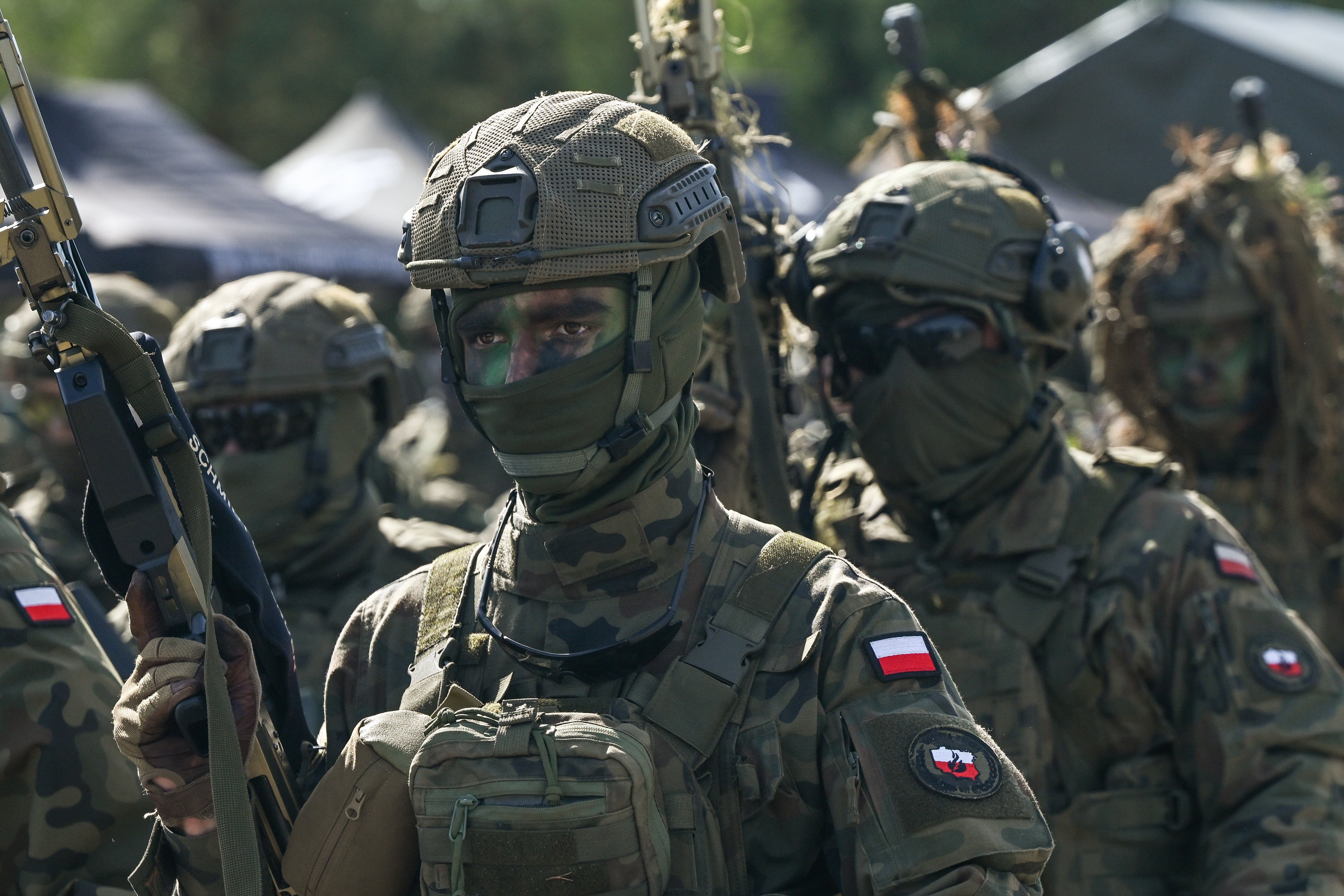
However, Poland still faces a manpower shortage. The core issue, according to the report, is that despite high trust in the armed forces, there is a lack of belief in collective responsibility for defense. This would make wider conscription potentially "counterproductive.”
Lithuania
Lithuania has conscription; however, participants are selected at random. Those chosen must undertake a 9-month service, then be transferred to the reserve in the armed forces. As the report says, Lithuania has 16,100 active personnel and 12,950 reservists, including 5,850 in the National Defense Volunteer Forces (NDVF). The latter members must serve 20-50 days per year and be ready to fight in the event of a war. To incentivize volunteers, Lithuania offers salary increases, bonuses for demanding tasks and field exercises, and improved compensation and social guarantees.
Lithuania’s strength, compared to Poland, is that younger people have a growing interest in joining the reserves and the military, with growth over the last few years. Over 60% of professional soldiers have also come through the reserve pathway, showing the strength of its recruitment model.
All three countries show, as stated in the report, “the importance of ready reserves, structured training, and incentives to sustain national defence,” but one crucial factor is widespread societal support for defense and a shared sense of obligation. Any country looking to bolster its defense capabilities through recruitment must work on this.
Political readiness and unity
Finland, Estonia, and Poland are rated “green” in terms of political readiness. Each country has crisis preparedness, societal support for defense institutions, and systems that allow the deployment of defense forces and security procedures without the slow parliamentary checks that could delay responses, as the executive maintains the power. All these countries have systems that are integrated with other NATO nations, meaning the processes are efficient.
Finland’s system allows for the rapid deployment of forces and defense measures without additional government approval, meaning that, in a crisis, they can respond quickly. The report specifies “Crisis authorities are pre-delegated through preparedness legislation that allows the government to activate extraordinary powers immediately upon defined threat thresholds.” Public support for defense is high and unified.
Estonia has emergency legislation that “provides automatic triggers empowering the executive to authorize military movement, allied support, and infrastructure prioritization without sequential approvals,” meaning the government can quickly respond without parliamentary checks, and the defense forces can activate and respond to any security risk. Similarly to Finland, public support for the defense is high, and crises are rehearsed.
Poland scores highest for trust in the armed forces, despite other political volatility, which bolsters its political readiness. In emergencies, the executive has “broad
powers to authorize allied deployments, military movement, and emergency procurement.”
The lower-ranked countries, Bulgaria, Romania, Hungary, and Slovakia, have more parliamentary systems for defense, meaning that if a crisis were to occur, parliament would need to convene to discuss a response.
Is Europe’s eastern flank ready for battle?
The report paints a picture of uneven readiness. As a whole, it emphasizes the need for integration and coordination, and we can see that, despite vastly different geographies, societal cohesion, economies, and demographics, all countries have changed since 2022. Nonetheless, there are challenges and changes that need to be made.
Interoperability and integration must be at the cornerstone of defense, and the region must determine its own defensive programs rather than relying solely on external suppliers or fragmented procurement.
To answer who is most ready, Poland, Finland, and the Baltics tend to score highest in terms of readiness for a variety of reasons, yet they alone cannot defend the region. Further integration and cooperation, combining the strengths of each country, are key to European security.
Discuss this article:
-4a56a6b482ec132402c16ef6fcabf9a2.png)


-c439b7bd9030ecf9d5a4287dc361ba31.jpg "Photo of Katherina Popilnichenko")

-111f0e5095e02c02446ffed57bfb0ab1.jpeg "Photo of Roman Kohanets")