- Category
- World
Who Will Defend Europe in War? Key Allies and Challenges Explained
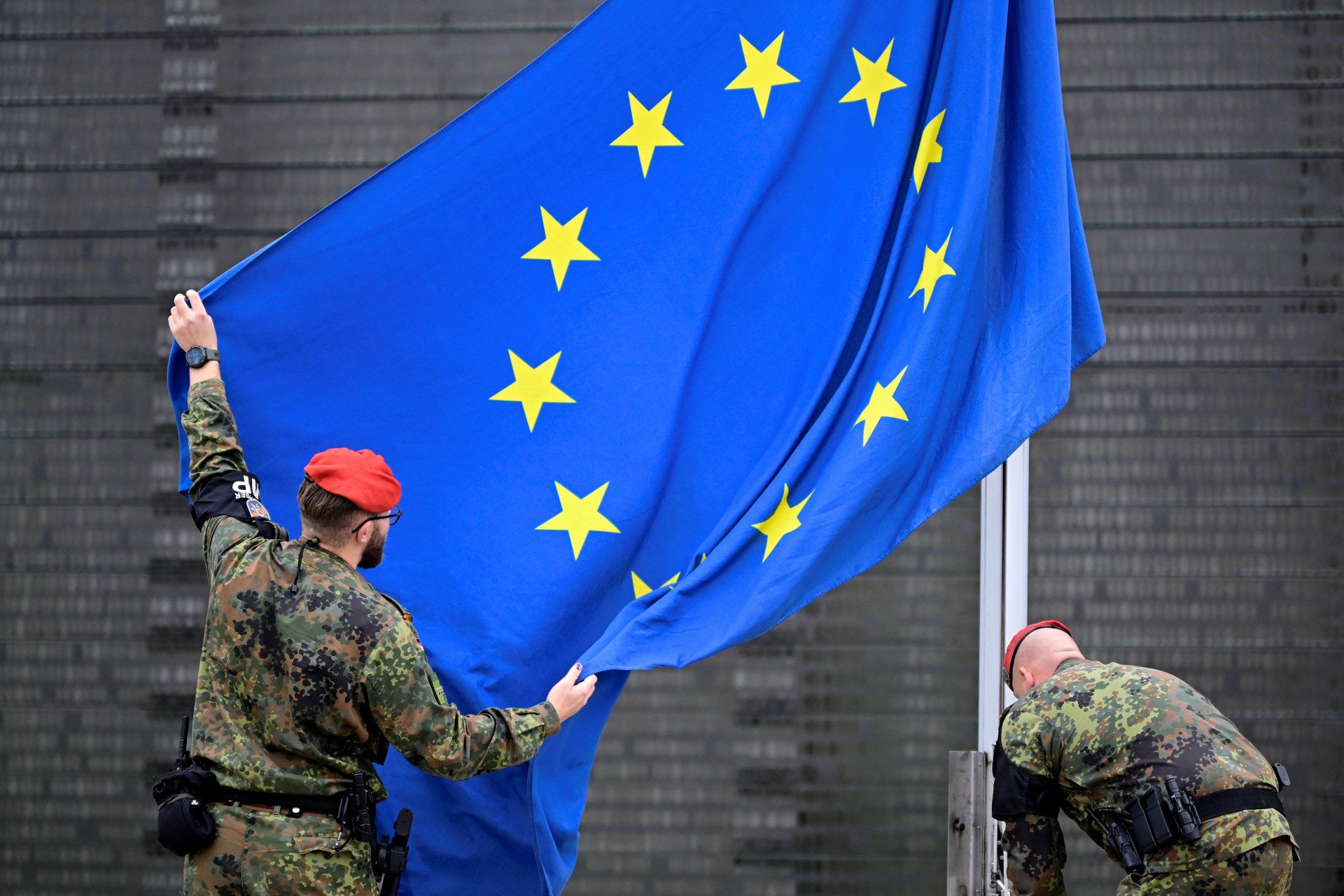
With US support growing more conditional and Russia ramping up its aggression, Europe is being pushed to take charge of its own defense. What is the state of Europe’s military strength, and what alliances matter now?
 Prefer U24 Media on Google
- Authors

-605be766de04ba3d21b67fb76a76786a.jpg "Joseph Place")
Since the post-war period, US troops have been stationed in Europe, particularly in Germany, to support NATO's defense and deter the Soviet Union and the Warsaw Pact. The USA is the largest provider of security assistance and has a major presence. As of 2024, there were approximately 80,000 US troops in Europe, many stationed at bases such as Ramstein in Germany, as well as US military positions in Eastern Europe and participation in exercises in the region. However, 200 positions, with key roles in NATO, are reportedly about to be cut.
Europe’s strategic allies
Military powers within Europe
Within the EU, key players include France and Germany.
France
France has a sizeable army of roughly 200,000 soldiers and is seen as the most powerful EU force. France has recently taken the lead in moving away from US dependence, providing intelligence to Ukraine without US involvement and offering political support, and has historically also advocated for European security independence.
Germany
Germany’s army includes 180,000 active personnel, which it hopes to increase to 260,000 by 2035, and while not ranked as highly as France, it has a strong manufacturing sector that has been growing, high-tech military equipment, and a historically strong economy. It is also now considering reinstating a form of conscription in the event of an invasion.
The UK
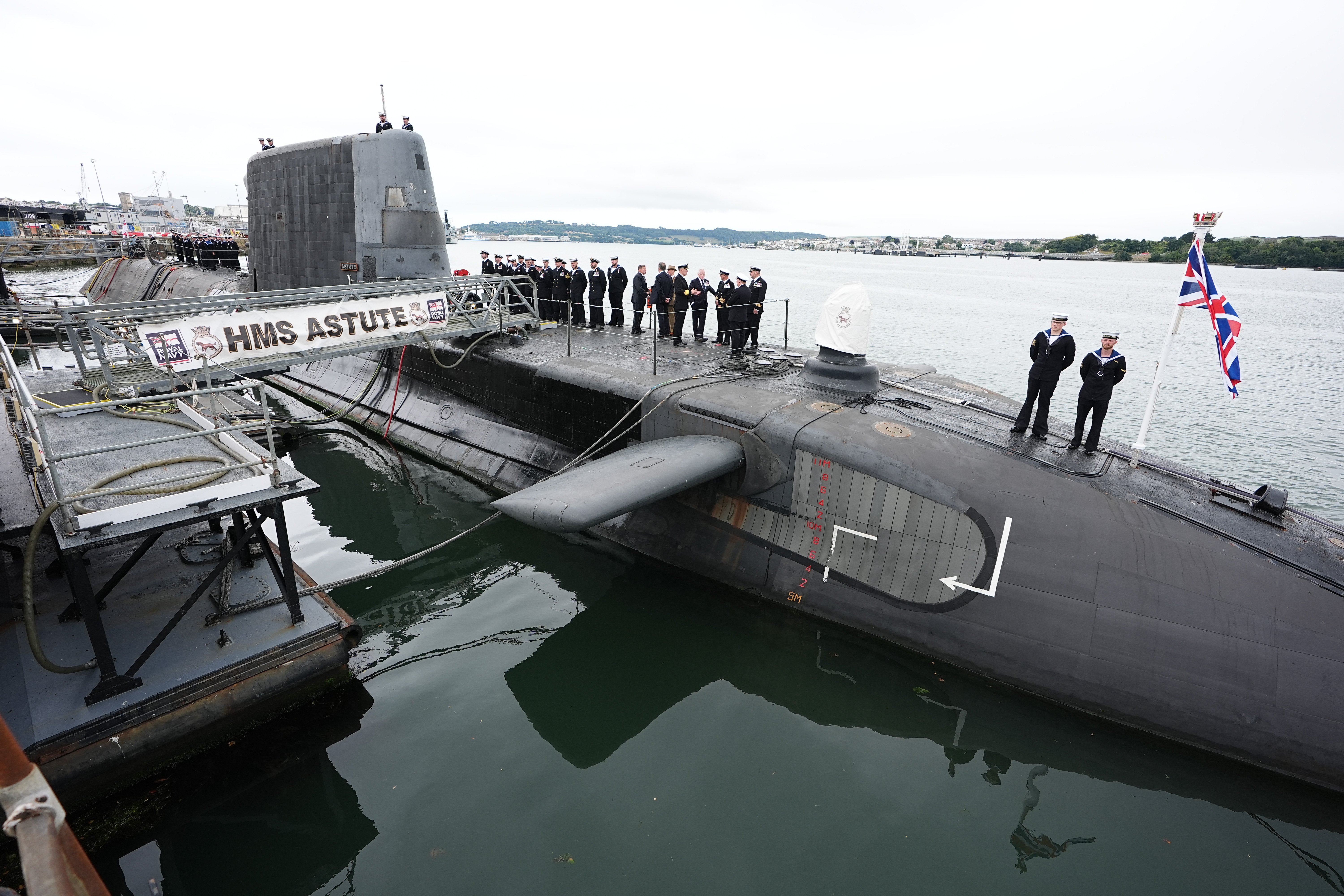
The United Kingdom, although no longer part of the European Union, remains a key military ally of Europe. As a leading member of the Coalition of the Willing—nations committed to supporting Ukraine—the UK may well become the cornerstone of any future European defense initiative. The UK also ranks among the top 6 in global power projections with high-quality troops and equipment. The UK currently has defense partnerships and agreements within the EU, including a 100-year partnership with Ukraine, which involves defense investment, drone manufacturing, and more.
Global allies supporting European security
Beyond the United States, Europe has developed strategic defense relationships with several key global partners.
Australia
Australia and the European Union, for example, started negotiating a security and defense partnership. Australia already has a security agreement with the UK and the USA; a European partnership would help bolster defense. Australia’s defense budget exceeds 2% of its GDP and is a major Pacific power. The government has focused on the military and defense, boosting recruitment and maintaining an army of 61,000. It has 50 commissioned vessels, including 6 Collins-class submarines and 3 Hobart-class destroyers.
Canada
Canada and the EU have a Security and Defense Partnership as of 2025, and both are focusing on increasing their military capabilities and investing. Ranking 28th globally in military power, the country benefits from high-quality training and its geographical proximity to the Arctic region and two oceans, which provide opportunities to bolster global security. They are committed to assisting Ukraine, and Canada, alongside the EU, pledged to “improve the interoperability and movement of Canadian and European military equipment, personnel, and supplies within Canada and the EU,” indicating they can be considered a reliable ally.
Japan
Japan was the first Asian country to sign a security and defense partnership with the EU in 2024. While Japan’s constitution enshrines pacifism and forbids aggression, it has been reinterpreted to include the defense of allies, maintains a Self-Defense Force of 250,000 soldiers, and is a significant military power with modern military technology. Japan has also been a major supporter of Ukraine, donating billions of dollars and providing significant aid.
South Korea
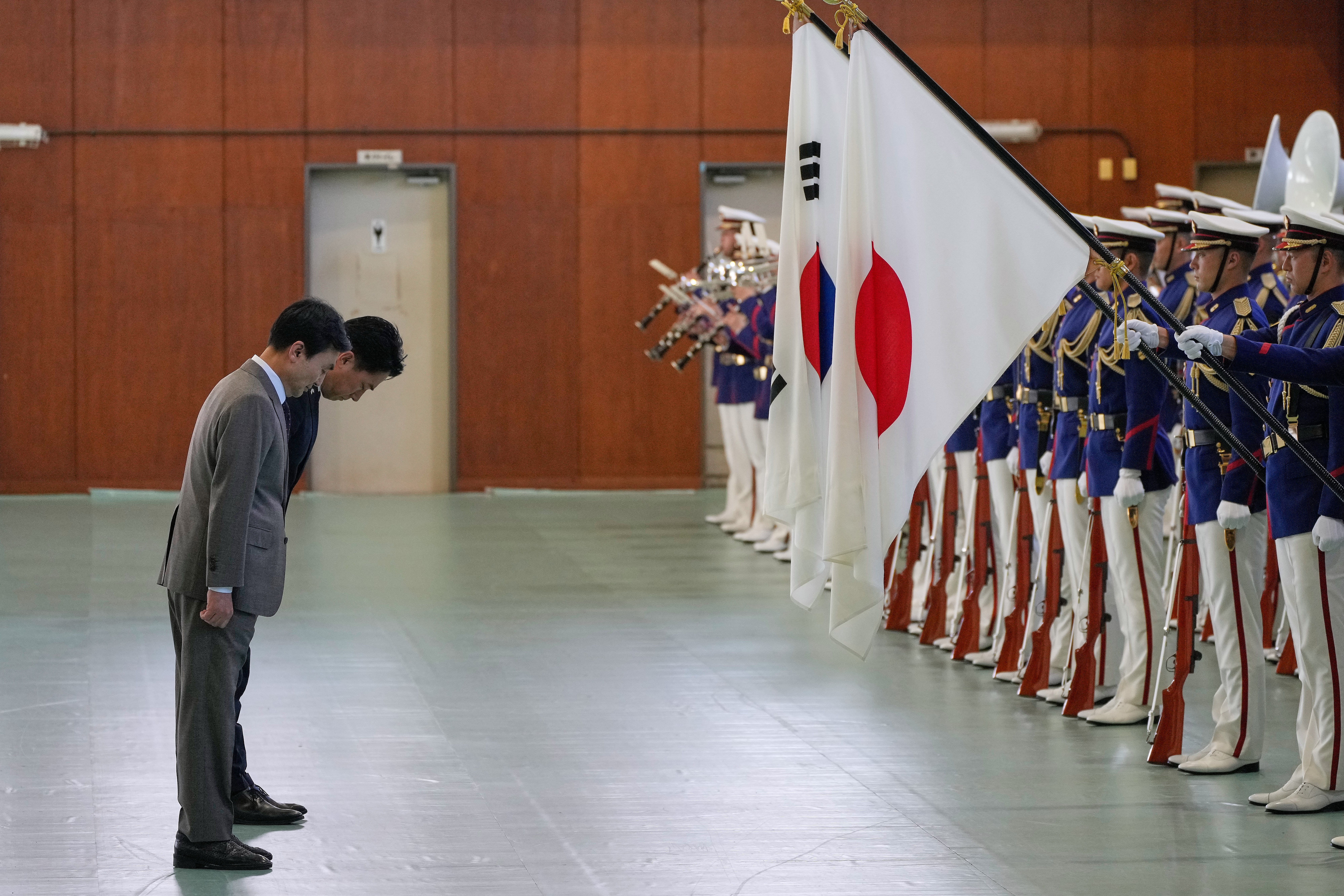
The Republic of South Korea was the second Asian country to sign a partnership with the EU. South Korea is one of the largest military powers in the world, ranking 5th in conventional warfare for three consecutive years in 2026, and aims to be 4th. Its military has 500,000 active military personnel, 3.1 million in reserve, and a large arms industry. Due to tensions with North Korea and China, it has consistently invested in defense, technology, and readiness, and is an incredible asset to European security.
NATO’s role in European security
Without a united Armed Forces of Europe, NATO is essentially the only fully formed international body that provides defense to European nations. NATO members are obligated to spend 3.5% of GDP on defense and 1.5% on defense-related items, with a total goal of 5% as of 2025. NATO members also conduct joint exercises to enhance security readiness.
Most crucially, NATO has multiple articles, such as Article 5. When Article 5 is triggered, wherein a member is attacked, other nations' militaries are obligated to assist. The only time this was activated was after the terror attacks on the USA on 9/11.
There have been multiple NATO operations. Most of them have been about European security, bolstering defenses in the region, for example, along the Baltic border. One key area of operations is the former Yugoslavia, for example, closing airspace in Bosnia, conducting airstrikes to prevent Serbian forces from violating the UN safe zones, and deploying troops for peacekeeping operations in the region and later in Kosovo.
Another main area of operations was Afghanistan, where NATO forces aimed to establish security and conduct anti-terrorism operations. In addition, they have placed no-fly zones in Libya, aid operations in Pakistan after the earthquake, border security for Türkiye, and training operations in Afghanistan once the Taliban forces were removed.
It is important not to conflate NATO operations with the individual actions of the USA or other members. For example, the invasion of Iraq was not a NATO operation, even though multiple NATO members were involved.
In much of Europe, NATO has been seen as an essential tool for deterring Russia’s military ambitions. The Baltic countries and other Eastern European countries joined NATO as soon as possible to shore up their defense capabilities. This indicates the importance of NATO for European defense in the past, even if that is changing now. Nonetheless, NATO is building defenses in Europe, such as the “no man’s land” on Europe’s eastern border, and tracking Russian ships.
Challenges and limitations of the EU
NATO has generally been dominated by the US; however, that does not mean European nations do not contribute more than their fair share to NATO, nor does it mean NATO could stand without the US. Data from 2024 and 2025 show that, measured as a share of GDP, several European countries spend more on defense than the US does.
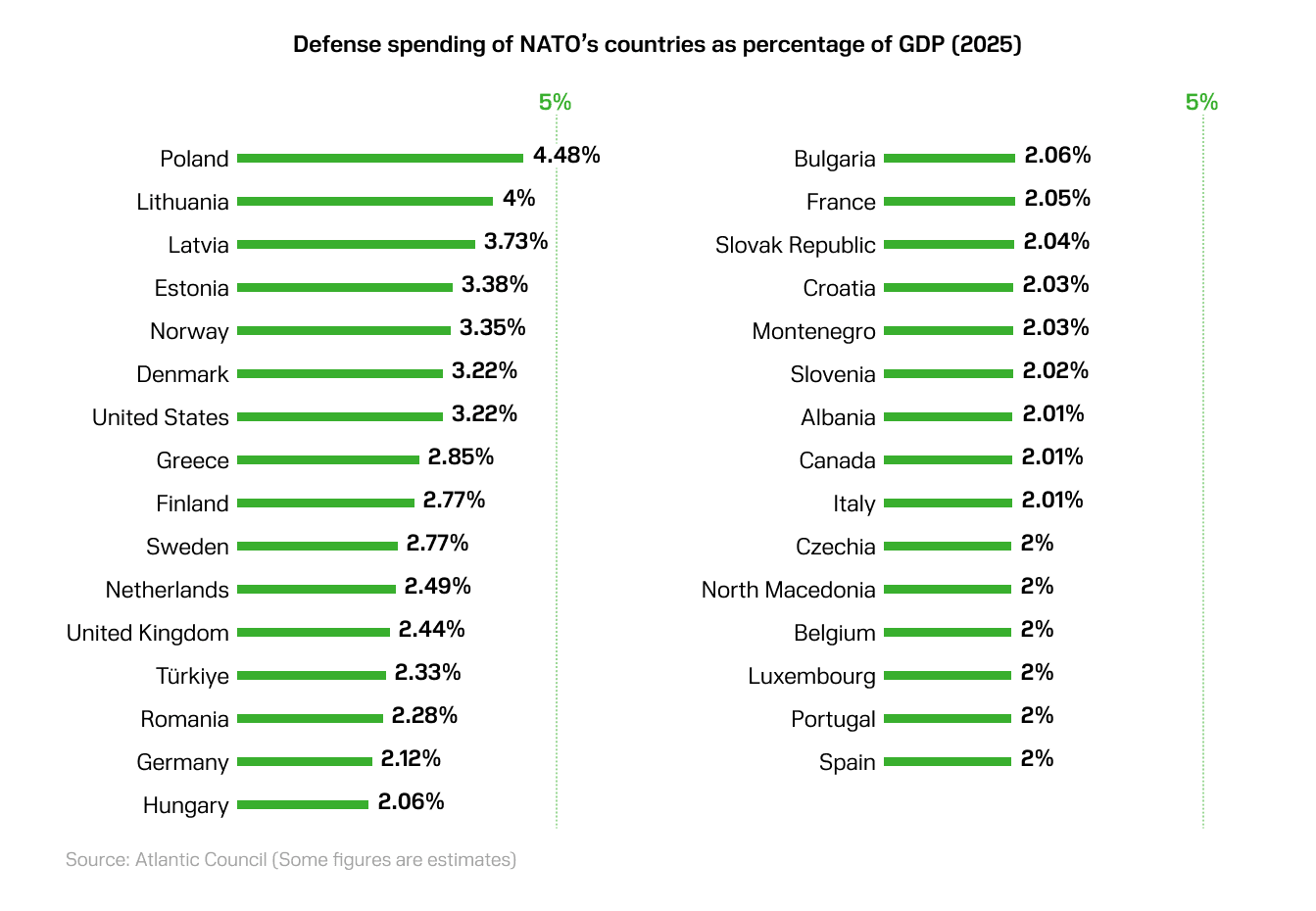
However, if we look at actual spending, the USA spends $980 billion per year on defense, while Europe and Canada together spend $512 billion. This indicates that Europe does not currently have the same level of defence spending as the USA.
In the event of a direct war between NATO and Russia, around 300k US troops would be expected to fight in Europe, the US-based think tank RAND estimated in 2024. This is a significant contribution. The US also has significant assets in aviation, naval power, and global force projection capabilities that Europe currently cannot match.
However, when we exclude the USA, the European nations could provide approximately 1.7 million troops, according to SIPRI One issue is the lack of unified command: the Supreme Commander of NATO, one of the most senior operational positions, has always been a US general. That means Europe would have to take this role, or find a new way to coordinate.
Politically, one key challenge in European defense is the model itself. Would it adopt a NATO Article 5 response in the event of an attack, or would it require a majority of members to vote? Would it purely be defensive? Who will be involved? These questions must be answered in creating such an army. Especially when we consider nations like Hungary, which often spoil consensus in Europe.
-465b92e7bb6e4c097e41f308a7571f2a.jpg)
Regional support beyond major powers
Beyond the major powers of Europe, many countries offer significant assets for European security, especially in the event of a wider war with Russia. We can also see from the various responses to Russia’s full-scale invasion of Ukraine what different European countries are capable of and the levels of willingness.
Poland has one of the largest standing armies in Europe, the third-largest in NATO, and regularly exceeds the previous NATO target of 3.5% of GDP. They have also been a significant supporter of Ukraine, providing many aid packages.
The Czech defense industry is a growing member of the Western European Armaments Group, and Czechia has provided considerable amounts of ammunition to Ukraine, as well as drones. Other countries are growing in terms of the defense industry. Bulgaria has also been crucial in providing ammunition to Ukraine, especially for soviet made weaponry, which is still popular in Ukraine. Taken together, countries that may not rank highly in terms of power can all contribute to the European project’s security.
The Nordic countries are important to any European defense. Finland is investing in its defense and expanding its army, while Norway, Sweden, and Denmark have been providing substantial support to Ukraine, demonstrating their military strength and weapons-production capabilities. Sweden is providing Ukraine with substantial weaponry and may provide Gripens, indicating that it is aiming to step up its contribution to European security. Norway provides high-tech air defense to Ukraine, among other military goods, and Denmark has a Ukrainian weapons manufacturing plant on its territory. They are all very ready, willing, and able to help European security and would play a key role.
It is also worth understanding that a European army could well include Ukraine. This would bolster its experience level and manpower significantly, even if Ukraine’s army was not the full size it is now, for example, in the event of peace with Russia. Prior to the full-scale invasion, the army was approximately 230,000, but now its size is approximately 800,000 . Ukraine also has the knowledge of drones and the realities of warfare with Russia.
Taken together, from the strength of the UK and French military, to the weapons manufacturers of Europe, to the willing and able Nordic and CEE countries, European military power has significant potential.
Discuss this article:
-4a56a6b482ec132402c16ef6fcabf9a2.png)


-c439b7bd9030ecf9d5a4287dc361ba31.jpg "Photo of Katherina Popilnichenko")