- Category
- World
Hungary Signals Intent to Lift Veto on Ukraine EU Membership Talks
 Prefer U24 Media on Google
- Authors

-72b63a4e0c8c475ad81fe3eed3f63729.jpeg "Photo of Cyril Barabaltchouk")
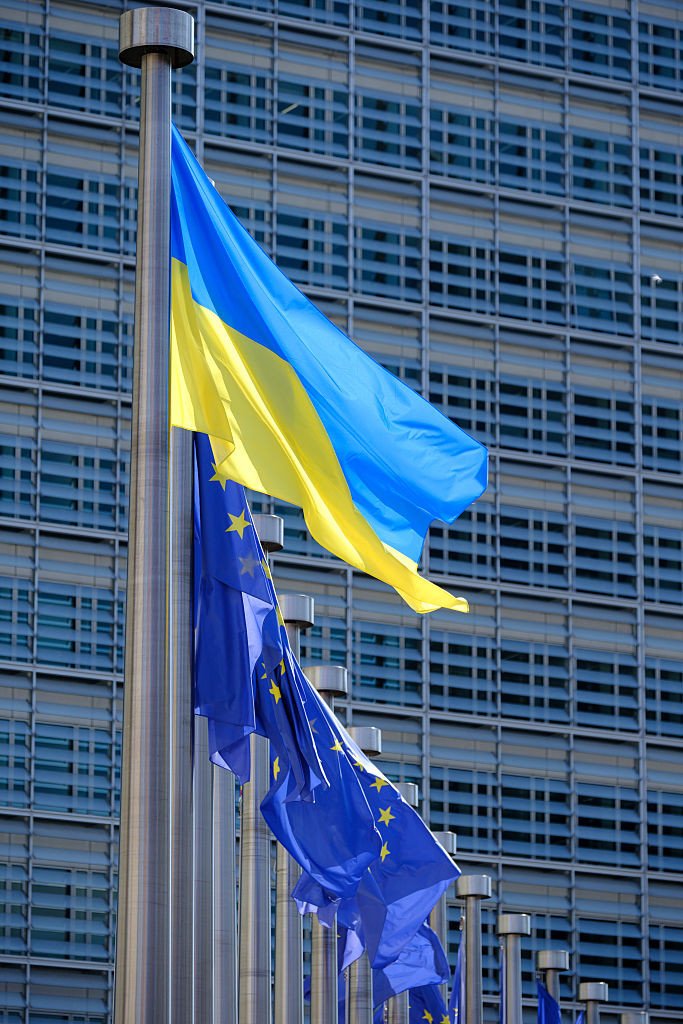
Hungary has indicated it will drop its longstanding opposition to Ukraine’s bid for European Union membership, clearing the way for both Ukraine and Moldova to commence formal accession negotiations in the coming days, Politico reported on June 2.
Diplomats familiar with the matter told Politico that the opening of the first negotiating “cluster"—the foundational step in the membership process—is projected to take place during an intergovernmental conference in Luxembourg on June 15. Because Ukraine and Moldova submitted their EU applications simultaneously, Moldova’s progression is directly linked to the advancement of Kyiv’s bid.
We bring you stories from the ground. Your support keeps our team in the field.
While Hungary opposed Ukrainian accession under its former Viktor Orbán’s leadership, the country’s new administration has privately signaled its willingness to lift the veto. The change follows an extensive meeting between Ukrainian and Hungarian experts addressing the rights of the Hungarian minority living in Ukraine, according to Politico.
The realignment in Budapest’s approach underscores a divergence between the previous administration of Viktor Orbán and the newly elected government of Péter Magyar. Under Orbán, Hungary frequently weaponized its veto power to block critical Western support packages and systematically opposed Ukraine’s integration into Euro-Atlantic structures.
-223608190163598d0aa4f0d1fde74085.jpg)
In contrast, following his election victory, incoming Prime Minister Péter Magyar signaled an immediate reset in bilateral relations. While maintaining a pragmatic focus on recovering frozen European funds, Magyar’s administration has committed to a policy of non-interference toward Kyiv, explicitly stating that Hungary will not obstruct the EU’s €90 billion ($104.7 billion) loan mechanism or block Ukraine’s formal accession negotiations.
During the session, Ukrainian representatives offered assurances to address most concerns highlighted in an 11-point plan originally drafted by Budapest. Though some requests require further technical alignment, diplomats noted that Hungary’s approval is not dependent on Ukraine enacting immediate new legislation.
“Negotiations are ongoing. No agreement has been reached,” a Hungarian official told Politico anonymously, adding that a formal decision regarding the clusters has not been finalized due to the confidential nature of the discussions.
The acceleration of membership talks coincided with a diplomatic visit by Hungarian Prime Minister Péter Magyar to Brussels. Magyar met with senior EU officials to coordinate the unlocking of €16.4 billion ($19 billion) in frozen European funds previously held back over rule-of-law disputes, Politico wrote.
EU ambassadors expect to finalize their collective stance on opening the initial cluster by the end of the week, following a presentation by Ukraine outlining its domestic reform timelines and minority rights commitments. Politico notes that, because opening thematic clusters demands unanimous consent from all 27 member states, any nation retains the ability to halt the accession framework at subsequent stages of the integration process.
This administrative progress aligns with structural preparations inside Brussels to formalize the accession roadmap. A recent report had indicated that the European Commission plans to introduce its official recommendation to open the first negotiating cluster during a General Affairs Council meeting, setting up EU leaders to formally endorse the move at a European Council summit days later.
While Kyiv has advocated for a more expansive initiation encompassing multiple areas of EU law simultaneously, the current framework prioritizes this foundational cluster—covering democratic, economic, and institutional pillars—before opening the remaining five. The accelerating timeline also follows Kyiv’s firm rejection of alternative integration models, including German Chancellor Friedrich Merz’s recent proposal for Ukraine to accept an “associate membership” without full voting rights.
Discuss this article:



-c439b7bd9030ecf9d5a4287dc361ba31.jpg "Photo of Katherina Popilnichenko")