- Category
- World
How Chinese and South Korean Firms Are Helping Russia Build a Drone Battery Industry
 Prefer U24 Media on Google
- Authors

-c439b7bd9030ecf9d5a4287dc361ba31.jpg "Photo of Katherina Popilnichenko")
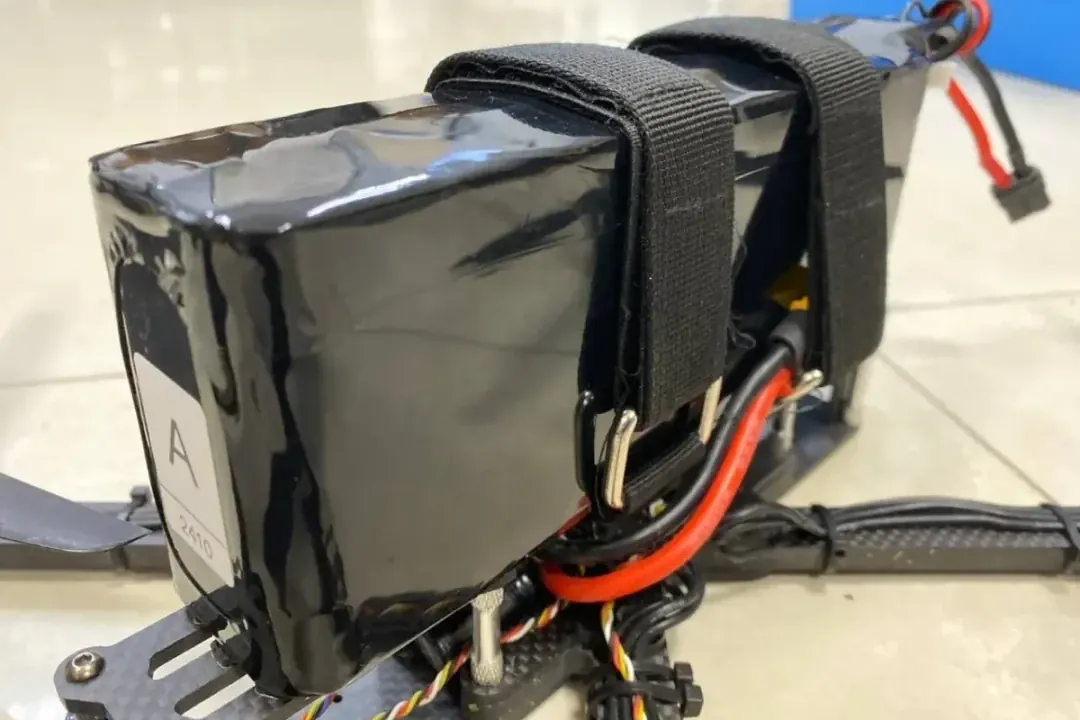
Russia is rapidly developing a local lithium-ion battery industry for FPV drones using components from Chinese and South Korean companies, an investigation by The Insider reveals.
In the first quarter of 2025 alone, Russia imported over 6.6 tons of specialized electrolyte, which projects to 26 tons annually—enough to produce batteries for roughly 150,000 FPV drones.
We bring you stories from the ground. Your support keeps our team in the field.
This represents a major increase compared to prior years, when imports stood at 9 tons in 2024, 12 tons in 2023, and 4 tons in 2022. Additionally, quarterly imports of cobalt oxide surged 15-fold to 5.8 tons in early 2025, up from 400 kilograms in the same period of 2024, according to The Insider.
Russia also imported 93 tons of pure lithium hydroxide and 80 tons of battery-grade lithium carbonate per quarter in 2025. Meanwhile, the Renera plant in Kaliningrad Oblast purchased 56 tons of finished lithium-ion cells during the first quarter of 2025 from its South Korean subsidiary Enertech International, while also acquiring drying ovens from South Korean firm Jktech.
Developing domestic battery manufacturing will significantly complicate efforts by Western nations to disrupt Russia’s military drone supplies. According to data from the Conflict Intelligence Team, unmanned aerial vehicles are the most lethal weapon in the fighting, accounting for 42% of civilian deaths in 2025 and over 80% of military fatalities in 2026.
Most Russian FPV drones are assembled from Chinese components like a modular toy set, which technically violates Chinese regulations prohibiting the export of parts for military equipment.
In the summer of 2025, during an industry exhibition in Yekaterinburg, Anastasia Mikhailova, director of Rosatom subsidiary Renera, stated a commitment to achieving complete manufacturing autonomy for drone parts. Rosatom aims to fully localize lithium-ion battery production by 2030.
Her statement came two weeks after Russian forces took control of a large lithium deposit in the village of Shevchenko in the Donetsk region, which is the only known deposit of its kind in the area.
According to the State Geologic and Mineral Resources Survey of Ukraine, the rocks at the site contain 1.24% lithium oxide. Russia claimed control of the site in January 2025, though physical control was established six months later.

Russia lacks sufficient domestic lithium mining operations. Prior to Russia’s full-scale invasion of Ukraine, raw lithium was imported from Chile and processed for export, but those commercial operations ceased.
Chinese manufacturers stepped in to supply the sector. Key Chinese suppliers now include Huizhou Capchem Chemicals, Jiujiang Tinci Materials Technology, Weifang Tianyuan Battery Material, and Huzhou Kunlun Enchem Battery Materials.
Primary Russian importers include LLC Obruch DV, AO AK Rigel, LLC NPO Lenenergomash, and LLC Uraltekhimport, with Uraltekhimport purchasing complete assembly kits containing cathode and anode materials, separators, drying ovens, and thin magnesium-aluminum alloy sheets for lightweight battery casings.
-e7ab0ea2932913dfdb6ce67beb7e79c0.jpg)
The sudden increase in raw material purchases indicates that Russia is establishing a battery industry almost from scratch at a pace faster than public statements from officials suggest.
Despite Western sanctions, it was recently reported that small Chinese suppliers exported hundreds of millions of dollars in dual-use components—including engines, microchips, and batteries—for Shahed-type drones directly to Russia and Iran.
Discuss this article:
-9a7b3a98ed5c506e0b77a6663f5727c5.png)