- Category
- World
How Ukraine Traces Millions of Tons of Grain Stolen From Temporarily Occupied Territories
 Prefer U24 Media on Google
- Authors

-c439b7bd9030ecf9d5a4287dc361ba31.jpg "Photo of Katherina Popilnichenko")
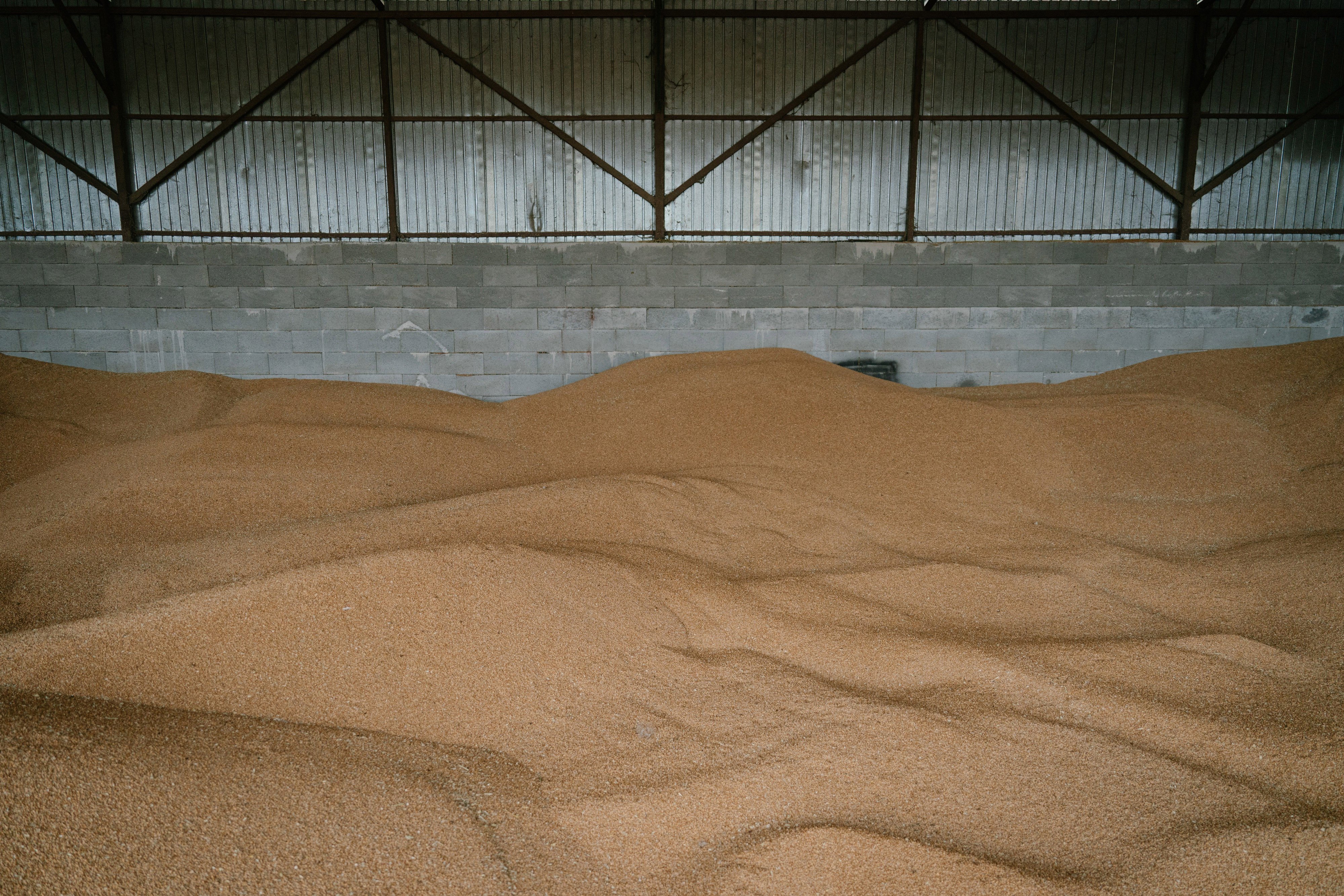
Ukraine is utilizing specialized laboratory testing and satellite data to trace and identify agricultural products taken by Russian forces from temporarily occupied territories.
According to data shared by Ukraine’s Deputy Minister of Economy, Taras Vysotskyi, approximately 30 million tons of grain and oilseeds were harvested in the occupied regions during the first three years following Russia’s full-scale invasion. With the current season included, this total could potentially reach 50 million tons, as reported by Deutsche Welle on May 19.
We bring you stories from the ground. Your support keeps our team in the field.
The volume comes from roughly 6 million hectares of agricultural land, of which 80 percent, or 4.5 to 5 million hectares, continues to be cultivated annually under occupation.
Despite attempts to conceal the origin of these agricultural goods by mixing them or falsifying transit paperwork, Ukraine can now confirm the geographical source of shipments with nearly 100 percent accuracy. This tracking relies on a network that utilizes a physical seed bank of local crop samples and an active testing facility in Lithuania.
The verification system was established as a joint initiative alongside the United Kingdom, which provided the proprietary tracking methodology and mechanical laboratory apparatus, and Lithuania, which hosts the testing hub near its maritime port infrastructure.
The forensic process relies on verifying physical grain samples against a pre-existing national archive of Ukrainian crops. Each sample contains distinct environmental markers shaped by the specific soil composition, local weather patterns, and regional climate conditions of the area where it was grown.
A primary challenge in tracking these commodities is the intentional blending of regular commercial grain with crops taken from occupied fields. However, the testing process remains highly effective even when shipments are combined.
If a shipment contains at least 10 percent of agricultural goods from occupied zones, the laboratory technology successfully identifies the illicit material. While the probability of detection decreases if the stolen portion drops to 5 percent, the immense labor costs required to blend crops at such a low ratio eliminate any economic incentive for exporters.
"Beyond physical laboratory testing, Ukraine relies on orbital tracking to monitor maritime logistics and verify shipments. Satellite imagery allows authorities to observe cargo vessels being loaded directly at occupied ports like Sevastopol, Berdiansk, and Mariupol. This tracking establishes a high probability of illicit origin almost immediately. Once a suspect vessel is identified, official bodies can legally demand a physical sample for comparative analysis," stated Ukraine’s Deputy Minister Taras Vysotskyi.
The testing process has been applied to several dozen high-profile cases rather than hundreds of routine shipments, as each investigation carries significant international and legal weight. The Office of the General Prosecutor of Ukraine acts as a frequent participant in these procedures, though independent arbitration and certification bodies also initiate requests through diplomatic channels.

While the total number of tracking requests has decreased over the past year, monitoring data indicates that the appropriation of agricultural resources continues, though operators have become significantly more cautious to avoid public exposure.
The application of this technology recently became central to a diplomatic discussion between Ukraine and Israel after a cargo vessel carrying suspected agricultural goods entered the port of Haifa. While one ship managed to unload its cargo, Israel ultimately blocked a second vessel from discharging its shipment.
The Israeli government has signaled a willingness to cooperate with Ukrainian authorities, and internal bilateral exchanges regarding the sharing of physical grain samples remain ongoing.
The scale of the agricultural extraction is monitored closely through joint assessments with NASA Harvest and the Food and Agriculture Organization. The annual harvest in the temporarily occupied territories yields an estimated 8 to 10 million tons of crops, consisting primarily of wheat and sunflower seeds, though the fields lack modern irrigation or long-term commercial investment.
While sunflowers are typically processed directly into vegetable oil, making them impossible to track via soil markers, wheat shipments are routinely funneled into Russia's domestic market, livestock industries, or mixed into its broader annual export volume of over 100 million tons.
Previously, an Israeli official announced that a shipment of Ukrainian grain, which had been taken by Russia from temporarily occupied territories, was blocked from unloading in Israel. The decision to reject the wheat and barley cargo carried by the Panama-flagged vessel Panormitis was made directly by the country's largest grain importer, Cenziper, rather than by government authorities.
This outcome followed intensive diplomatic and legal efforts by Ukraine, prompting Ukrainian Foreign Minister Andrii Sybiha to warn other global operators against participating in the trade of stolen agricultural goods.
Discuss this article: