- Category
- World
Hungary’s Incoming Government Pledges End to Orbán’s EU Blackmail Tactics
 Prefer U24 Media on Google
- Authors

-72b63a4e0c8c475ad81fe3eed3f63729.jpeg "Photo of Cyril Barabaltchouk")
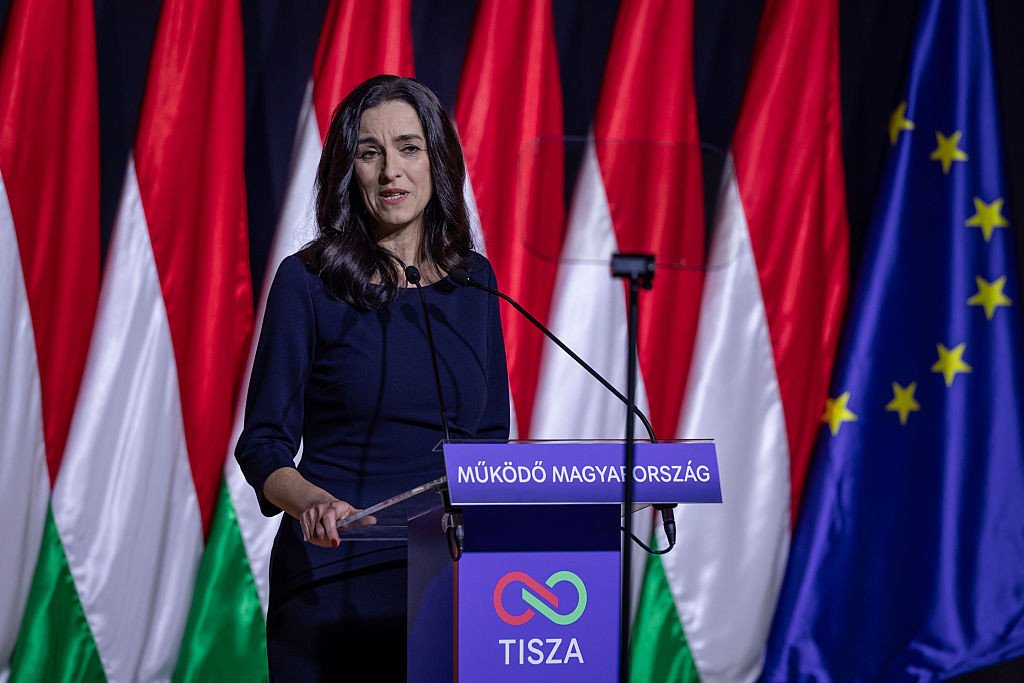
Hungary’s incoming government will break with the combative foreign policy of the past 16 years, abandoning the use of the veto as an instrument of political blackmail within the European Union, Hungarian news outlet Index reported on May 11.
During her parliamentary hearing, future Minister of Foreign Affairs and Deputy Prime Minister Anita Orbán criticized the outgoing administration. She stated that under the leadership of the Tisza Party, Hungary will no longer be an isolated pawn or a “stick between the spokes” of the EU, promising instead to be a reliable partner and alliance builder.
We bring you stories from the ground. Your support keeps our team in the field.
A central priority for the new government is retrieving billions in EU funds currently suspended over rule-of-law violations, according to Index. Anita Orbán stressed that the suspension was the direct price of losing Europe’s trust, adding that a successful country cannot be built on corruption.
She promised that the National Assembly would undertake serious legislative work to implement necessary anti-corruption and transparency guarantees before the summer.
“The EU does not expect anything that is bad for the Hungarian people,” the future foreign minister noted, dismissing claims from the previous administration that Brussels forces anti-national policies on member states in exchange for funding.
Anita Orbán also outlined the government’s geopolitical and economic ambitions, declaring that Hungary’s place is firmly within the Western federal system. She informed the committee that the new administration aims to meet the Maastricht criteria to adopt the euro by 2030, Index reported.
Regarding the Russian full-scale invasion of Ukraine, the incoming foreign minister confirmed that Hungary will not send soldiers to war. She stressed that Kyiv’s potential accession to the EU must be strictly merit-based and tied to clear guarantees regarding the rights of the Hungarian minority in Transcarpathia.
-278ccb44f31eada82b3fb30301b152e6.jpg)
However, the new government plans to maintain Budapest’s financial distance from the war. When questioned about the EU’s €90 billion ($97 billion) loan to Ukraine—from which Hungary, the Czech Republic, and Slovakia were previously exempted—Anita Orbán stated that the future administration would not voluntarily undertake payment obligations and would examine legal avenues to remain exempt if pressured, Index noted.
Following the hearing, the European Affairs Committee proposed Anita Orbán’s appointment as Minister of Foreign Affairs with six votes in favor and two abstentions.
The pledge to abandon veto politics directly addresses the diplomatic fallout left by former Prime Minister Viktor Orbán, whose tenure was defined by pro-Russian rhetoric and systematic obstruction within the bloc. The European Union had previously effectively frozen a €16 billion ($17.3 billion) defense loan for Hungary after Budapest deliberately blocked a critical €90 billion ($97.4 billion) financial package for Ukraine.
Orbán consistently weaponized Hungary’s veto to paralyze European decision-making—delaying the bloc’s 20th sanctions package against Russia and holding European aid hostage over demands to restore Russian oil transit via the Druzhba pipeline.
Discuss this article:


-c439b7bd9030ecf9d5a4287dc361ba31.jpg "Photo of Katherina Popilnichenko")
-111f0e5095e02c02446ffed57bfb0ab1.jpeg "Photo of Roman Kohanets")
-a1738cb523135070a26ed61c09a8eb5e.jpg "Police stand in front of the Russisches Haus in Berlin, Germany. (Source: Getty Images)")