- Category
- World
Lithuania Moves to Scrap Ban on Weapons of Mass Destruction and Military Bases
 Prefer U24 Media on Google
- Authors

-111f0e5095e02c02446ffed57bfb0ab1.jpeg "Photo of Roman Kohanets")
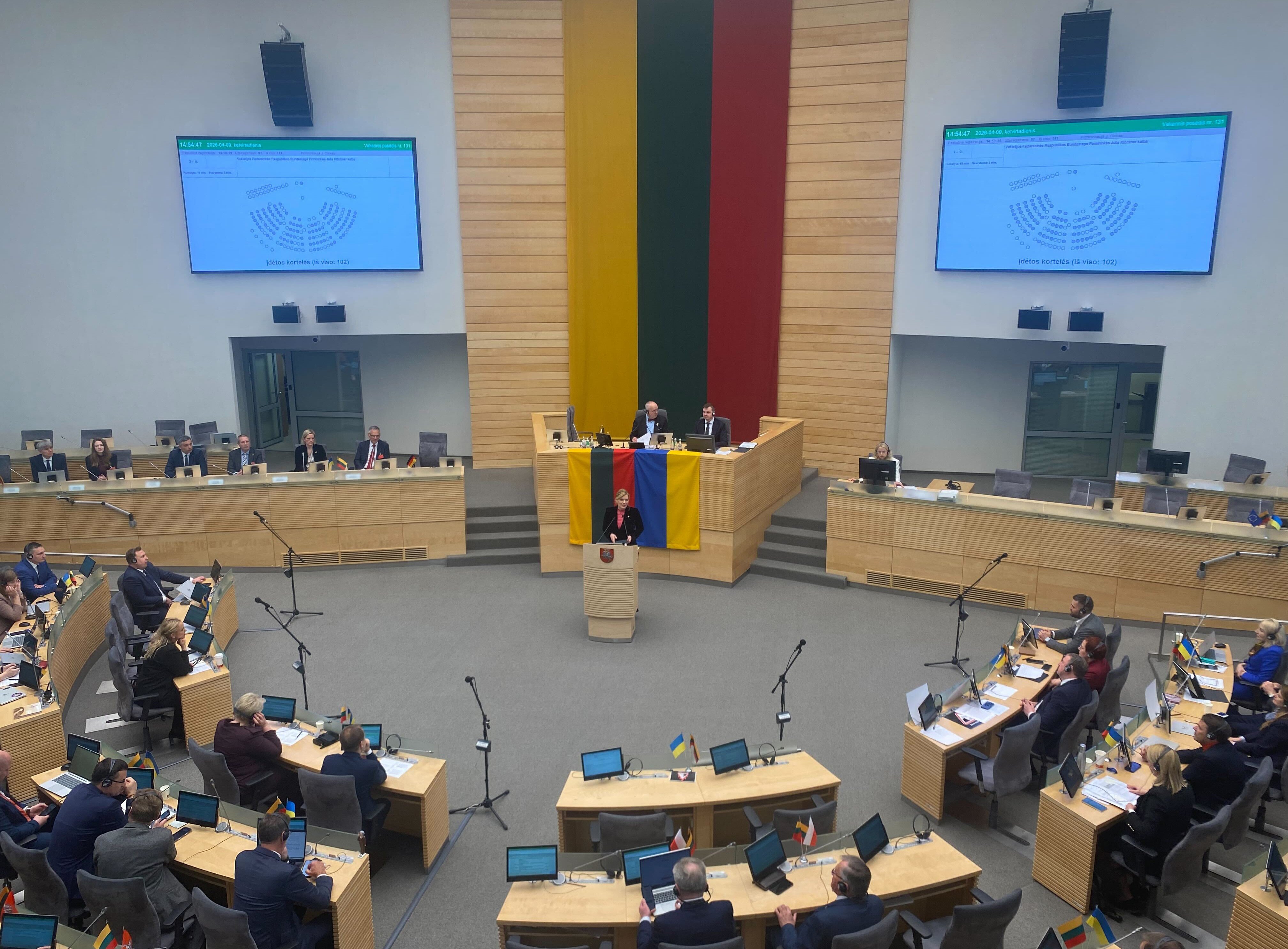
Lithuania's Seimas has backed removing a constitutional clause that bars both weapons of mass destruction and foreign military bases from the country's territory.
This was reported by Lithuanian public broadcaster LRT on September 22.
We bring you stories from the ground. Your support keeps our team in the field.
The measure passed only the consideration stage, and two further votes on adoption remain before the amendment can take effect. According to LRT, 99 lawmakers supported the change, 13 opposed it, and five abstained.
LRT noted that most of the opposition came from the Nemunas Dawn faction, with nine of its members voting against it and four abstaining. Agrarian lawmaker Valius Ąžuolas and three members of the Mixed Group also withheld support.
Article 137 currently states that neither weapons of mass destruction nor foreign military bases of other states may be stationed on Lithuanian territory. The proposed amendment would delete that provision outright.
-689076dcf5f357589547d1dbf6facd41.png)
Seimas Speaker Juozas Olekas indicated that the first adoption vote is scheduled for October 6 and the final vote for January 12 next year. LRT added that lawmakers must vote twice more, with a three-month interval between the ballots. At least 94 of the 141 members must back the amendment for it to pass.
Debate on the floor exposed sharp divisions over deterrence. Laurynas Kasčiūnas, an elder of the opposition Homeland Union—Lithuanian Christian Democrats faction, described nuclear weapons as one of the most effective deterrents.
He credited them with “keeping the Cold War from turning hot.”
He argued that Lithuania was the only country in the region still bound by such a restriction, pointing to Latvia, Estonia, Poland, and Finland as states without such a limit.
"Russians do not attack the strong," Kasčiūnas told the chamber, per LRT.
Remigijus Motuzas, the social-democrat chair of the Seimas Committee on Foreign Affairs, emphasized that Lithuania should not obstruct NATO's nuclear deterrence or become the alliance's weak link. He warned that the country could not afford to be less protected than other NATO members.
Opponents pushed back. Nemunas Dawn leader Remigijus Žemaitaitis claimed the amendment was unnecessary and maintained that only a referendum could change the article.
Ignas Vėgėlė of the Mixed Group cautioned that the deleted text also lifts the ban on foreign military bases, asking whether Lithuania might cede land it would neither control nor manage.
Liberal leader Viktorija Čmilytė-Nielsen framed the vote as a way to ensure Lithuania would not appear weaker than its allies.
The vote comes amid a wider European debate over nuclear deterrence.
The Financial Times separately reported in early June that the US was weighing the deployment of nuclear weapons in several additional NATO countries in Europe.
The vote followed a rapid sequence of steps toward the same goal.
On September 9, the Seimas Committee on Legal Affairs voted 7-2 to strike the constitutional provision on nuclear weapons.
Moscow reacted within days: on September 11, Russian Security Council Deputy Chairman Dmitry Medvedev warned that Lithuania would be wiped from the map if a confrontation over nuclear deployment ever erupted, claiming NATO allies would not come to its defense.
Discuss this article:





-c439b7bd9030ecf9d5a4287dc361ba31.jpg "Photo of Katherina Popilnichenko")