- Category
- World
NATO Forces Near Belarus Border Adopt Ukrainian Anti-Drone Tactics
 Prefer U24 Media on Google
- Authors

-72b63a4e0c8c475ad81fe3eed3f63729.jpeg "Photo of Cyril Barabaltchouk")
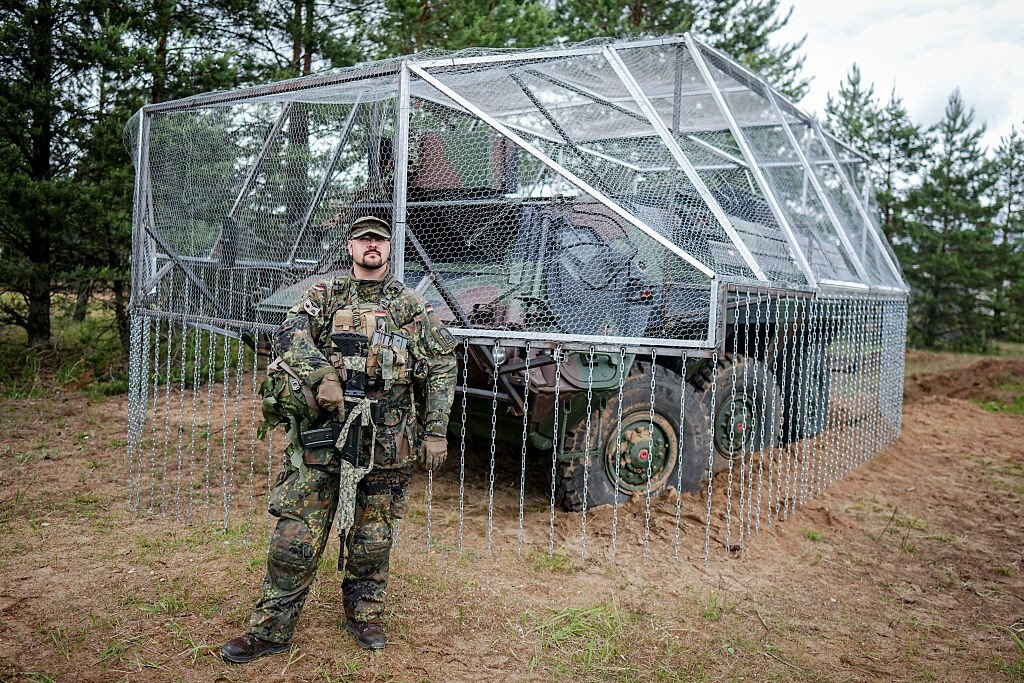
The German 45th Armored Brigade, permanently deployed in Lithuania, has equipped its Fuchs armored personnel carriers and Leopard 2 tanks with improvised anti-drone protection, Militarnyi reported on June 15.
The modifications were spotted during the Freedom Shield 2026 military exercises taking place just 15 kilometers from the Belarusian border. Vehicle crews independently designed and installed these protective screens during the drills, drawing direct inspiration from the combat experience of the Ukrainian military in its defense against Russia.
We bring you stories from the ground. Your support keeps our team in the field.
Photographs from the exercises reveal varying levels of drone defense based on the specific vehicle type. German mechanized infantry units constructed extensive, all-around anti-drone screens for their Fuchs armored personnel carriers, effectively shielding the vehicles from multiple angles against first-person view drones, Militarnyi wrote.
Conversely, tank crews opted for a much more conservative approach. The Leopard 2 main battle tanks were fitted with a smaller, net-based superstructure positioned strictly over the turret roof. According to Militarnyi, this lighter modification was likely chosen to prevent overloading the tank’s suspension system while still providing crucial overhead protection against drone-dropped munitions.
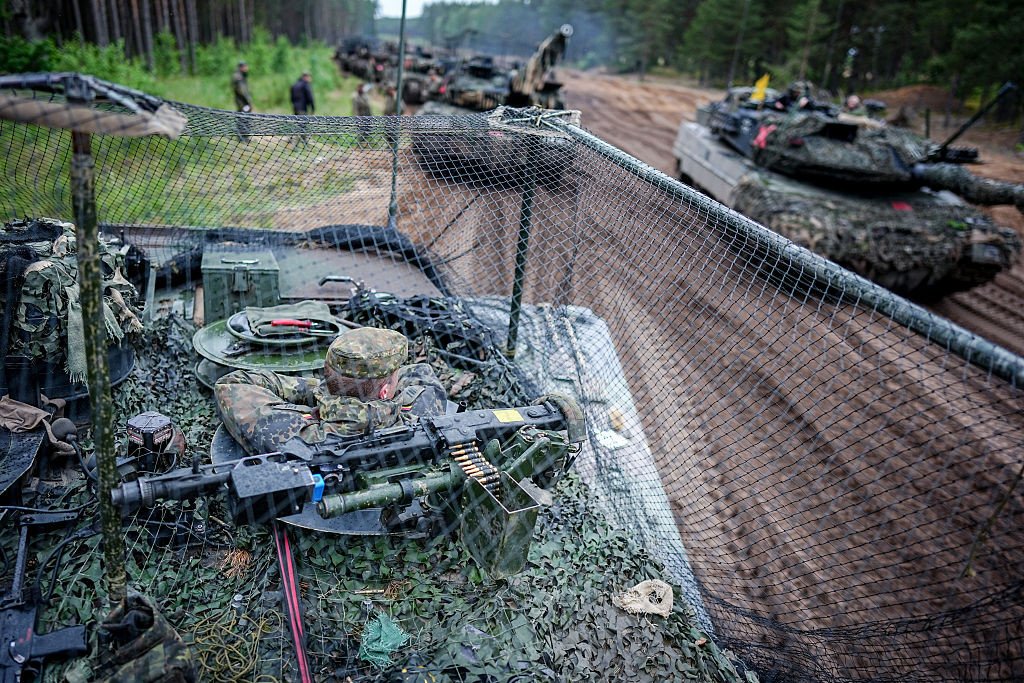
The Freedom Shield 2026 drills kicked off in late May at the Pabrade training ground in Lithuania. The exercises focus on preparing the 203rd Armored Battalion, reinforced by the 122nd Armored Infantry Battalion, ahead of their full permanent relocation to Lithuania scheduled for next year.
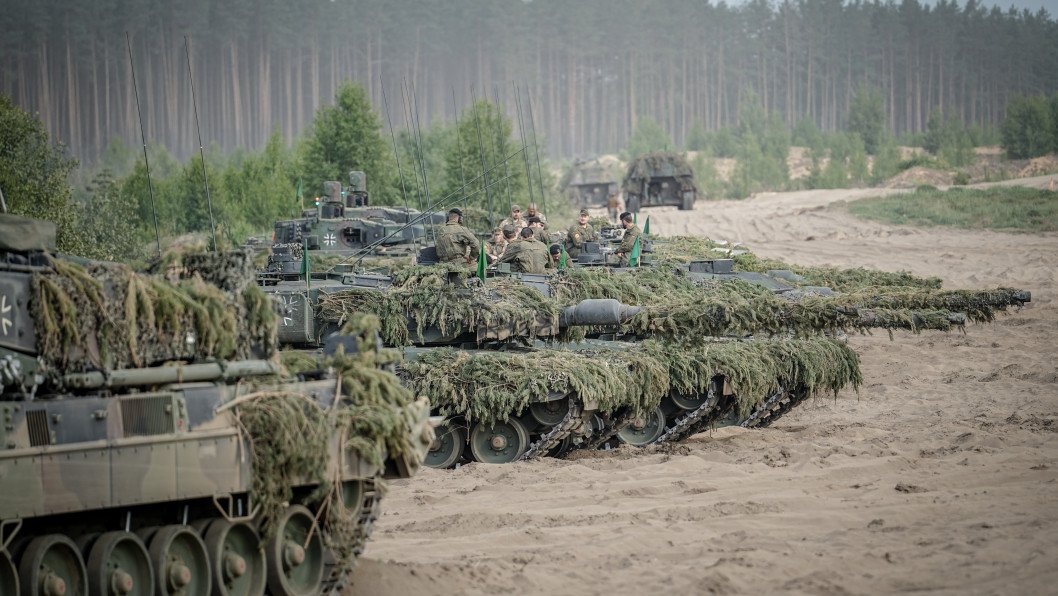
Militarnyi writes that the training brings together a significant military coalition, with German forces joined by the NATO Multinational Battlegroup in Lithuania, the Lithuanian Land Forces, and various other Bundeswehr units.
In total, the exercises involve a massive deployment consisting of 2,900 military personnel, including 2,300 from Germany, alongside 800 pieces of military hardware from eight different NATO member states. This marks the German brigade’s first major exercise since its initial deployment to the Baltic state.
Moving forward, the brigade will conduct readiness drills in Lithuania twice a year to continuously demonstrate its capability and maintain a strong deterrence posture on NATO's eastern flank, Militarnyi reported.

The training scenarios are designed to replicate highly realistic modern combat conditions, integrating drones, mortars, artillery, attack helicopters, and heavy armor. The Freedom Shield 2026 exercises are divided into several distinct phases, including troop movement, tactical preparation, and live-fire engagements, with combat episodes closely simulated using the advanced AGDUS laser engagement training system.
These tactical adaptations on NATO's eastern flank mirrored combat lessons documented on the front lines in Ukraine. In one recent engagement, a Ukrainian Leopard 1A5 tank from the 5th Separate Heavy Mechanized Brigade had survived 52 consecutive strikes by Russian FPV and Molniya drones during a single, daylong assault.
The vehicle’s survival was attributed to layered protection—including custom roof cages, side netting, and steel cables designed to break drone propellers—similar to the defenses Western forces began integrating into their own armored units.
Discuss this article:


-c439b7bd9030ecf9d5a4287dc361ba31.jpg "Photo of Katherina Popilnichenko")