- Category
- World
NATO’s Biggest Planning Shift in Decades Centers on Russia
 Prefer U24 Media on Google
- Authors


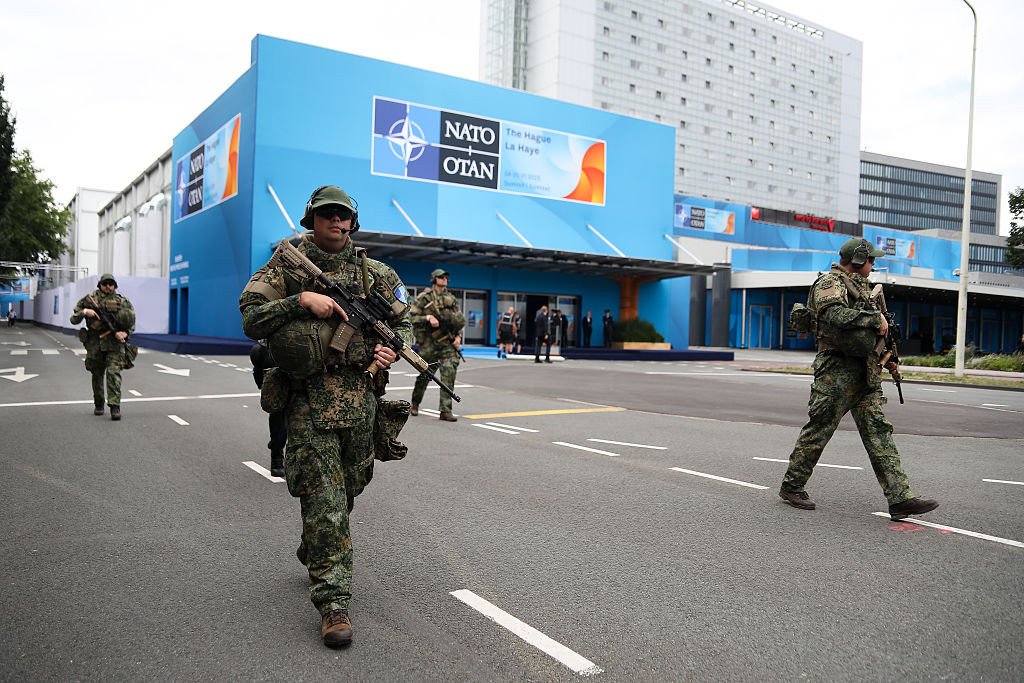
NATO allies are considering their biggest overhaul of military planning in at least two decades, with a proposal to prioritize a major war in Europe over maintaining enough spare forces for several overseas crisis-management missions, Politico reported on November 10.
Russia’s hybrid pressure on NATO countries has also intensified in recent months. European governments have reported suspected sabotage, drone incursions, cyberattacks, and attacks on critical infrastructure, while Germany has directly linked some incidents to Moscow.
We bring you stories from the ground. Your support keeps our team in the field.
According to four NATO diplomats briefed on a draft planning document, the alliance is considering dropping a longstanding requirement for members to provide enough forces for both scenarios simultaneously.
Instead, allies could be required to prepare for either a major European conflict or smaller crisis-management operations, Politico reported.
The proposal reflects “a very clear understanding that no matter what, for NATO, a major contingency in Europe will overtake any other priorities or events,” Camille Grand, a former NATO assistant secretary-general for defense investment, told Politico.
The potential change forms part of negotiations over NATO’s Political Guidance, which will shape new force and equipment requirements for the alliance. Members are expected to finalize an agreement by February, with the wider capability-planning process concluding in 2029.
Politico noted that the draft currently favors replacing the requirement to prepare for a major conflict “and” several smaller operations with preparation for one scenario “or” the other.
“It makes a big difference if you choose ‘and’ or ‘or,’” a senior NATO diplomat told Politico, while emphasizing that negotiations remain at an early stage.
The change would not automatically end existing NATO missions in Kosovo or Iraq. A senior NATO official also emphasized that the alliance was not abandoning its ability to conduct crisis-response operations.
The debate comes as NATO members seek to strengthen deterrence against Russia while facing pressure to prioritize limited defense resources. European officials have repeatedly warned that Russia could pose a direct military threat to NATO territory by 2029, Politico reported.
“NATO has come full circle,” former NATO spokesperson Oana Lungescu told Politico. “It makes sense that NATO’s main effort as a defensive alliance should be to deter an aggressive Russia and keep Europe safe, especially as the US is reducing its commitment.”
The shift also aligns with US pressure for European allies to take greater responsibility for defending NATO territory and reduce emphasis on operations beyond the alliance. Washington has pushed allies to scale back some overseas missions while the Pentagon prepares a review of its military presence in Europe
NATO has also been reassessing how it responds to Russian activity below the threshold of conventional war. In September, NATO Secretary General Mark Rutte stated that Article 5 remains “deliberately ambiguous” on hybrid threats, allowing the alliance to respond without giving Moscow clear red lines to exploit.
Discuss this article: