- Category
- World
Russia at Sea, China in the Air—Japan Tracks Spy Ship and Recon Aircraft Near Its Islands
 Prefer U24 Media on Google
- Authors


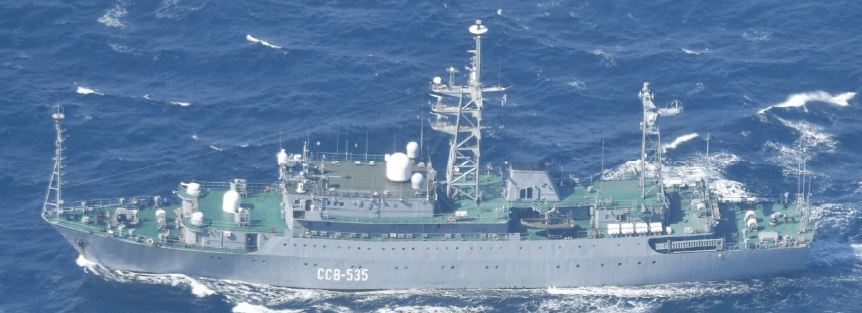
Japan tracked a Russian Navy intelligence-gathering ship moving through the Tsushima Strait while three Chinese military aircraft operated near the country’s southwestern islands, Japan’s Joint Staff said on October 28.
Between October 27 and 28, the Russian Navy intelligence ship SSV-535 Kareliya, a Meridian-class vessel, sailed southwest through the Tsushima Strait before continuing toward the East China Sea.
We bring you stories from the ground. Your support keeps our team in the field.
The Soviet-designed Project 864 Meridian class is built for signals intelligence, including intercepting communications and monitoring radar emissions. The ships carry extensive antenna arrays beneath distinctive radomes and are also equipped for hydroacoustic intelligence collection.
Japan’s Maritime Self-Defense Force dispatched the minesweeper Hirashima, assigned to the 3rd Minesweeper Division at Sasebo, to monitor the Russian vessel. A P-1 maritime patrol aircraft from the 4th Air Wing at Atsugi also tracked its movement from the air.
On 27-28 Oct, a Russian Vishnya-class intelligence-gathering ship transited the Tsushima Strait and entered the East China Sea. It is being tracked by Japan’s SDF. https://t.co/VG2bLeIZ3Y
— James D.J. Brown (@JamesDJBrown) October 28, 2026
Later on October 28, Chinese military aviation activity was detected in the same broader region.
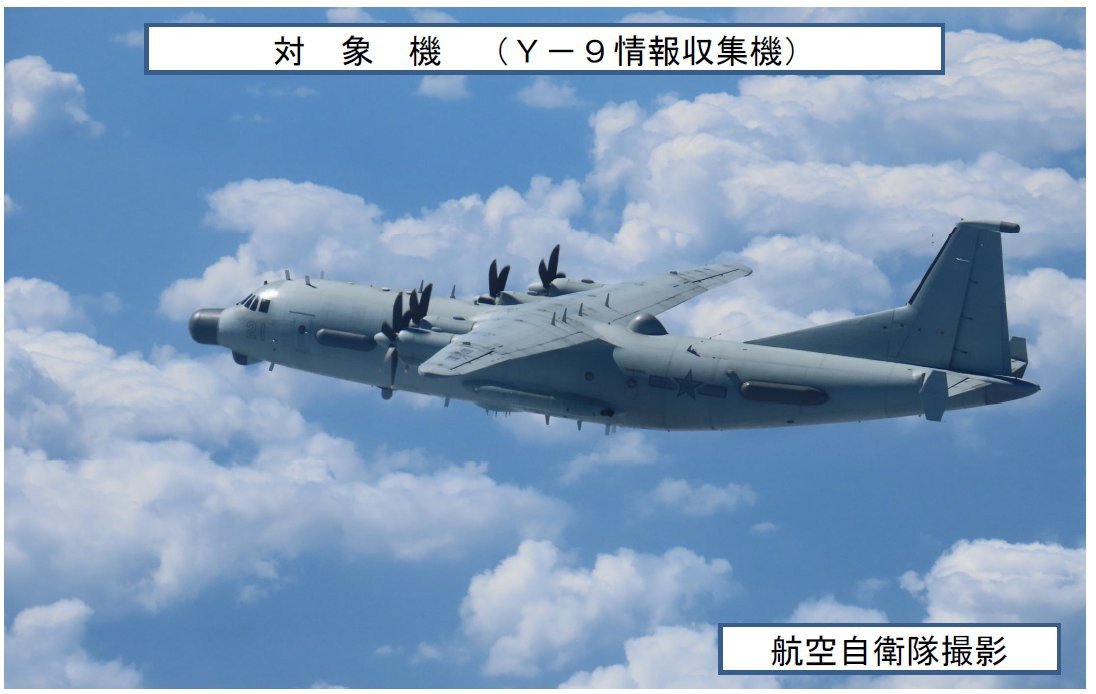
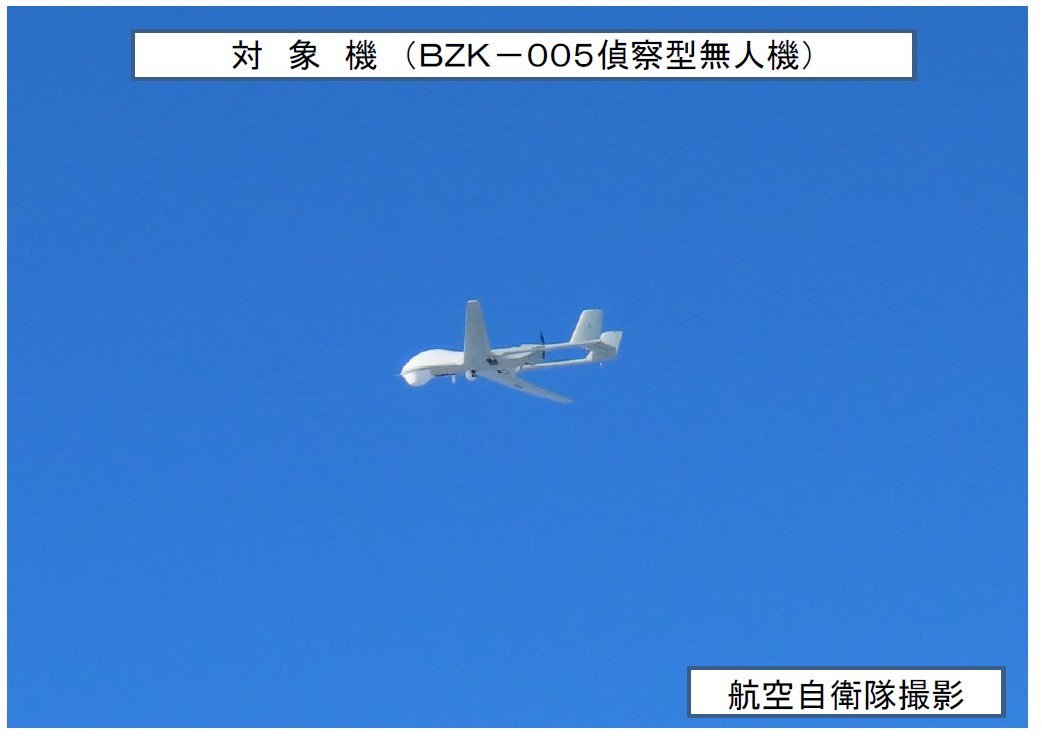
A Chinese BZK-005 reconnaissance drone and a Y-9 intelligence aircraft flew from the East China Sea toward the Pacific, passing through the airspace corridor between Okinawa and Miyako islands. After turning over the Pacific, both aircraft returned toward mainland China along approximately the same route.
The BZK-005 is a long-endurance reconnaissance UAV capable of remaining airborne for up to 40 hours. It carries electro-optical and infrared sensors as well as synthetic-aperture radar for surveillance missions.
The Y-9 reconnaissance variant is designed for signals and electronic intelligence, using antenna arrays positioned along the fuselage to intercept communications and locate radar emitters.
A third Chinese aircraft, a maritime patrol variant of the Y-9 family, also operated in the region the same day, flying from the direction of mainland China toward waters southwest of the Danjo Islands and northwest of Okinawa.
The maritime patrol version carries a nose-mounted search radar, a magnetic anomaly detector in the tail for locating submarines, electro-optical sensors, and an internal weapons bay capable of carrying sonobuoys, torpedoes, and anti-ship missiles.
Japan’s Air Self-Defense Force scrambled fighters from its Southwestern Air Defense Command to monitor the Chinese aircraft.
Earlier, reports emerged that Japan scrambled fighter jets 442 times in response to Chinese and Russian aircraft during the first half of fiscal year 2026, up sharply from 265 scrambles during the same period last year.
Discuss this article: