- Category
- World
Japan Fighter Scrambles Jump 67% Amid Increased Chinese and Russian Military Presence
 Prefer U24 Media on Google
- Authors


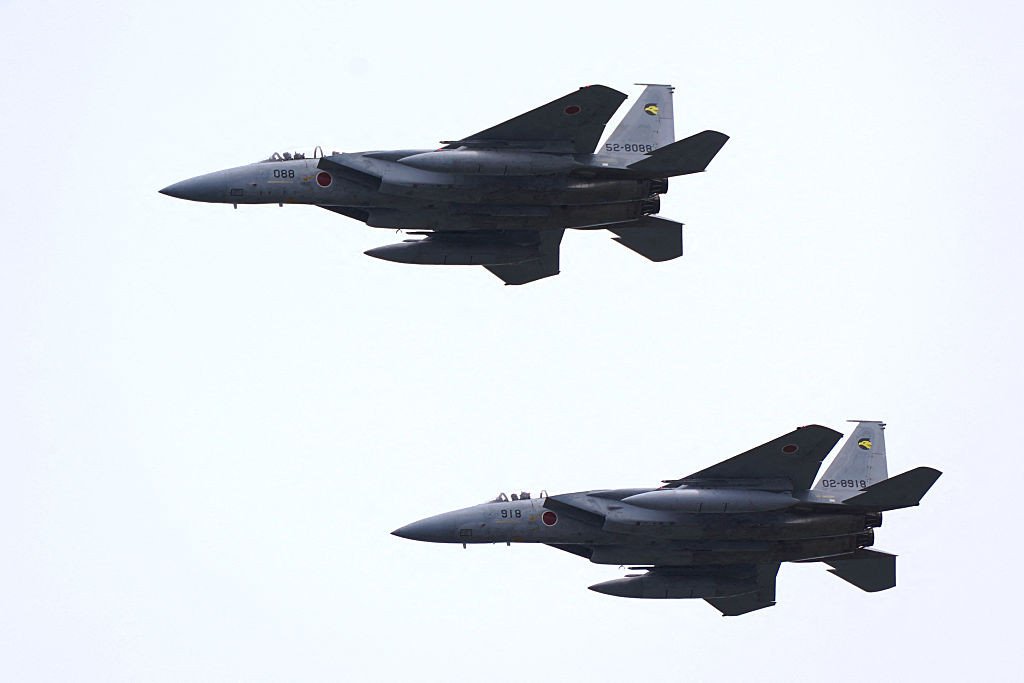
Japan scrambled fighter jets 442 times in response to Chinese and Russian aircraft during the first half of fiscal year 2026, up sharply from 265 scrambles during the same period last year, USNI News reported on October 20.
From April 1 through September 30, 285 scrambles, or 65% of the total, were triggered by Chinese aircraft and unmanned aerial vehicles. Russian aircraft accounted for 152 scrambles, or 34%, while five were classified as other incidents.
We bring you stories from the ground. Your support keeps our team in the field.
USNI News noted that no violations of Japanese sovereign airspace were recorded during the period. Most of the activity took place inside Japan’s Air Defense Identification Zone, which extends beyond the country’s 12-nautical-mile territorial airspace.
The documented activity included Russian Il-20 electronic intelligence aircraft operating over the Sea of Japan and Pacific Ocean, Chinese Y-9 intelligence aircraft over the East China Sea, and joint long-range flights by Chinese H-6 and Russian Tu-95 bombers.
The largest share of Chinese activity occurred over the East China Sea near southwestern Japan, while most Russian flights were recorded over the Sea of Japan and Pacific Ocean near Hokkaido and northern Honshu, USNI News wrote.
Japan’s Southwestern Air Defense Command carried out 201 scrambles during the six months, compared with 189 a year earlier. The Northern Air Defense Command, which frequently responds to Russian military aviation near Hokkaido, recorded 112 scrambles, more than double the 53 reported during the same period in 2025.
The Western Air Defense Command recorded one of the sharpest increases, conducting 102 scrambles compared with just 14 a year earlier. USNI News attributed the rise to increased Chinese activity in the East China Sea and Russian aircraft flying south to join Chinese forces for coordinated operations.
Japan’s Joint Staff Office also recorded 25 instances of what it classified as unusual flight activity, involving Russian Il-20 aircraft, Chinese Y-9 intelligence planes, TB-001 drones, and bomber formations.

Between September 3 and 7, Japanese fighters scrambled on five consecutive days in response to a Chinese Y-9 electronic intelligence aircraft operating over the East China Sea.
One of the largest coordinated missions occurred on June 27, when two Chinese H-6 bombers and two J-16 fighters flew from the East China Sea toward the Sea of Japan and joined Russian Tu-95 bombers, Tu-142 maritime patrol aircraft, and a Su-35 fighter.
The combined force later continued through the area between Okinawa and Miyako Island before operating over the Philippine Sea and Pacific Ocean, USNI News reported.
“In the vicinity of Japan, China and Russia conducted joint flights of bombers and joint navigations of vessels,” Japan’s Ministry of Defense stated in its 2026 defense white paper. “Such repeated joint activities are obviously intended as demonstration activities against Japan and pose a grave concern for Japan’s security.”
The increased Russian air activity comes amid heightened tensions between Moscow and Tokyo over the disputed Kuril Islands. In August, Russia’s State Duma speaker Vyacheslav Volodin invoked Russia’s nuclear arsenal while warning Japan over its territorial claims, after the Russian leader, Vladimir Putin, visited the disputed island chain and triggered a formal protest from Tokyo.
Discuss this article: