- Category
- World
Russia Faces Choice Between Scaling Back War Goals and Forcing a Soviet-Style Economy
 Prefer U24 Media on Google
- Authors

-c439b7bd9030ecf9d5a4287dc361ba31.jpg "Photo of Katherina Popilnichenko")
The Kremlin must choose between reducing its military goals or introducing a Soviet-style command economy and forced conscription to sustain Russia’s full-scale invasion of Ukraine.
Severe labor shortages and battlefield losses are pushing Russia to its absolute economic limits, according to the report "The Coming Crisis in Russia's Political Economy" by the London-based International Institute for Strategic Studies (IISS) on May 18.
We bring you stories from the ground. Your support keeps our team in the field.
The Kremlin is rapidly exhausting its current economic and human resources, putting it on a path where it must soon choose between scaling back its military ambitions or enforcing deeply unpopular domestic measures to sustain Russia’s full-scale invasion of Ukraine.
The Russian government has avoided full societal mobilization by relying on high-paying contracts to recruit soldiers and preserving market economy systems despite recent state nationalizations.
However, with severe labor shortages, budget deficits, and soldier losses since December outstripping recruitment, the country is reaching its productive limits.
Historically, nations participating in major European warfare have implemented total mobilization. The IISS report notes that every major combatant state in World War II enforced conscription, and even the United States drafted 1.7 million men during the Vietnam War, deploying 38% of them to the front lines.
Russia has avoided this path, but its semi-wartime economic structure is fracturing. High defense spending has triggered inflation, high interest rates, and tax hikes that are actively suppressing the domestic civilian market without yielding additional output for the military.
According to the IISS, “the Kremlin will soon face a fundamental choice over whether to radically escalate its demands on Russia's economy and society or to scale back its war aims.” To proceed with the invasion, the Russian government would likely need to "introduce significant new command-like measures that forcibly mobilise human and material resources" for the ongoing military operations.
These adjustments would directly target basic civil liberties established after the collapse of the Soviet Union. The state would likely impose strict regulations on employment, directing citizens into defense factories or military roles rather than using financial incentives.
Furthermore, the report anticipates severe restrictions on travel and foreign departures. The technological framework for these measures is already operational, following the integration of military recruitment databases with border control systems and the rollout of an electronic summons platform.
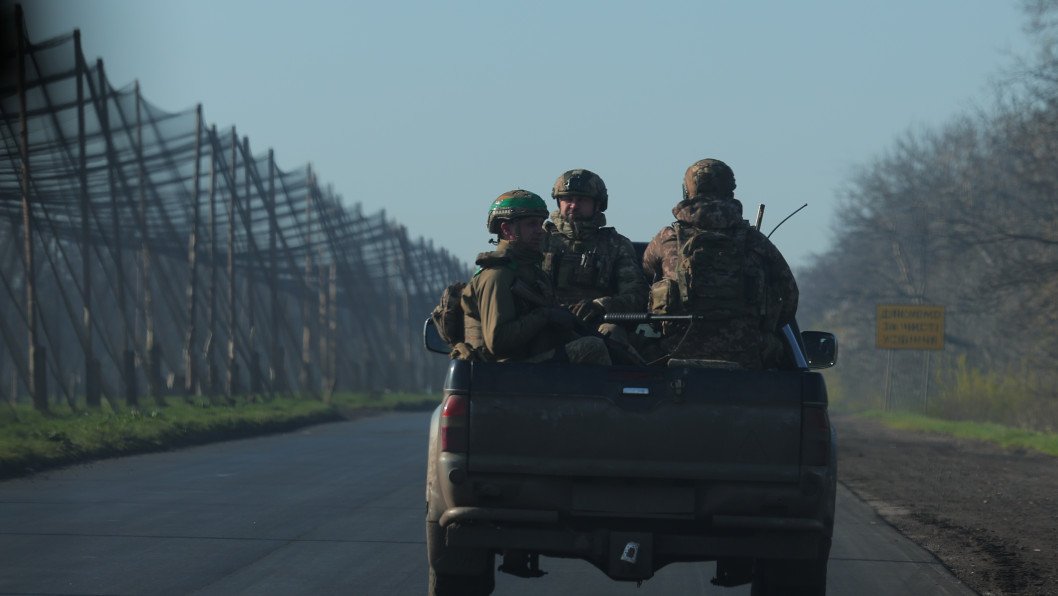
Ultimately, this trajectory points toward a fully militarized, state-run financial system. The IISS predicts the emergence of a command economy reminiscent of the Soviet era, characterized by widespread state ownership and strict government price controls.
While the Kremlin prefers to avoid these volatile domestic choices, recent regional and metropolitan internet shutdowns suggest that security forces are actively preparing mechanisms to suppress potential public unrest or anti-war mobilization.
A shift toward total conscription and economic nationalization involves massive risks for the ruling government. Despite the domestic danger, international experts warn that the policy could still be carried out effectively.
Previously, Russia’s Presidential Administration ordered intelligence agencies, the Foreign Ministry, and state media to launch a coordinated disinformation campaign against Ukraine, according to documents obtained by Ukraine’s Foreign Intelligence Service.
Ukrainian intelligence disclosed the findings in a statement on its official website on May 20. It framed the directive as a demand by Russian leader Vladimir Putin, prompted by the failure of Russia's spring offensive and crucial economic problems.
Discuss this article:


-111f0e5095e02c02446ffed57bfb0ab1.jpeg "Photo of Roman Kohanets")