- Category
- World
Russia Is Turning Belarus Into Its Personal Gas Station. And Ukraine Is the Reason
 Prefer U24 Media on Google
- Authors



Belarus sharply increased rail exports of gasoline and diesel to Russia in May, as the country faces a worsening fuel shortage caused by rising seasonal demand and declining refinery output following a successful Ukrainian deep-strike campaign against Russian refineries, The Moscow Times reported on June 9.
Compared with April, gasoline shipments from Belarusian refineries to Russia rose by 11% to 57,000 tonnes, while diesel supplies increased by 23% to 50,000 tonnes. More than 5,000 tonnes of aviation fuel were also delivered to the Russian market over the same period.
We bring you stories from the ground. Your support keeps our team in the field.
From January to May 2026, gasoline rail exports from Belarus to Russia surged almost 13 times year-on-year to 270,000 tonnes, while diesel exports tripled to 179,000 tonnes.
According to The Moscow Times, Belarus, which operates two refineries with a combined annual capacity of 24 million tonnes, has been partially compensating for reduced Russian refining output affected by Ukrainian drone strikes, according to Belarusian state media citing leader Alexander Lukashenko.
In the latter half of 2025, the Novopolotsk and Mozyr refineries began processing Russian toll crude, with the resulting fuel supplied both to the Russian domestic market and for export.

Transit flows of Belarusian fuel via Russian ports also increased. In May, rail shipments of gasoline for export through Russian ports rose by nearly 30% in daily terms month-on-month, reaching around 165,000 tonnes.
Of this volume, about 34,000 tonnes were shipped through the Arctic port of Murmansk, while most of the remainder was routed via Astrakhan. No diesel exports from Belarus via Russian ports were recorded during the month, The Moscow Times reported.
Meanwhile, rail shipments of fuel oil through St. Petersburg declined by 17% to 85,000 tonnes, and no deliveries were made to Ust-Luga.
Overall, transit exports of Belarusian petroleum products through Russian ports rose 2.5 times in January–May 2026 compared to the same period last year, reaching roughly 1.53 million tonnes.
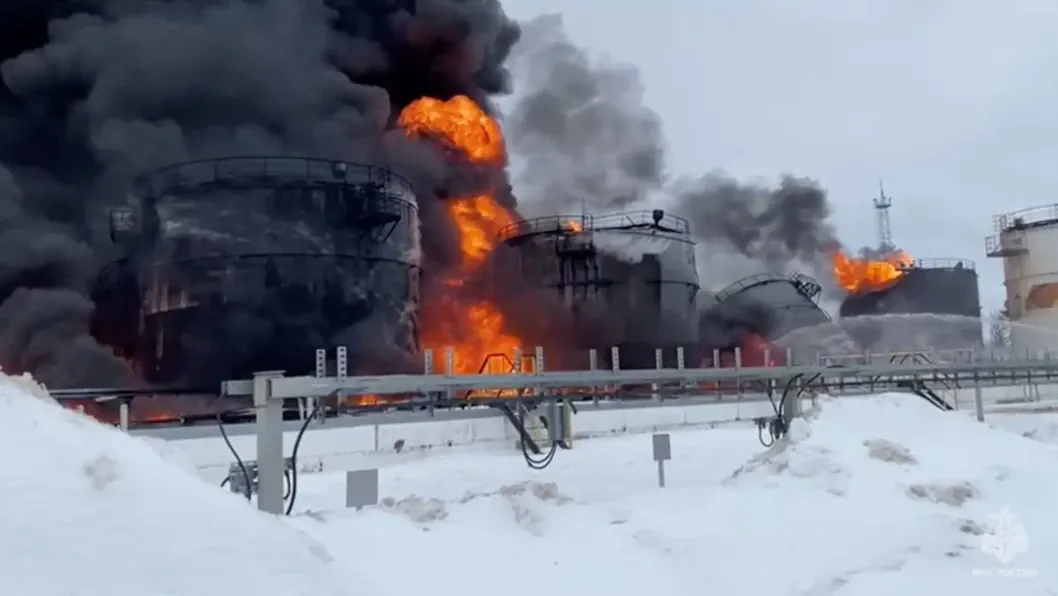
Since the beginning of Russia’s full-scale invasion, Ukraine has conducted at least 158 strikes on Russian oil refineries.
The analysis indicates that Ukrainian forces have hit at least 24 of Russia’s 33 largest refineries, each with an annual processing capacity exceeding one million tonnes of crude oil.
Of the major facilities, only the Omsk and Angarsk refineries—both located east of the Ural Mountains—are reported to have remained beyond the reach of Ukrainian attacks. At the same time, Ryazan and Saratov refineries have been among the most frequently targeted, each coming under strike around 15 times since the start of the war.
-c65beef38eb42c5c49f25778e5905100.jpg)
As a result of repeated attacks, some Russian refineries have been forced to reduce or suspend operations, pushing the country’s oil processing output to its lowest level since 2009. Industry losses linked to Ukrainian drone strikes are estimated to have exceeded $13 billion in 2025.
Separately, Bloomberg, citing estimates based on Ukrainian and Russian official data, reported that Ukraine carried out around 120 strikes on Russian energy infrastructure in 2025. Of these, 81 targeted oil refineries, making them the most frequently hit category. Maritime energy assets, including offshore oil and gas platforms, were struck 27 times, while pipelines were hit on eight occasions and oil tankers in four separate incidents.
-78b1636206f47b71ab3b491ada3f4484.jpg)
At the same time, drones and missiles hit the Kuibyshev oil refinery in Russia’s Samara region, triggering multiple fires at the site, according to footage shared by the OSINT group Exilenova+ on June 10.
Samara region governor Vyacheslav Fedorishchev confirmed that the region had been targeted in a combined drone and missile attack.
The Kuibyshev refinery is one of the largest oil processing facilities in the region and is operated by Rosneft.
Discuss this article:



-c439b7bd9030ecf9d5a4287dc361ba31.jpg "Photo of Katherina Popilnichenko")


-72b63a4e0c8c475ad81fe3eed3f63729.jpeg "Photo of Cyril Barabaltchouk")