- Category
- Investigations
Russia Quietly Armed Iran’s Air Force for Years, Leaked Files Reveal. Su-35 Jets Expected Next
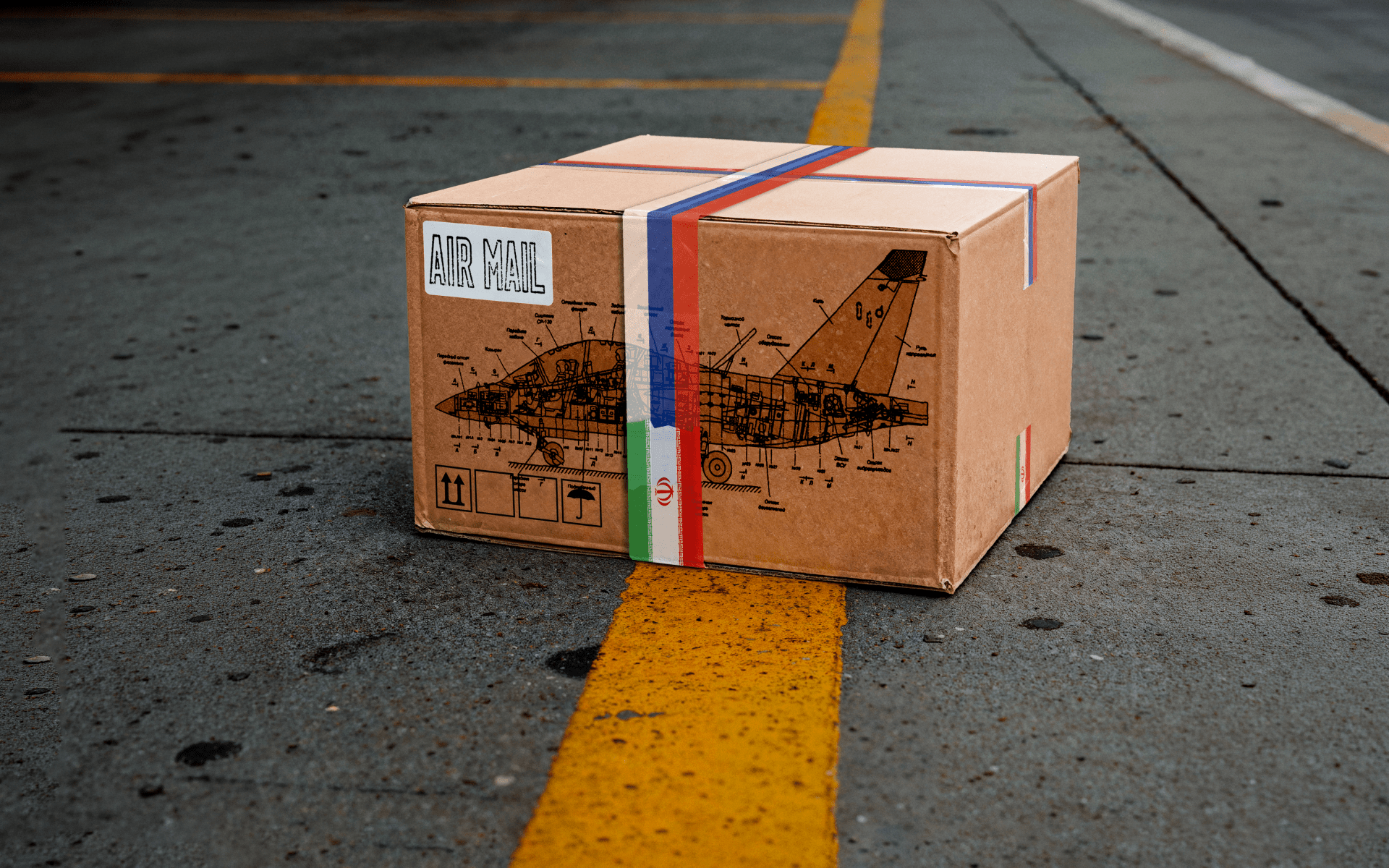
An F-35 made history on March 4, 2026, by shooting down a Russian-made aircraft over Tehran—the first confirmed air-to-air kill by the stealth fighter. Leaked documents show how the downed Yak-130 reached Iran.
 Prefer U24 Media on Google
- Authors


“An Israeli Air Force F-35I fighter jet (“Adir”) shot down an Iranian Air Force YAK-130 fighter jet a short while ago over the skies of Tehran,” the Israel Defense Forces (IDF) said.
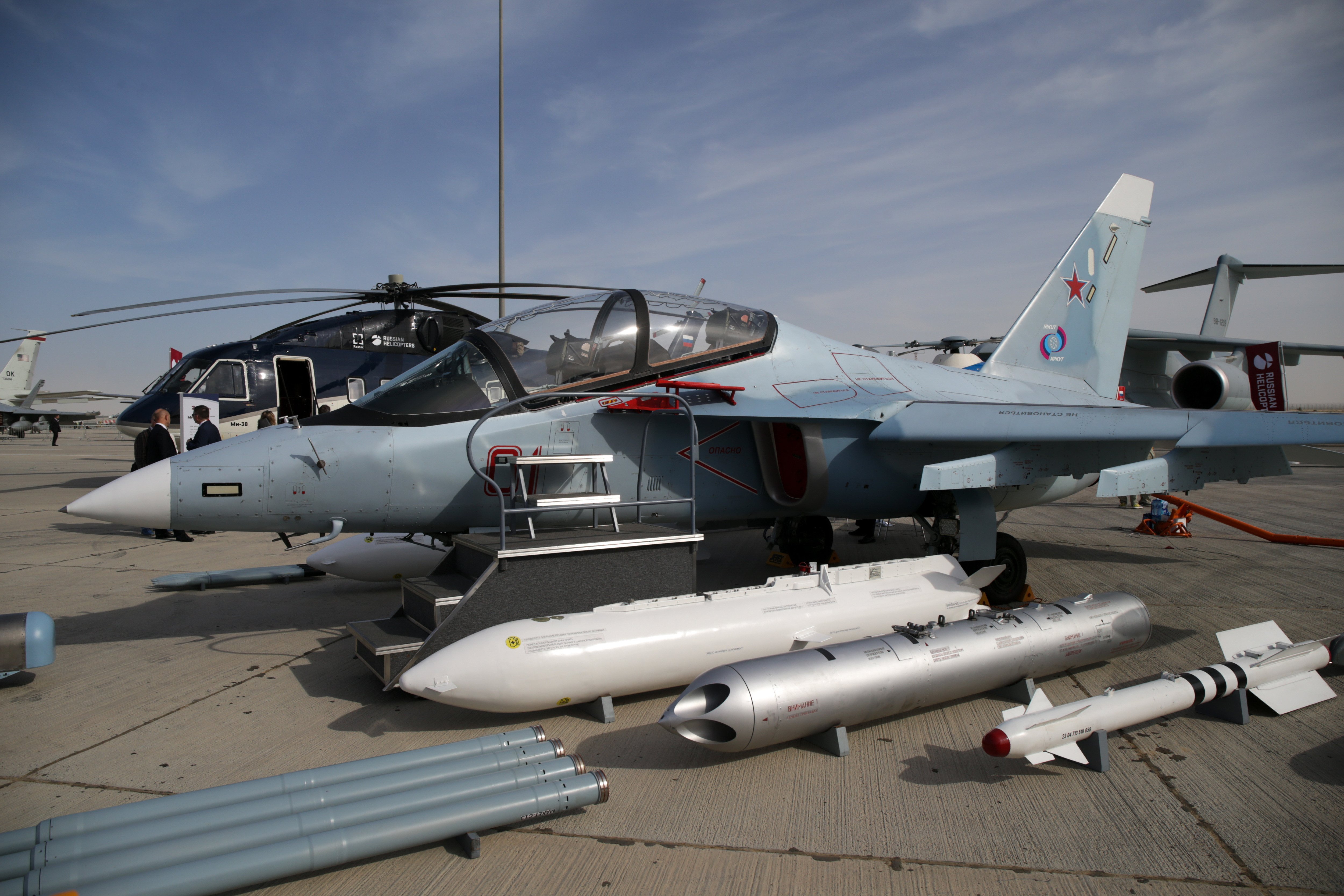
Historians will later assess the significance of this event for the world’s air forces. For contemporary chroniclers, however, one simple fact is already clear: Iran has Russian aircraft in its arsenal. And it is already using them against Israel and the United States.
Russia has spent years quietly strengthening Iran’s combat aviation. Leaked documents obtained by our editorial team show that Iran received at least eight training aircraft from Russia. The Yak-130 aircraft were purchased under state contracts, and their implementation will continue at least through the end of 2026. At the same time, Russia is also already building dozens of modern Su-35 fighter jets for the Iranian Air Force.
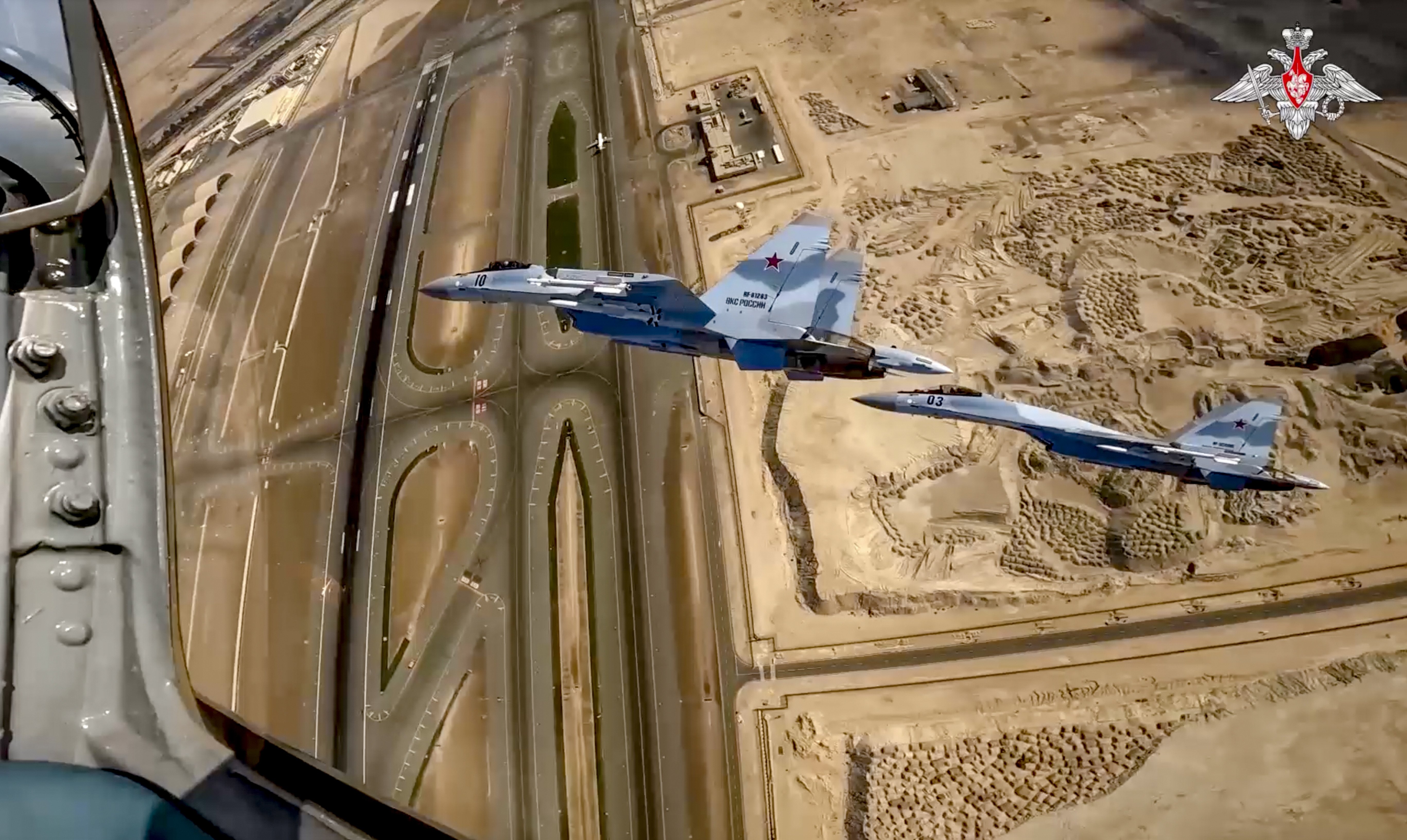
Military aircraft components supplied to Iran
The first Russian Yak-130s were delivered to Iran in 2023. Their primary role is to train future military pilots, although they can also serve as light attack aircraft, carrying up to three tons of munitions. It is no coincidence that they are often referred to as “flying classrooms.”
As previously published information indicated, the Yak-130s were expected to be used to train future Su-35 fighter pilots, while the Russians were already assembling those aircraft for Iran during the full-scale war against Ukraine. As our investigation shows, work on strengthening Iran’s air force is ongoing.
Key participants:
Research & Development Production Enterprise Zvezda (R&D PE Zvezda), manufactures ejection seats.
Irkut Corporation (now renamed Yakovlev Corporation), handles exports within the United Aircraft Corporation and manufactures jet aircraft.
Scientific Research Institute of Polymer Materials (NIIPM JSC), specializes in the development of propellants, solid rocket fuel, low-gas-generating components, and charges based on them.
The federal state-owned enterprise Perm Powder Plant, specializes in the production of propellants and explosives for defense purposes.
The first evidence we obtained indicating that Moscow was working to fulfill its contract with Tehran to deliver Yak-130 aircraft dates to October 2022. In them, the head of R&D PE Zvezda contacts NIIPM JSC to clarify the procurement of certain product items from the latter. The direct customer, or contractor on the Russian side of the agreement, is Irkut Corporation.
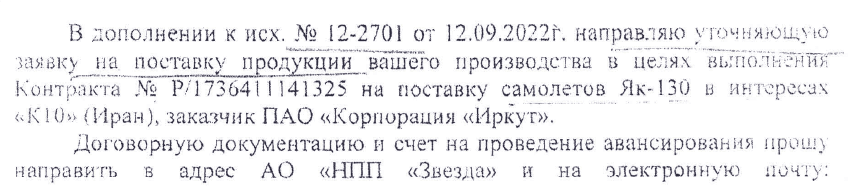
The substance of this clarifying request may seem technical, but in aviation, there are no unimportant details, and what follows makes that abundantly clear.
The available documents show that NIIPM JSC was expected to deliver 40 units of PK-3.5Ya pyrotechnic kits, marked “IRBD 773519.015 GD/1872,” to R&D PE Zvezda in March 2023.
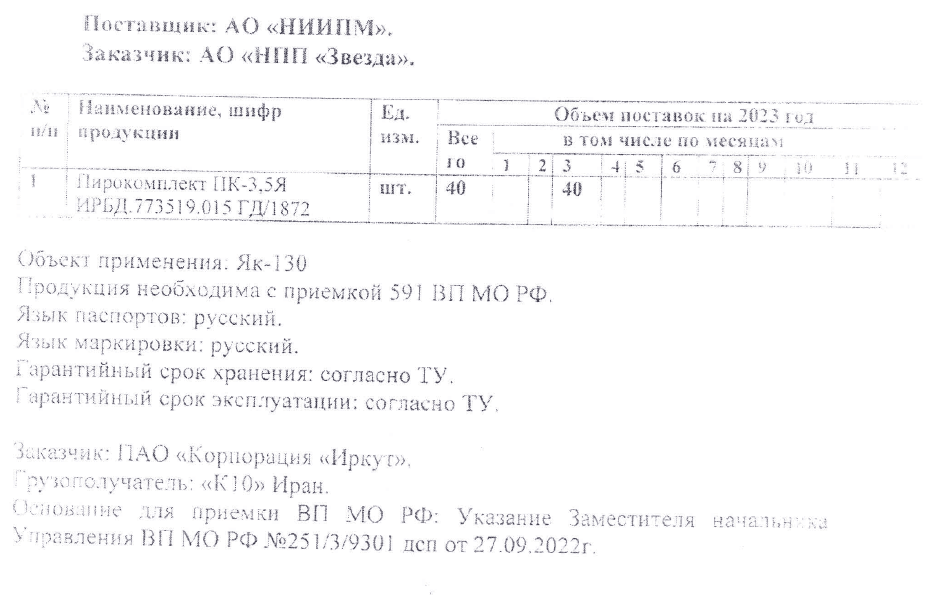
These pyrotechnic cartridges are used in pilot-seat ejection systems. But they are not easy to manufacture, so as part of implementing the contract with Iran, Irkut Corporation brought in another Russian enterprise: the Perm Powder Plant. Correspondence between these two entities shows that Tehran ordered more than just training Yak-130 aircraft.
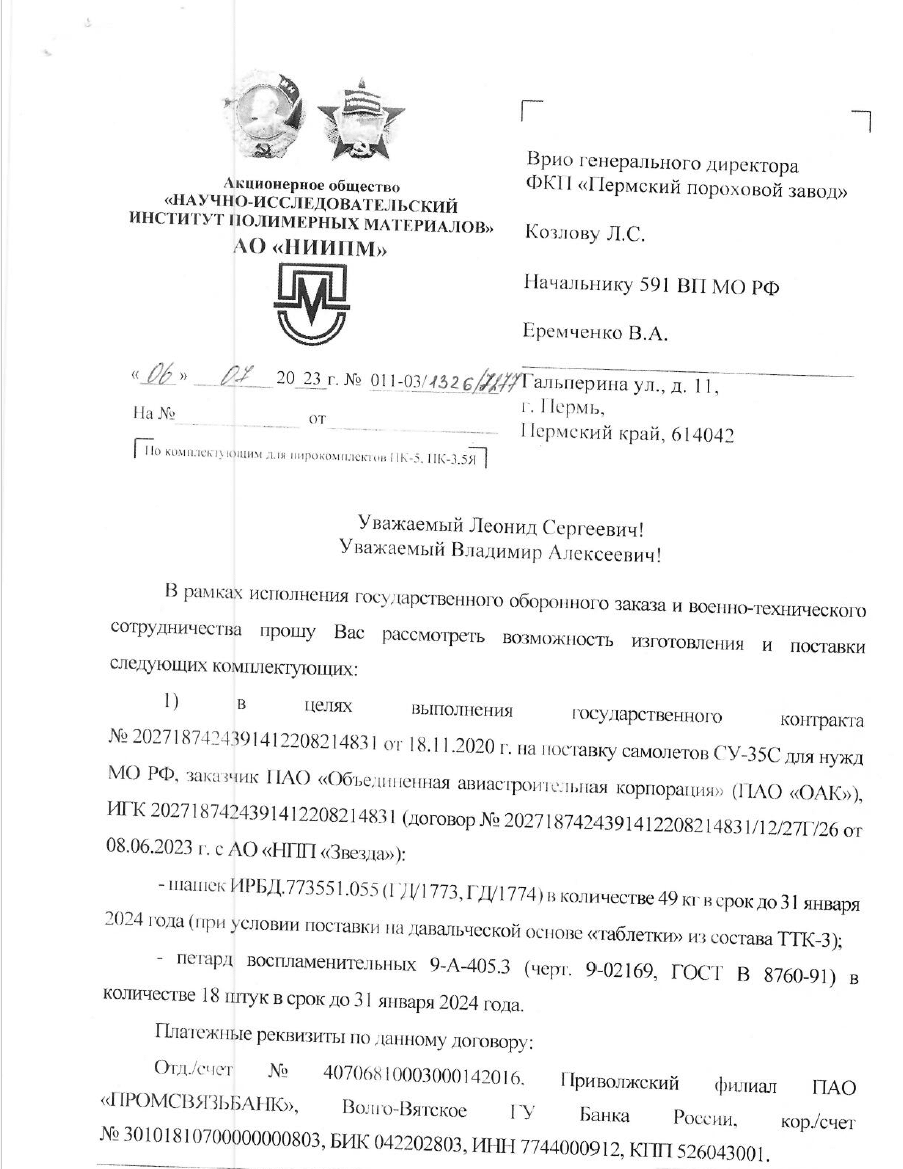
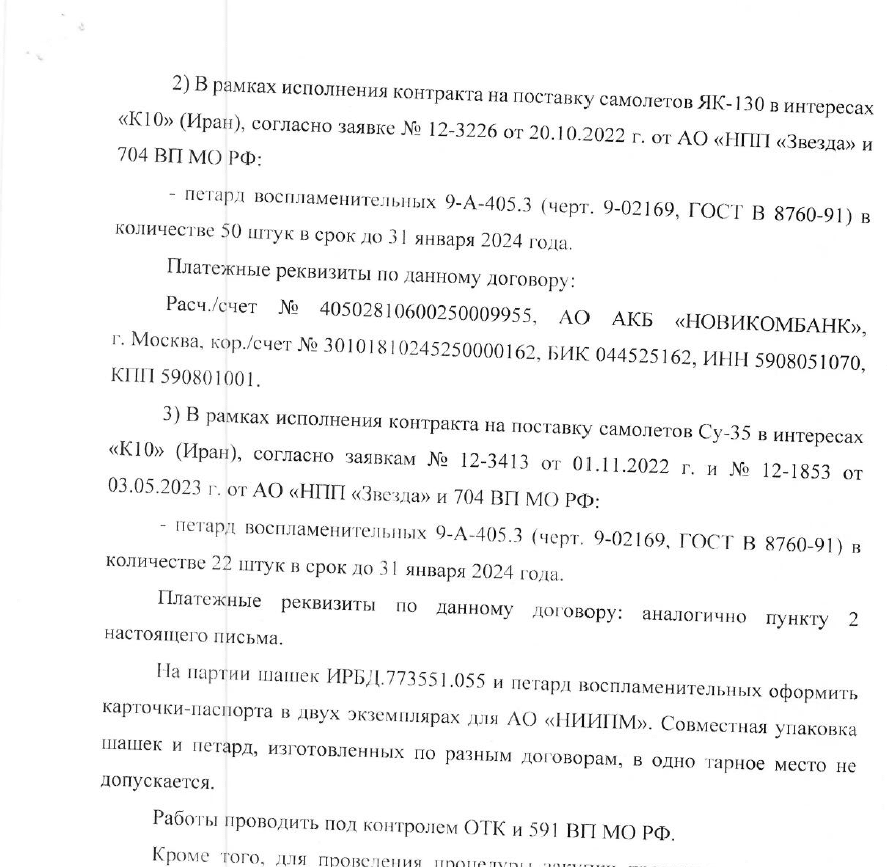
As the documents show, under the contract for the supply of Yak-130 aircraft to Iran, R&D PE Zvezda contracted the Perm Powder Plant to manufacture and deliver 50 ignition cartridges with the appropriate markings. The deadline for fulfilling the order was January 31, 2024.
The next item in the same document lists similar ignition cartridges in a quantity of 22 units, but this time under the Iran contract for the supply of Su-35 fighter jets. These aircraft ignition cartridges were also to be delivered by January 31, 2024.
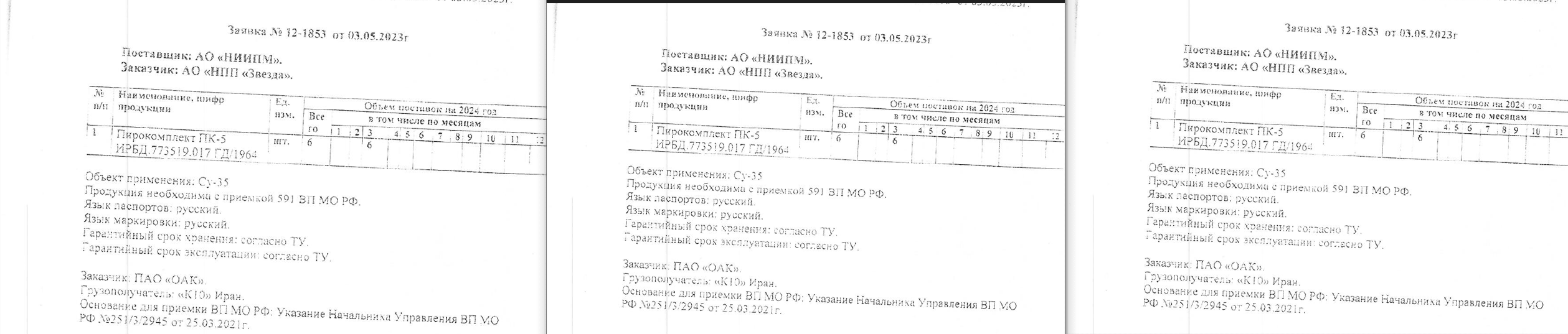
Most interestingly, the contracts in question are still active now, and their execution is scheduled to continue throughout 2026. The documents state that in May 2025, the deputy general director of NIIPM JSC asked the general director of the Perm Powder Plant to confirm delivery timelines for a range of items for the manufacture of “PK-5 pyrotechnic kits in the interests of foreign customer K10” (Iran).
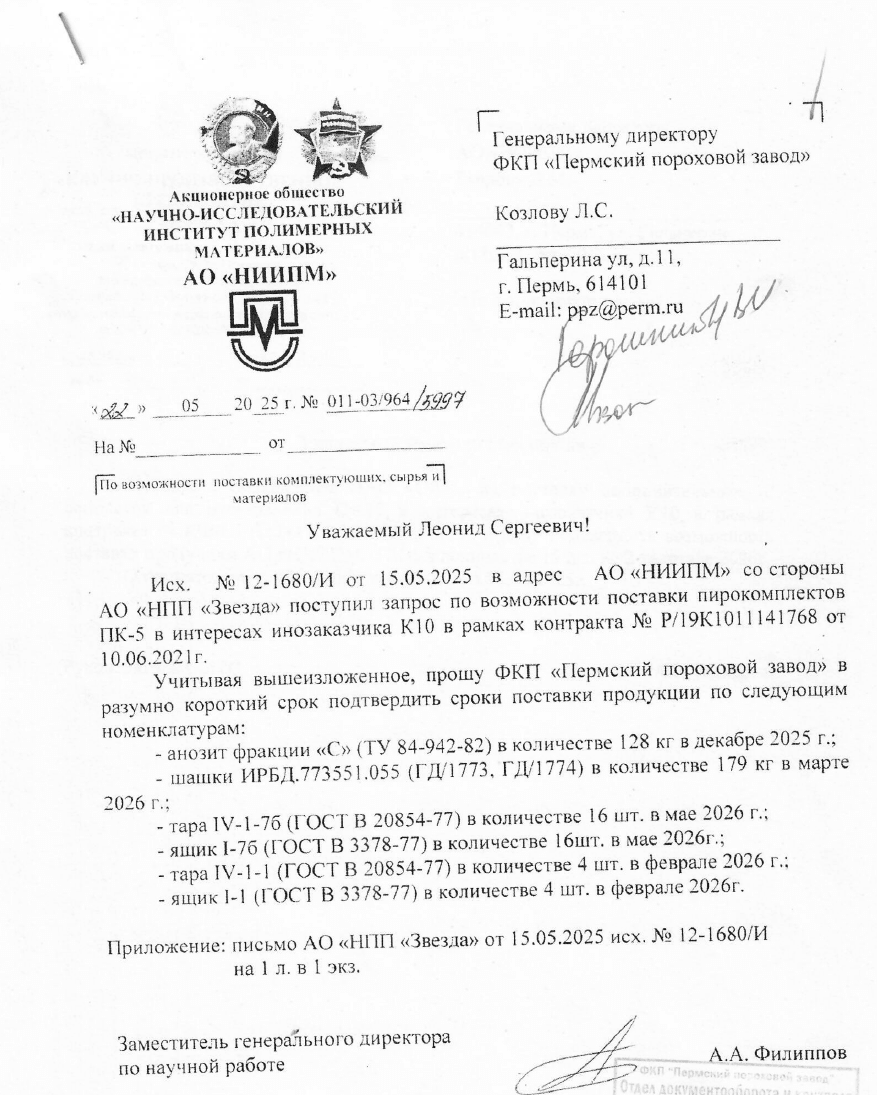
As this letter shows, deliveries of components in the interests of the customer, Iran, are continuing in March 2026 and will also take place in May of this year. Given that these are only parts for manufacturing specific components used in military aircraft that Moscow has committed to transfer to Tehran, the actual delivery of the Su-35 fighters and new “training” Yak-130s is still expected to take place later.
As the final document shows, contract No. R/19K1011141768 was signed on June 10, 2021, and, based on the available documents, its implementation was not disrupted by Russia’s full-scale war against Ukraine.
Open sources include the minutes of a late-2025 board meeting of the Sapphire Machine Plant, which manufactures optoelectronic devices and mentions the above contract with Iran.
The document states Sapphire is selling goods to Radiozavod, a manufacturer of equipment for mobile automated command-and-control systems for troops and weapons, including air defense and artillery systems, under a contract “in the interests of foreign customer K10.” The contractor under that agreement is listed as Rosoboronexport.
Overall, the documents show that Moscow and Tehran are building a systematic military-technical partnership that extends far beyond isolated arms deliveries. Even after the start of the full-scale war against Ukraine, Russia has continued to execute contracts that directly strengthen Iran’s military potential.
If the transfer of Yak-130 combat trainer aircraft to Iran already appears to be a completed step, the documents suggest that cooperation may not stop there. In Russian-Iranian negotiations, the possible transfer of a far more powerful platform, the Su-35, is appearing with increasing frequency.
Unlike the Yak-130, which is primarily used for pilot training and light combat missions, the Su-35 is a heavy, multirole 4++ generation fighter equipped with the powerful Irbis-E radar and capable of carrying a wide range of air-to-air missiles. For Iran, whose air fleet still consists largely of aging F-4 Phantom II and F-14 Tomcat aircraft, such a delivery would be a major boost to airpower and could affect the regional balance of forces.
Discuss this article:
-9a7b3a98ed5c506e0b77a6663f5727c5.png)



-206008aed5f329e86c52788e3e423f23.jpg "Photo of Oleksandr Moiseienko")