- Category
- World
Russia’s War Economy Starts to Crack as Moscow Forecasts First Industrial Decline in Five Years
 Prefer U24 Media on Google
- Authors


Russia’s Ministry of Economic Development has officially projected a decline in industrial production for the first time in five years, as the country’s economy faces mounting pressure from its shift toward wartime production.
According to Ukraine’s Foreign Intelligence Service (SZRU), which reported the figures on November 2, Russia’s industrial output is now expected to contract by 0.2% in 2026, compared with an earlier forecast of 0.6% growth.
We bring you stories from the ground. Your support keeps our team in the field.
Industrial production remained stagnant during the first eight months of the year, while output fell by 0.8% year-on-year in August.
According to the SZRU, the downturn reflects the consequences of the Kremlin’s decision to redirect Russia’s economy toward supporting its war against Ukraine.
One of the main factors behind the decline has been weakening domestic demand, driven by high inflation, currency fluctuations, and elevated borrowing costs.
At the same time, Russia’s defense industry is also experiencing a slowdown as government defense orders decline amid broader economic difficulties. The intelligence agency noted that defense manufacturers, which Moscow had expected to support industrial growth, are now facing production cuts of their own.
The downturn has been particularly pronounced in industries dependent on consumer spending and access to credit, including automotive manufacturing, construction, agriculture, and chemical production.
Declining revenues have also increased financial pressure on Russia’s regions, many of which are becoming increasingly dependent on federal government assistance.
According to Ukrainian intelligence, 65 Russian federal subjects currently rely on subsidies from the central government to sustain their finances, while only 24 remain financially self-sufficient contributors to the federal budget.
The growing dependence on federal support is further weakening household purchasing power, adding to the difficulties facing consumer-oriented industries.
The decline is also reflected in production figures across several major industrial sectors. Russia’s metallurgical industry has recorded a 5.2% reduction in output, while chemical manufacturing has contracted by 3%.
Clothing production has fallen by 4.2%, while manufacturing of elevators and freight railway wagons has declined by 20% and 30%, respectively.
The energy sector is also showing signs of weakening, with petroleum product production falling for the third consecutive month. According to the SZRU, Russian oil extraction could decline to its lowest level in 17 years by the end of 2026.
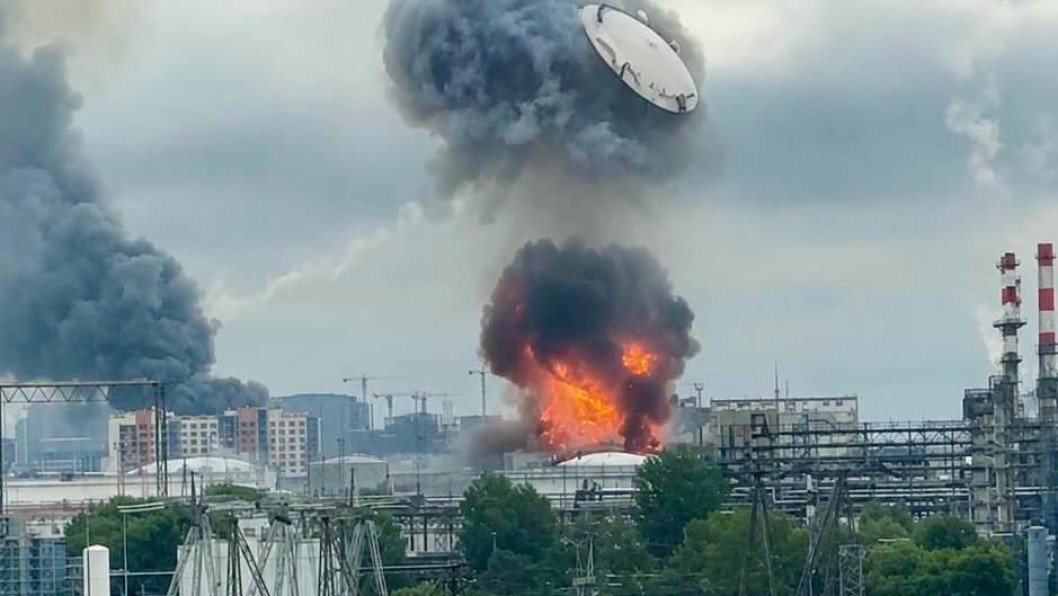
The reported industrial slowdown comes as Ukraine continues conducting long-range strikes against Russian military and defense industry infrastructure, targeting facilities involved in weapons production and supporting Moscow’s war effort.
In October 2026, Ukrainian forces struck at least 30 military and strategic targets across Russia, including defense manufacturing enterprises, military airfields, aircraft, radar installations, and logistics infrastructure, according to Ukraine’s Ministry of Defense.
In a November 3 statement summarizing the operations, the ministry reported that Ukrainian strikes targeted seven facilities associated with Russia’s defense and aerospace industries, three military airfields, and several radar and military communications installations.
Other targets included ammunition depots, military command posts, equipment repair facilities, a missile launcher, and a base used to deploy Russian attack drones.
Discuss this article: