- Category
- Anti-Fake
The Private Putin Army in Europe
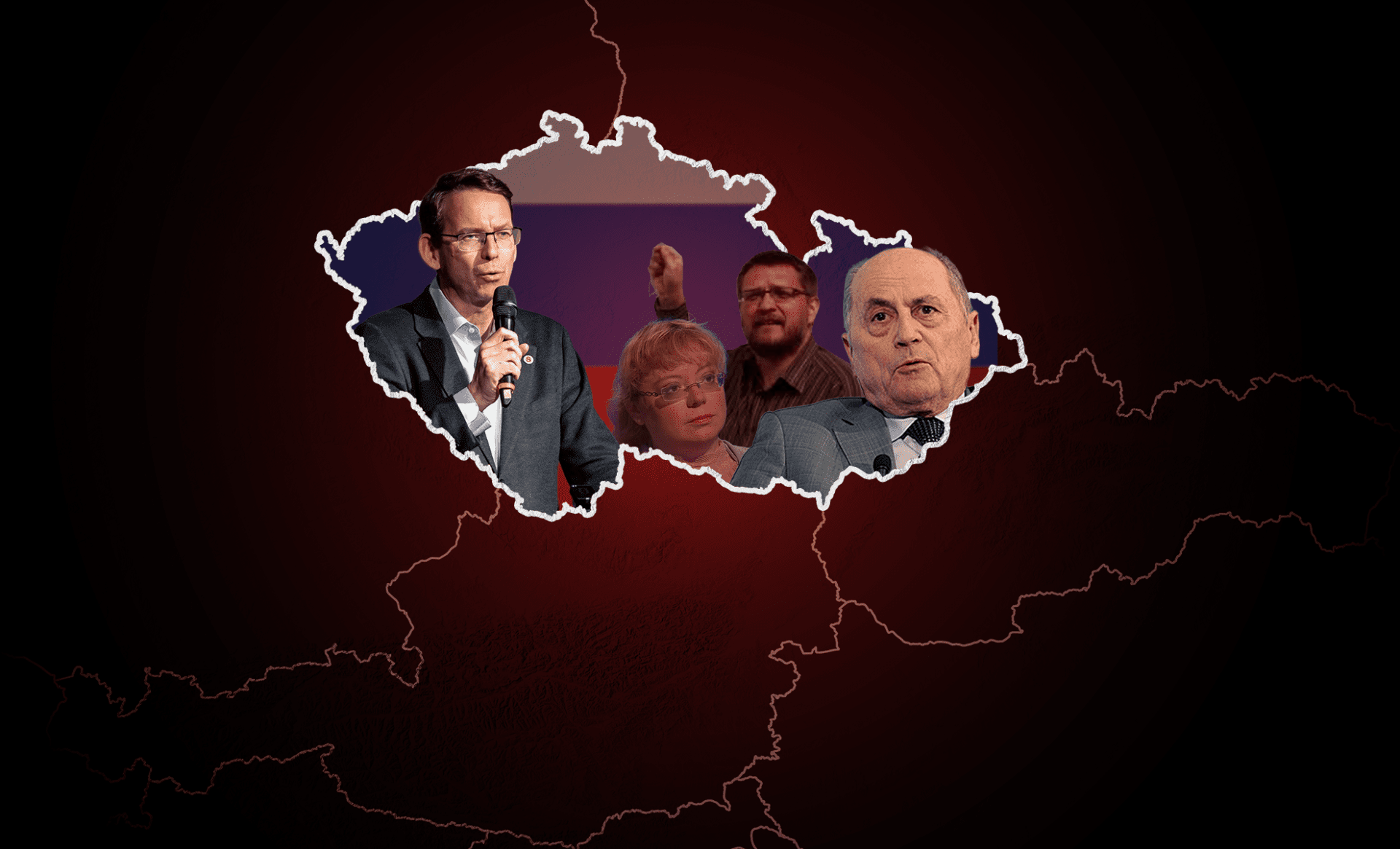
Russia’s efforts to sway Czech politics have gone further than public messaging. As voters reject them at the ballot box, an NGO quietly works to keep the Kremlin’s agenda alive.
 Prefer U24 Media on Google
- Authors

-46f6afa2f66d31ff3df8ea1a8f5524ec.jpg "Photo of Jess Daly")
Czechia was among the first to support Ukrainian refugees and supply weapons when Russia’s full-scale invasion of Ukraine began. The Czech President at the time of the invasion, Miloš Zeman, who had been historically strongly pro-Russian, called Russian leader Vladimir Putin a “mad man,” and encouraged international courts and war crimes tribunals to bring Russia to justice.
Lunatics need to be isolated, and we must protect against them not only by words but by concrete measures.
Miloš Zeman
Former President of Czechia
Zeman said that his “biggest failure” during his many years in office, from Prime Minister to President, was his misconception of Putin.
Like much of Europe, Czechia has seen large-scale disinformation operations launched by Russia this year, specifically targeting elections and public discourse. In Czechia, the production of Russian-linked disinformation websites is now at the highest level in history and is still growing.
UNITED24 Media speaks with Vojtěch Boháč, the editor-in-chief of Voxpot who dives into Russia’s disinformation operations pre-elections, and uncovers an NGO—Svatopluk—that’s bringing together pro-Russian figures from both the far right and post-communist left in Slovakia and Czechia, aiming to topple the so-called Czech regime and clear the way for Moscow’s agenda.
This is basically Russia’s agency in Europe…its founders are the real links to Russian secret services and Russian influence in Europe.
Vojtěch Boháč
editor-in-chief of Voxpot
Russia’s disinformation campaign in Czechia
Ahead of Czechia’s October 2025 elections, Russia’s push to sway the country’s politics hit overdrive. Voxpot and tech collective Druit IT revealed a vast web of disinformation networks operating inside the country.
They traced 360,000 publications across 16 platforms over 25 years and found a coordinated flood of Kremlin-aligned propaganda—much of it linked to Russian state media and even the intelligence services FSB and SVR .
Leading up to the vote, output from Czech-language disinformation sites reached record levels—around 4,000 articles a month, or about 120 pieces every single day. That’s more content than some of the nation’s largest mainstream outlets produce, Voxpot reported.
Pro-Kremlin Czech sites
The joint investigation found that the country’s largest disinformation site is Cz24news, and at the centre of the campaign, churning out as many as 2,000 posts a month and drawing in around three million visits.
Other key platforms include:
Nová republika—founded by Ivan David, a Czech Member of the European Parliament from the Freedom and Direct Democracy (SPD) party. The site routinely echoes Russian talking points; one recent headline read, Russia must destroy Ukraine before the West can start a war in Eastern Europe.
Protiproud—run by Petr Hájek, a former adviser to ex-president Václav Klaus, who has long faced criticism for his pro-Russian stance. The outlet brands itself as a “counterrevolutionary magazine” but is widely recognized as a hub of Kremlin propaganda.
AC24—a Czech media outlet that became a major translator and amplifier of Russian state media content into Czech.
Zvědavec—one of the first Czech-language websites to push pro-Kremlin narratives.
Sanctioned Russian websites
Material taken directly from EU-sanctioned Russian sites also surged, peaking at roughly 250 articles a month since Russia’s full-scale invasion of Ukraine began.
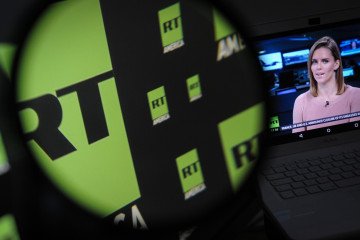
Of the 20,975 propaganda pieces identified during their investigation, more than 7,000 came from Sputnik, 4,000 from RT, and over 2,000 from RIA Novosti—all sanctioned Russian sites.
Publishing or distributing content from sanctioned Russian outlets is illegal in the EU and in Czechia and can lead to fines of up to 50 million korunas ($2.38 million) or even eight-year prison terms. But according to Voxpot’s government sources, Czech authorities—while fully aware of the violations—have so far hesitated to act.
Czechia finds itself in a situation where the state is afraid to confront propaganda and disinformation from a country that openly labels us an enemy and exploits the vulnerabilities of our society for its own political aims.
Voxpot
Russian Campaign in Czechia Is Much Bigger Than You Thought report
TikTok’s propaganda network
Boháč highlighted an unusual front in the information war: a coordinated TikTok network working for both the far right and far left, all serving Moscow’s interests. Ahead of the election, it pushed Kremlin narratives and boosted parties like the far-right SPD and the far-left STAČILO!.
Hundreds of anonymous accounts, largely automated, repeat the same messaging: first, Kremlin propaganda, then promotion of pro-Russian politicians. At the top sit ten high-profile creators whose videos attack anyone pro-EU or NATO, regularly drawing tens or even hundreds of thousands of views.
A second tier of over a hundred smaller accounts exists solely to amplify the larger creators. Many were created in the last six months, post nothing original, have no profile pictures, and use nonsensical handles. An investigation by the Centre for Internet Risk Research found that the accounts can like and comment faster than any human could, indicating heavy automation.
Online Risk Labs found 286 accounts collectively reaching 5–9 million views per week, translating content from sanctioned Russian sources and impersonating political candidates. As of August 2025, TikTok removed 98.5% of content breaking its election rules, along with 46 accounts impersonating officials.
Despite the deluge of propaganda, Boháč says Russian interference largely failed to sway voters. But the TikTok network did push a single goal: toppling the Czech regime and shifting the country toward Moscow. Voxpot uncovered an NGO orchestrating this tactic, uniting left and right in service of Russia’s agenda.
“Sovereignty” from the Left and Right
In 2022, as Czech leaders searched for ways to support Ukraine, Voxpot found that a new alliance had quietly emerged: a coalition of prominent figures from both the left and right, led by former Czech First Deputy Foreign Minister Petr Drulák.
At the beginning, there were three of us.Now there are hundreds of us, soon there will be thousands.
Svatlopuk
The group co-authored a book titled “Svrchovanost zleva i zprava” (Sovereignty from the Left and Right). By the book’s own description, the book is a forum for voices “from both the right and the left… from different disciplines, life experiences, and political positions.”
But beneath its academic tone, Boháč says, all its authors shared a hard line: hostility toward NATO and the EU—and the claim that Russia was provoked by the West to invade Ukraine. The book opened the door for open talk of regime change in Czechia, “because under the current regime, it is not easy to oppose the country’s current ally, Ukraine”, Boháč said.
Within months, the authors launched an NGO—Svatopluk—turning their ideas into a political project. The network spans Czech and Slovak politics, giving Moscow new channels into both countries.
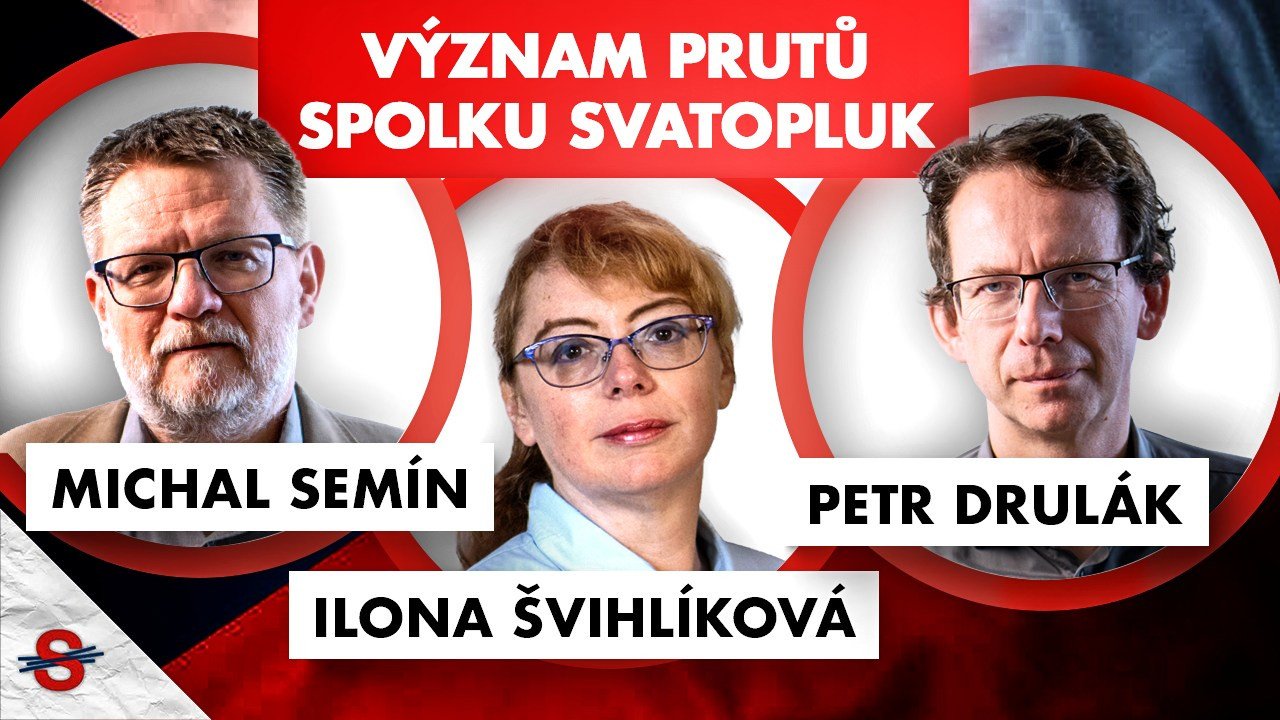
The founding core includes Petr Drulák, Michal Semín , and Ilona Švihlíková , joined by high-profile Slovak figures with Kremlin ties: former Slovak Prime Minister Ján Čarnogurský and Ľuboš Blaha, a senior MP from Robert Fico’s SMER-SD party.
Slovakia and Czechia have long been close allies, but that bond began to fray after Russia launched its full-scale war. In March 2023, Slovakia’s foreign minister met with Russia’s counterpart, Sergey Lavrov, and Fico’s pro-Kremlin stance further strained ties. Prague responded by scaling back diplomatic and intelligence cooperation with Bratislava.
Since then, Fico’s government has halted aid to Ukraine, denounced EU sanctions against Russia, and rejected Kyiv’s NATO aspirations. As Czechia turned its back on Russia and Slovakia, the Svatopluk Association is working to keep Russian politics in Czechia alive.
There will be no regime change in these elections, but forces will emerge… And the main force pushing for this is the Svatopluk Association.
Petr Drulák
Svatopluk
Under the cloak of an NGO
Svatopluk doesn’t advertise itself as pro-Russian. On paper, it claims to “discover the unique historical, cultural, natural wealth and heritage” of Czechia and Slovakia.
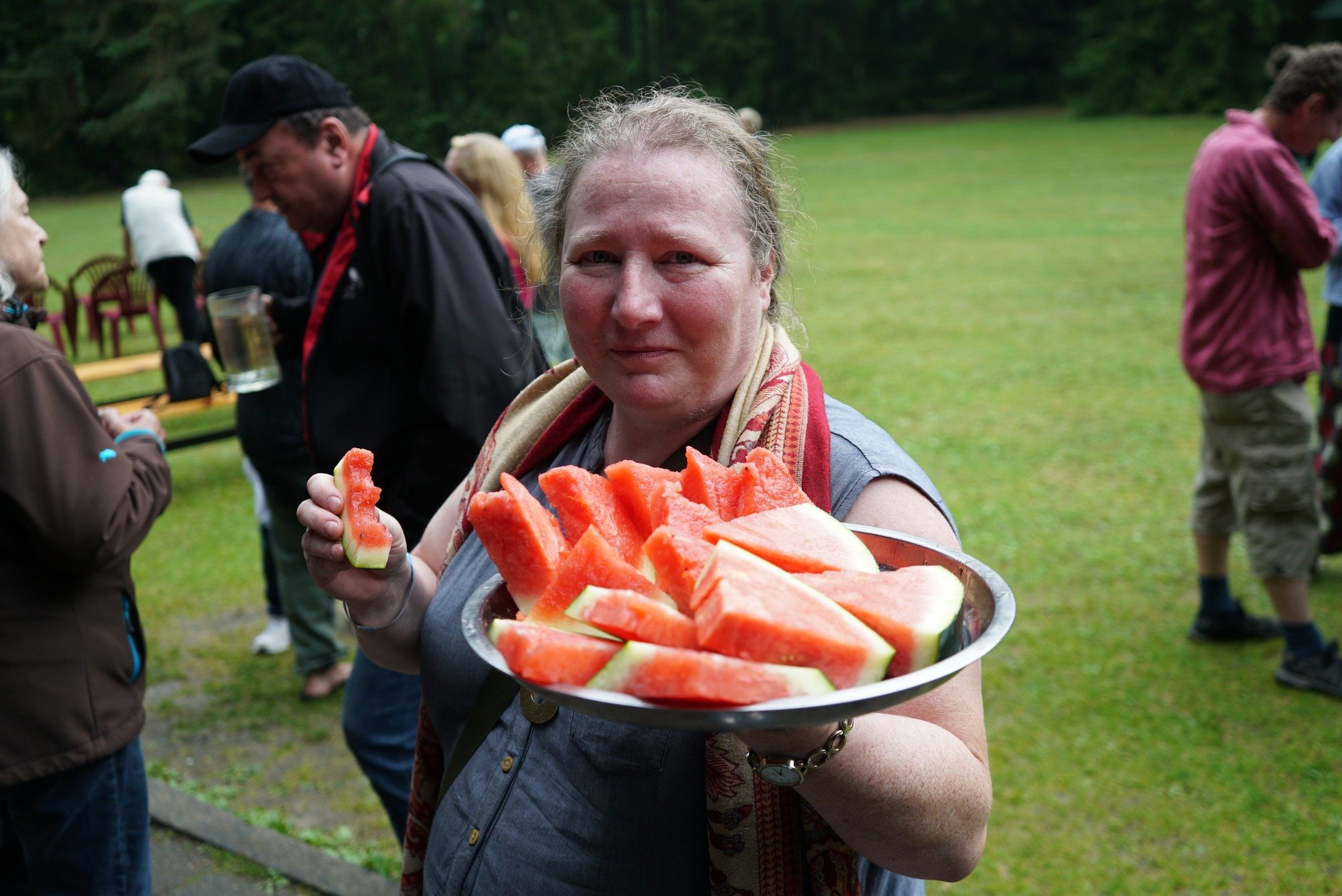
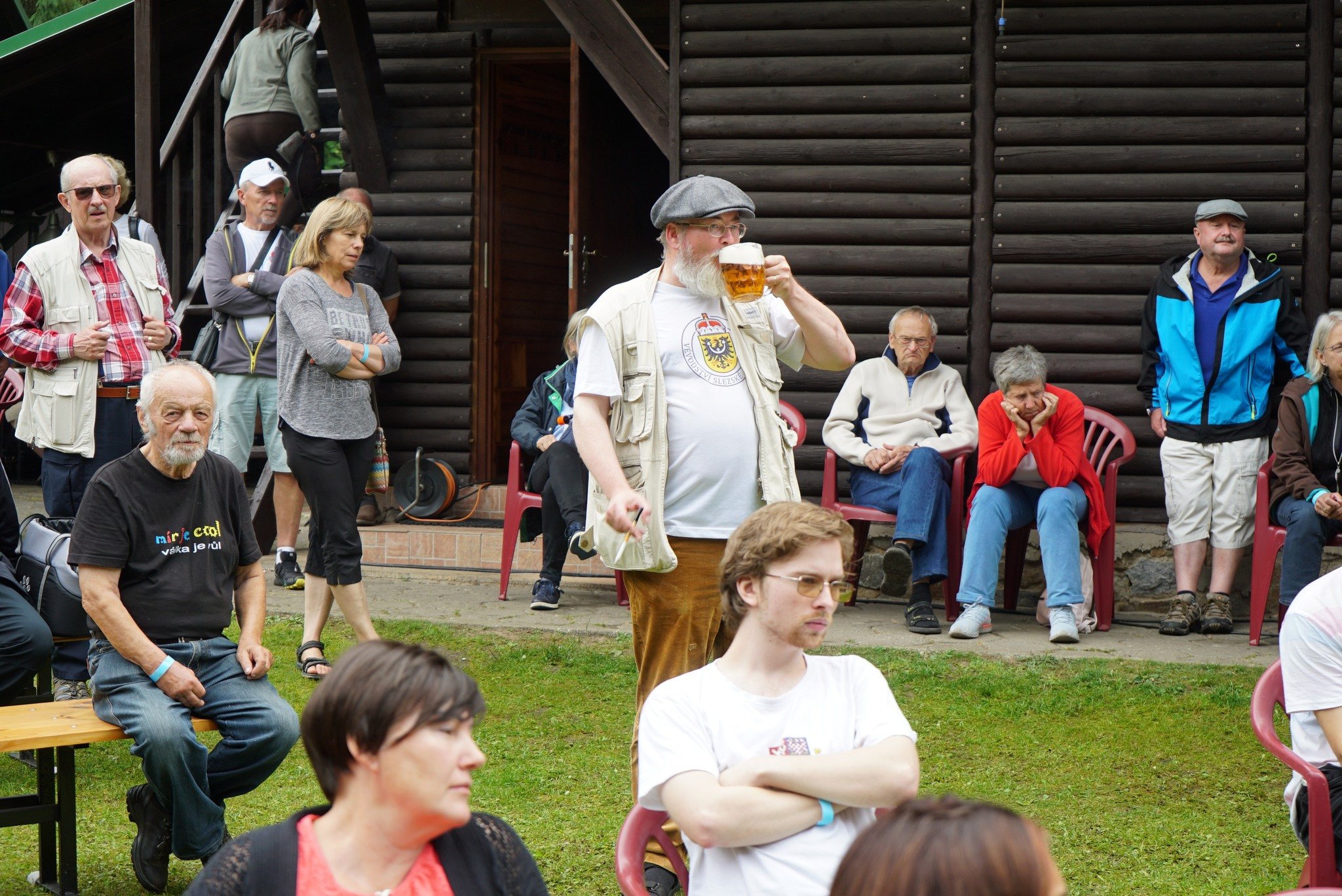
Its website promotes “cultural experiences, hiking, and art” and says it views the world “from the conservative right.” Meanwhile, pushing anti-EU rhetoric, accusing “the European ruling class and its local protégés” of having “lost all touch with reality and leading us into disaster.”
Behind the “friendly” façade, the group openly backs Russia’s invasion of Ukraine and even runs weapons training—albeit at a ‘lame level,’ as Boháč puts it.
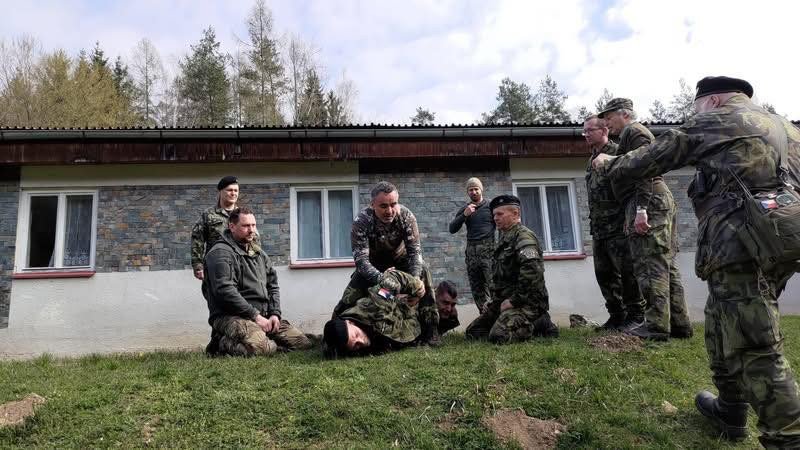
The picnics and campfires aren’t as innocent as they look; civilians on these “cultural” outings are carrying Kremlin narratives into Czech society. Svatopluk pulls together clusters of pro-Russian civic society to connect them, mobilise them and make this area of society stronger, “not just politically, but ultimately to push on the politics and lead towards the change of regime,” Boháč told us.
Behind the shared beer and watermelon are key operatives linked directly to Russian intelligence. In Putin’s Russia, soft power is just another weapon in its arsenal.
Key figures behind Svatopluk
Petr Drulák
Drulák is Svatopluk’s chairman and the organisation’s strongman. Boháč, upon listening to Drulák’s interviews, said that he was “struck by how literally he repeats what you hear directly from the Kremlin.”
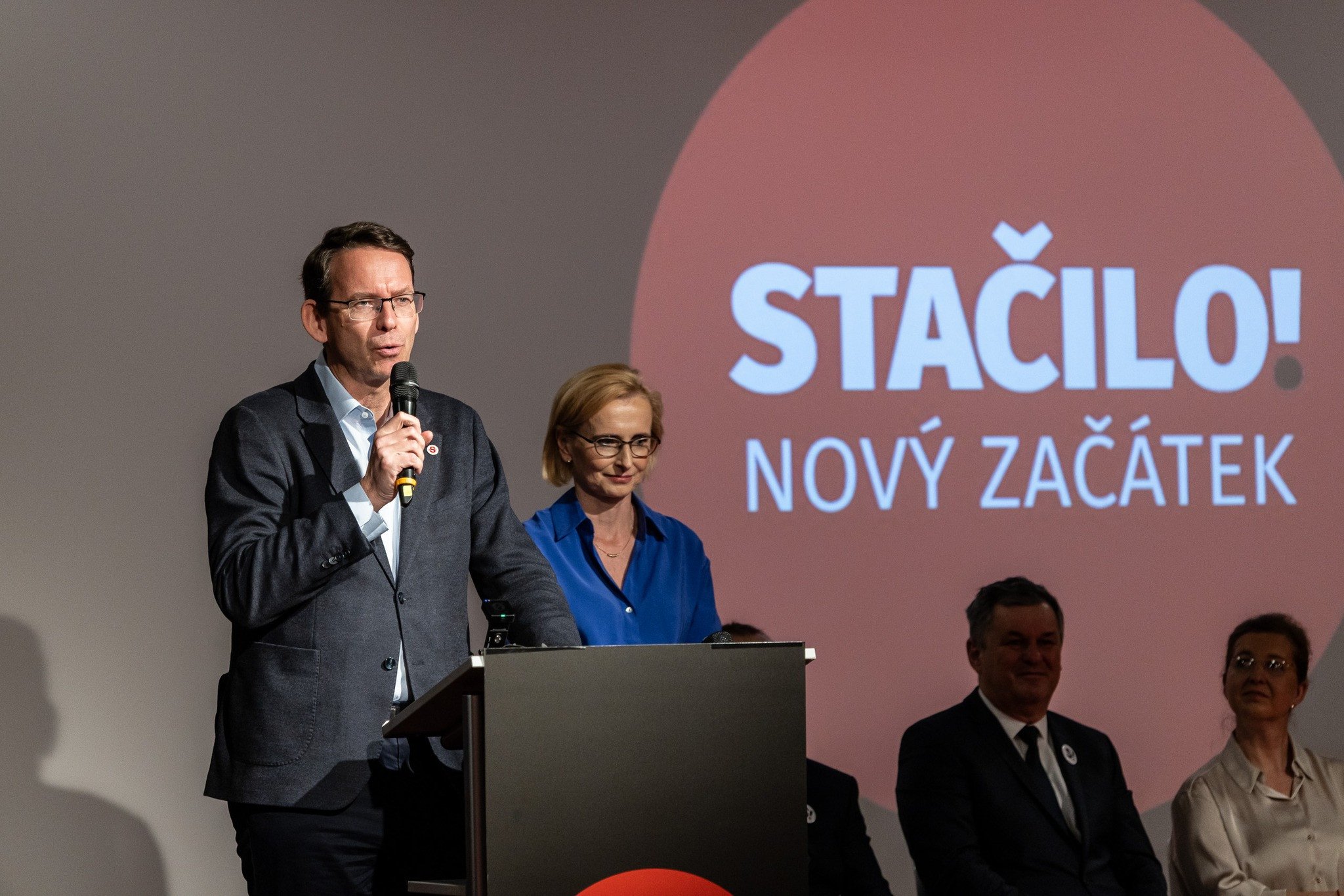
Drulák was a former ambassador to France, and in 2023 was dismissed from his position as a senior researcher at the Institute of International Relations (ÚMV) for playing into Russian propaganda, according to Czech media reports.
ÚMV had already given Drulák two letters of reprimand before his dismissal for his “unsubstantiated conspiracy narratives,” the report added. On Svatopluk’s website, Drulák regularly writes opinion pieces, with titles such as “European elites have gone crazy. The rest of the world understands why Russia attacked.”
Semín and Drulák visited the Russian embassy on its “Victory Day ” in 2025 and presented a letter of thanks to Russian Ambassador Alexander Zmeyevsky for liberating the country from Nazism in 1945.
Ján Čarnogurský
Čarnogurský is the former Slovak Prime Minister, a self-proclaimed Russophile, and chairman of the Slovak-Russian Society since 2006. He contributed to Svatopluk’s second book, “Human Rights, Left and Right.”
In 2014, after Russia illegally attempted to annex Crimea, Čarnogurský started an NGO and lobbied against Russian sanctions. In 2024, Putin awarded him with the “Order of Honor” for his role in strengthening friendship and cooperation between the two nations, which was presented by Vladimir Konstantinov, the self-proclaimed Chairman of the Praesidium of the Crimean State Council.
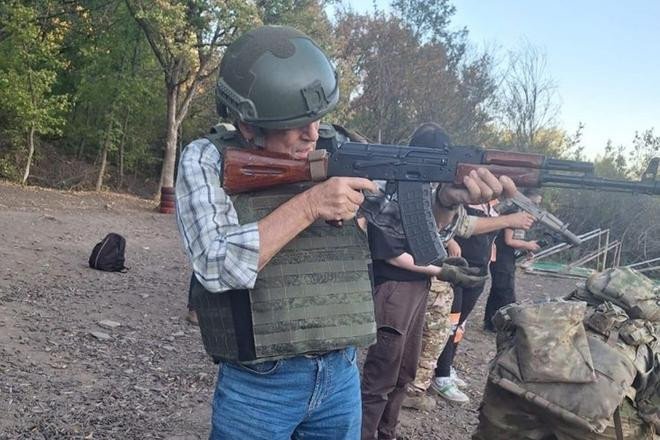
Čarnogurský has organized several conferences in Moscow and Bratislava. Their topics have ranged from celebrating Russia’s military and exhibiting “war trophies” to “war of the West with Russia” and “anti-Russian sanctions.” Vladislav Gasumjanov, a former SVR and FSB officer now in charge of security at MGIMO (Moscow State Institute of International Relations), a Russian university known as a breeding ground for intelligence operatives, co-organised one conference.
The event also drew high-profile pro-Kremlin figures, including Serbia’s ex-president Milorad Dodik, a close Putin ally, and former Moldovan President Igor Dodon, now on trial for corruption. Through Drulák and Svatopluk, Čarnogurský connects the Kremlin directly to Czechia.
Russia’s influence doesn’t end at the ballot box
Russia’s presence in Czechia no longer depends on borders; Svatopluk is hiking across them, organising and mobilising like-minded networks into a civic force aligned with Moscow, albeit on a miniature scale—for now.
Currently, their reach remains uncertain. “Czech people really don’t like Russians, and there’s a deep mistrust because of the past, 1968 , the Vrbětice terrorist attack and so on,” Boháč said. “If the war in Ukraine ends, if Russia is weak, they won’t be able to do anything.”
But the risk lies in the waiting game. The network’s book, its campfire gatherings, even its “lame-level” weapons training all point to a long-term project of keeping Moscow’s politics alive in Czech society.
If war really does touch us in the near future, people that Russia can use are being watered and growing… In a moment of instability, they will be here—and they will probably have instructions on what to do.
Vojtěch Boháč
editor-in-chief of Voxpot
Russia may not have swayed the 2025 elections, but it is planting seeds—and Czechia cannot afford to look away.
Discuss this article:
-9bd5e1532102621f8fb1c4ba871a3171.png)

-c439b7bd9030ecf9d5a4287dc361ba31.jpg "Photo of Katherina Popilnichenko")

-206008aed5f329e86c52788e3e423f23.jpg "Photo of Oleksandr Moiseienko")
-72b63a4e0c8c475ad81fe3eed3f63729.jpeg "Photo of Cyril Barabaltchouk")