- Category
- Anti-Fake
Why Over 40,000 Czechs Apologized to Ukraine—or What “Junta” Really Means
 Prefer U24 Media on Google
- Authors

-29a1a43aba23f9bb779a1ac8b98d2121.jpeg "Photo of Illia Kabachynskyi")
“Junta” implies dictatorship, and Ukraine is a democracy. When a Czech politician twisted the term, more than 40,000 citizens pushed back with an open letter of apology to Ukraine.
Czech politician Tomio Okamura spoke out in December 2025 against financing military aid to Ukraine from the Czech budget, calling Ukraine’s resistance against Russia’s war “senseless,” and referring to Ukrainian President Volodymyr Zelenskyy’s inner circle as a “junta.”
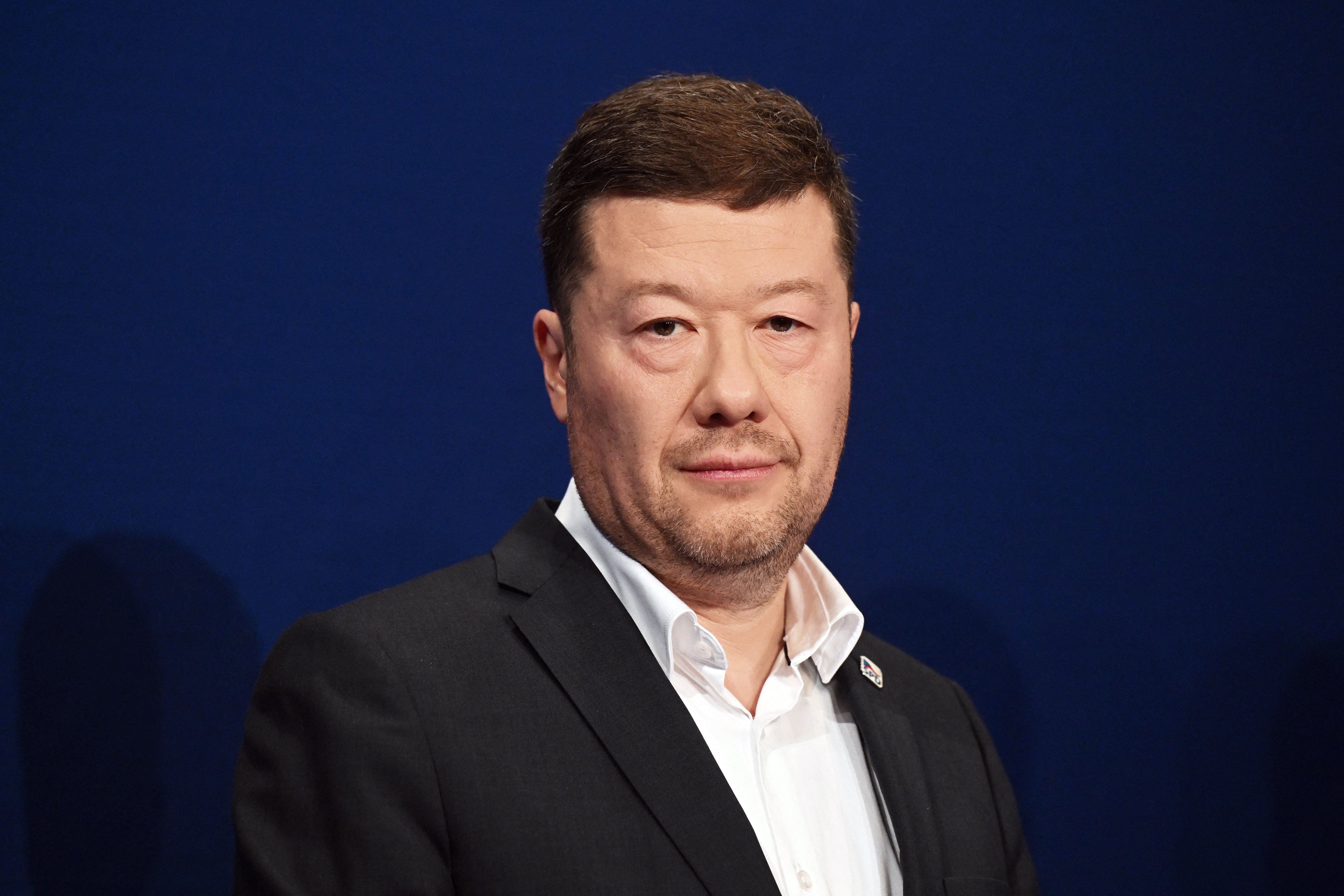
The term junta has a clear definition: a despotic form of rule exercised through terror. Ukraine is a democratic country where the president and government are elected in democratic elections, power is changeable, and since independence, only one president has served two consecutive terms.
Yet, Okamura also claimed that Ukrainians were “taking jobs away from Czechs.”
His remarks drew significant attention, including among Czech citizens themselves. Antonín Kolář, a teacher and the mayor of the Czech village of Semněvice, wrote an open letter apologizing for Okamura’s anti-Ukrainian statements. By January 5, more than 40,000 residents of the country signed a public letter of apology, stating that they stand in solidarity with Ukraine and its struggle for independence.
⚡️ More than 40,000 Czechs signed a letter apologizing to Ukraine over an anti-Ukrainian speech by parliament speaker Tomio Okamura.
— UNITED24 Media (@United24media) January 5, 2026
The letter says he represents only a small fringe after attacking President Zelenskyy and opposing Ukraine’s EU path, local media report. pic.twitter.com/BE7T2tXHVj
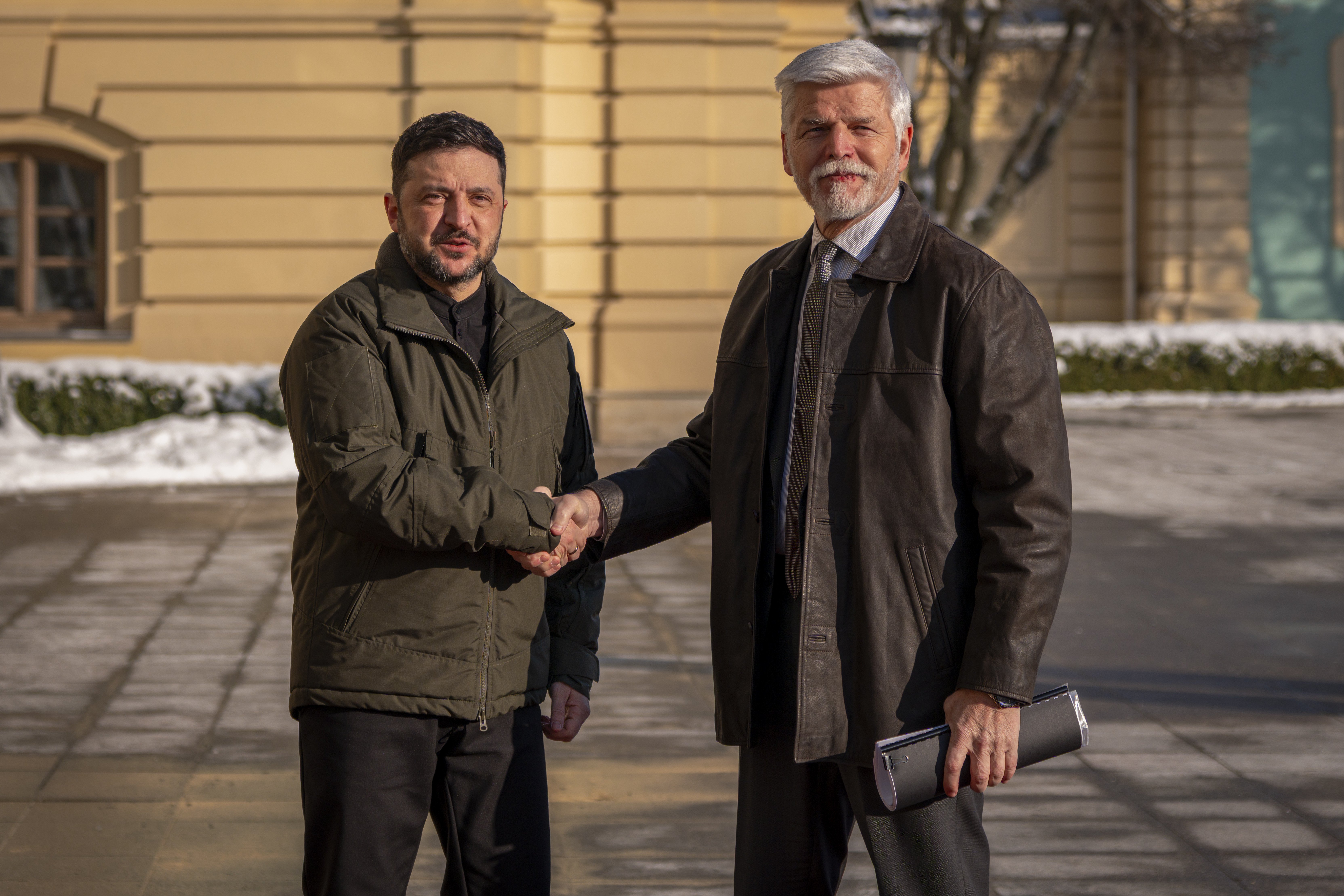
Czechia is indeed a major partner of Ukraine, supporting Kyiv with weapons, financial assistance, and a number of important initiatives, such as the supply of artillery ammunition. Today, Russia’s war in Ukraine has also become a catalyst for the revival of the Czech defense industry: according to a SIPRI (Stockholm International Peace Research Institute) report, the entire Czech defense sector is working to meet Ukraine’s needs, generating billions of euros in revenue.
That said, it is important to clarify terminology—specifically, the concept of a “junta” and why it does not apply to Ukraine.
What is a junta?
A junta is a political group—often military—that comes to power through unconstitutional means (for example, a military coup) and establishes a military dictatorship or authoritarian regime, ruling through terror.
Several key elements define a junta:
an unconstitutional seizure of power, such as a military coup;
a military dictatorship or authoritarian regime;
governance through terror;
a frequent presence of the military at the helm of power.
What about Ukraine?
The President of Ukraine, Volodymyr Zelenskyy—whom Okamura labeled part of a “junta”—was elected in democratic elections in 2019. The previous president, Petro Poroshenko, lost in a fair contest, and four years earlier, he himself had been elected through democratic elections. Before that, neither had served as president.
Parliamentary elections to the Verkhovna Rada (Ukrainian parliament) were also held in 2019. This marked the ninth parliamentary election in Ukraine’s history. Although the Rada has been dissolved several times, each time new democratic elections were held. In the most recent parliamentary elections, representatives of ten different political parties entered parliament, along with several dozen independent candidates—another clear indication of a democratic electoral process.
Importantly, even after the start of the full-scale invasion, the military did not take power in Ukraine. The country is headed by a civilian commander-in-chief—the President of Ukraine—as stipulated by the Constitution. Generals Zaluzhnyi and later Syrskyi are subordinate to the president, and their replacement occurred through formal presidential decrees.
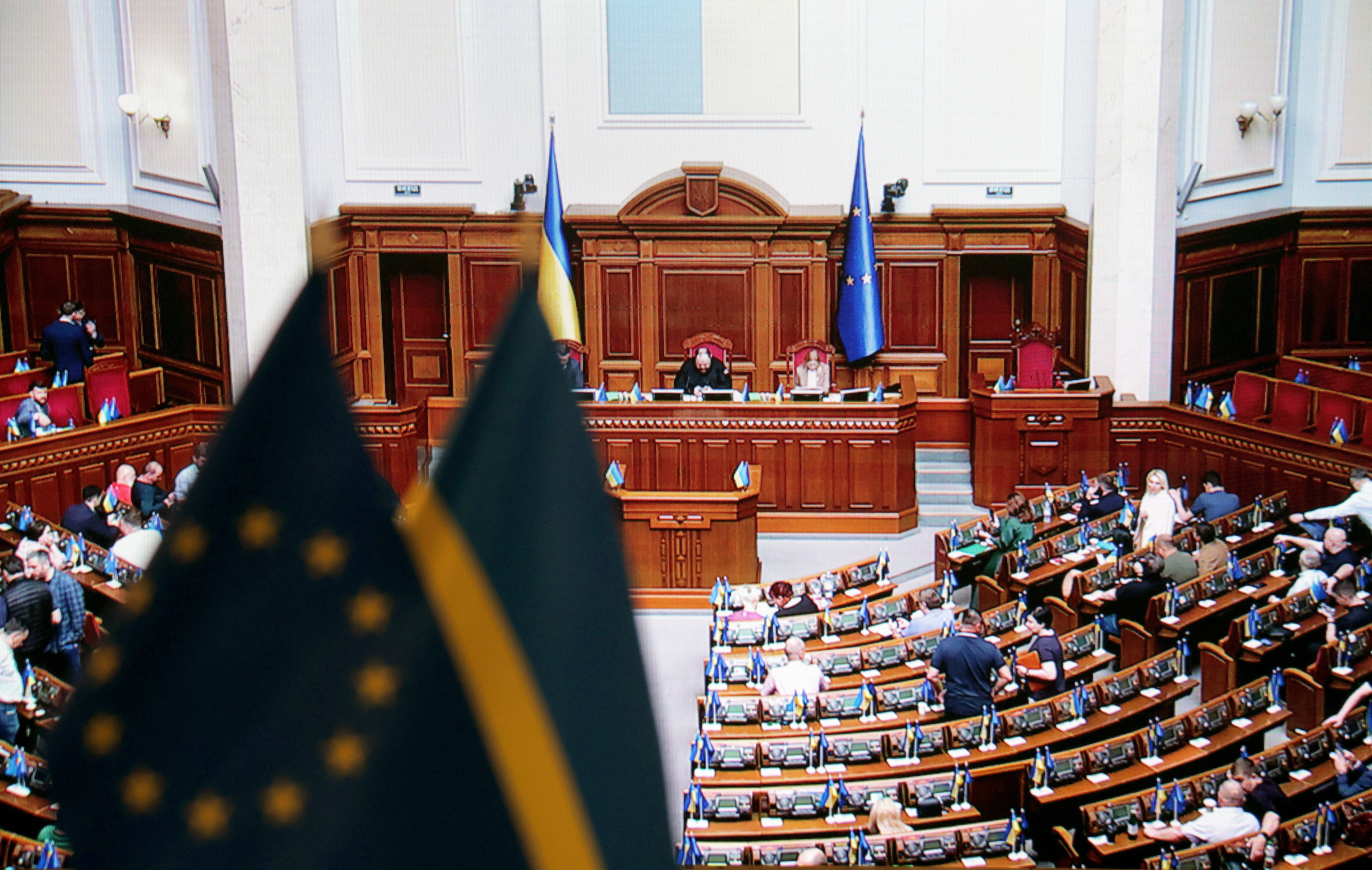
At the beginning of 2026, the president also announced changes to the Cabinet of Ministers of Ukraine, the country’s main executive body. All such changes must still be approved by the Verkhovna Rada, which undermines claims of authoritarianism or dictatorship.
Another telling example is the events of July 2025, when the government sought to reform the specialized anti-corruption bodies NABU and SAPO. At the same time, Ukrainians took to the streets of cities to protest the proposed changes. No one was dispersed, beaten, or imprisoned. The protests were effective, and the changes were rolled back.
The one-year delay in elections is due to the Constitution—the country’s supreme legal document—which prohibits elections during active military hostilities. The full-scale war, which has been ongoing in Ukraine for nearly four years, was started by Russia, which remains the primary obstacle to holding elections.
A free press also continues to operate in Ukraine, openly criticizing both the president and the government, and frequently reporting on problems within the army and the state.
In other words: no military rule, no coups, governance in accordance with the Constitution, a free press, and the absence of terror.
Ukraine cannot be discussed without understanding the context. Russia has occupied approximately 100,000 square kilometers of Ukrainian territory, killed thousands of civilians and soldiers, launched more than 100 drone strikes in 2025 alone against Ukrainian hospitals, schools, and residential buildings, caused damages estimated at one trillion dollars, and forced more than five million people to flee their homes and emigrate. The cities of Kupiansk, Bakhmut, Vovchansk, and Pokrovsk have been completely destroyed. More than 700,000 Russian soldiers are currently on Ukrainian territory, seeking its destruction.
Ukraine is defending itself—and doing everything possible to preserve its sovereignty. Ukraine is at war. Missiles strike residential buildings; rescue workers responding to fires are targeted by double-tap attacks; even farmers harvesting crops are not safe from Russian drones. Right now, Ukraine is experiencing the largest and most intense war in Europe since World War II.
In the absence of any signs of a “junta,” does anyone truly have the moral right to label Ukraine as one?
Discuss this article:

-206008aed5f329e86c52788e3e423f23.jpg "Photo of Oleksandr Moiseienko")
-72b63a4e0c8c475ad81fe3eed3f63729.jpeg "Photo of Cyril Barabaltchouk")