- Category
- Culture
Cassandra Saw War Coming. Now Her Story is Reimagined by a Ukrainian-Polish Theater Collaboration
In the ancient myth, Cassandra saw catastrophe coming but was never believed. In Ukraine, warnings of war are no longer prophecies: they arrive as alerts on a phone or in the sound of explosions. As Russian attacks continue to shake Kyiv, the city’s stages keep finding new reasons to light up.
 Prefer U24 Media on Google
- Authors

-2865137c7f83ccc2b728b2627d93a536.png "Photo of Daryna Udovenko")
This season, two Ukrainian national theaters are uniting for the first time to bring КΑΣΣ_ΑΝΔΡΑ to the stage, together with Polish director Grzegorz Jarzyna.
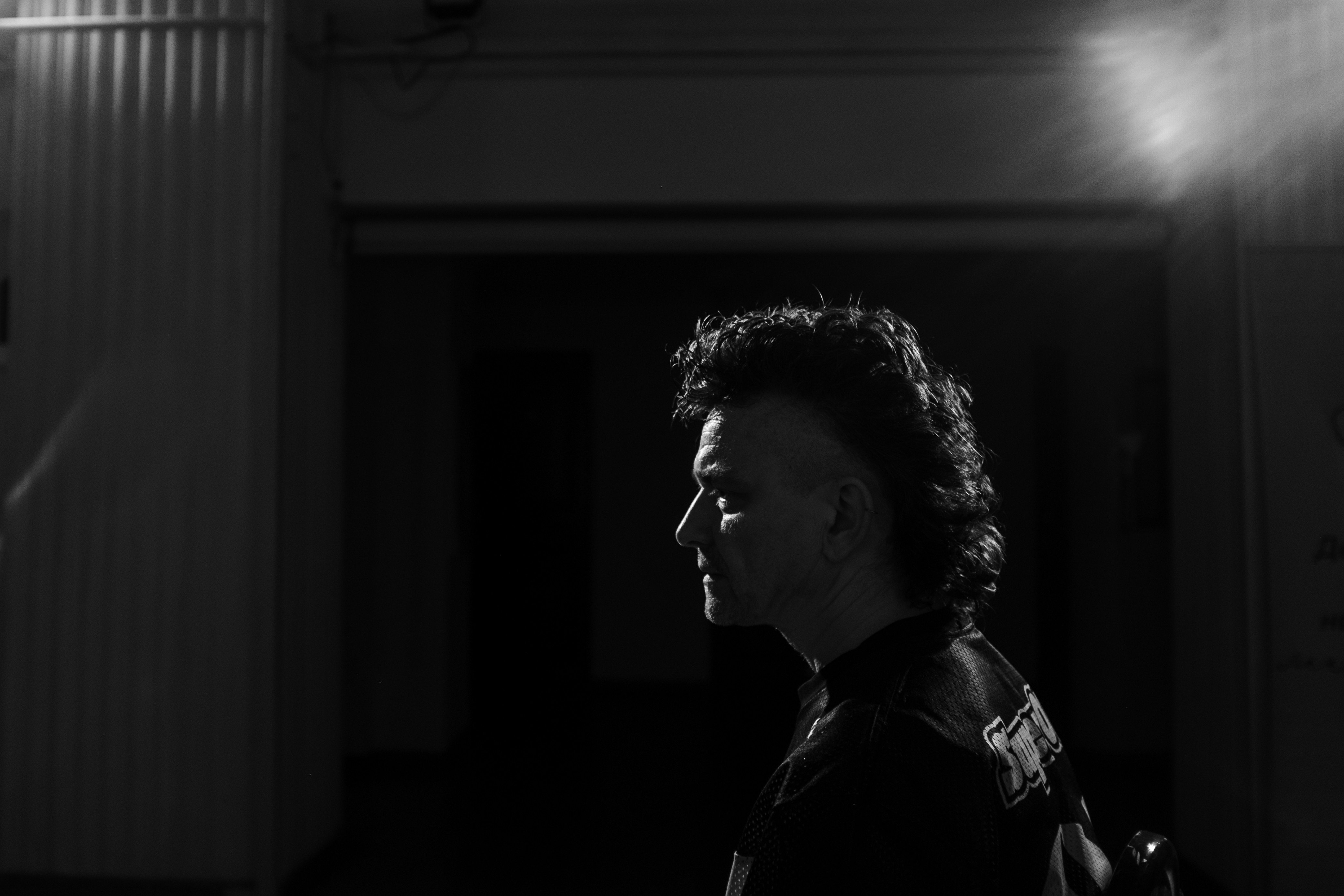
For more than a decade, Polish director Grzegorz Jarzyna had been carrying the idea of КΑΣΣ_ΑΝΔΡΑ with him. One of the most influential figures in contemporary European theater, Jarzyna is known for bold reinterpretations of classical texts and ambitious, genre-blurring productions. Over the years, he developed КΑΣΣ_ΑΝΔΡΑ through workshops in different cities—London, Los Angeles, Munich—testing the story, its characters, and the ways it could speak to a contemporary audience. But it was Kyiv that eventually proved to be the right place for the production to come to life.
Ukrainian actors understand this story in a way that others simply cannot. They know what it means to lose the people closest to you, and they understand the experiences described by Homer much more deeply because they have lived through them. There is no one here whom the war has not touched.
Grzegorz Jarzyna
Director
Two theaters, one stage
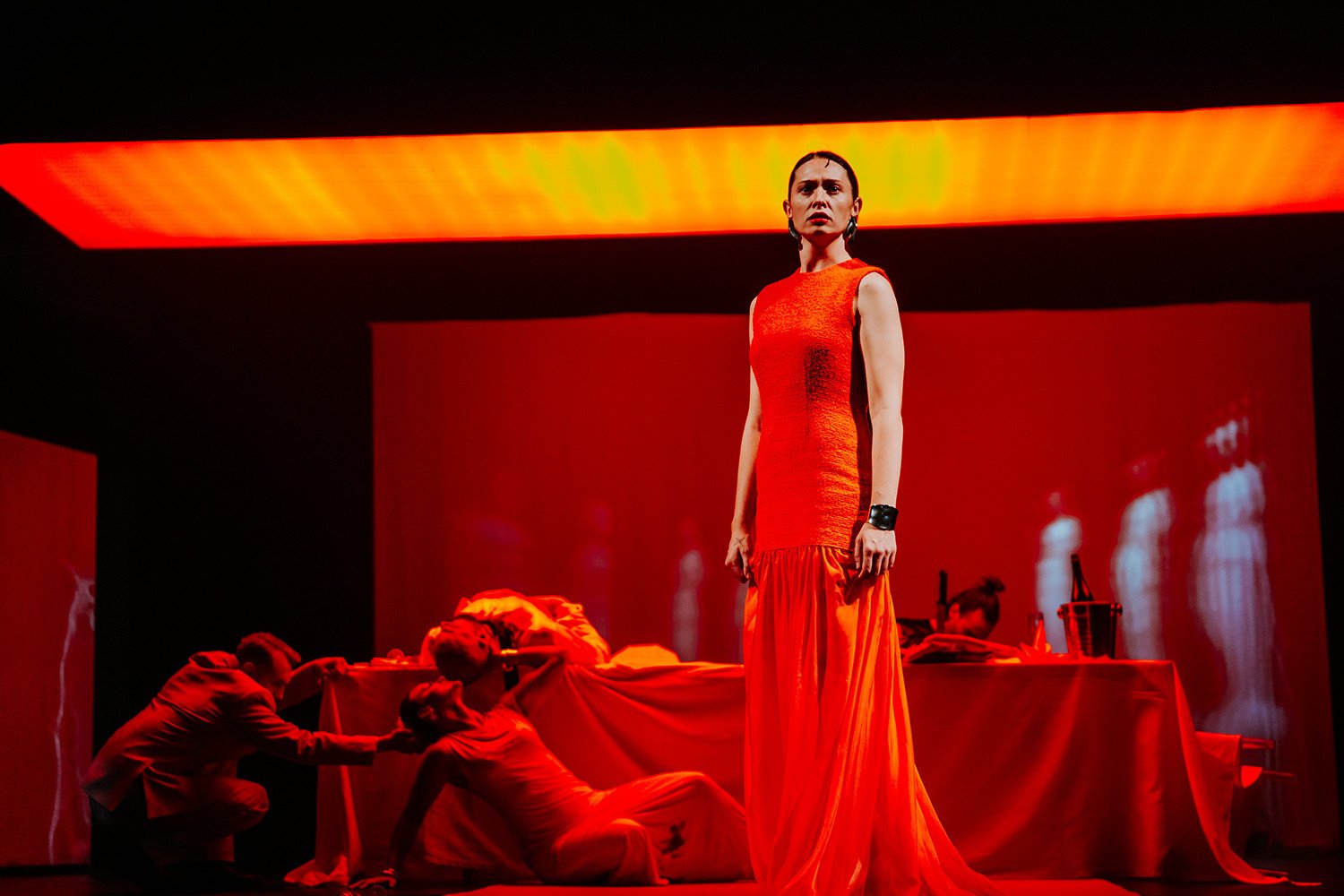
For the first time, the Ivan Franko National Academic Drama Theater and Lesia Ukrainka National Academic Drama Theater have joined forces to create a production together. КΑΣΣ_ΑΝΔΡΑ is a story about the female experience of war. At its center are women’s fears, humiliation, psychological wounds, and struggle to hold on to their identity. The production brings these experiences into conversation with the ancient myth, showing how the stories of women caught in war can echo across centuries.
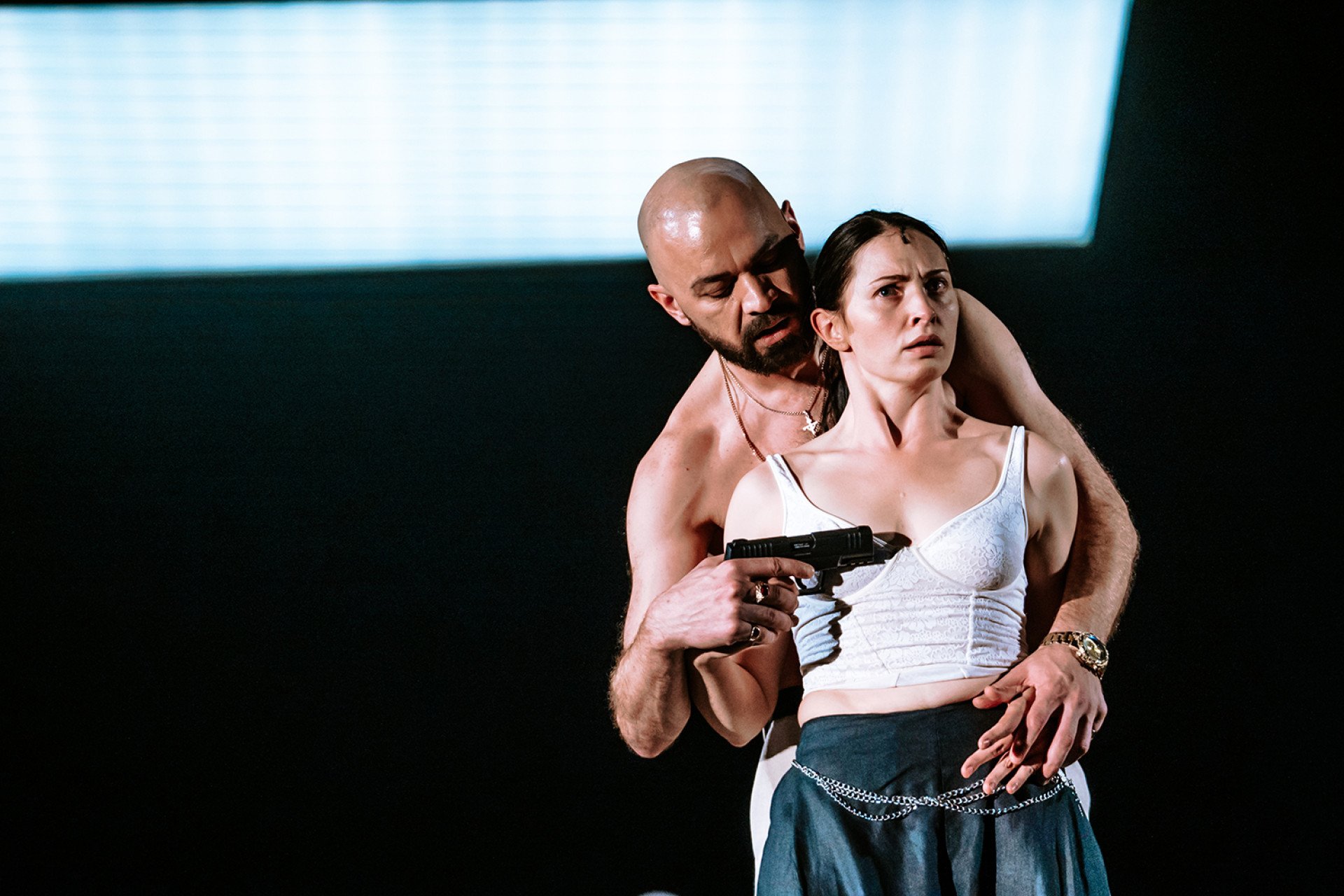
The story unfolds across two timelines—the present and the mythological past—connected by Cass, portrayed by Nataliia Kobizka, a woman from a conflict zone who wakes up one day with no memory of who she is. Her partner, Agam, played by Akmal Guryezov, is a powerful politician who, with the help of Dr. Apollon, played by Vitaliy Azhnov, tries to reconstruct her lost identity.
The two timelines gradually begin to mirror each other, bringing the experiences of women caught in war into the same story. Scenes of Troy’s destruction are followed by Hecuba’s monologue, performed by Natalia Dolia, in which she reflects on the invaders who came to another land and died there rather than defending their own borders. Andra, played by Olha Goldys, is another woman left to live with the consequences of war after her husband is killed in battle. Clytemnestra, portrayed by Tetyana Mikhina, brings the story to its cathartic finale, taking revenge on her husband in a final reckoning with the violence and losses that have shaped the story.
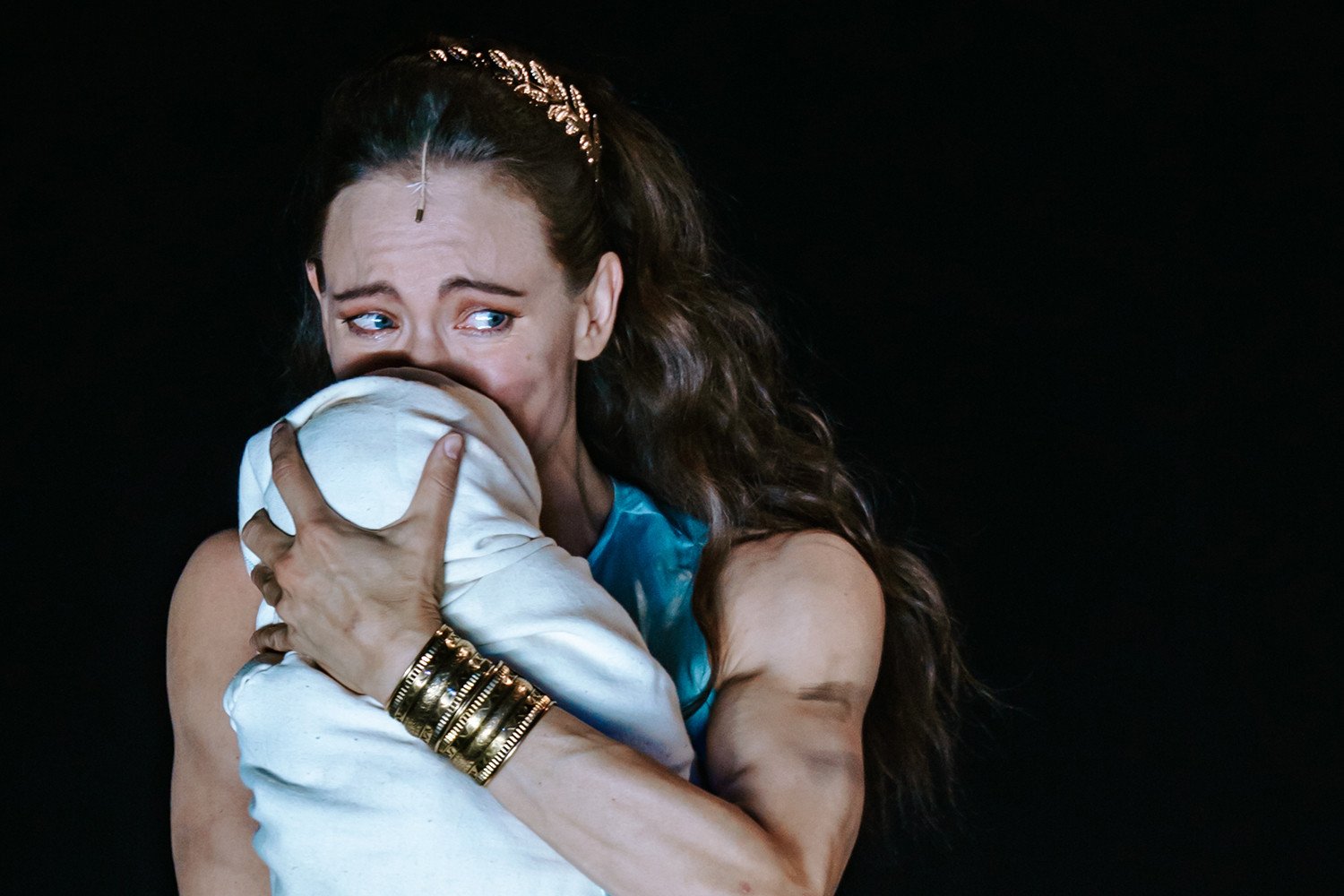
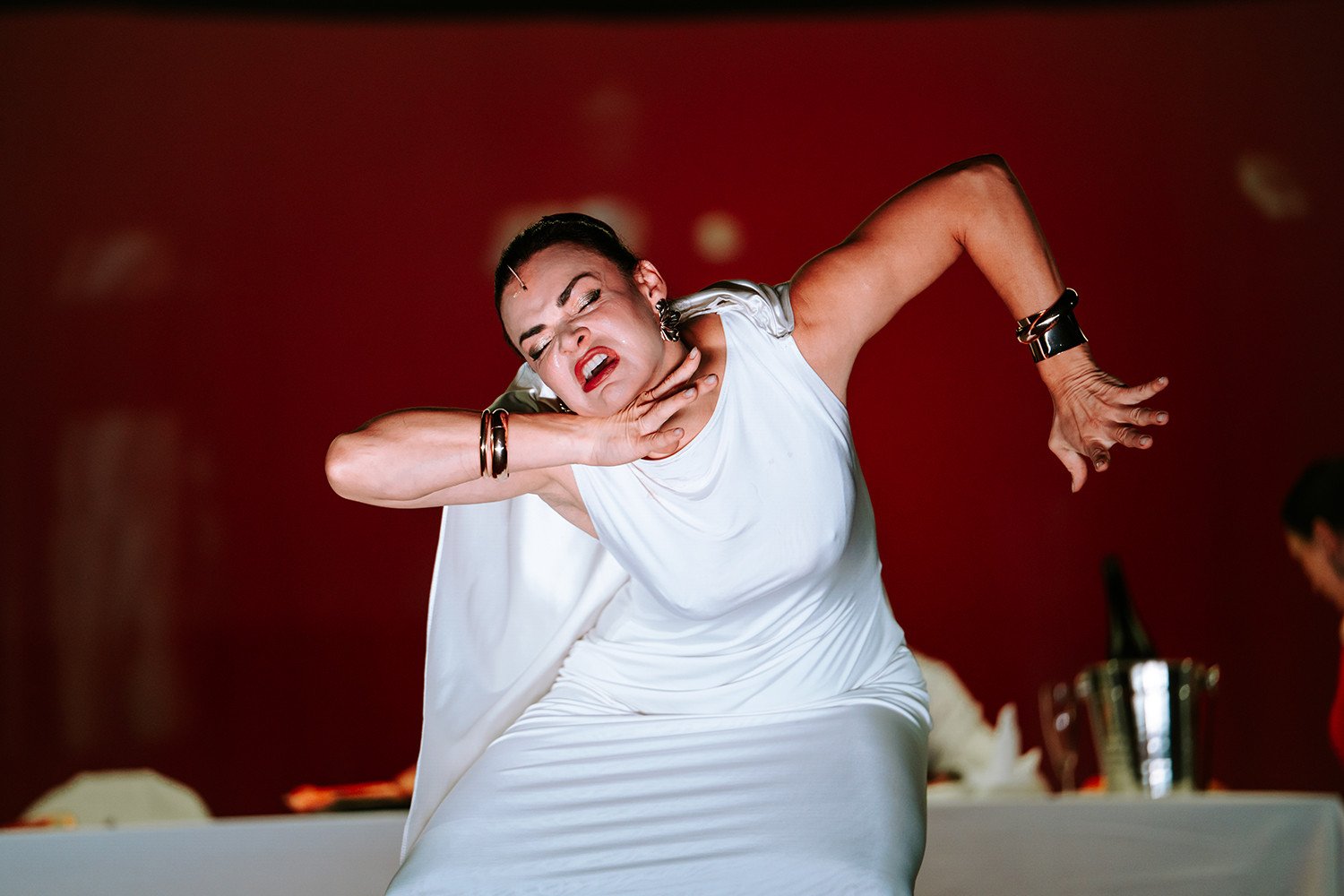
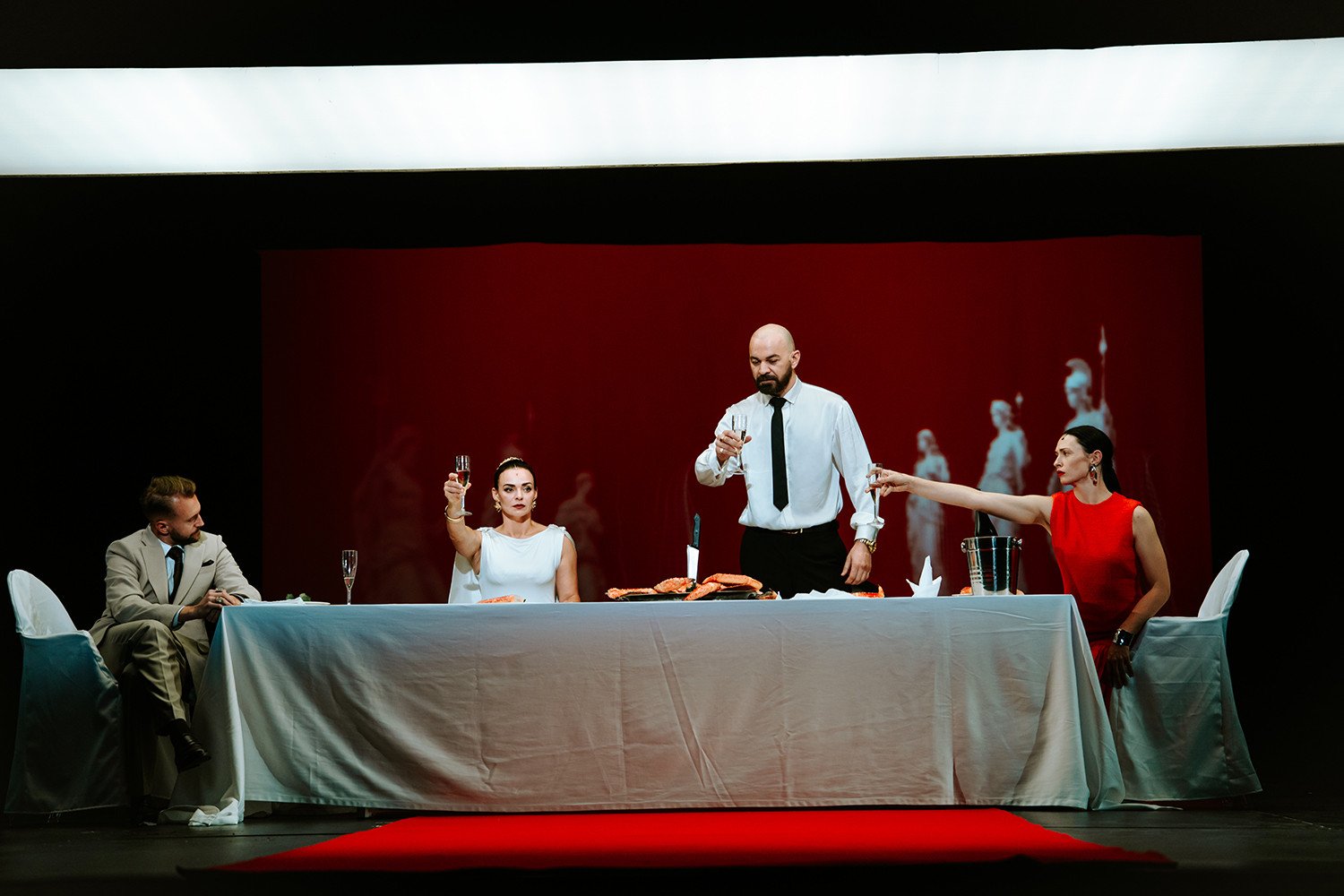
The audience’s response reflects the weight of the play: many describe the themes as painful and unsettling, but also as necessary to confront—precisely because they remain so close to the reality outside the theater.
A play written in rehearsal
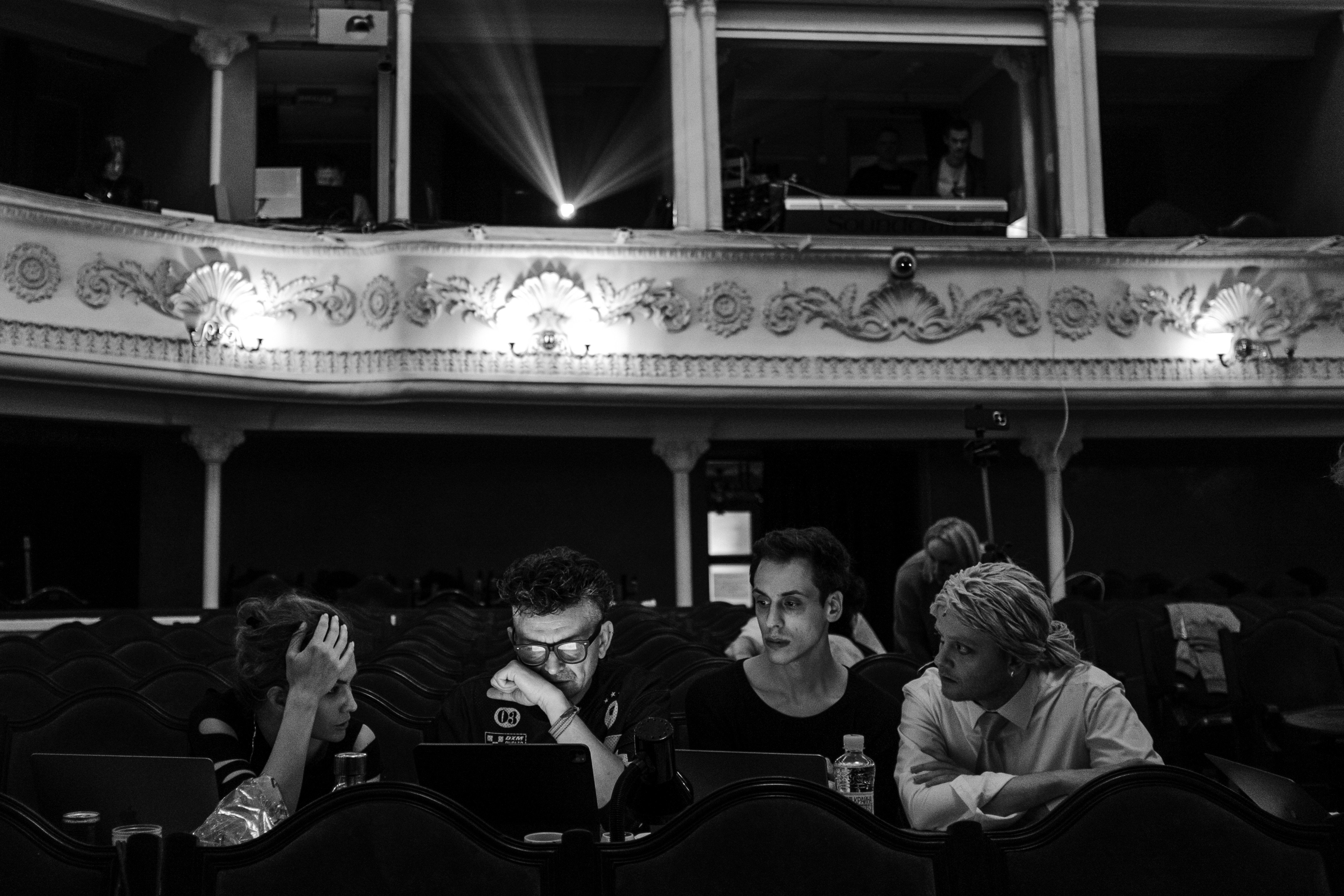
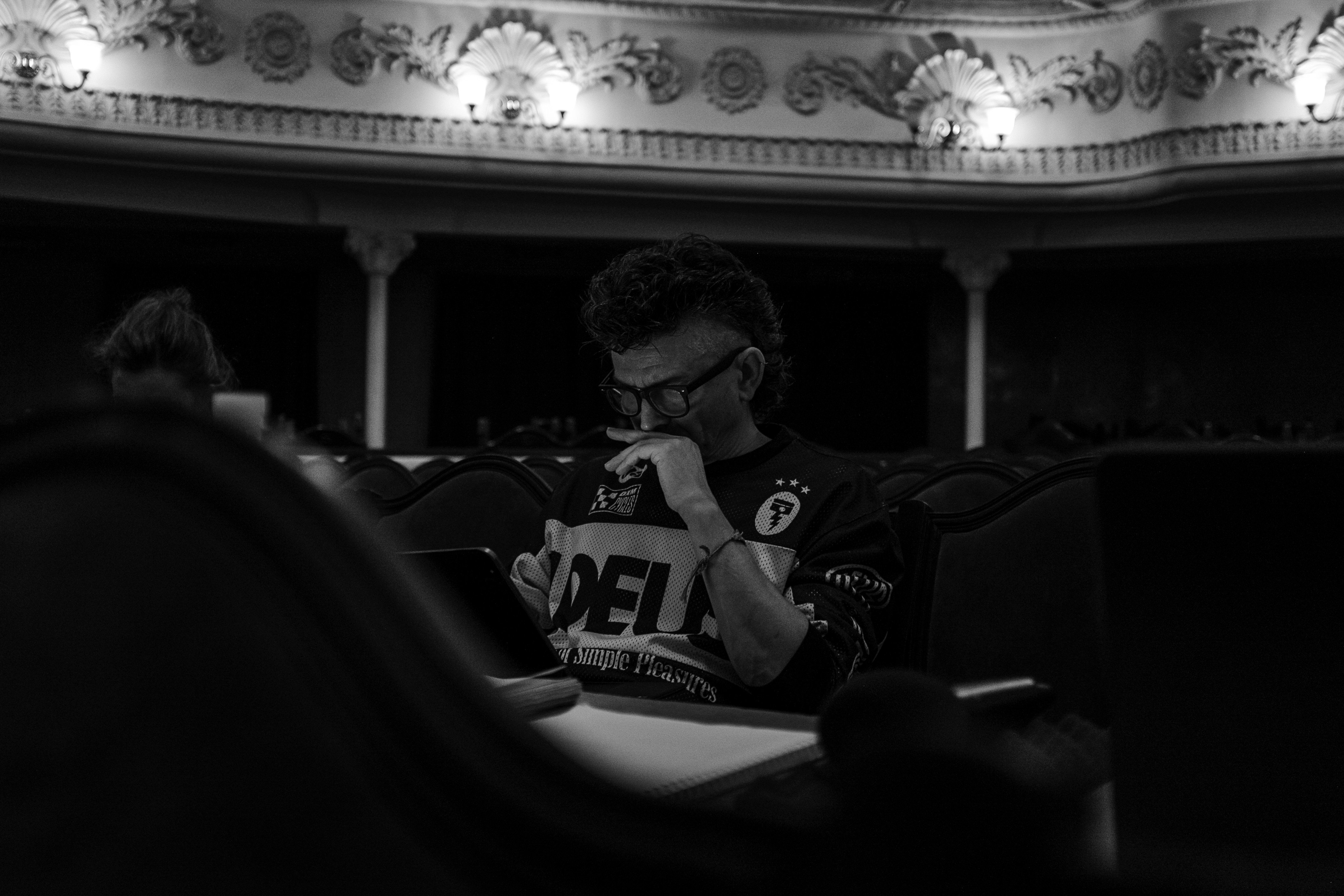
The production’s form is just as collaborative as its story. Jarzyna did not arrive in Kyiv with a finished script. Instead, working alongside playwright Roman Pawłowski-Felber, he developed the text through conversations and workshops with the actors themselves. Scenes, characters, and fragments of dialogue emerged in the process of rehearsing, making the performers not only interpreters of the story, but also part of its creation. Jarzyna says the process was so attentive to the context that even a single word could be reconsidered if it felt triggering or out of place. The text kept changing as the team listened to one another and to the reality surrounding them.
The production’s visual language is both technically ambitious and central to its sense of repetition. Projections transform the stage throughout the performance, creating shifting spaces and moving between different layers of the story. As the main characters act in the foreground, other performers mirror them from a distance, almost like their shadows or echoes. The effect suggests that these stories do not belong to one time or one generation. They have happened before, are happening now, and may happen again—a cycle of war, power, loss, and survival that continues to repeat itself.
Culture beyond borders
In a time when the country is fighting for its survival, Ukraine’s cultural institutions are choosing to come together, sharing resources, experience, and creative energy to create something that could not have existed within one institution alone. КΑΣΣ_ΑΝΔΡΑ is also being considered for international performances, including London and New York City, bringing the work of Ukrainian theaters and actors into the wider international cultural conversation.
We are creating КΑΣΣ_ΑΝΔΡΑ together despite the attacks and the constant threat, and by doing so, we show that culture continues to live. We want to be part of the European cultural space not only as a country that needs support, but as a country that has something to say and something to share.
Oksana Nemchuk
Producer
The production began with an ancient myth, but its journey does not end there. From Kyiv to international stages, КΑΣΣ_ΑΝΔΡΑ carries a story shaped in a country still living through war. Rather than explaining Ukraine to the world, it lets Ukrainians speak through theater, through their stories, and through the work they continue to create even during the darkest times.
Discuss this article:
-9a7b3a98ed5c506e0b77a6663f5727c5.png)

-e00d178a31a987cd514e15ad3a8c2131.jpeg "Max Klymenko wearing the Etnodim, featuring embroidery inspired by traditional Ukrainian crafts. (Source: Ian Treherne)")

-e88c01988249cd60b6f04f79d29156b7.jpeg "Damage to “Cosmogony,” the largest painting in Ukraine, following a Russian drone attack on Lutsk on October 13, 2026. (Source: @sashyyna/Instagram)")
-480d70a36b9b34492b0b32ca04af4489.jpg "People attend the funeral ceremony of the famous Ukrainian writer Victoria Amelina at the Garrison Church, in Lviv, Ukraine, on July 5, 2023. (Source: Getty Images)")