- Category
- Defense Tech
Russia Says It Has “Skynex at Home” as Rostec Puts ZAK-30 Citadel on Wheels
 Prefer U24 Media on Google
- Authors


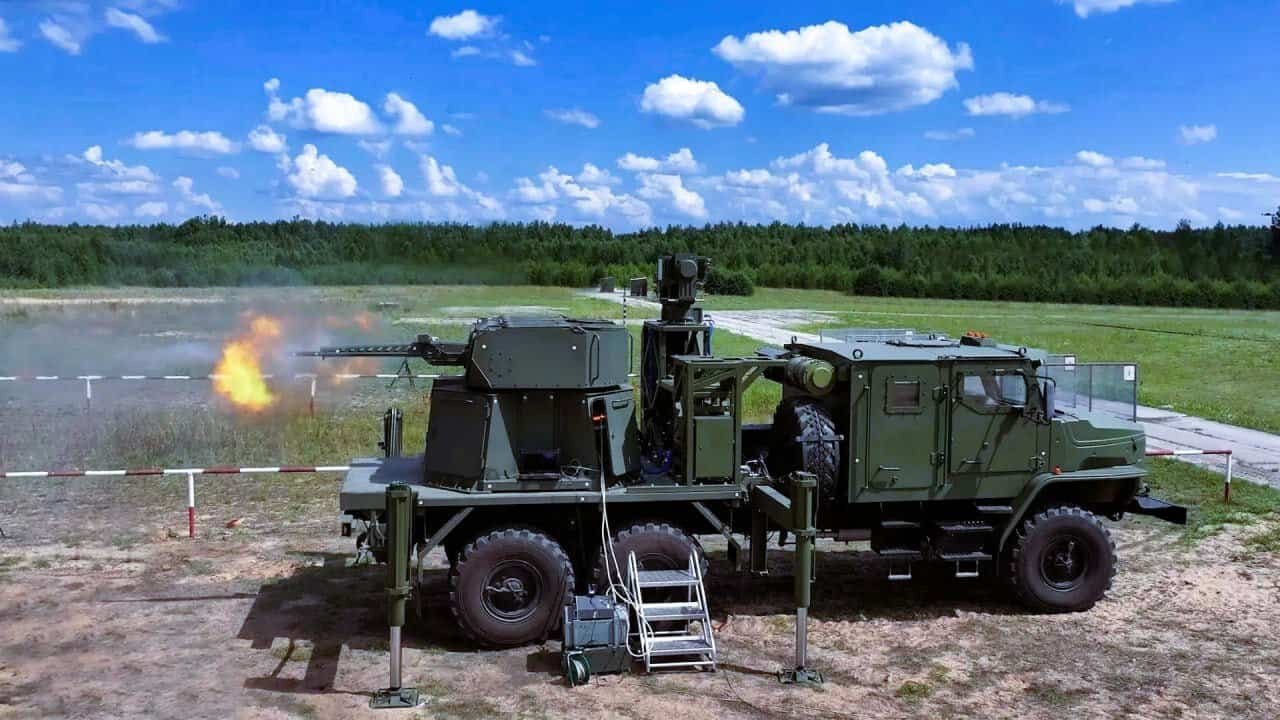
Russia’s state-owned defense giant Rostec has put its ZAK-30 Citadel anti-drone gun system on wheels, turning what began as a fixed-site defense weapon into a mobile platform that bears more than a passing conceptual resemblance to Germany’s combat-proven Skynex.
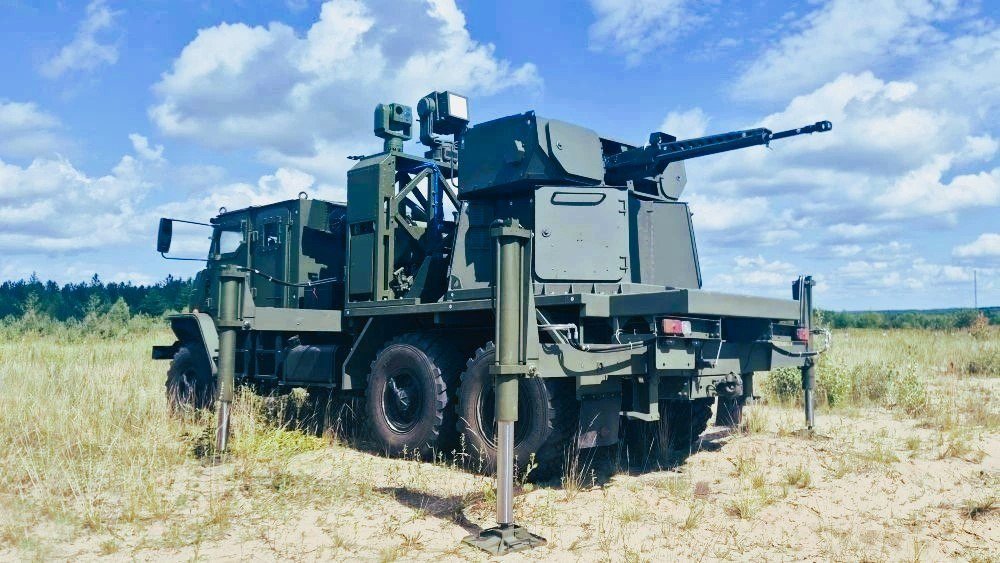
The new version combines the Citadel’s 30mm automatic cannon, radar, and electro-optical targeting equipment on a three-axle truck with an armored cab, Russian arms manufacturer Rostec announced on November 6.
We bring you stories from the ground. Your support keeps our team in the field.
Hydraulic outriggers extend from the vehicle to stabilize it while firing, while the rear platform carries the remotely operated gun turret and a mast fitted with optical and radar sensors.
According to its developers, mobility should allow the system to move quickly between facilities threatened by aerial attacks and expand the capabilities of mobile air-defense groups.
Until now, Rostec had presented Citadel primarily as a stationary system for defending individual sites against drones.
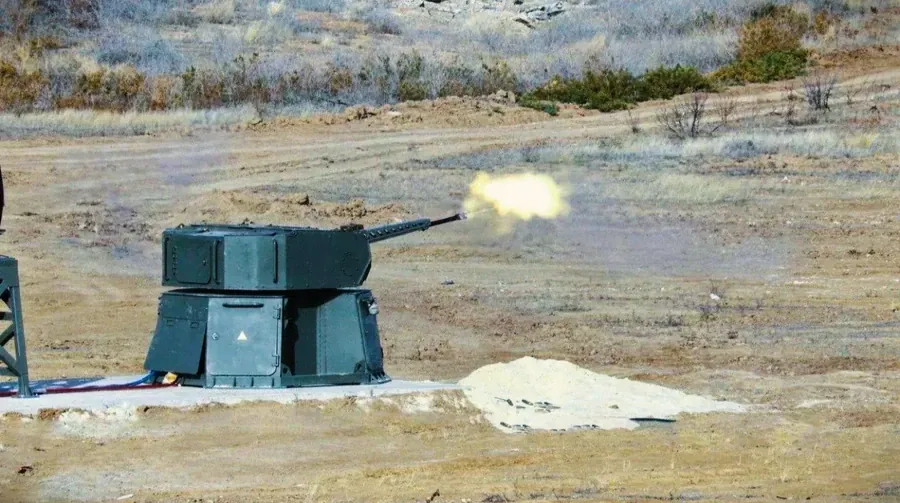
30mm drone killer with “smart” shells
The centerpiece of the ZAK-30 is a 30mm automatic cannon intended to engage UAVs and cruise missiles. And its most important feature is programmable airburst ammunition.
Instead of depending on a direct hit, Citadel’s fire-control system calculates where a shell should detonate along the target’s flight path. The round is then programmed to explode near the target and throw a cloud of fragments across its path.
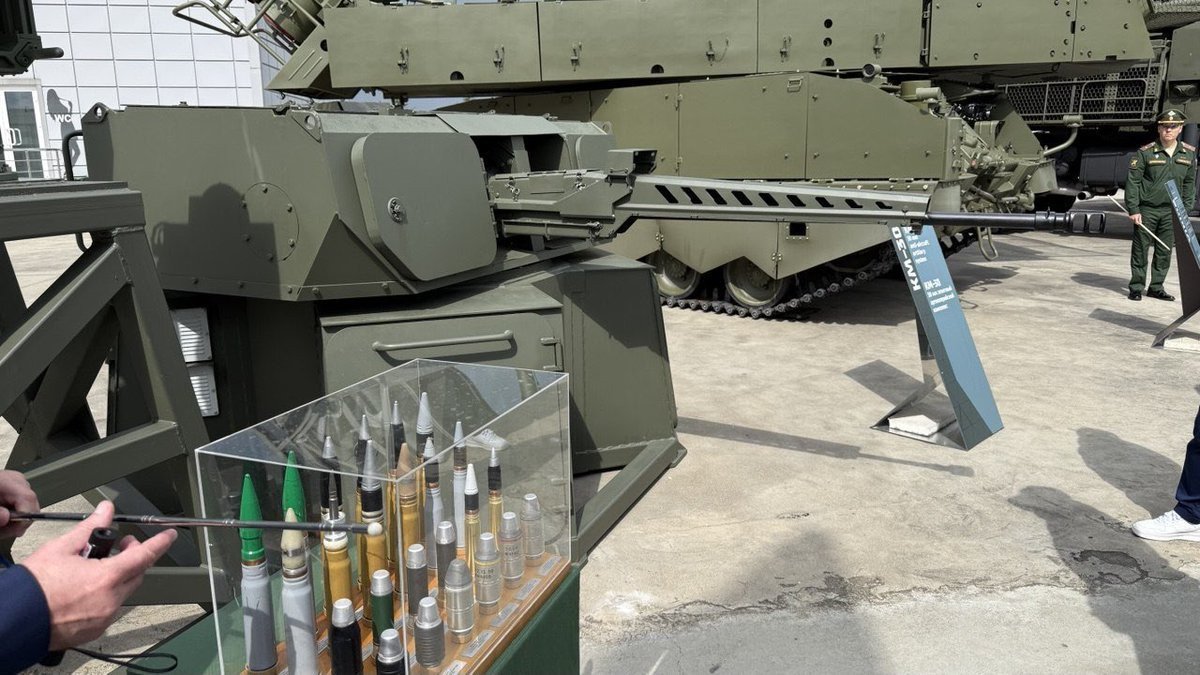
The concept is intended to increase the probability of destroying small aerial targets while reducing the number of rounds required.
Citadel combines radar with an electro-optical system operating in visible and infrared wavelengths for target detection and tracking.
According to published specifications, the system can detect fixed-wing UAVs at distances of up to about 2 kilometers, while its effective engagement range is listed at roughly 1,000 to 1,300 meters, much worse than its German counterpart.
Russia’s “Skynex at home”?
The overall concept inevitably invites comparisons with Rheinmetall’s Skynex, which Ukraine already operates against Russian drones and cruise missiles.
Both systems combine gun-based air defense, automated target tracking, radar and optical sensors, and programmable ammunition designed to detonate near an aerial target rather than requiring a direct impact.
But Skynex operates in a different performance class.
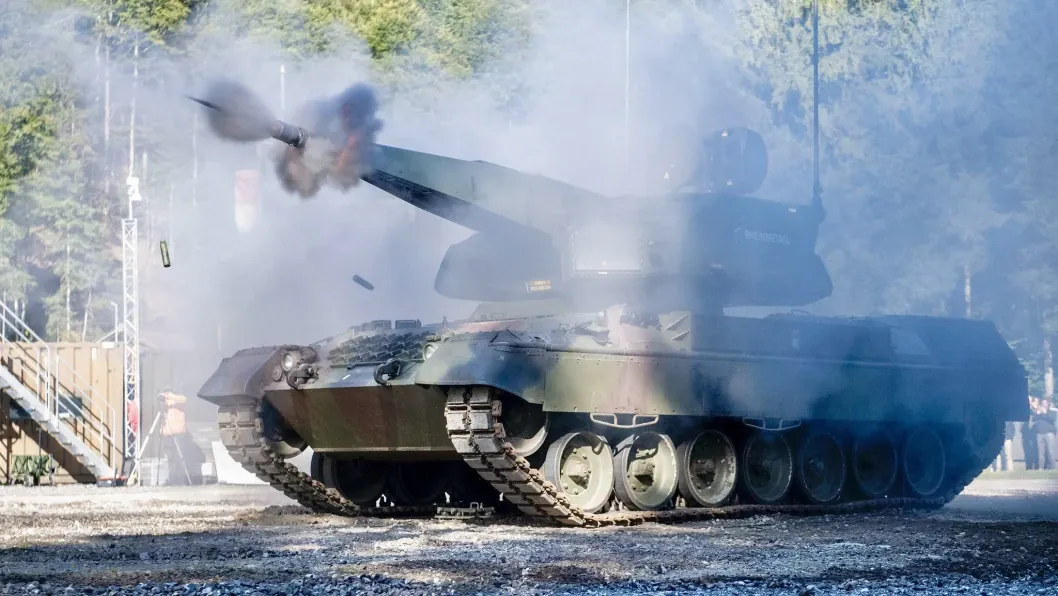
The German system uses 35mm Oerlikon Revolver Gun Mk3 cannons capable of firing up to 1,000 rounds per minute and engaging aerial targets at roughly 4 kilometers—several times the published engagement range of Citadel.
Its AHEAD programmable ammunition detonates at a calculated point and releases a dense cloud of subprojectiles into the target’s flight path.
The concept behind Citadel had already been compared with Skynex when Russia first displayed the stationary version earlier in 2026.
At the time, one major difference was that Skynex already integrated sophisticated radar and electro-optical targeting into a mature air-defense architecture, while questions remained over Russian production of programmable 30mm ammunition at meaningful scale.
Skynex already has a combat record in Ukraine
Ukraine has fielded the German system in operational air defense, including against Shahed attack drones and Russian cruise missiles. We previously reported that a Ukrainian Skynex air defense artillery system destroyed 12 Russian aerial targets in a single battle, including one cruise missile and 11 Shahed-type drones.
During another documented engagement, a Skynex system destroyed at least seven Russian Shaheds in a single overnight attack. Ukraine uses the systems primarily to protect critical infrastructure and other high-value fixed sites.
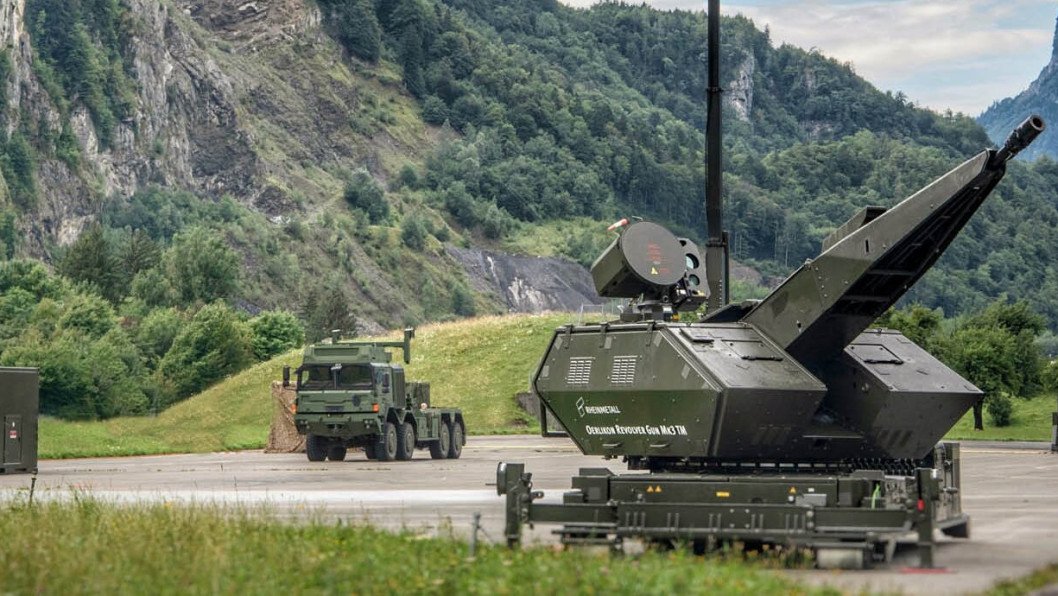
That combat experience is particularly relevant because Citadel is being developed for much the same problem Russia now faces at home: protecting refineries, industrial facilities, and other infrastructure from waves of relatively inexpensive long-range drones.
Previously, service members of the 121st Separate Territorial Defense Brigade of the Armed Forces of Ukraine showed that they do not necessarily need cutting-edge weapons to stop some of the newest Russian missiles.
They intercepted two Russian aerial targets, including a new S-8000 Banderol missile and a Kh-59 missile, using 70-year-old Swedish 40 mm Bofors L70 anti-aircraft guns.
Discuss this article: