- Category
- Defense Tech
Russia’s Cheap Molniya Drone Is Learning to Strike Without Being Steered
 Prefer U24 Media on Google
- Authors


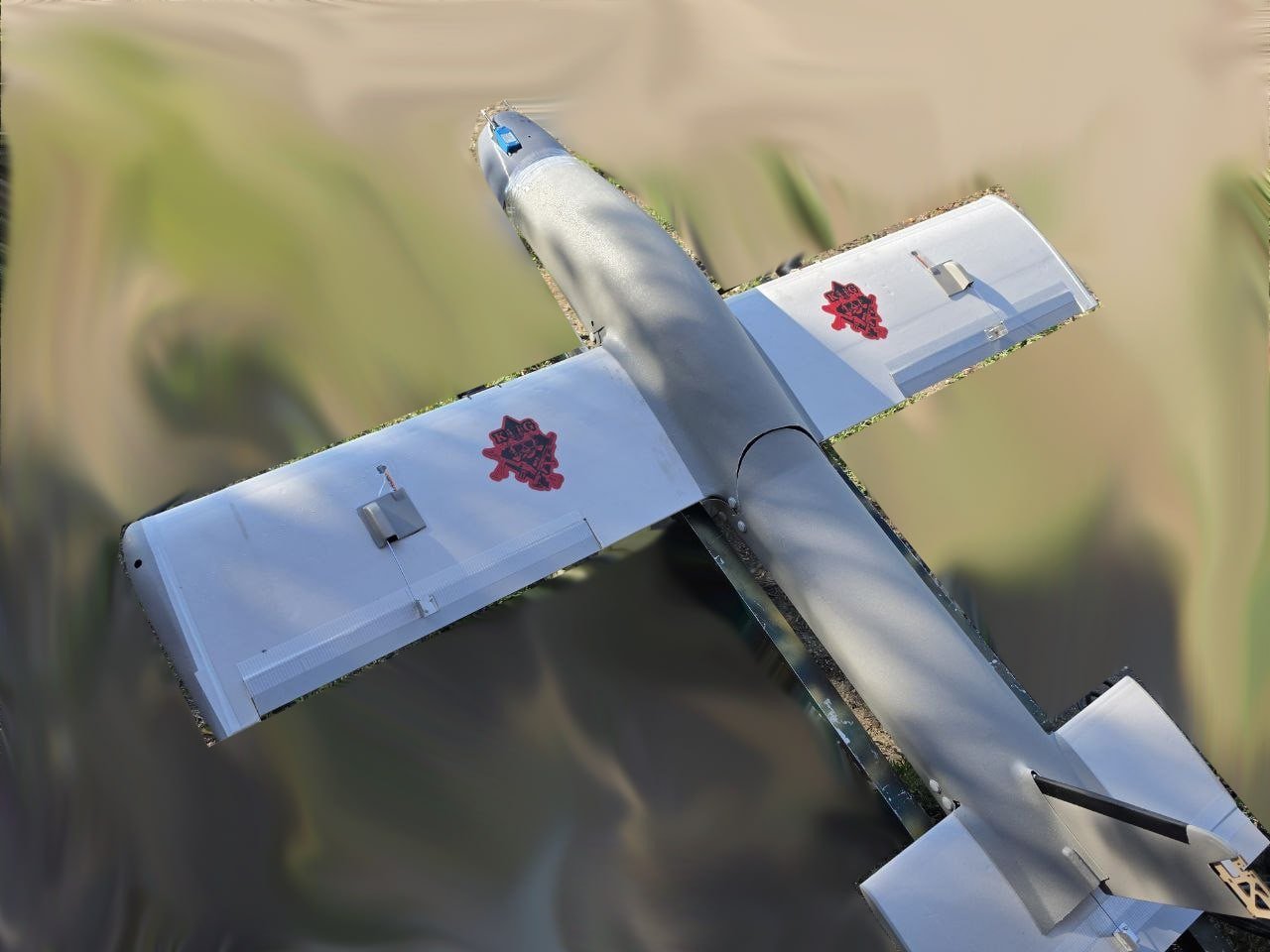
Russia has begun using a new autonomous version of its Molniya strike drone in Ukraine, adapting the cheap fixed-wing attack UAV to hit targets without the control antenna that made earlier models vulnerable to electronic warfare, Defence Blog reported, citing an advisor to the Ukrainian Defense Minister Serhii “Flash” Beskrestnov on July 3.
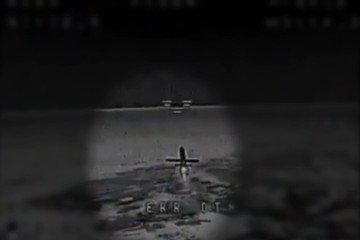
The new variant was identified after a Russian Molniya struck a Ukrainian facility and was later found without the usual antenna used for operator control.
We bring you stories from the ground. Your support keeps our team in the field.
Ukrainian radio technology specialist Beskrestnov said the drone carried only a camera and an onboard computer, suggesting a different strike profile. Instead of requiring a live operator to steer it all the way to impact, the UAV may be able to continue its mission autonomously.
“The UAV had only a camera and a computer. This is where everything is heading. Navigation, target acquisition and the attack will become fully autonomous,” Beskrestnov said.
Defence Blog noted that the basic Molniya was already a difficult target because of its low cost, simple construction, and ability to be used in large numbers. The drone can fly farther than many short-range FPV quadcopters and carry an explosive payload against Ukrainian positions, vehicles, or rear-area targets.
Russia fields fully autonomous Molniya strike drone — no radio link, invisible to jamming.
— Clash Report (@clashreport) July 3, 2026
Russia deployed a fully autonomous variant of the Molniya (Lightning) strike drone with no radio control link at all, according to Ukrainian MoD advisor and electronic-warfare expert… pic.twitter.com/oMaAPZO2X2
Its main weakness was the control link. If Ukrainian electronic warfare crews disrupted that link, jammed the video feed, or forced the operator to lose situational awareness, the attack could fail.
The absence of a visible control antenna, combined with only a camera and onboard computer, suggests the new Molniya may rely on onboard visual processing for navigation, target search, or terminal attack.
That does not mean every Molniya now works this way, but it shows Russia is moving toward drones that can continue a mission after the operator is no longer guiding them in real time.
Ukraine has already introduced autonomous strike drones such as Hornet, the fixed-wing UAV associated with Perennial Autonomy. Defence Blog drew attention to the same broader trend: cheap aircraft, AI-assisted guidance, and reduced dependence on a radio link during the final phase of flight.
Defense Minister's advisor "Flash" reported that the Russian Federation has begun deploying "Molniya" UAVs stripped of their control antennas. The drone was equipped with only a camera and a computer. Serhii Beskrestnov emphasizes that navigation, target acquisition, and attacks… pic.twitter.com/RikSKqPti4
— WarTranslated (@wartranslated) July 1, 2026
Hornet has been described in published reporting as carrying around 5 kilograms, or 11 pounds, of payload over a range of roughly 200 kilometers, or 124 miles.
Molniya belongs to a different Russian ecosystem built around low-cost airframes and rapid battlefield modification. But the key comparison is not the exact payload or aircraft shape—it is the guidance philosophy, Defence Blog wrote.
Both systems point toward a battlefield where disposable drones become less dependent on human operators once they reach the most dangerous part of the mission.
According to Flash, Russian forces are now reportedly using the new Molniya variant with growing intensity in southern Ukraine, especially in the Zaporizhzhia region. That area is a logical testing ground for such systems because long approaches, open terrain, and dense electronic warfare make drones that rely on stable control links more vulnerable.
-007b7438a05c303eaadec523aa0aa882.jpg)
Official Ukrainian regional reports have confirmed heavy Russian drone and missile attacks across Zaporizhzhia in recent days, though they do not publicly identify every UAV type used. For that reason, claims of intensified Molniya use in the region should be treated as battlefield observations rather than as an official public count.
An autonomous Molniya can be launched toward Ukrainian positions, logistics routes, staging areas, or command nodes without needing continuous control across the full route. If the onboard computer can recognize the target area or lock onto a selected object in the final phase, Ukrainian jammers lose one of the simplest ways to stop the attack.
Earlier, Ukraine’s Defense Intelligence Directorate identified a new Russian drone that relies on mobile internet networks for control.
Discuss this article:
-4a56a6b482ec132402c16ef6fcabf9a2.png)


-111f0e5095e02c02446ffed57bfb0ab1.jpeg "Photo of Roman Kohanets")