- Category
- Defense Tech
Ukraine Secretly Built a Shahed-Like Drone for SBU—Now Thousands Are Flying Deep Into Russia
 Prefer U24 Media on Google
- Authors


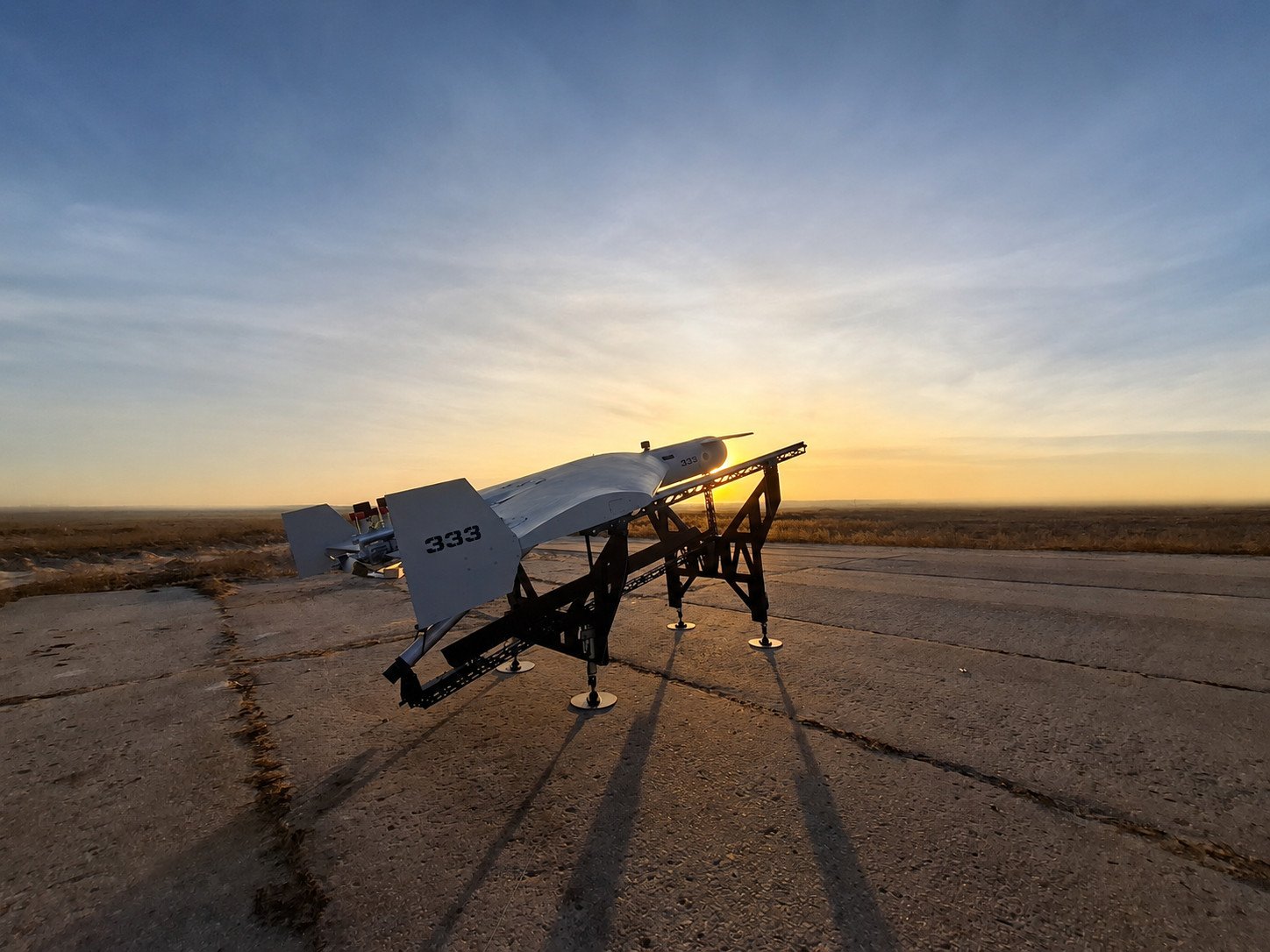
Ukrainian engineers turned a Chinese civilian drone design into a domestically produced 2,000-kilometer deep-strike weapon now used exclusively by the Security Service of Ukraine’s (SBU) Alfa special operations center, according to Ukrainian defense outlet Oboronka, whose journalists visited the MICH 2000 production facility on August 12.
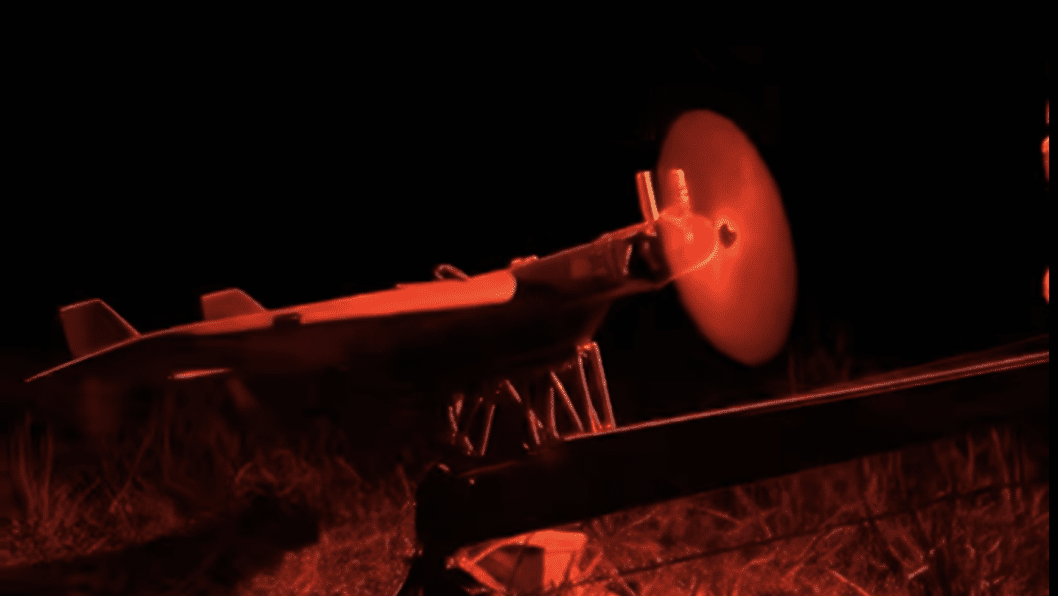
The drone, known as MICH 2000, can carry up to 60 kilograms of explosives and has already been used against targets deep inside Russia and temporarily occupied Ukrainian territory.
We bring you stories from the ground. Your support keeps our team in the field.
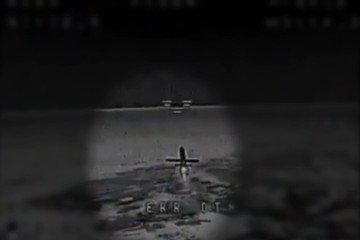
One of its most recent reported appearances came in early August, when Ukrainian forces struck the cargo ship Nadezhda near Novorossiysk with a drone that looked more like an Iranian-designed Shahed than Ukraine’s better-known Lyutyi or FP-1 long-range weapons.
According to Oboronka, that aircraft was a MICH 2000.
From Chinese drone to Ukrainian deep-strike weapon
Its story began before Ukraine had developed the large domestic deep-strike drone industry it operates today.
🇺🇦 Chinese UAV "Mugin-5 Pro" of the Armed Forces of Ukraine was shot down/landed against the background of an oil depot.
— MAKS 26 🇺🇦👀 (@Maks_NAFO_FELLA) March 15, 2026
The cost of the drone is several thousand dollars. It was probably re-equipped to perform combat missions/was used as a dummy target. pic.twitter.com/LOJrcn8WgS
Beginning in 2022, Ukrainian teams converted Chinese-made Mugin-5 PRO civilian aircraft into attack drones, fitting them with explosive payloads for strikes against targets in the Russian rear. Each platform cost around $15,000, carried approximately 25 kilograms of explosives, and could fly roughly 500 kilometers.
China tightened restrictions on direct civilian drone exports in the summer of 2023, forcing Ukrainian developers to search for another approach.
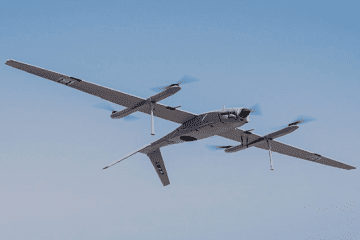
In December that year, a Ukrainian engineering team traveled to China hoping to purchase complete airframes directly from manufacturers. According to Oboronka, they eventually found a factory producing dozens of ZTK-150 drones, aircraft closely resembling the Shahed configuration but identifiable by small forward canards.
“We were at a very large production facility and saw all the processes. Then we negotiated for several days with Chinese intermediaries until they came up with the idea to sell us the technology so we could make everything ourselves. That’s when they planted the idea that we could really build drones in Ukraine instead of buying and shipping them,” a member of the team told Oboronka.
🦅🇺🇦 Some time ago, an unknown shahed-like drone hit cargo ship "Nadezhda" near Novorossiysk. It turned out to be a Ukrainian drone - MICH 2000, - journalist Illya Volynskyi
— MAKS 26 🇺🇦👀 (@Maks_NAFO_FELLA) August 12, 2026
There are 8 different modifications of "Mich" in "middlestrike" and "deepstrike" configurations.
🛑The… pic.twitter.com/qODVEgDbES
Ukraine’s military leadership reportedly backed the proposal.
Ukraine couldn’t buy the tech—so engineers learned how to build it
But when the developers returned prepared to purchase the technology, management at the Chinese factory refused the deal.
The intermediaries offered another solution: drones could be assembled at a location outside the reach of China’s export restrictions, while Ukrainian personnel would receive training on how to operate them.
That training apparently provided much more than piloting experience.
“We went there to train pilots to fly the Chinese drones. And while training, we photographed everything there was, from the production process to the layout of the shelves and cabinets,” the team told Oboronka.
The Ukrainians returned home with eight Chinese-built aircraft, trained pilots, and a detailed picture of how the drones were manufactured.
The first prototypes barely flew
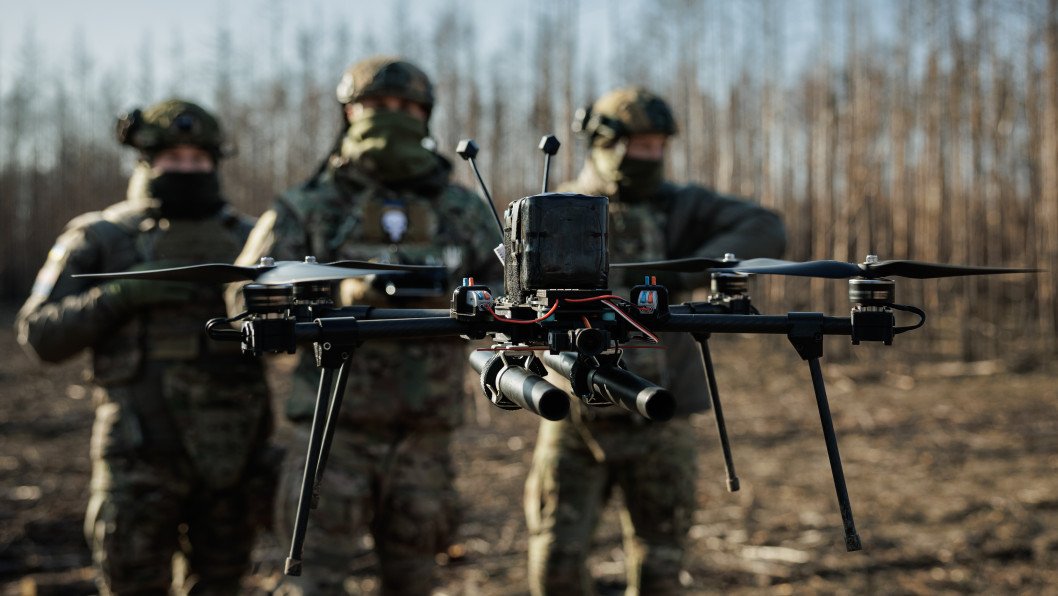
Testing began in the summer of 2024—and initially went badly.
The first prototype traveled only about one kilometer before crashing because of incorrect weight distribution. The second remained airborne for roughly an hour before vibration caused its propeller to break away. A third failed after losing its control signal under electronic warfare, exposing the original aircraft’s inability to operate reliably in a heavily jammed environment.
Building a Ukrainian version from scratch brought another wave of problems.
“When we started making our own fuselages, we made a lot of mistakes, aerodynamic and structural, that caused us constant problems. For about a month and a half to two months we were crashing planes at the range until our customer told us: ‘You’ve worn out your welcome, it’s time for combat.’ We said we hadn’t started flying properly yet. But Alfa wasn’t interested in that. They needed results,” the company’s owner told Oboronka.
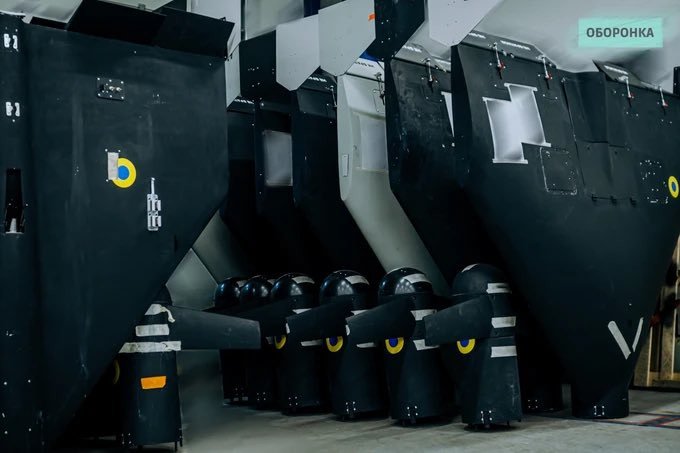
The MICH’s first combat mission came in October 2024.
From three combat drones to eight MICH variants
Three drones were launched. One was shot down, while the other two reportedly missed their designated targets by approximately 10 meters.
The unit approved the platform for production, and the aircraft began evolving rapidly from an experimental adaptation into a family of deep-strike weapons.
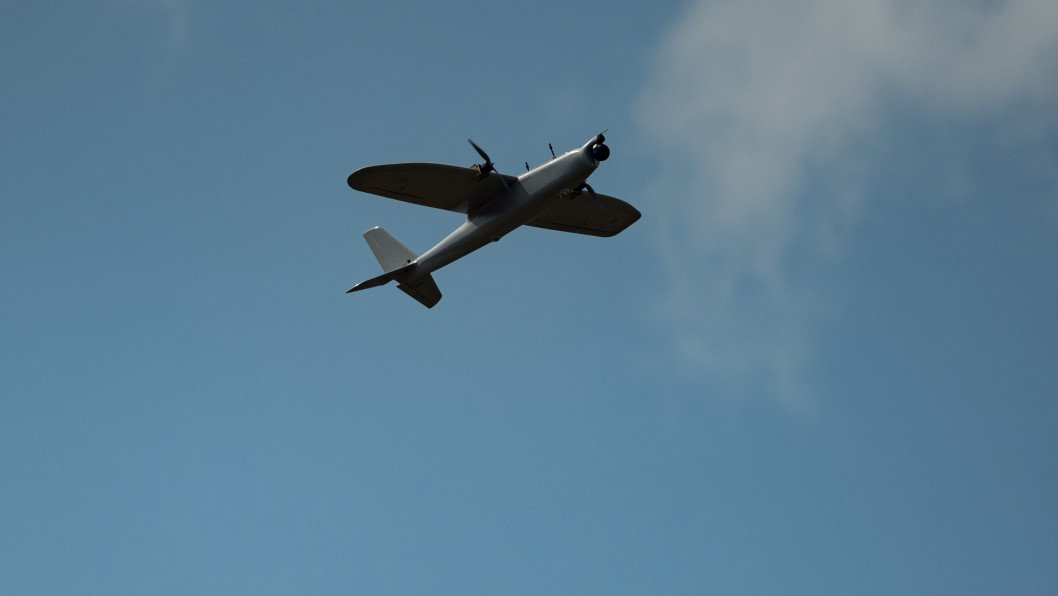
The MICH uses a flying-wing design, meaning much of the aircraft body itself generates lift. Finished fuselages are weighed as part of a broader quality-control process intended to keep every airframe as close as possible to the same specifications.
“Repeatability of the technology matters to me. The lighter the airframe, the more fuel it can carry, and the fewer problems can occur in flight. Any millimeter, or a misplaced comma in the code, can cause an error,” the owner said.
-496d2603f5ac63a0e4aab3cf40f8d6a5.png)
According to Oboronka, the manufacturer now offers eight configurations for what it describes as “deep strike” and “middle strike” missions.
Depending on the version, the drones can fly up to 2,000 kilometers and carry between 25 and 60 kilograms of explosives.
Customers can select analog, digital, or Starlink communications, different warhead types, terminal-guidance systems, and CRPA antenna configurations intended to make satellite navigation more resistant to Russian jamming.
The original Chinese aircraft reportedly cost about $50,000.
Ukraine’s domestically produced version starts at approximately $48,000, although the final price rises depending on guidance, communications, and electronic-warfare-resistant navigation equipment.
Over the past two years, the manufacturer has built a network of dozens of Ukrainian subcontractors producing components including engines, warheads, fuselages, ignition boards, and rocket-assisted launch boosters.
The crew aboard a ship in the Black Sea filmed Ukrainian Shahed-looking drones flying directly over their deck during attacks on other vessels in the area.
— Special Kherson Cat 🐈🇺🇦 (@bayraktar_1love) August 7, 2026
One of the targeted ships has the distinctive profile of a Ro-Ro cargo vessel, fitting the recently struck NADEZHDA. pic.twitter.com/zJiC8QstOH
One major foreign dependency remains: CRPA anti-jamming antennas.
Only a small number of manufacturers produce them, according to Oboronka, and individual systems can cost between $20,000 and $25,000 depending on the number of antenna modules.
A MICH 2000 without a CRPA system is approximately 85% localized in Ukraine by cost. Adding the imported antenna reduces that figure to about 55%.
The company has also learned the cost of relying on outside suppliers the hard way.
“We had an unpleasant incident where third-party boosters burned about a million dollars’ worth of our equipment. After that we were banned from launching on those boosters … We went to the range, launched the first aircraft, and the booster misfired, producing more impulse than it should have. Chemists and engineers worked all night reworking the rockets right there at the range. The next day three drones flew. After that we started scaling up and switching to our own boosters,” the owner told Oboronka.
6,000 drones a year—and one customer
The manufacturer currently produces roughly 6,000 drones annually and plans to increase output to 10,000.
That remains far below the 100,000-drone annual production target announced by Ukrainian manufacturer Fire Point for its own long-range systems, but MICH follows a very different model.
Unlike Fire Point’s FP-1, which is distributed across multiple Ukrainian units, MICH 2000 has one customer: SBU Alfa.
“We know our drones won’t just fly off somewhere into the swamps. They’ll fly to a specific target, because Alfa is about analytics and results,” the company told Oboronka.
Where MICH 2000 already struck
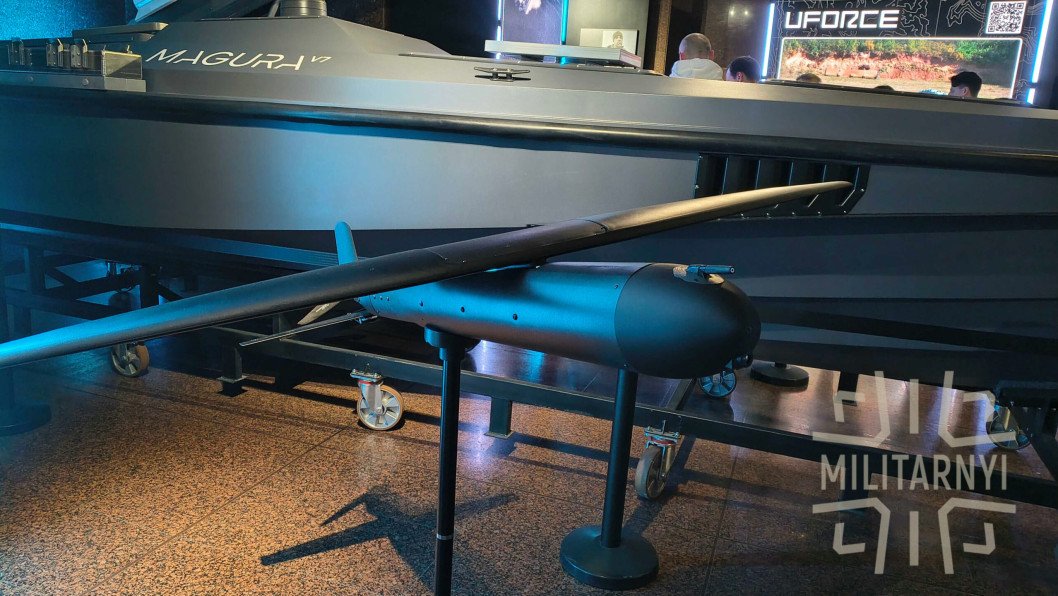
According to the outlet, Alfa has already launched thousands of MICH drones and struck hundreds of targets.
Oboronka identified at least eight publicly available videos showing the aircraft either in flight or striking targets.
The company says MICH 2000 has been involved in attacks on Moscow, Russian military infrastructure in occupied Ukrainian territory, and several high-value targets deep inside Russia.
Among the most notable reported operations was the destruction of a Tu-95MS strategic bomber at Engels airfield. Satellite imagery later showed that the rear section of the aircraft had been destroyed beyond repair.
The drone has also reportedly struck a Wildberries logistics hub in Russia’s Ryazan region, an electronic warfare system near Vladimir Putin’s residence in Gelendzhik, and a Russian Baltic Fleet naval facility.
The platform’s largest reported single operation targeted the Russian port of Ust-Luga, where more than 20 MICH drones reportedly reached their targets.
In another attack, according to the manufacturer, so many guided MICH drones successfully entered the target area that the operators began running out of designated objects to strike.
“During one attack with guided MICH drones, so many reached the target area that there weren’t enough targets left for them. They ended up chasing a Pantsir air defense system down the road after it had fired off all its ammunition,” the company’s head said, laughing.
The next MICH will carry a bigger warhead
Development has not stopped with the 2,000-kilometer version.
The company is now working on MICH+, a shorter-range “middle strike” variant without the front canards seen on the original design.
The new version is expected to carry a larger 70-kilogram warhead, include terminal guidance, and reach targets at distances of up to 600 kilometers. Its expected price is around $40,000.
The manufacturer is hiring additional workers, opening new production sites, and reinvesting approximately $1 million every month into research and development as it works toward the 10,000-drone annual production target.
But having only SBU Alfa as a customer also limits how quickly the company can finance further expansion.
According to Oboronka, the manufacturer is therefore exploring joint production with Baltic countries through the Build with Ukraine initiative, potentially opening access to European financing and additional manufacturing capacity.
What began with eight Chinese-built drones and a Ukrainian team photographing a foreign production line has evolved into a domestically manufactured family of strike weapons capable of reaching targets up to 2,000 kilometers away.
“Honestly, I don’t want to guess anymore what happens after 10,000. I just want the war to end. But if we need to keep working, we’ll keep working,” the company’s head said.
Earlier, Ukraine’s F-Drones delivered the first 2,000 F10 FPV drones to the US military under the Pentagon’s Drone Dominance Program, making the F10 the first Ukrainian drone authorized for export to the United States under the initiative.
Discuss this article:
-9a7b3a98ed5c506e0b77a6663f5727c5.png)