- Category
- Defense Tech
Ukraine Is Building Its Own 100-Satellite Network With No Foreign Kill Switch
 Prefer U24 Media on Google
- Authors


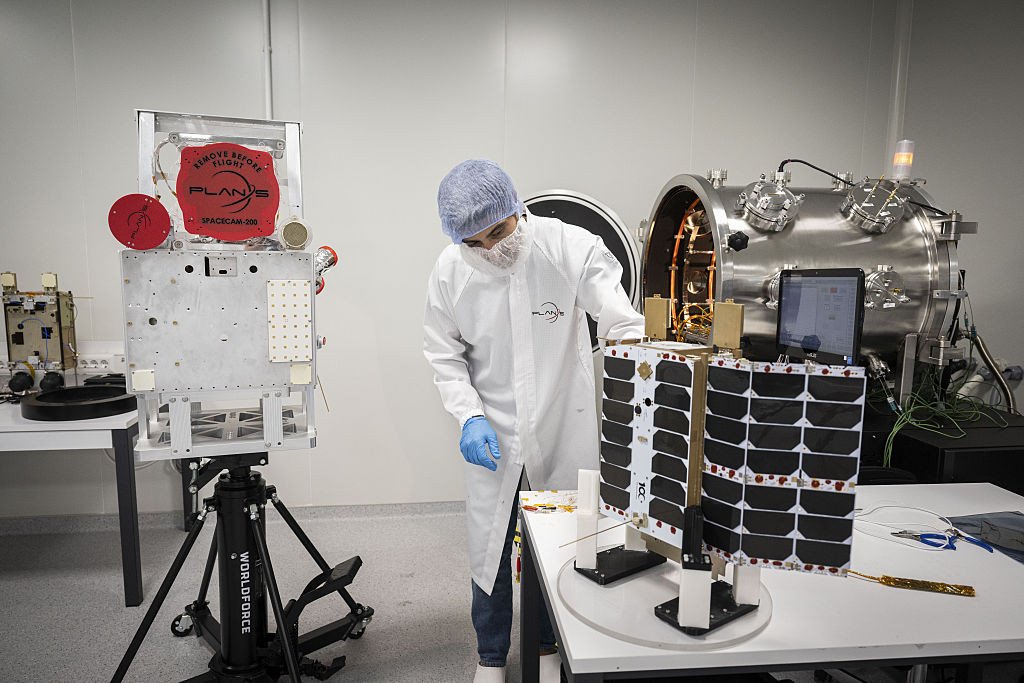
Ukraine is developing an independent satellite communications network designed to provide secure connectivity for the Defense Ministry and critical infrastructure, with deployment potentially beginning within two to three years, Defense Express reported on November 9.
Dmytro Khmara, vice president for satellite technologies at Ukrainian communications company Himera, noted that the project is not intended to replace Starlink.
We bring you stories from the ground. Your support keeps our team in the field.
“No, we are not going to make a replacement for Starlink. We are building strategic communications using satellites to connect command centers for the Defense Ministry and critical infrastructure points,” Khmara told Defense Express.
The project aims to create a national secure communications system controlled entirely by Ukraine, without foreign operators having the ability to restrict or disable access.
“The main thing about this communications system is that it will be completely controlled by Ukrainians. No one abroad will have any button to limit it or switch it off,” Khmara stated.
Himera estimates that at least 100 satellites would be required to provide continuous coverage across Ukraine, including connectivity for critical infrastructure. The constellation is expected to operate in low Earth orbit, potentially at an altitude of around 500 kilometers, according to Defense Express.

The project is currently financed entirely through private investment, with no state funding committed so far. Himera plans to seek financing from European funds, with Khmara indicating that the full program would require hundreds of millions of euros.
The first test satellite, OBRIA NANO, was launched on October 1 aboard SpaceX’s Transporter-18 mission. GomSpace manufactured the 8U CubeSat in Denmark, and it weighs around 10 kilograms.
The satellite is currently undergoing checks of its onboard systems and equipment. GomSpace remains responsible for operating it during the testing phase, but control is expected to be transferred entirely to Ukraine later, Defense Express wrote.
Himera plans to use OBRIA NANO to train Ukrainian operators and test technologies intended for the future constellation.

Serial satellites are expected to weigh around 250 kilograms. Khmara noted that Himera could initially assemble the first production satellites in Europe to accelerate deployment, although It intends to localize production of both satellites and ground terminals in Ukraine.
Comparable satellite communications projects typically take five to seven years to deploy, according to Khmara. Himera’s most optimistic estimate is that Ukraine could begin establishing its network within two to three years, Defense Express reported.
The project follows the October launch of OBRIA NANO as Ukraine seeks greater control over strategic satellite communications. Himera noted that the system is intended to connect military command centers and critical infrastructure through a network that cannot be restricted by an external provider.
Russia is pursuing its own expansion of satellite communications capabilities. In November, filings with the International Telecommunication Union showed plans for a RASSVET-4 network of 374 satellites, while earlier analysis indicated that a sufficiently large RASSVET constellation could support long-range drone control, reconnaissance, and strike missions beyond direct line of sight.
Discuss this article: