- Category
- Defense Tech
Ukraine’s Defense Builder Demo Day Showcases Nine Combat-Tested Military Tech Innovations
 Prefer U24 Media on Google
- Authors

-111f0e5095e02c02446ffed57bfb0ab1.jpeg "Photo of Roman Kohanets")

Nine Ukrainian and European defense-tech teams presented their systems to investors, military officials, and international partners at Demo Day 3.0, the closing event of the Defense Builder Accelerator's third cohort, UNITED24 Media correspondent reported on June 19.
The teams secured grants of up to $65,000 from the accelerator and its lead event partner, the Ukrainian defense-tech company General Chereshnia.
We bring you stories from the ground. Your support keeps our team in the field.
Inside a four-month build
The Demo Day capped an intensive four-month track that pushed each team to build a company, validate products in trials with combat units, and connect with investors, lawyers, and manufacturers.
Partners included Brave1, the European Commission Office in Kyiv, and NATO's representation in Ukraine, and more than 30 mentors with backgrounds in defense and venture worked with the participants.
The business stream covered unit economics, investment structures, fundraising, and state procurement, while a separate track prepared teams for NATO AQAP due diligence and foreign market entry.
Nine systems across three combat layers
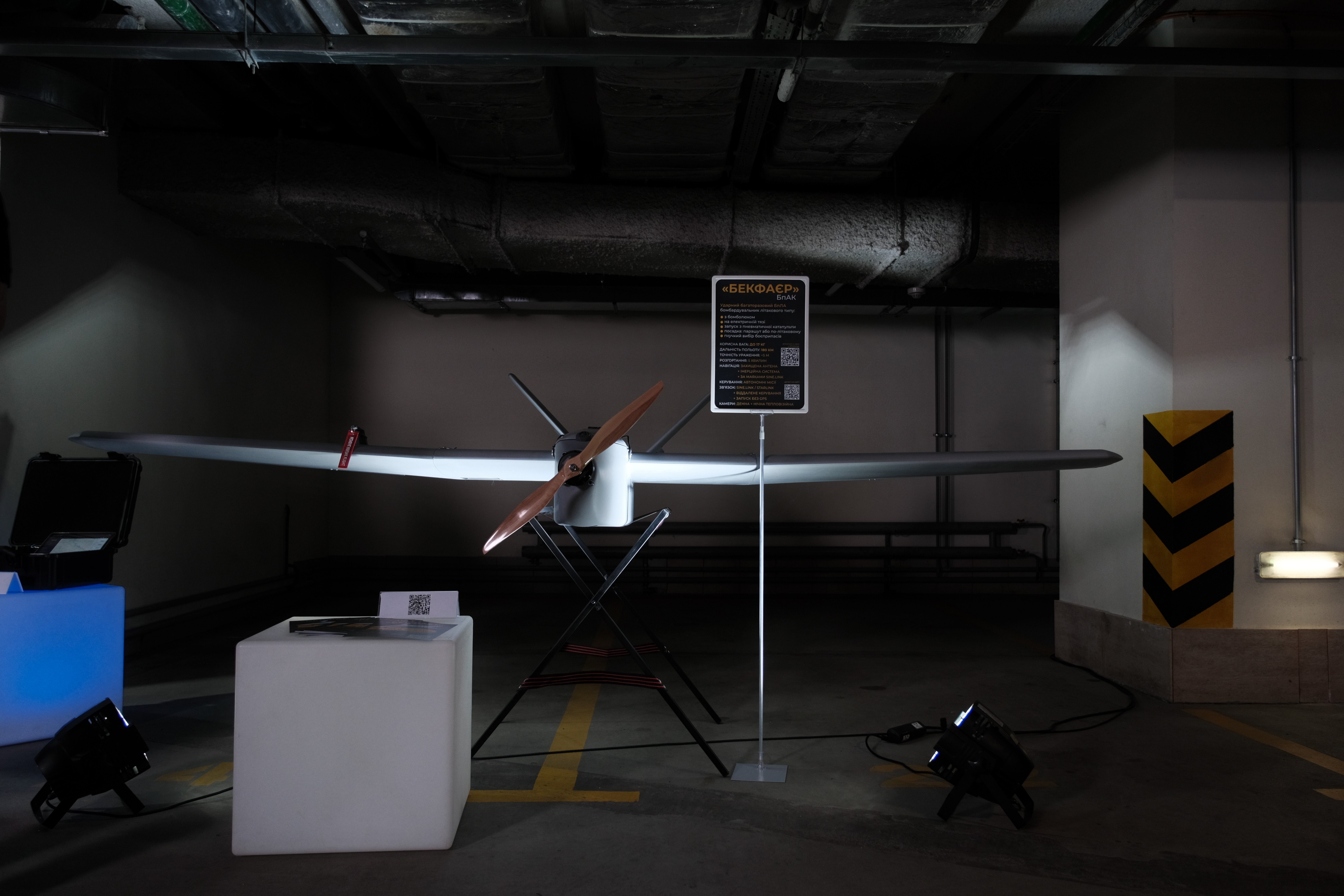
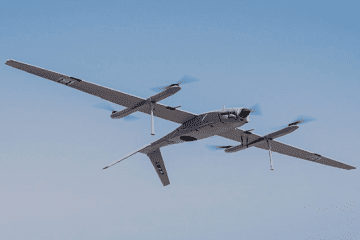
The cohort's solutions spanned strike, air defense, and ground robotics, all rated at technology readiness levels 3-8. WingTech showed its HABA strike drone, which launches from a catapult, operates without GPS, and reaches up to 600 kilometers.
Trident presented an autonomous terminal-guidance module that increases accuracy from 20% to more than 80% in the presence of jamming, while Fremen demonstrated a compact onboard unit that shields reconnaissance drones from FPV interceptors.
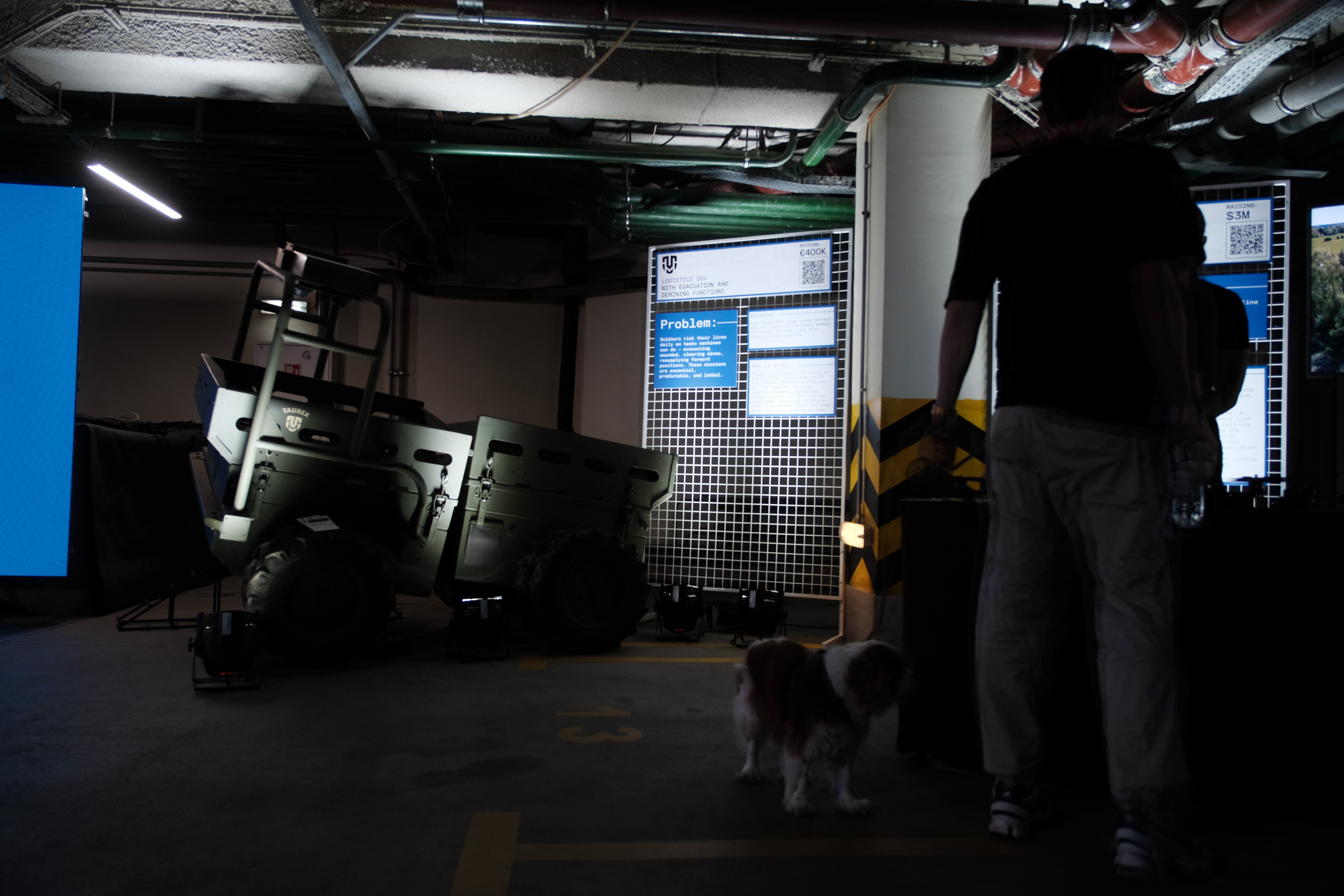
In ground robotics, TAUREX moves more than 300 kilograms across more than 80 kilometers for logistics and casualty evacuation, and Estonia's Telearmy logged a remote-control range record of 4,300 kilometers.
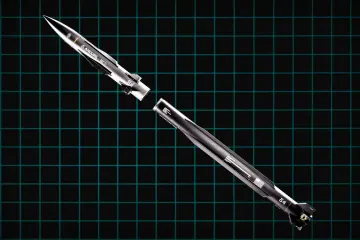
On air defense, Frost Works unveiled its VELES system for early detection of low-altitude threats such as Shahed drones, Denmark's BlueShadow fields swarms of unmanned surface vessels that intercept UAVs over the Black Sea, and NEBOSTRAZH builds an AI-guided turret that engages FPV targets for under $50 each.
NATO takes note
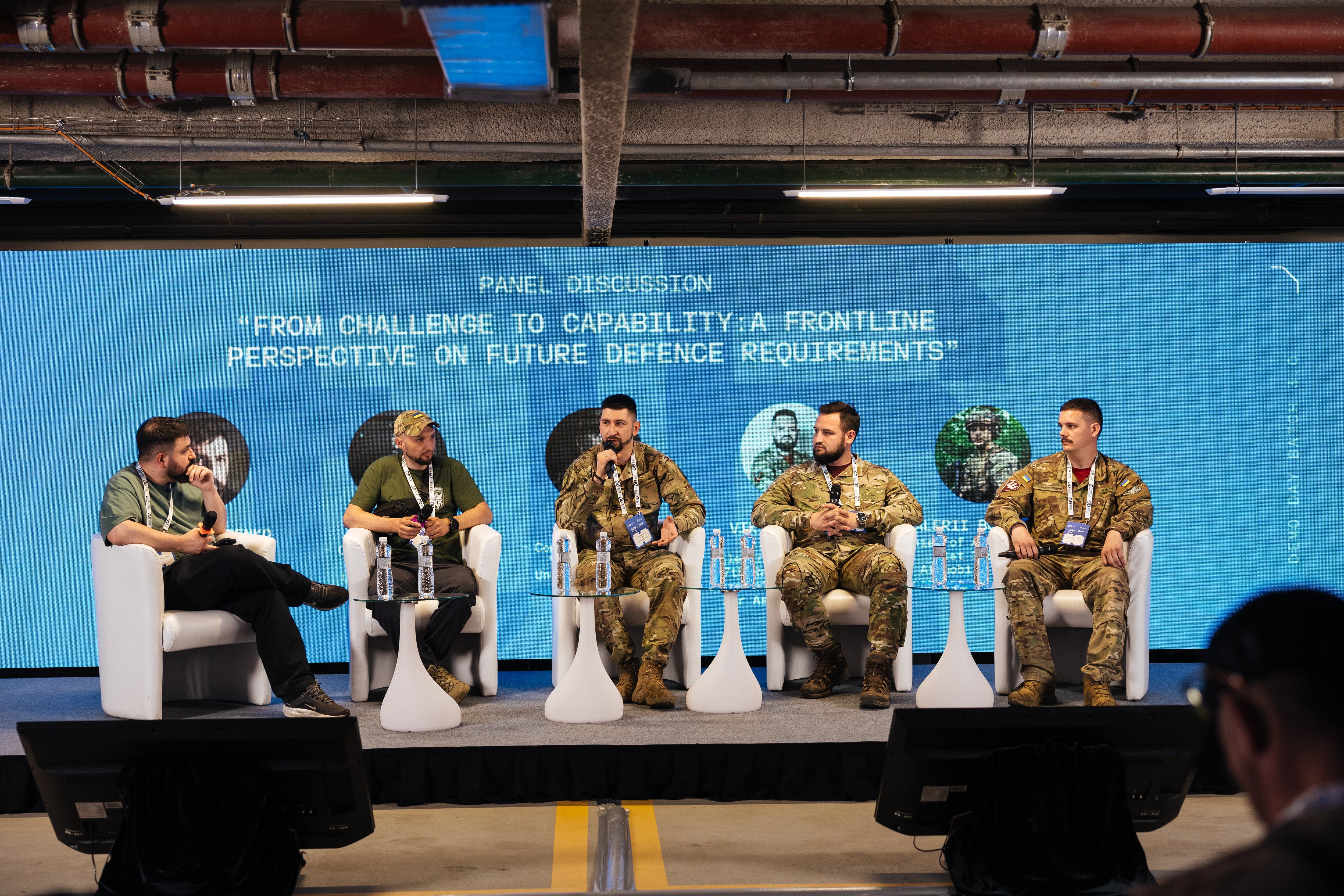
"The front line, your units, accelerators like Defense Builder and the wider ecosystem have proven that you can deploy, learn, and iterate in weeks rather than years," Will Tonkins, NATO's adviser on industry, procurement, innovation, and joint enablement, stated. "That in itself is a capability, and NATO is studying it closely."
Grants and reach
Every team received a $10,000 base grant, with the strongest performers earning more: Fremen received an extra $30,000, while WingTech, Frost Works, and the TAUREX developer each received an additional $20,000. General Chereshnia separately awarded WingTech, Trident, NEBOSTRAZH, and Frost Works an additional $25,000 each.
The event drew more than 250 participants, including representatives of Ukraine's Armed Forces, Defense Ministry, and General Staff, as well as NATO bodies, prime manufacturers, and sector investors.

Turning breakthroughs into an industry
The Defense Builder Accelerator has run since 2024, putting more than 25 companies through its program, and the combined valuation of its first two cohorts exceeded $100 million. "Strong technology is only half the equation," Line Rindvig, the accelerator's CEO, noted. "The other half is building a company capable of producing, selling, and scaling it."
The drive to convert isolated battlefield breakthroughs into a scalable industry has shaped a wave of similar Ukrainian defense-tech programs. A separate competition, Battle Proven, set for the Defense Tech Valley summit in Lviv in September, will sort entrants into early-stage, field-tested, and combat-deployed tiers and is open to Ukrainian and foreign teams alike.
Discuss this article:
-9bd5e1532102621f8fb1c4ba871a3171.png)


-6ff4efaedd2092e0205aad37f9e7b98a.jpg "Illustrative image. US F-16 and Polish MiG-29 over Poland, 2005.")