- Category
- Interview
“Airborne Within Five Minutes”: What Gripen Jets Would Mean for Ukraine—A Former Swedish Air Force Pilot
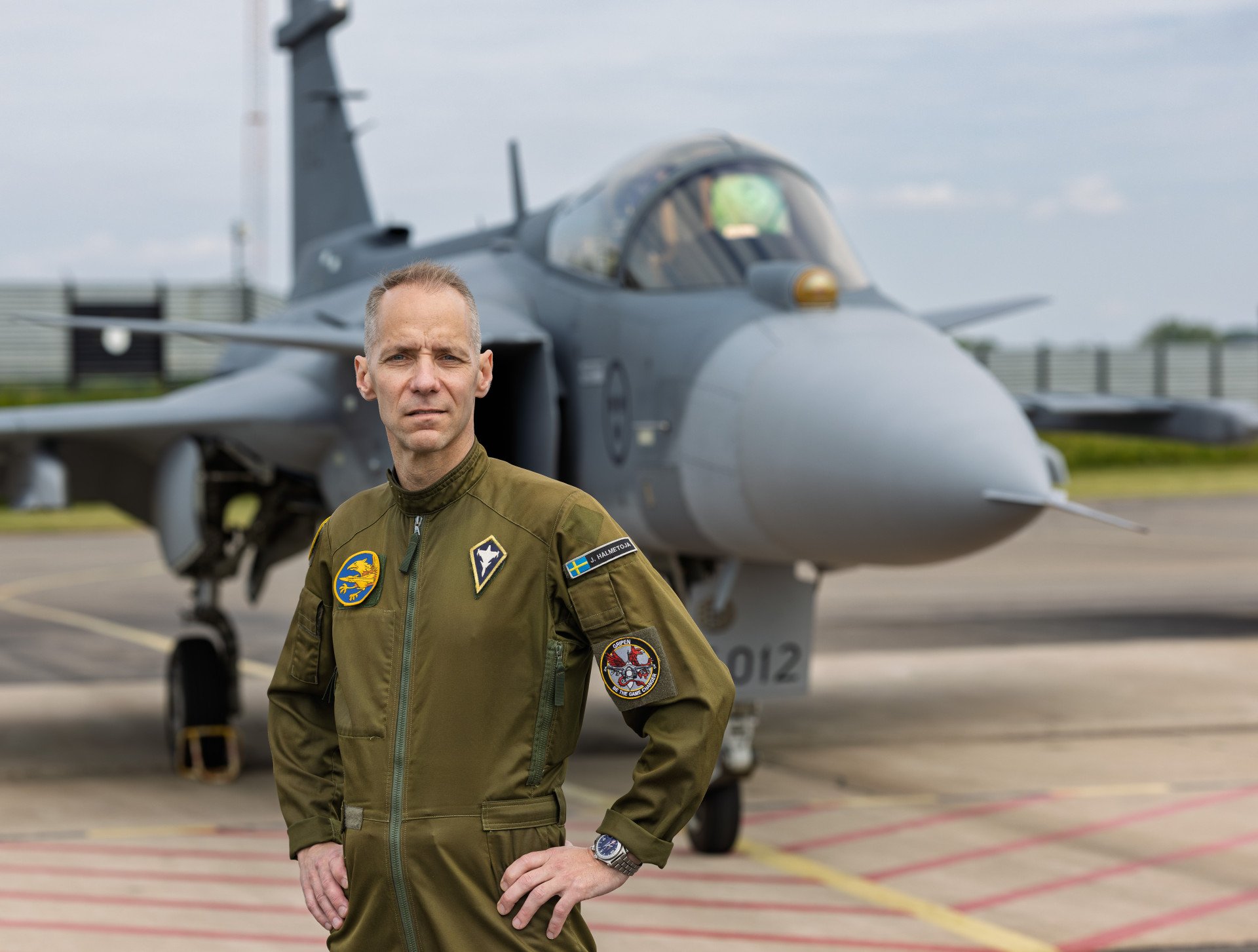
What the Gripen fighter jet was built to do, what it could offer Ukraine, and one former Swedish Air Force pilot’s view of two nations united by yellow and blue.
 Prefer U24 Media on Google
- Authors



-73e9c0fd8873a094288a7552f3ac2ab4.jpg "Photo of Olena Blizniakova")
During a recent reporting trip to Stockholm, UNITED24 Media visited Saab headquarters to take a closer look at the JAS 39 Gripen, the Swedish fighter jet that President Zelenskyy said in October 2025 had become a top priority for Ukraine’s future air force, with first deliveries expected in 2026 under a plan for up to 150 aircraft.
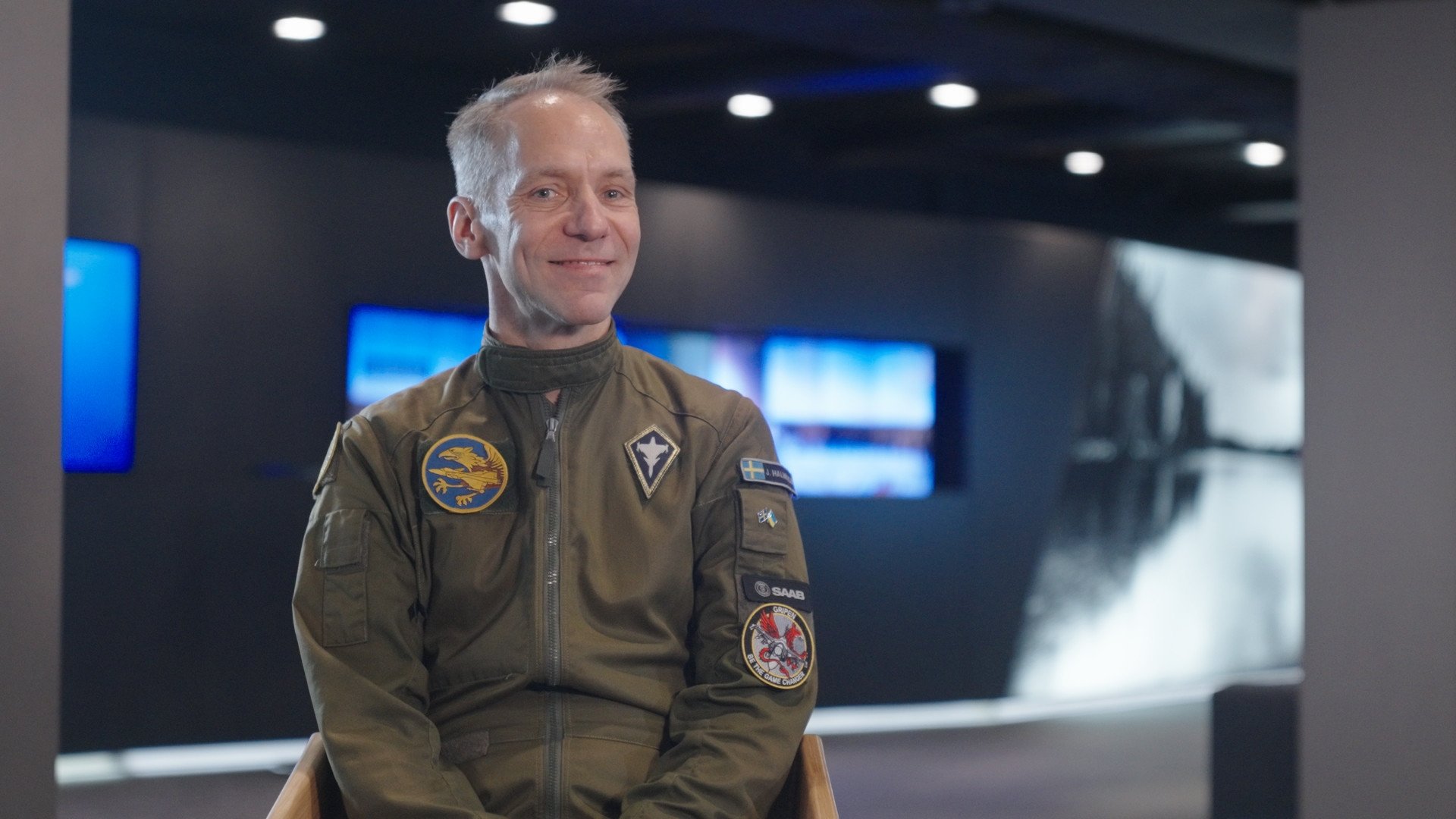
To understand what sets this multirole fighter jet apart, we met with Jussi Halmetoja, a retired Swedish Air Force major with almost 25 years in military aviation and experience flying more than 25 aircraft types. In 2019 he joined Saab, currently working as Senior Operation Advisor—Air Domain. He gave us a pilot’s view of the Gripen’s design, strengths, and what it could offer Ukraine in its defense against Russia’s war of aggression.
The Pilot behind the Gripen
Jussi Halmetoja greets us with a beaming smile, welcoming us not only to Saab’s showroom but to Sweden itself. Addressing us by name, he introduces himself by his callsign, “Miyagi”—“another story,” he says, for another time—before outlining the path that had led him here, to this conversation.
“I was probably five or six,” he says, tracing his fascination with aviation back to childhood and the influence of his stepfather—a role model, he says, who was “super nerdy about fighter airplanes.” After school and basic military training , he applied to the Air Force and began flight training in early 1995, embarking on what would become a seven-year process. In the final two, he entered the cockpit of his first real fighter jet, the Viggen , still “closest to my heart.”
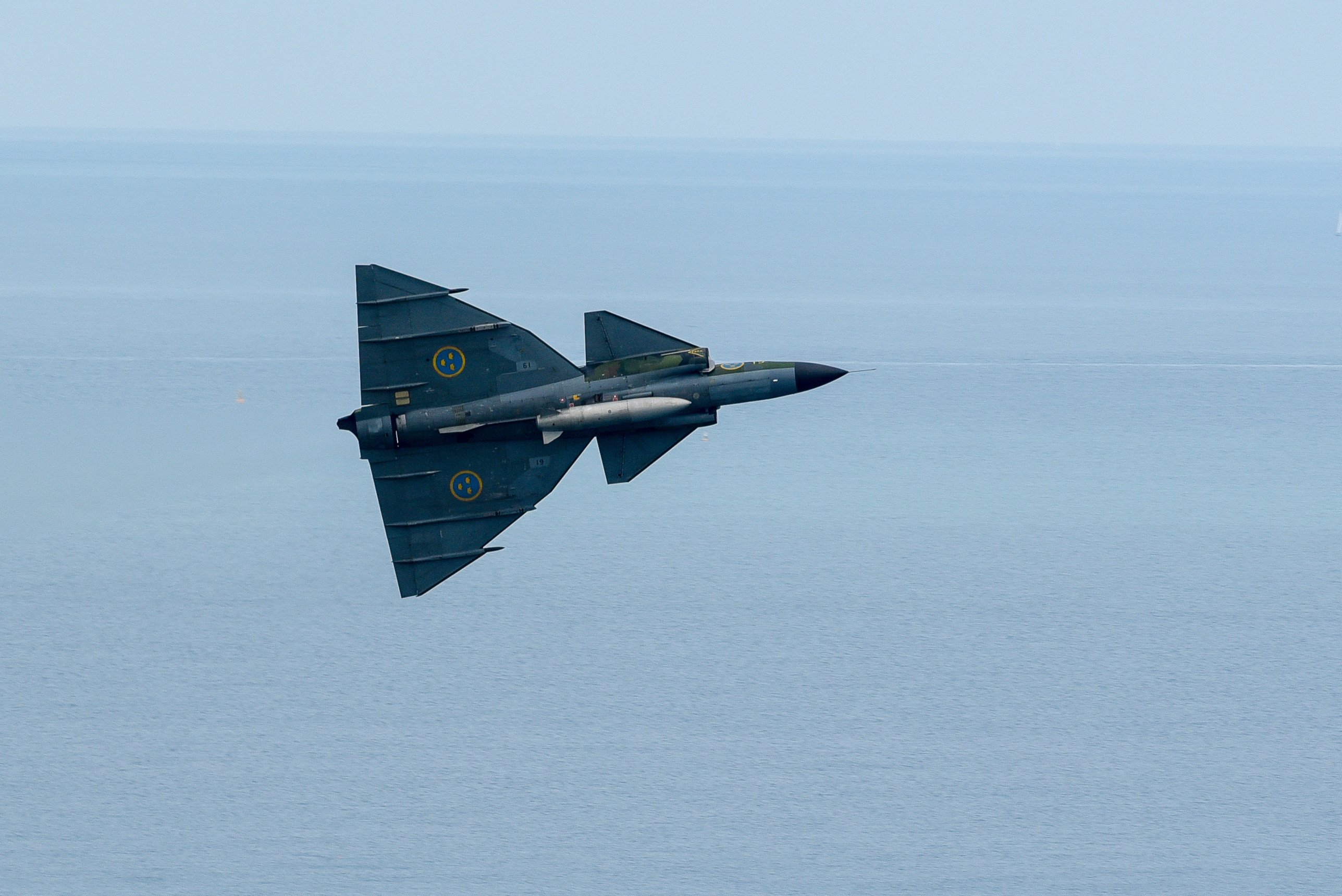
From the Viggen to the Gripen cockpit
That first fighter had been designed in the 1960s and was, as Halmetoja puts it, “already towards the end of its lifecycle” by the time he flew it. His first encounter with Gripen came later, as a test pilot, when he climbed into the C/D version for the first time. “I remember that day very clearly,” he says, recalling a cockpit that felt “super modern, like a cockpit from space,” and an aircraft that was simply “so easy to operate.”
What impressed him most, though, was the way the aircraft handled information. “It tells me all these things,” he says of the sensors and presentation, calling it “a very pilot-friendly airplane.” That, he argues, is one of Gripen’s core advantages. Unlike aircraft such as the F-16, which he says “are great airplanes, however, with a design that presents too much information at once, while Gripen is designed to show what matters most in the moment,” helping the pilot “maintain a manageable workload enabling focus on the right task.”
For Halmetoja, the newer Gripen E/F generation represents “20 years of technological evolution” in cockpit layout, electronic warfare, and weapons capability. “It’s another level,” he says, pointing to “great sensors, long-range weapons, very efficient survivability, powerful electronic warfare” as “exactly what you need in the modern fight.” He cites the Meteor as one example, saying it “can fly 150–200 km at very high speed” and would give Ukraine a better missile than it has today.
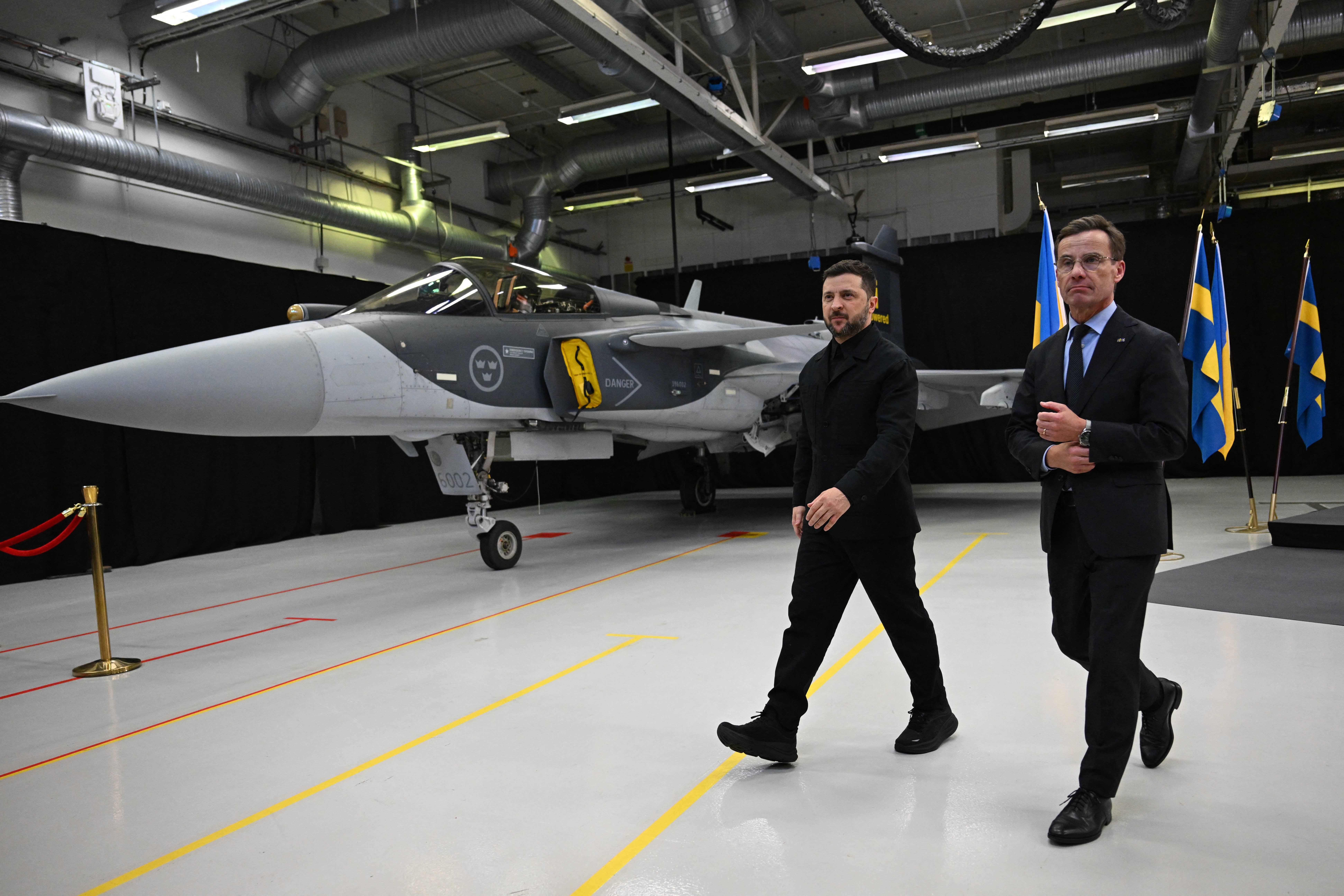
In Swedish, the aircraft’s designation JAS stands for Jakt, Attack, Spaning—fighter, strike, and reconnaissance—reflecting Gripen’s multirole concept. In Halmetoja’s description, that means “air-to-air, air-to-ground, air-to-sea,” with sensors that “look everywhere at the same time” and give the pilot “instant high quality situational awareness” while airborne.
The name has its own backstory, too. Saab says Gripen was chosen in a 1982 public competition and named for the mythical griffin—a creature said to combine the strength of a lion with the wisdom of an eagle, ruler of both land and sky.
The dispersed-operations concept
In modern warfare, permanent Main Operating Bases (MoBs) are usually among the first targets of attack. Sweden addressed that vulnerability during the Cold War by developing a dispersed-operations concept later formalized as Bas 90 , allowing fighter jets to operate from temporary strips and, as Halmetoja explains, “take off and land from very short runways, even normal highways,” instead of relying on a few major airfields.
He describes the system in practical terms. “We only have one trolley with all the tools that you need,” he says, stressing that the equipment is built to work “in the snow, in the mud, in the cold, in the rain, in the dark, under a tree, in a base, everywhere.” The point is to keep the aircraft serviceable in rough conditions with as little infrastructure as possible, with turnaround handled by as few as five technicians in as little as 15 minutes.
“Compared to other aeroplanes such as F-16, Rafale, Eurofighter, and others, they will nominally take three or four times that time, so 45 to 60 minutes,” Halmetoja says.
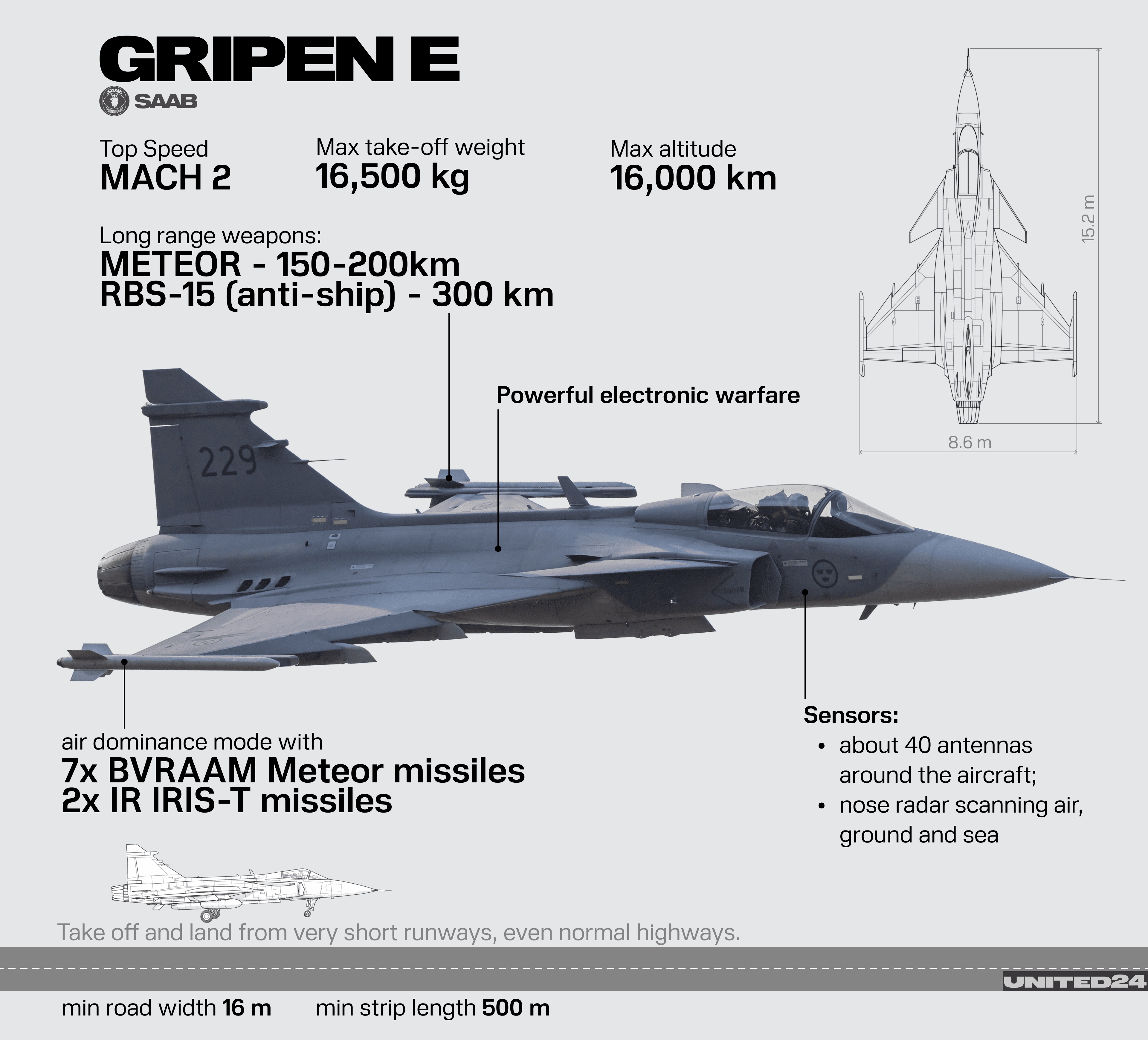
That 15-minute figure refers to a full combat turnaround—re-arming and refuelling the aircraft for its next mission. The time from alert to takeoff can be even shorter. “It can take less than a minute if you are already prepared,” Halmetoja says. “But if you have your airplane standing on a base somewhere and then you get the call, ‘Now scramble,’ the pilots will get into the jet, and you are in the air within five minutes.”
Gripen’s faster turnaround, short takeoff from highways, and minimal infrastructure requirements are part of what make it relevant to Ukraine. “That gives us the ability to use our airplanes more, to fight more, to win the battle.”
What Gripen could do in Ukraine
Asked what main role Gripen could play in strengthening Ukraine’s air defense, Halmetoja pointed to two areas where he believes the aircraft could make a difference. First, he said, it could help “support the frontline troops with long-range precision fire,” giving Ukraine a capability for precise air-to-ground strikes.
Just as importantly, he argued, the aircraft could challenge Russian aviation by forcing “enemy fighter planes and bomber planes” operating near the border “to push them away and have them to change their tactics.” He described those as the “two main missions” Gripen could solve “very, very efficiently.”
He tied that logic directly to Sweden’s own defense thinking: “We have the same threat… So it’s what we build the airplane to do,” adding that “Gripen would suit perfectly in a scenario like Ukraine.”
Training Ukrainian pilots
On the question of how Gripen training compares with the F-16, especially for pilots transitioning from Soviet-era aircraft, Halmetoja says the biggest challenge would not be to learn flying the jet itself. “Flying will be easy,” he says. “The information management is the challenge”—how to interpret it and use it tactically. At first, he suggests, the main hurdle for Ukrainian pilots would be language training.
He believes an experienced pilot with strong language skills and “some hundreds of hours already” could transition to Gripen in “three to four months.” That estimate comes from a pilot with 2,300 flight hours across a wide range of aircraft. For a younger pilot, he says, “it will take a year, and then you are up to speed to fight in war.”
He also argues that Gripen training could be done “a bit smoother, a bit more tailored and a bit quicker” than on the F-16, Rafale, and others, because, in his view, Saab wants to train pilots on what they need to know “and then skip the rest.” Even so, he is careful not to overstate the comparison. “They’re all great airplanes,” he says. “They do the job, they just do it differently.”
“That gives us the ability to use our aeroplanes more, to fight more, to win the battle.”
Jussi Halmetoja
Swedish Air Force major
War and responsibility
Halmetoja says meeting Ukrainian pilots carried an immediate sense of connection. “If you meet a pilot anywhere from the world in a green flight suit, you have kind of an immediate brotherhood, sisterhood,” he says. With Ukrainians, he adds, that bond carries extra weight because “of the situation you have in your country,” making it more emotional.
He says he also met Zelenskyy and other Ukrainian decision-makers to discuss Ukraine’s needs, its challenges, and how Saab could “help, support, and understand.” “It’s a life and death situation every day,” he says, not only for the Air Force but for Ukrainian society as a whole. He says that for most of his 25-year career, the threats were simulated. In Ukraine, they are real.
For him, that reality gives the war meaning far beyond aviation. “It’s a defining scenario for the whole Western world,” he says. Ukraine, he adds, is “on our doorstep,” and “we must continue full support.”
Discuss this article:
-9a7b3a98ed5c506e0b77a6663f5727c5.png)


-206008aed5f329e86c52788e3e423f23.jpg "Photo of Oleksandr Moiseienko")
-f3430f0449615e9897dff835086ac204.jpg "Ukraine Broke With a Soviet-Era Military System and Rebuilt It Around the Soldier")
-e126c16a85d580738cf2d57e760b80a3.jpeg "Photo of Vladyslav Greziev")