- Category
- Interview
How Ukraine’s Elite HUR Unit Guides a Fighter from Injury to a New Body
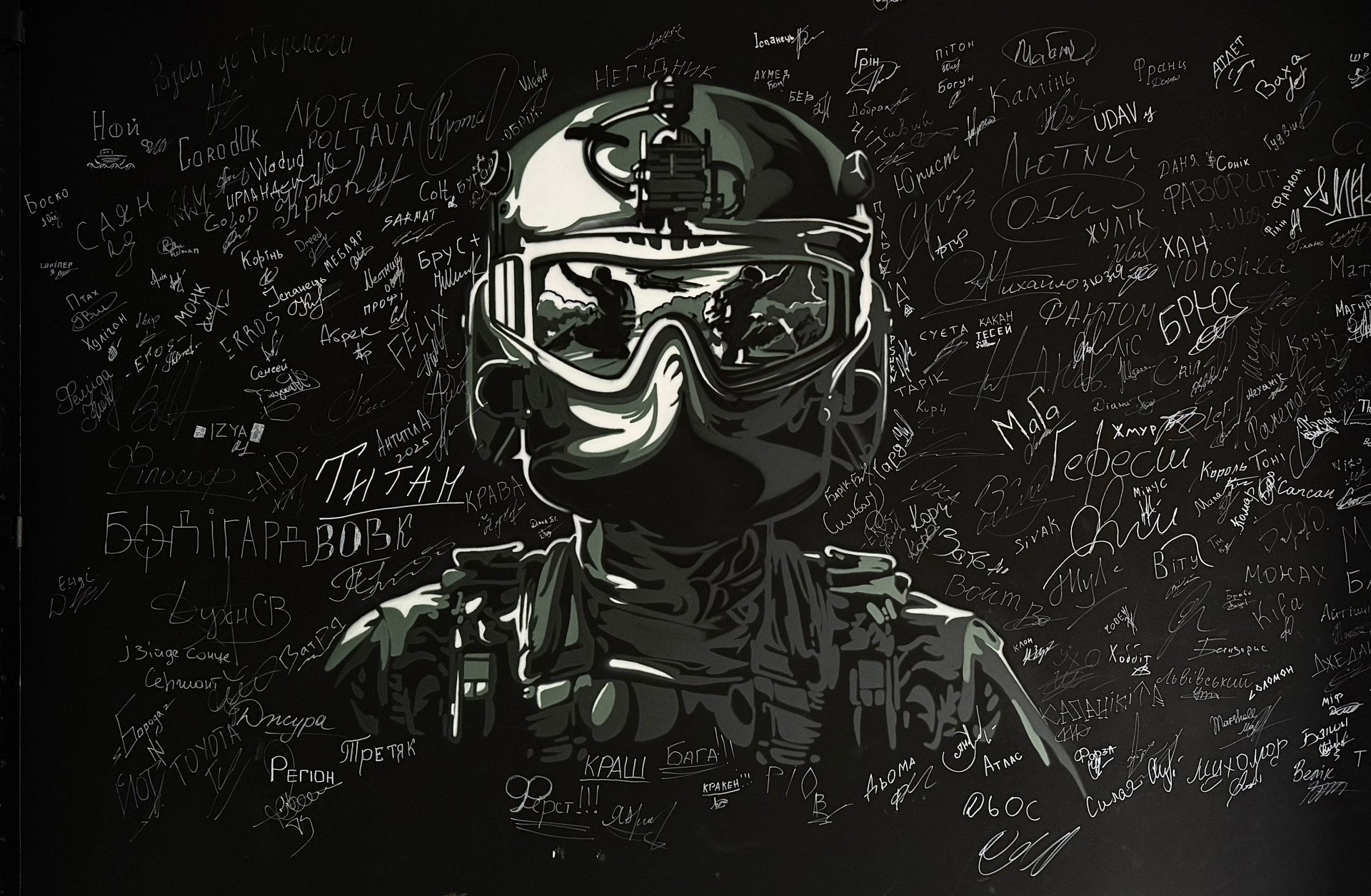
“Shredder” lay for 16 hours with tourniquets cutting into both legs, Russian FPV drones circling above. When he woke up and realized his legs were gone, he cracked a joke. What followed was a system designed to make sure he wouldn’t be left behind.
 Prefer U24 Media on Google
- Authors


Elite military units are usually judged in terms of operations and destroyed targets. Much less often—in terms of care. The true strength of a military formation is also defined by how it takes responsibility for its own after the battle.
We bring you stories from the ground. Your support keeps our team in the field.
On May 5, Ukraine marks the Day of Civil-Military Cooperation Specialists of the Armed Forces—a story about those whose work rarely makes headlines but often determines whether a wounded soldier can return to life.
“I was afraid I’d never see my wife and my little daughter again,” says a fighter from the “Artan” special unit of Ukraine’s Defense Intelligence, call sign “Shredder,” recalling the moment he was wounded. “My brothers-in-arms kept telling me, ‘Don’t fall asleep, everything will be fine.’ That thought, and the awareness that my family was waiting for me at home, kept me going.”
Elite soldiers
The “Artan” special unit, led by Viktor Torkotyuk, is part of the Department of Active Operations of Ukraine’s Defense Intelligence—a structure that carries out complex combat and reconnaissance missions. At the same time, it is building another, less visible component: responsibility for its people after the fight.
The Artan patronage service is not volunteer aid or occasional support, but an integrated part of the unit. It accompanies a fighter from the moment of injury through the entire journey: stabilization point, hospitals, prosthetics, rehabilitation, and, if necessary, treatment abroad.
In September 2025, in the Izium direction (Kharkiv region), after 21 days of direct contact with the Russian troops, Shredder and four of his comrades were withdrawing from their positions.
“A vehicle couldn’t reach us because of the many FPV drones hanging in the sky, so we had to walk several kilometers,” Shredder says. “But on the way, we encountered an OZM-72 mine—what people call a ‘witch’—it jumps up and explodes.”
Because of the Russian drones overhead, evacuation was impossible, and Shredder spent more than 16 hours with tourniquets on both legs.
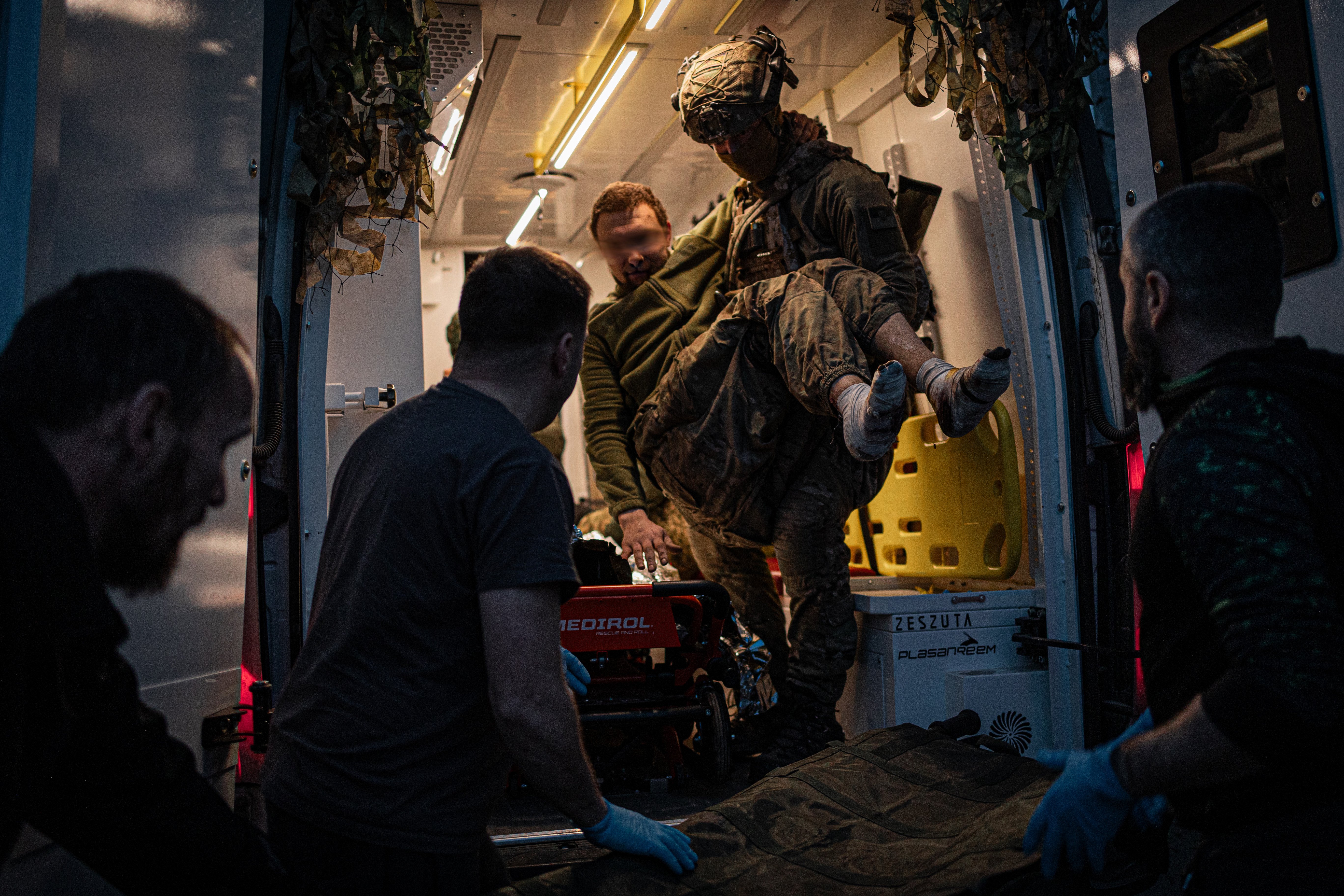
At the same time, a curator already knows where the wounded will be taken and heads there as well.
Where recovery begins
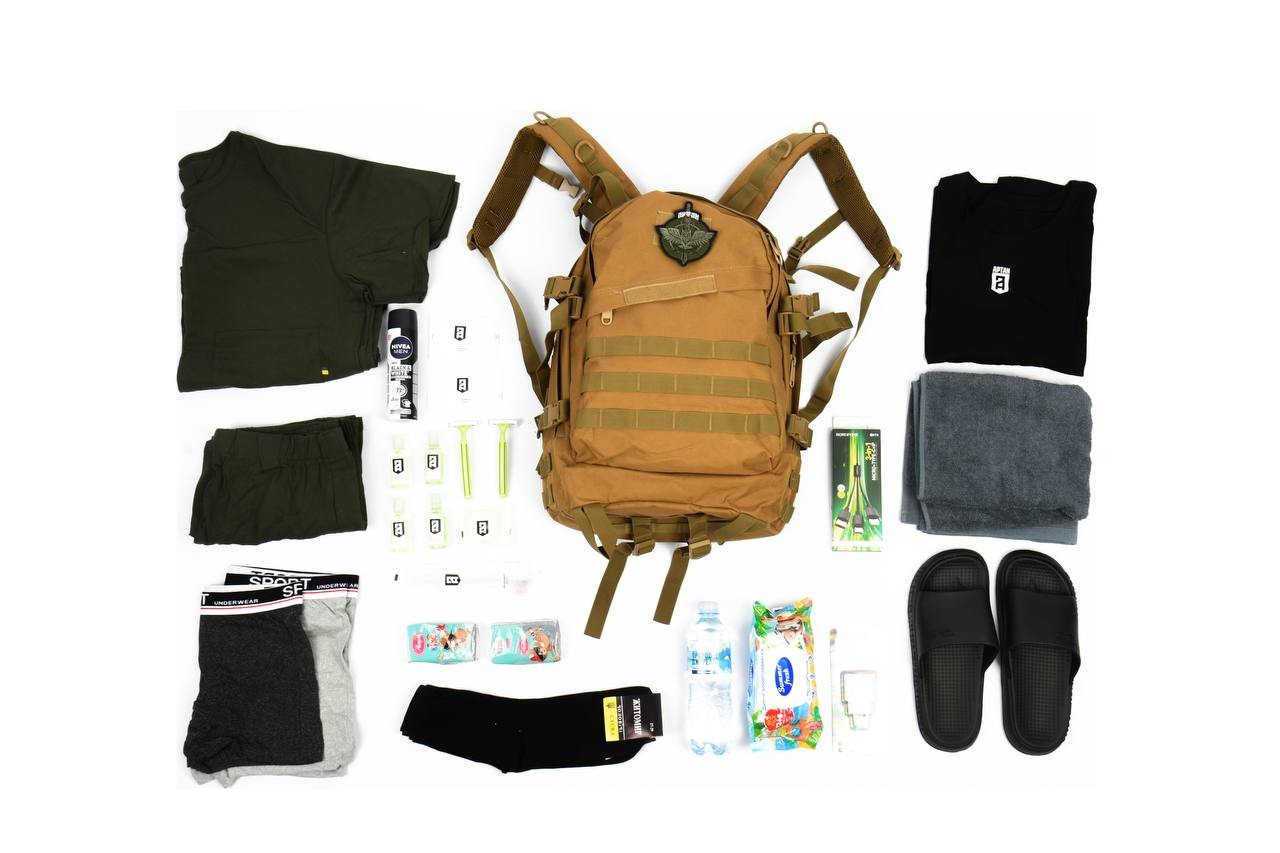
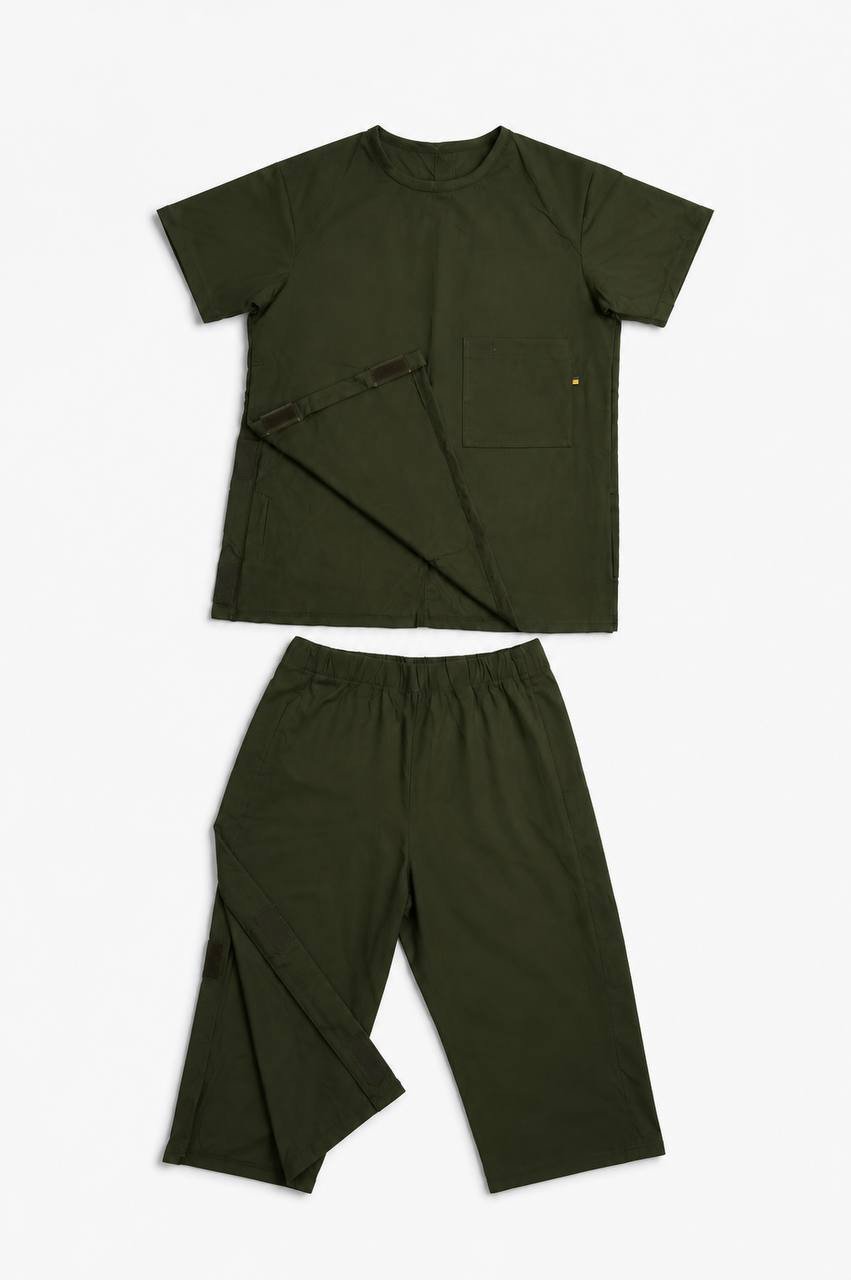
When a unit deploys on a mission, a representative of the patronage service also moves to the operational area. They receive information from the medical sector about evacuation to a stabilization point or directly to a hospital. At the hospital, the wounded soldier is met by a curator with a HelpBox—a backpack with essential items for the first days, including adaptive clothing.
Shredder woke up around 4 a.m. in a hospital in Kharkiv when a doctor approached to calm him. Seeing that his legs were gone, he joked:
“Everything’s fine, but I won’t be able to run anymore.”
At first, the doctor thought he was still under anesthesia. But when he asked for a phone to call his wife and said he knew all the numbers by heart, it became clear: the fighter was fully conscious and understood what had happened.
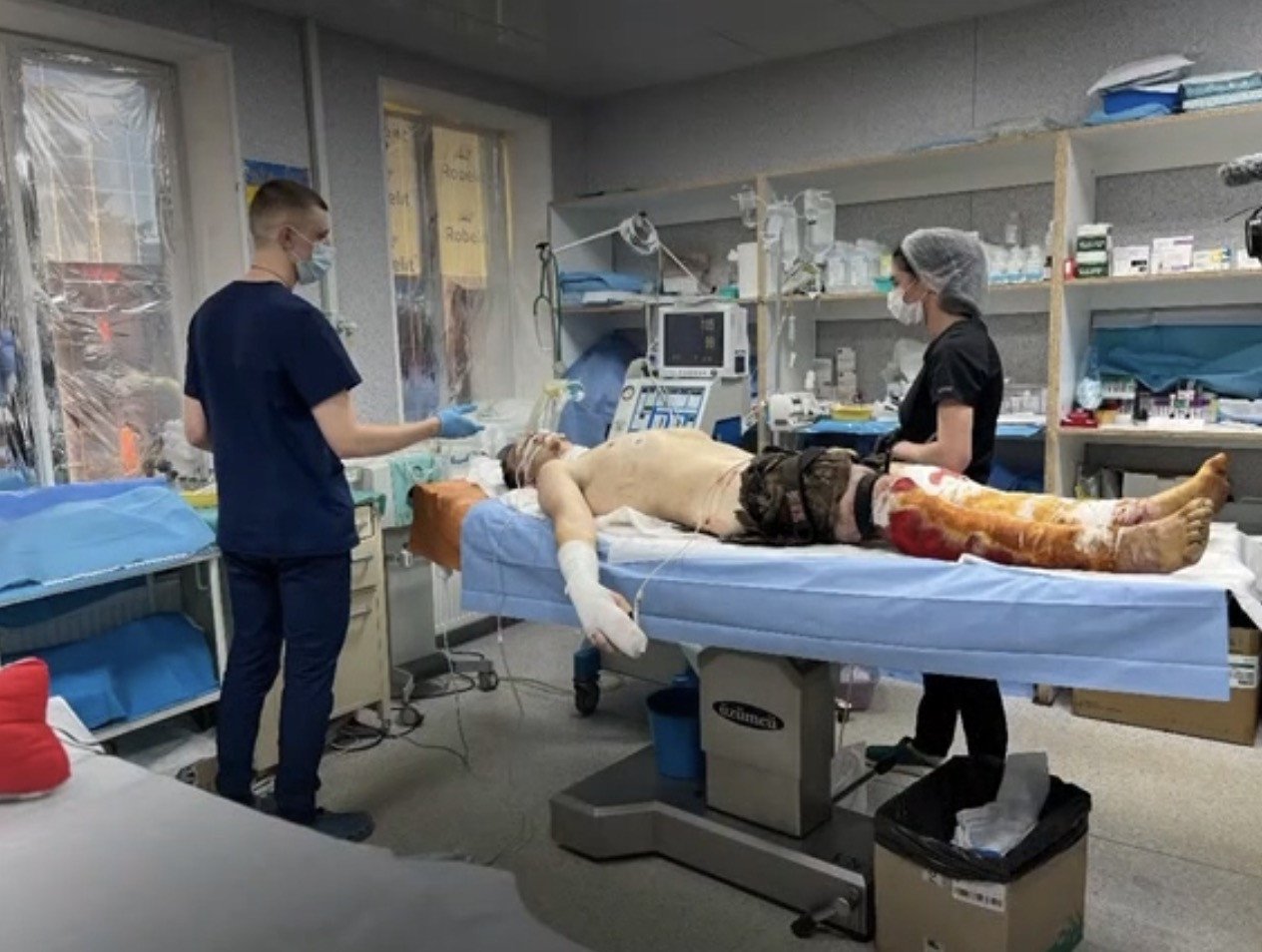
That’s where his first contact with the curator took place. The curator stayed in constant touch, explaining the next steps of evacuation and further rehabilitation, bringing necessary items, food, and small treats—and, first of all, delivering the HelpBox.
“I started unpacking it, looking at what was inside. I liked everything; everything fit,” Shredder recalls with a smile. “I called command and said, ‘Everything’s great, everything’s perfect—especially the flip-flops, they fit perfectly!’”
Curators are not professional psychologists, but they are the first to start these conversations. Their work requires quickly reading a person’s condition.
The first days after evacuation are not a formality. The curator does more than deliver a HelpBox—they stay nearby: talking, listening, responding to the soldier’s state, handling small requests that restore a sense of control—from a cup of coffee to late-night conversations after a difficult day.
After several stages of treatment in Kyiv, Shredder’s next step was determined by his curator, who suggested rehabilitation and prosthetics preparation at the Superhumans Center near Lviv. In this system, it is not a random choice, but navigation among available options tailored to the fighter’s condition.
His first day at the center felt like a sharp contrast to everything before: a modern clinic, quiet surroundings, a meeting with a team of doctors and rehabilitation specialists, and—after a consultation—a clear decision to fit him with prosthetics.
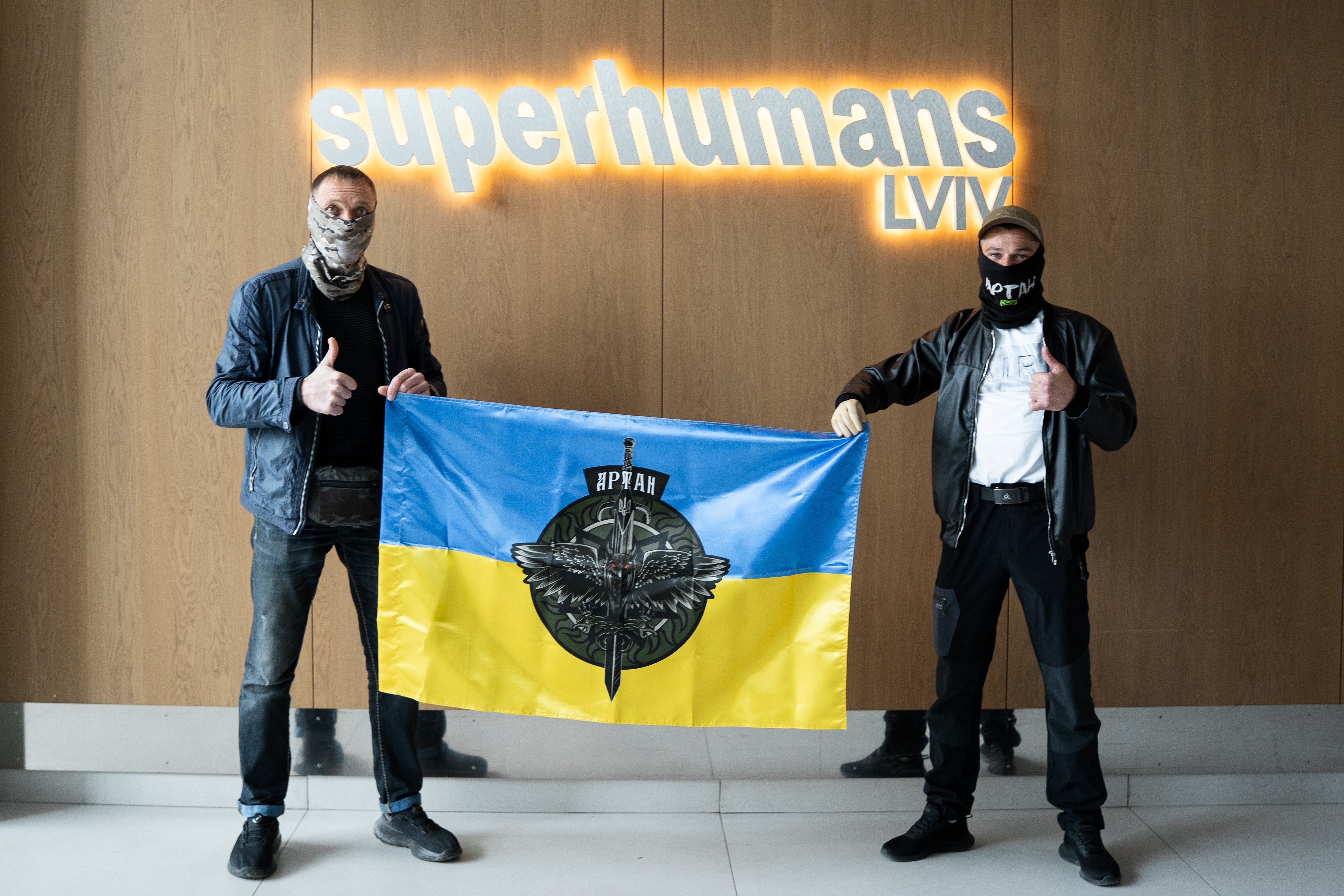
The entire space is adapted for this: gyms with specialized equipment, a pool, barrier-free pathways, ramps, terraces, and even a garden where soldiers can plant flowers. But the key is not infrastructure—it’s the intensity of the process.
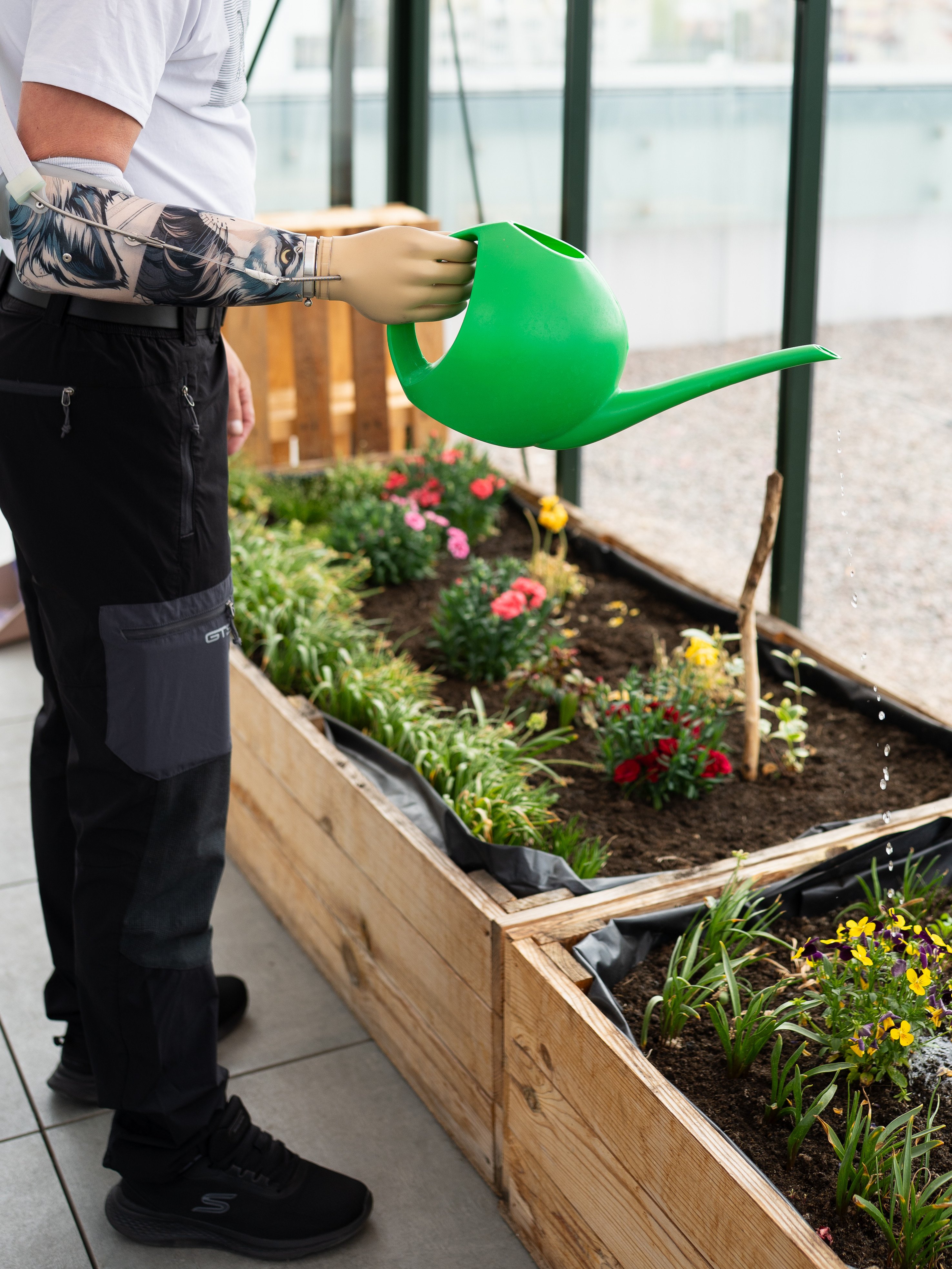
Rehabilitation here is not limited to a hospital routine—it is daily work from morning to evening, during which the body essentially learns to move again.
The program includes strength training for the arms, exercises for transferring from a wheelchair, parallel bars for first steps, obstacle paths, and support systems that stabilize the body at the start of recovery. At the same time, occupational therapists work on restoring fine motor skills, including those of a damaged finger.
The next phase
The next stage was rehabilitation in Montpellier, France—Shredder’s first trip abroad and another sharp transition into a new reality, made possible by the support system.
Here, everything is different: a warm climate, the sea nearby, a different rhythm, and an environment without the constant motion of hospitals.
“It’s calm here,” he says. “It’s a completely different life.”
Rehabilitation continues with a team of doctors and specialists, but another dimension is added—space and stability, which he describes as not only physical but also moral and psychological recovery.
Looking back, Shredder says he would give himself only one piece of advice:
“Put the tourniquets a bit lower. If I had placed them a bit lower, one leg would have been longer, and physically it would have been a bit easier.”
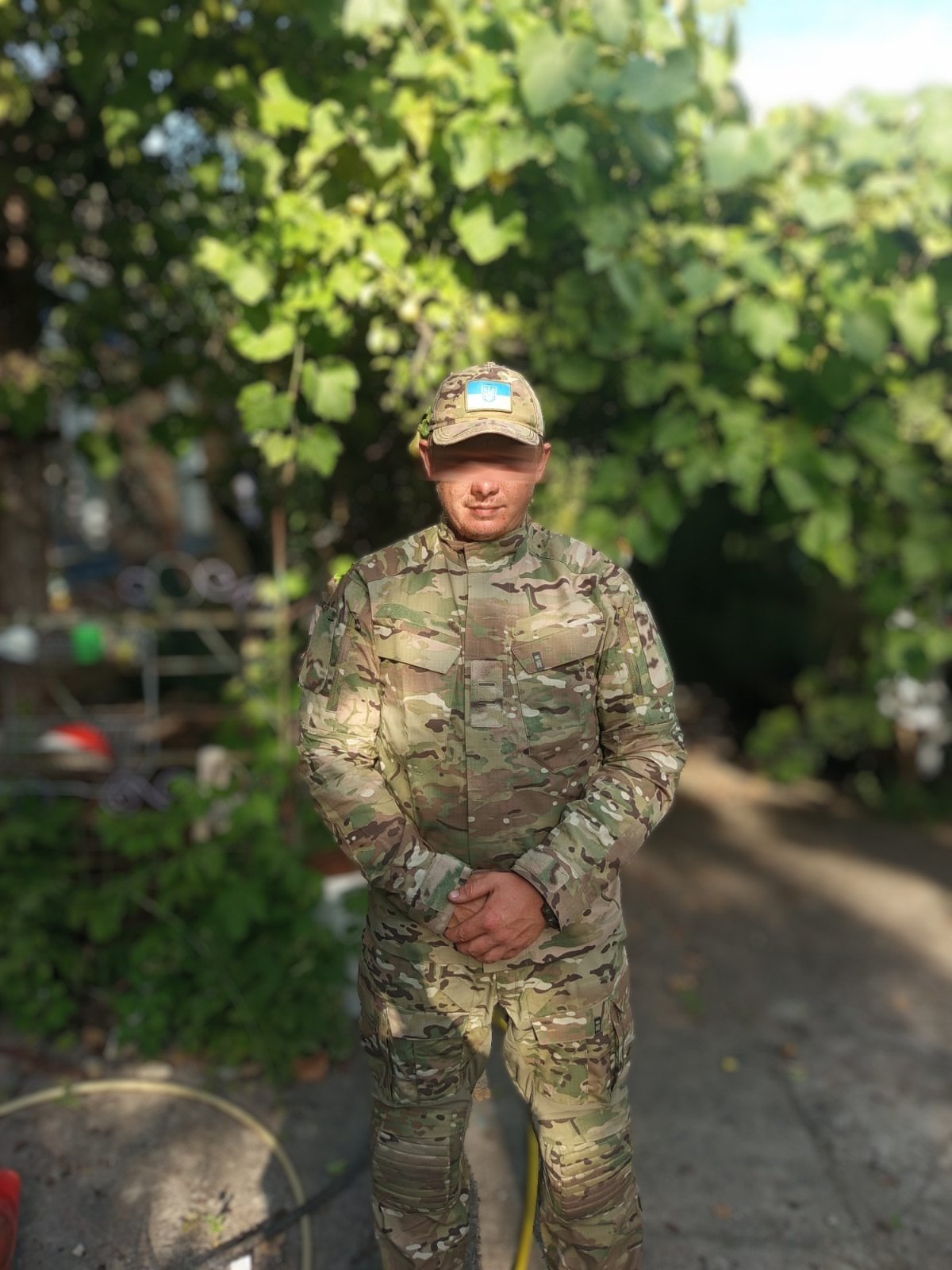
Shredder does not speak of his injury as a tragedy that broke his life, but rather as a consequence of a conscious choice made in advance. He chose to serve, understanding where he was going and what it could mean.
What helped him get through this experience was the support of his family—his wife and loved ones were by his side from the first day through his departure abroad, both physically and emotionally.
That support is reinforced by the unit: command and comrades remain in contact. A separate level is the patronage service, which regularly monitors his condition, resolves medical and everyday issues, and helps his family, for example, with renting housing near the rehabilitation center.
That is why, even after his injury, Shredder does not consider leaving the unit. He wants to remain useful, albeit in a new role—logistics, supply, or other processes.
This decision was partly shaped by the unit's response to his condition. He was not only provided with treatment and rehabilitation but also given the opportunity to continue serving—specifically, a manually operated Mercedes Vito equipped with a wheelchair lift.
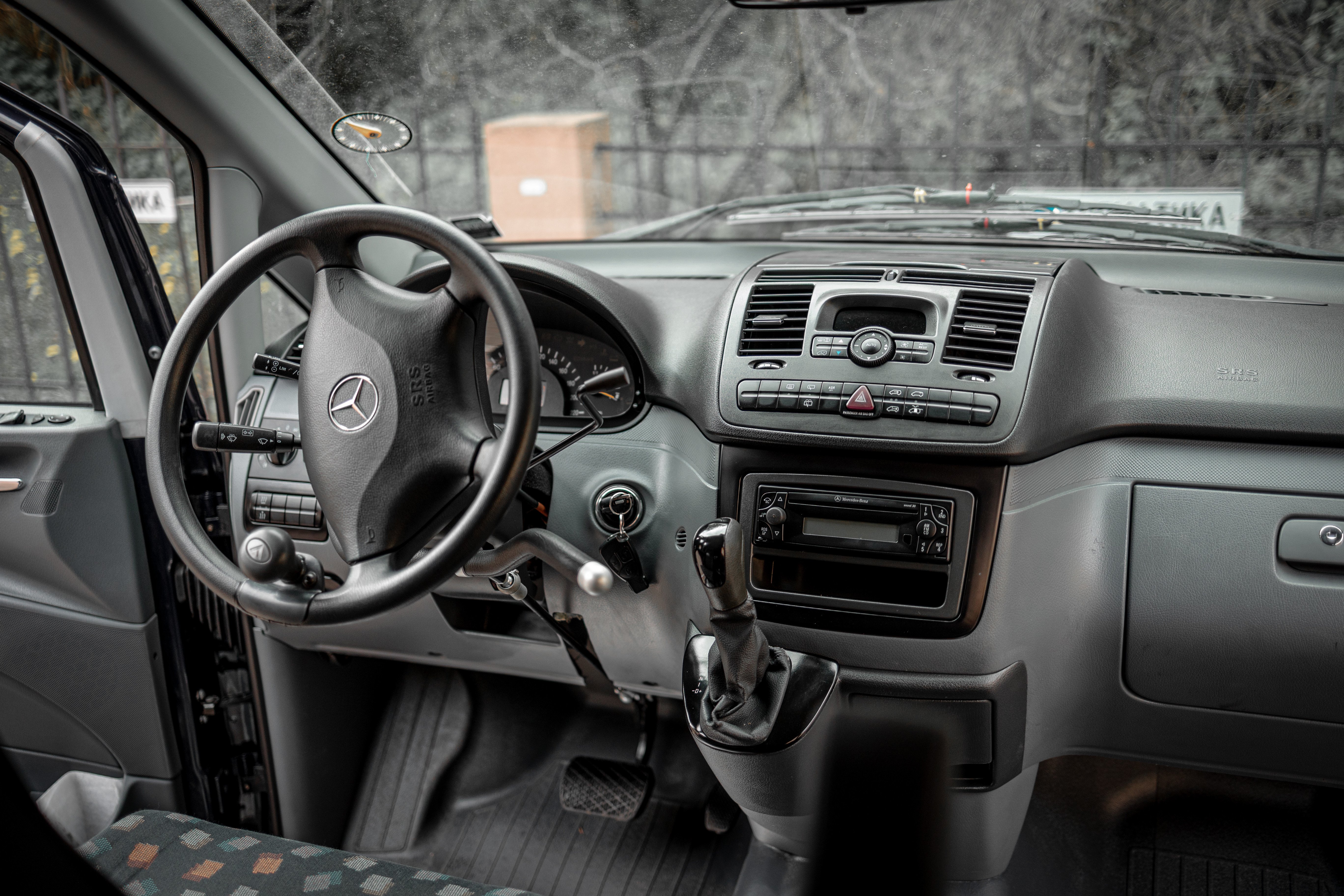
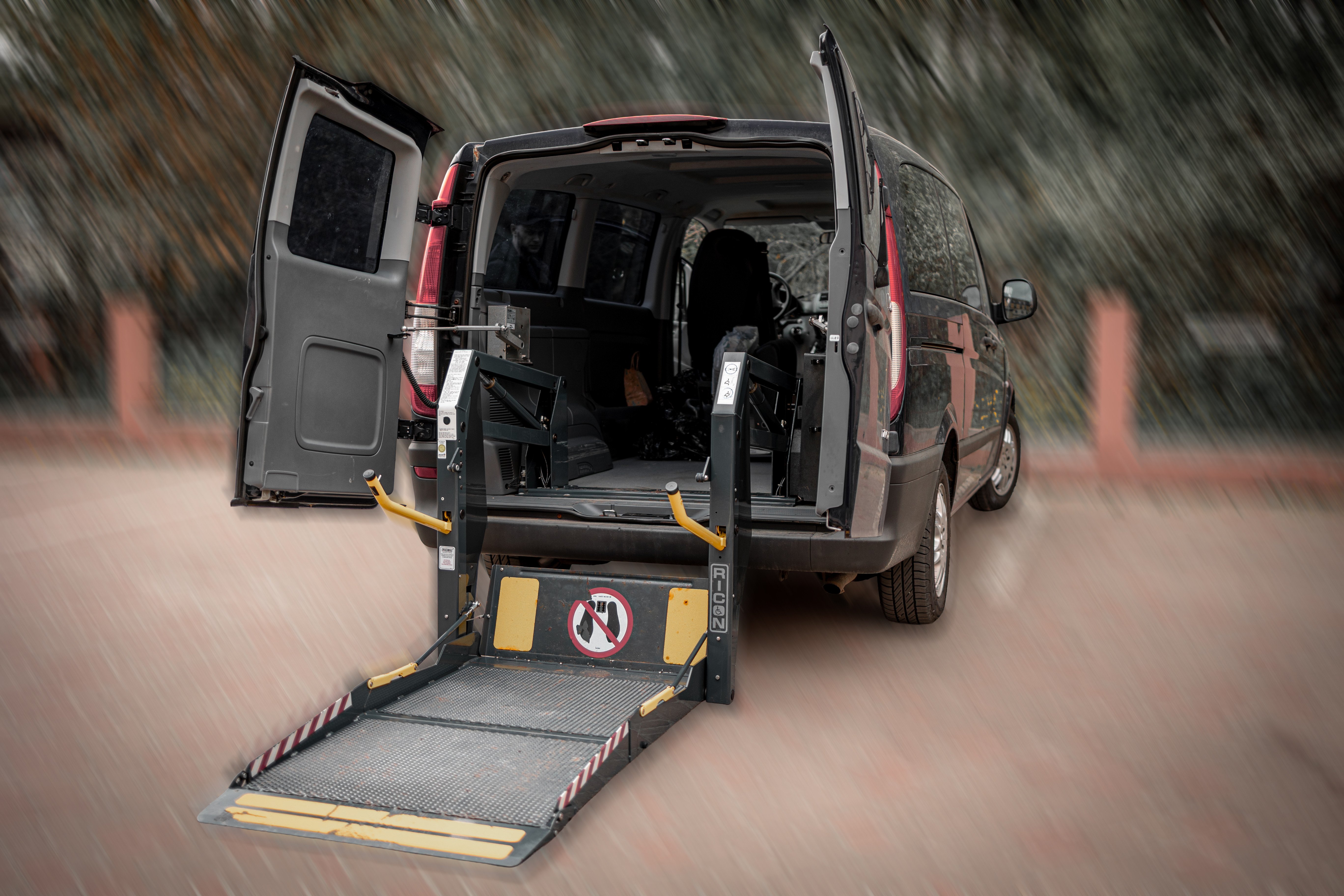
This gesture is not about comfort, but about reintegration into the system. Training an intelligence service soldier is a long and costly investment. Returning a wounded serviceman to a new role preserves a valuable combat asset within the unit.
Functions rarely discussed
The mission of the patronage service is to think not only about a soldier’s future within the unit, but also in civilian life, including after the war. Head of the patronage service direction, callsign “Monakh,” says this work begins long before a fighter formally becomes a veteran.
One area is preparing for a return to civilian life. The service works with businesses: holding meetings, explaining the specifics of working with veterans, and dismantling stereotypes about their “incompatibility” with civilian environments. This is not just about employment, but about creating conditions in which a soldier does not fall out of the system after service.
At the same time, a support infrastructure is being built. Across Ukraine, 12 Artan spaces are already operating—not classic veteran hubs, but social anchor points: places where one can stop while traveling to another city, get advice, help with daily matters, or simply feel among one’s own. Each space has a dedicated person working directly with wounded soldiers undergoing rehabilitation or prosthetics in that city.

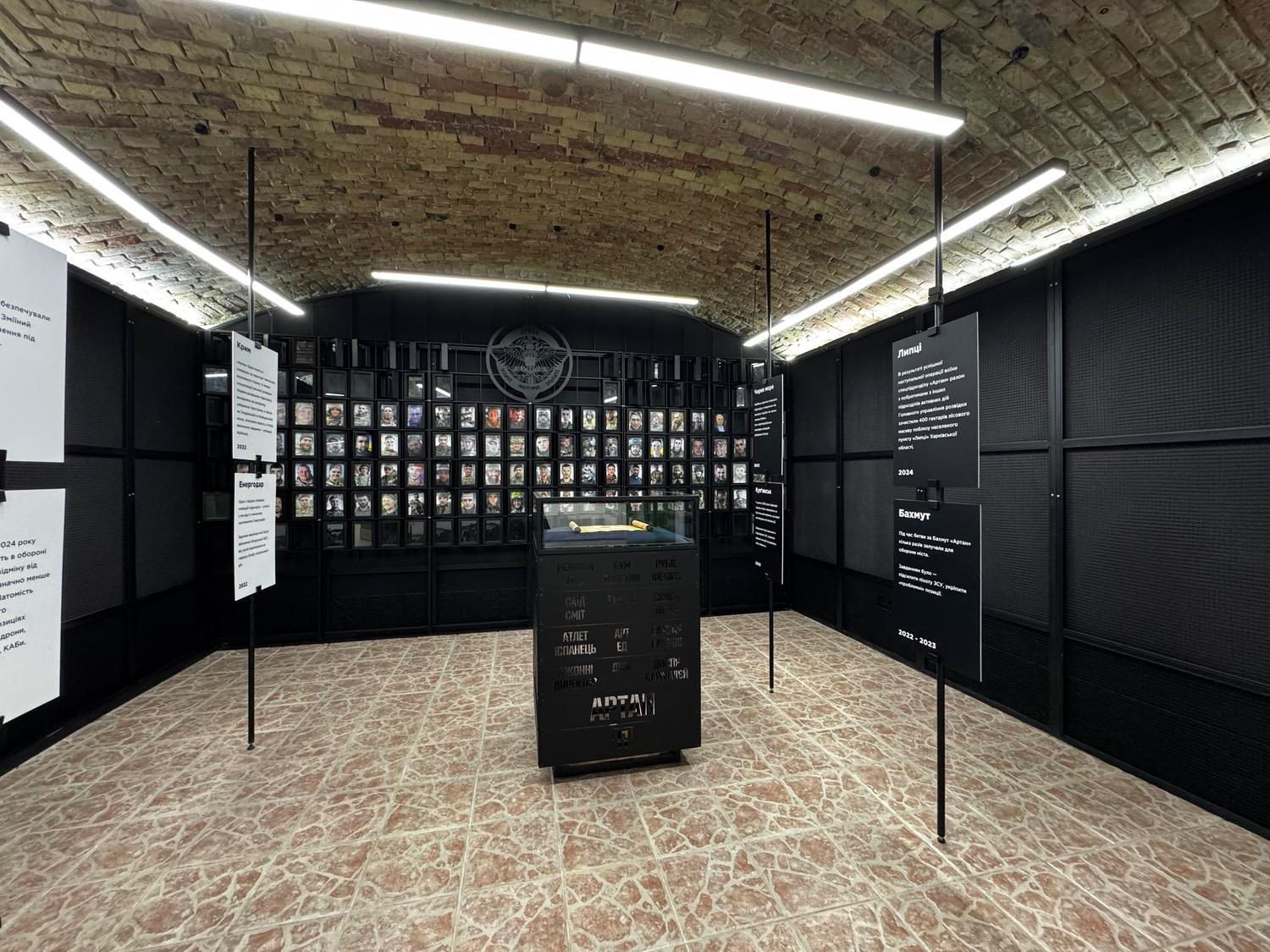
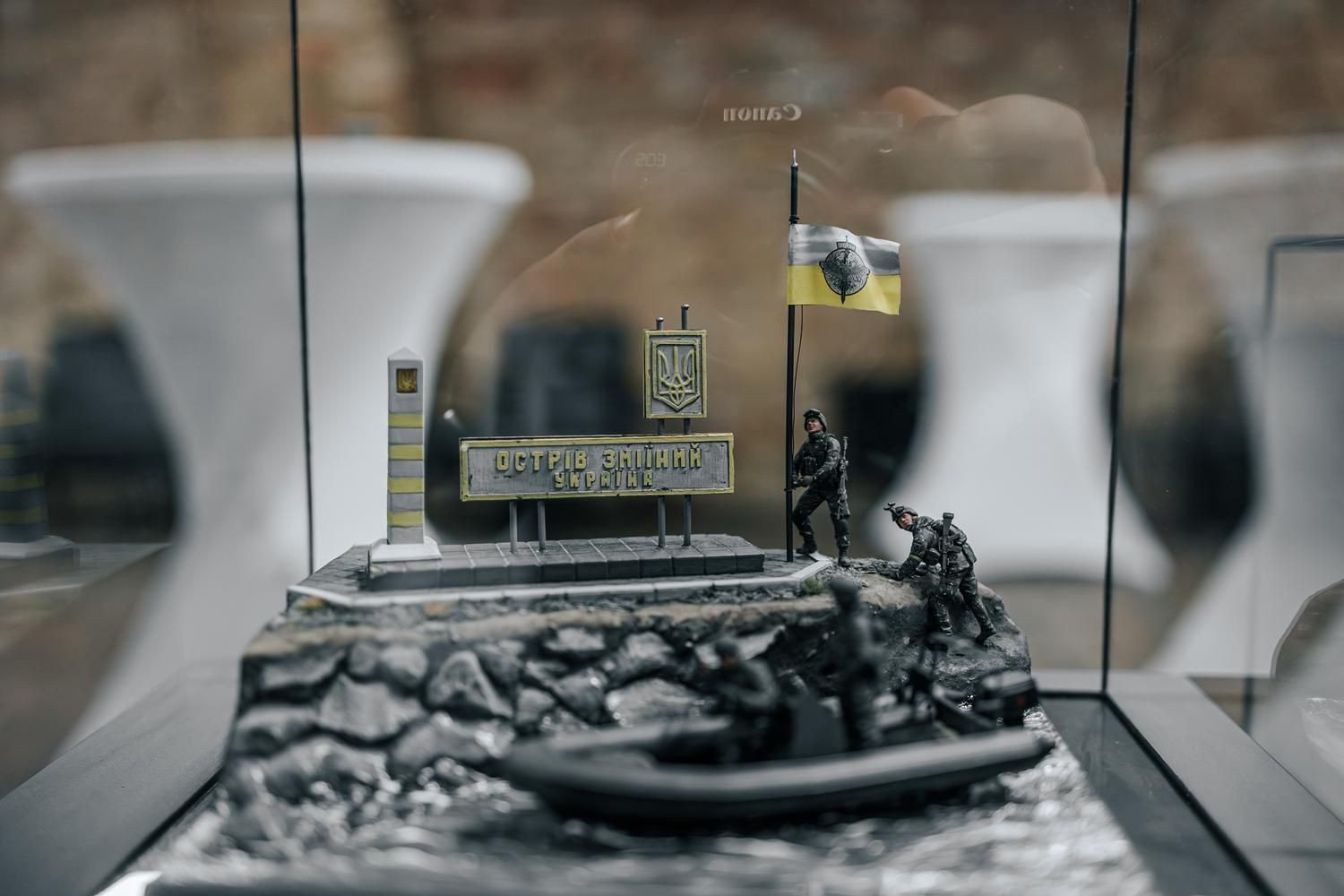
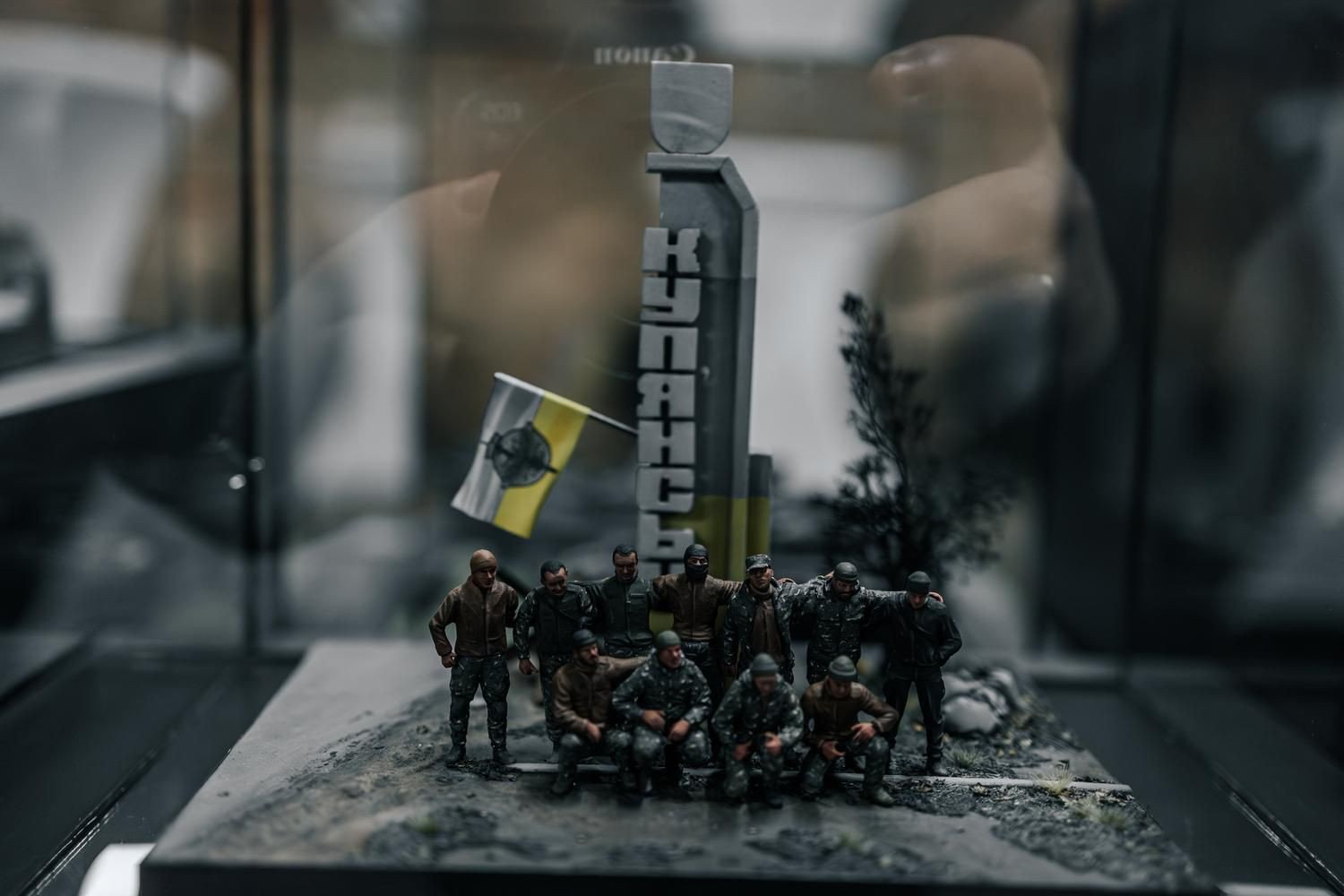
In the long term, the unit is considering creating a pool of job opportunities—businesses where veterans could work together, forming their own economic ecosystem.
However, the primary goal is not to “place them afterward,” but to understand what the individual wants. Some fighters aim to remain in the unit, and new roles are found for them—logistics, communications, and administration. Others want to fully distance themselves from the military—and in those cases, the patronage service does not impose scenarios but helps find alternatives.
“We’re like a nanny for the fighter,” Monakh says.
This means constantly reading needs—not only of the soldier, but also of their family. Requests vary—from job searches to launching a business. For example, if a soldier’s wife wants to start a small business, the service helps find support programs, complete paperwork, and prepare for grants.
In this model, the patronage service goes far beyond medical support. It effectively works with life after the war—before that “after” even arrives.
This principle—not leaving a person alone with their problems—continues in the service’s daily work.
“Within the unit, there’s a simple principle: everyone works for the fighter, so they can focus on the mission, while social issues are resolved without their constant involvement,” Monakh says.
The service handles a wide range of requests. These include everyday and family matters—from enrolling a child in daycare or college to resolving issues at home, such as gas outages or structural damage. These are the things that create basic stability—without which neither service nor recovery is possible.
At the same time, the service responds to crises—such as damaged housing, complex family situations, or serious illnesses. In such cases, internal resources, fundraising, and external partners are mobilized to quickly meet needs.
Another major area is medical care and rehabilitation. The service accompanies a fighter at all stages of treatment—from monitoring hospital conditions to seeking alternatives if treatment is ineffective. It also ensures access to necessary resources—from basic items to costly solutions like prosthetics or additional medications not covered by standard systems. In such cases, donors are engaged, or fundraising is organized.
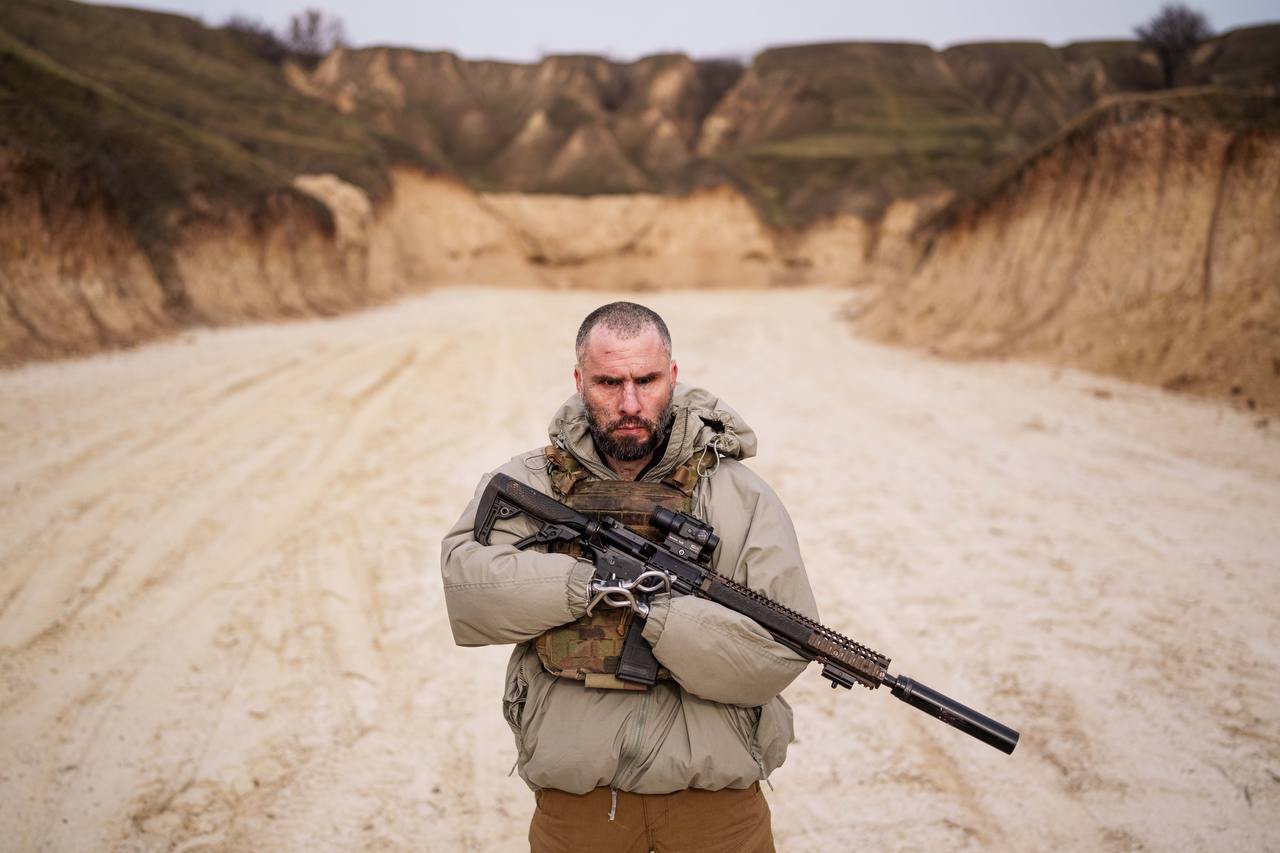
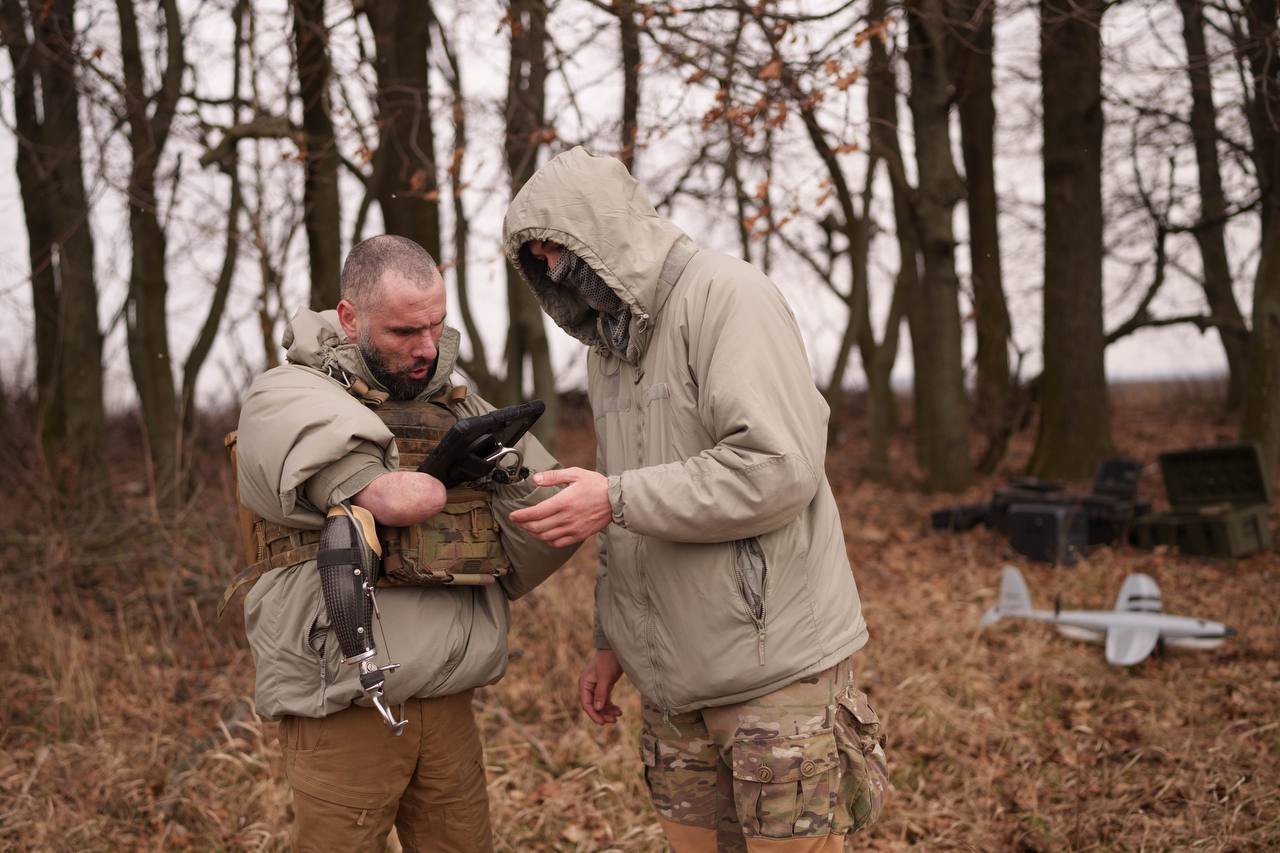
This is complemented by a network of partnerships: agreements with rehabilitation centers, dental clinics, and service stations that maintain soldiers’ vehicles at reduced or no cost.
A mobile model is also being developed, where rehabilitation specialists work directly in operational areas, allowing fighters to recover without leaving service. One such center is the Mercy&Health Foundation.
An important part of the work is communication between the fighter, their family, and command. The patronage service acts as a mediator, aware of the real situation and able to connect the right people in time—from commanders to specialists. This is especially critical in difficult situations, including family crises, where timely intervention or psychological support can prevent escalation.
Ultimately, this work is not a set of separate functions. It is a constant presence in the life of the unit—from the front line to the rear, from treatment to everyday matters. And it is precisely this that creates a system in which a fighter never falls out of sight—regardless of the stage they are in.
Discuss this article:


-206008aed5f329e86c52788e3e423f23.jpg "Photo of Oleksandr Moiseienko")
-f3430f0449615e9897dff835086ac204.jpg "Ukraine Broke With a Soviet-Era Military System and Rebuilt It Around the Soldier")
-e126c16a85d580738cf2d57e760b80a3.jpeg "Photo of Vladyslav Greziev")