- Category
- Culture
“A New Integrity”: Nikita Kadan’s Installation Forces Us to Confront the Reality of Amputation in Ukraine
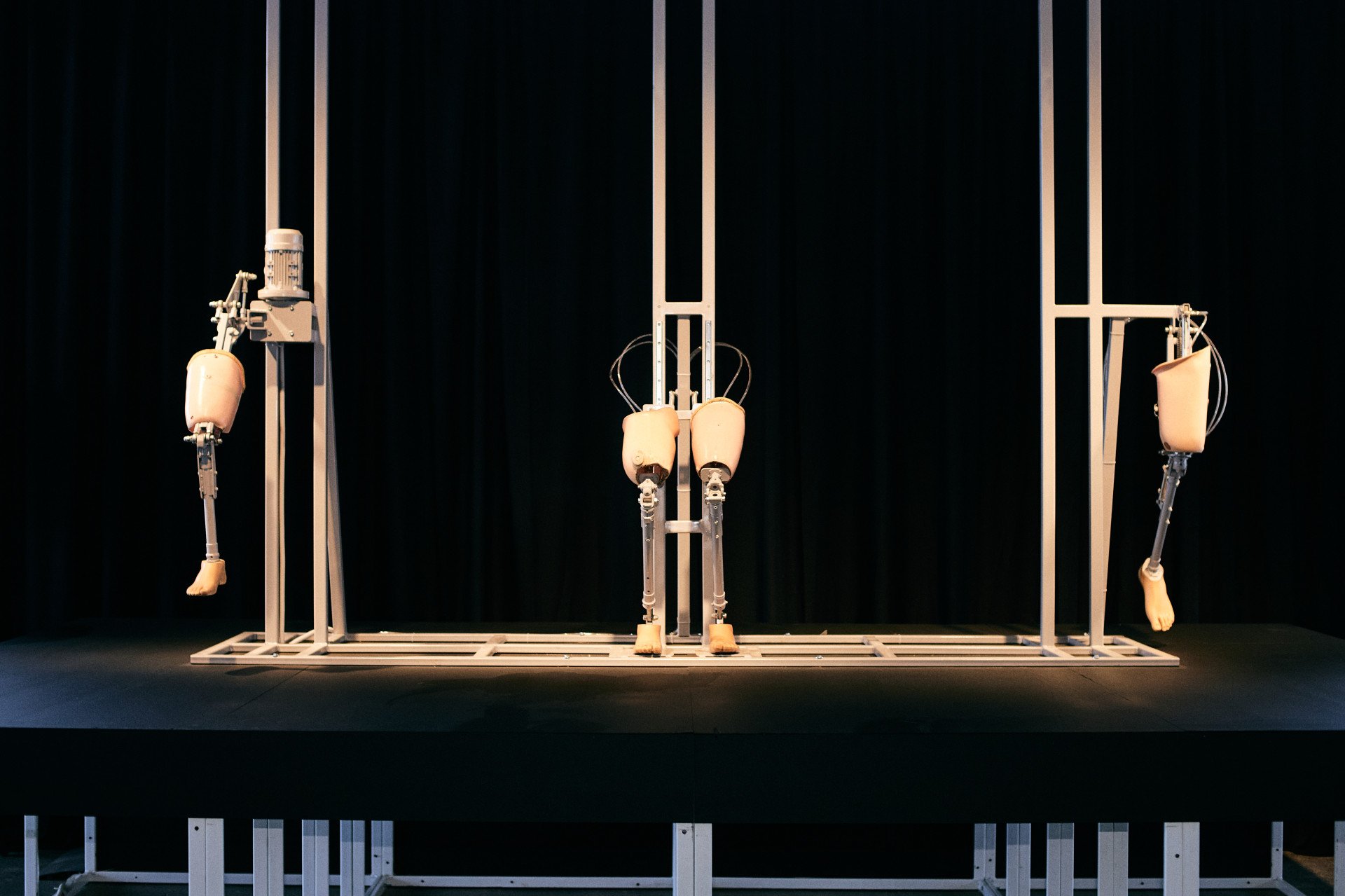
A stage with three kinetic objects made of prostheses stands in Kyiv’s Pavilion 13. Mounted on a chassis, the figures move in a robotic manner, almost hypnotically, and raise questions that audiences, both in Ukraine and abroad, may not yet be ready to answer.
 Prefer U24 Media on Google
- Authors


“A New Integrity” is a solo installation by renowned Ukrainian artist Nikita Kadan, unveiled in Kyiv on April 11. As you walk into Pavilion 13—a former Soviet exposition hall, now revitalized by RIBBON International and the Pavilion of Culture—the first thing you notice is the sound; a calm female voice echoing around the space. As you listen more closely, you hear that the voice is telling stories of Ukrainian veterans—haunting stories of injuries, amputation, and loss.
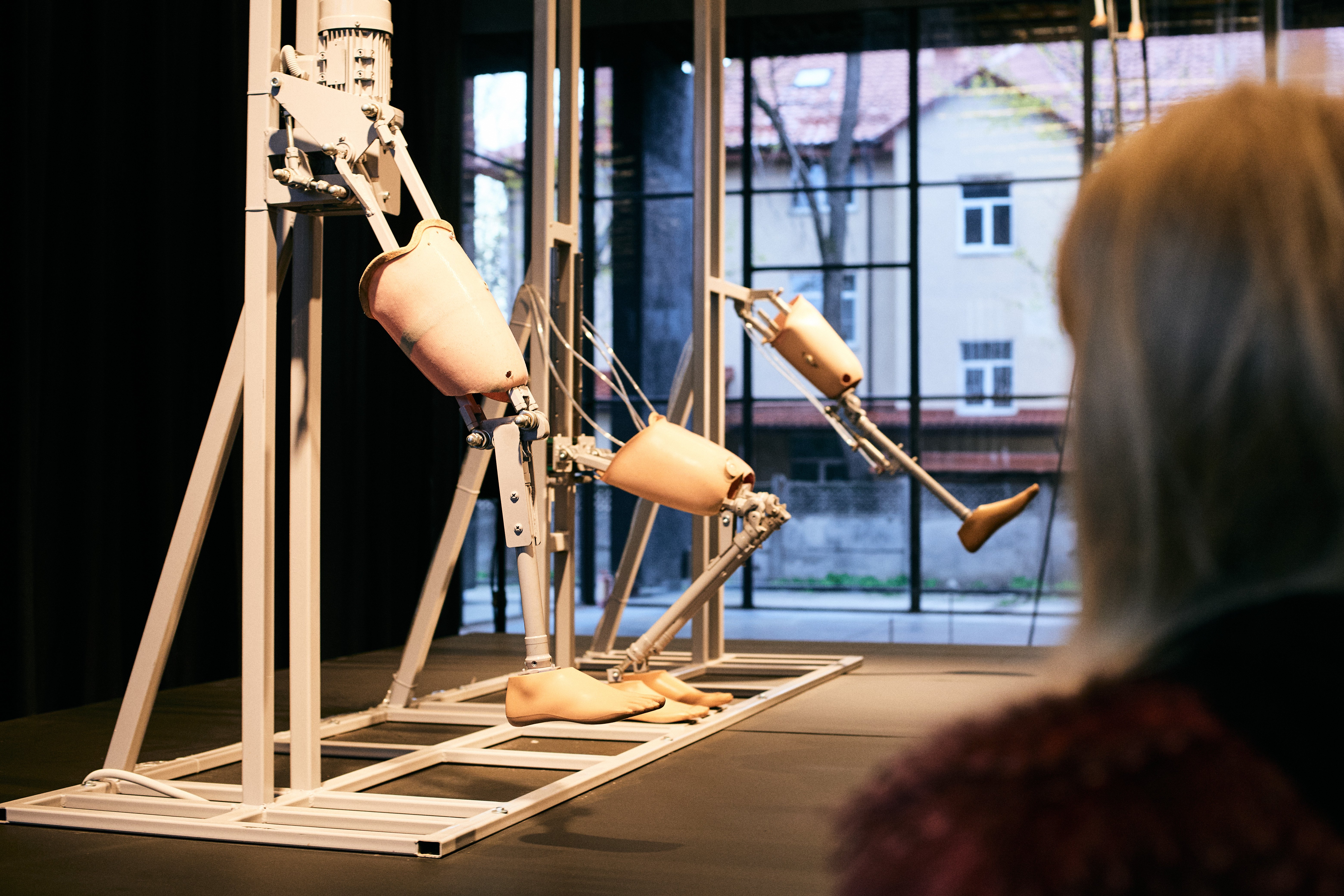
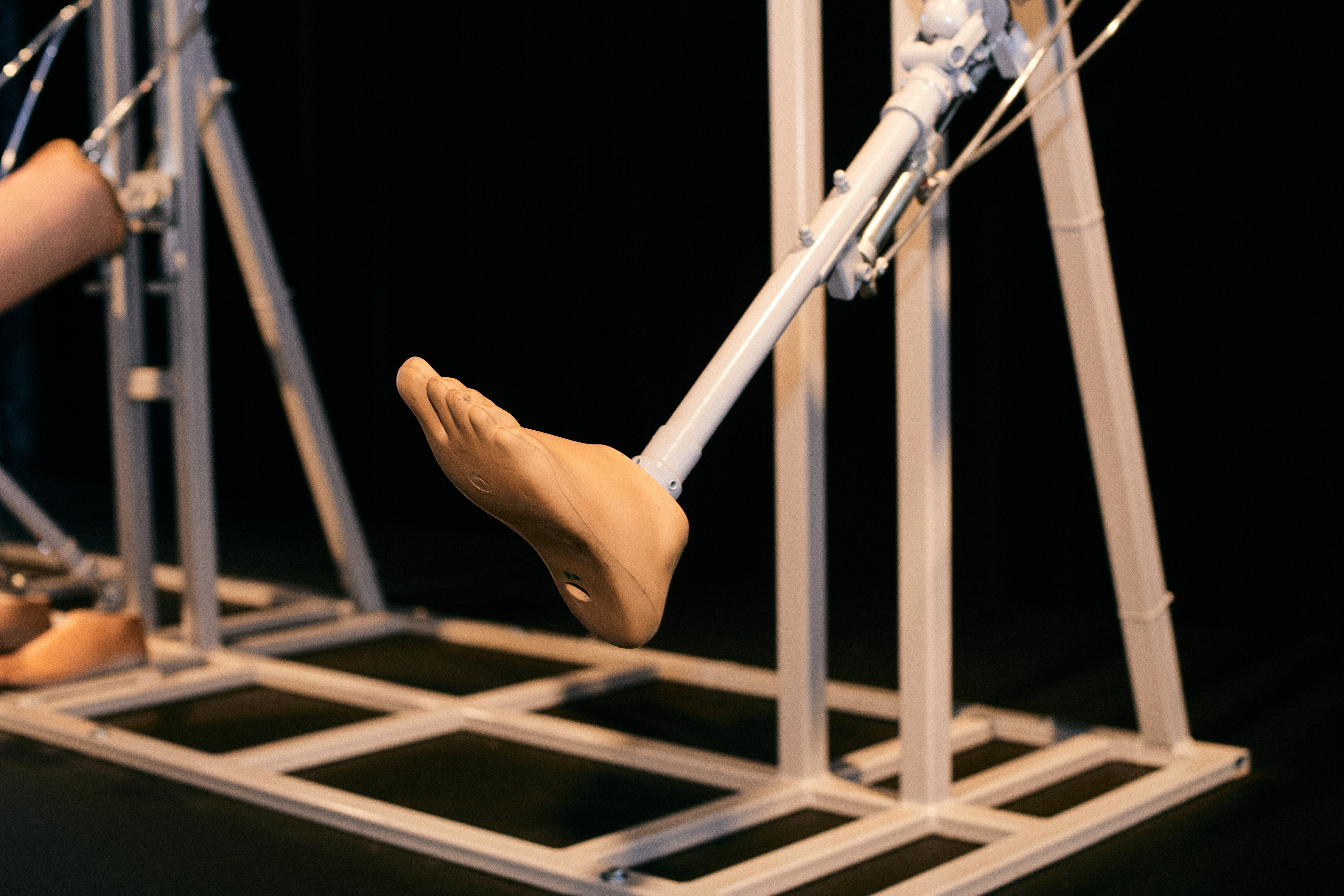
Taking a step further, you see a stage where prosthetic objects move—the “witnesses” that give form to trauma, change, and survival, as explained by Kadan himself.
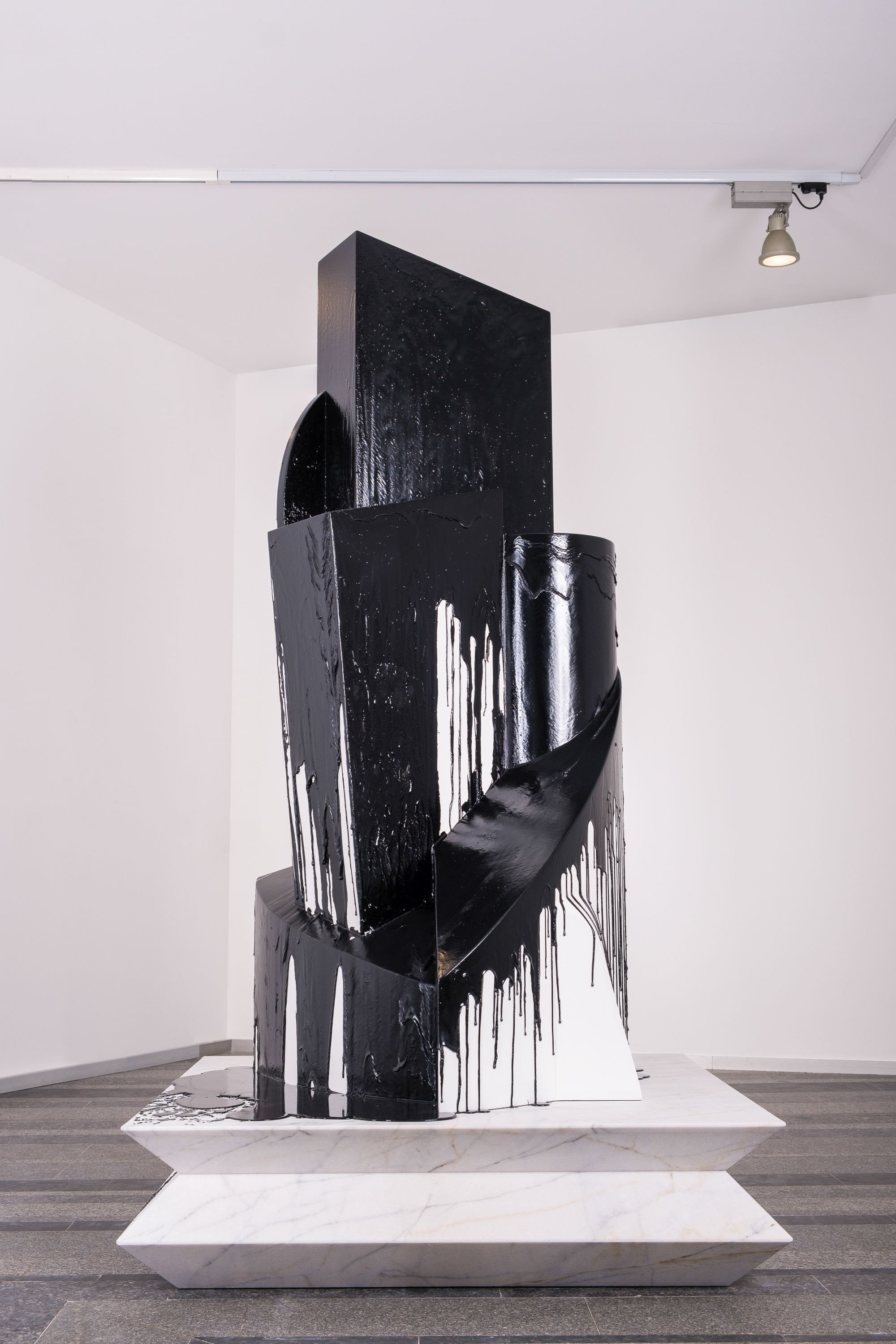
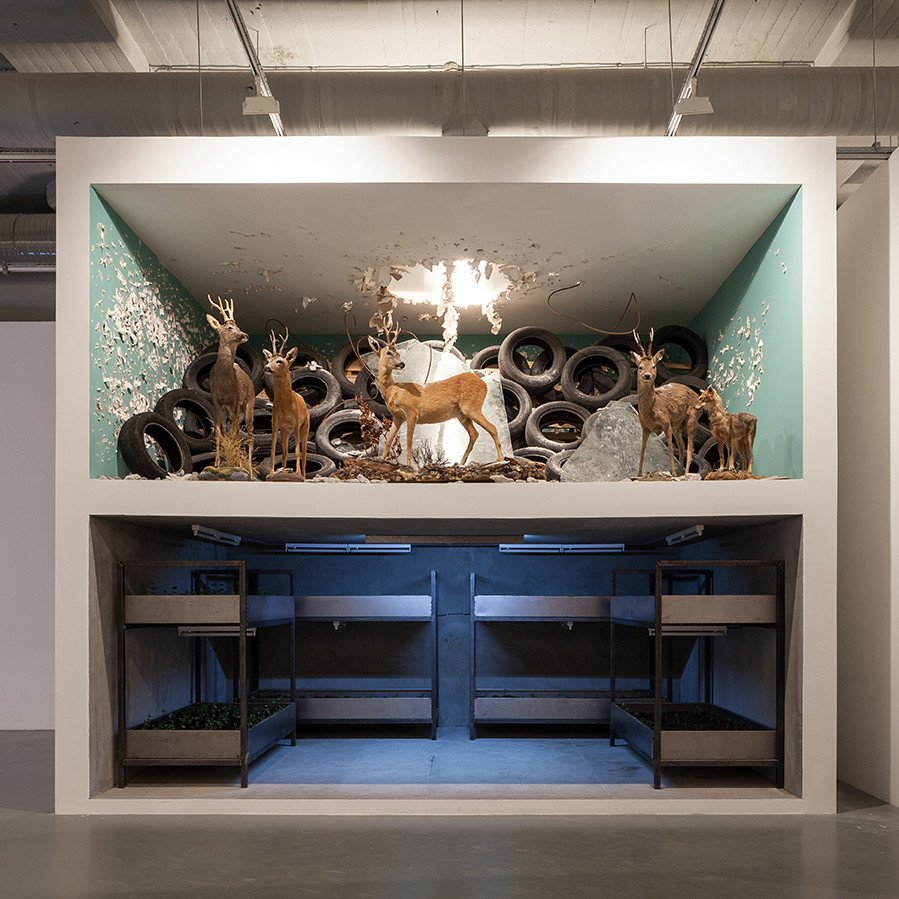
For the creation of the work, Kadan engaged a PhD sociologist, Sofiia Lavreniuk, who conducted interviews with the veterans, a musician, Clemens Poole, who integrated the interviews into the music background, and a voice actress, Anastasiia Seheda, as well as adding reproductions of works by contemporary Ukrainian artists, such as Dasha Kuzmich and Mykhaylo Palinchak, alongside works by modernist painters Anatol Petrytsky of Ukraine and Otto Dix and Heinrich Hoerle of Germany.
In his practice, Kadan explores history, memory, and political violence, often addressing the lasting impact of Soviet legacies. Working across installation, drawing, sculpture, and archival materials, he juxtaposes past and present to challenge dominant narratives and confront trauma and loss. He has exhibited widely in museums, biennials, and major art fairs, including Art Basel Miami Beach (2022) and Art Basel Paris (2025).
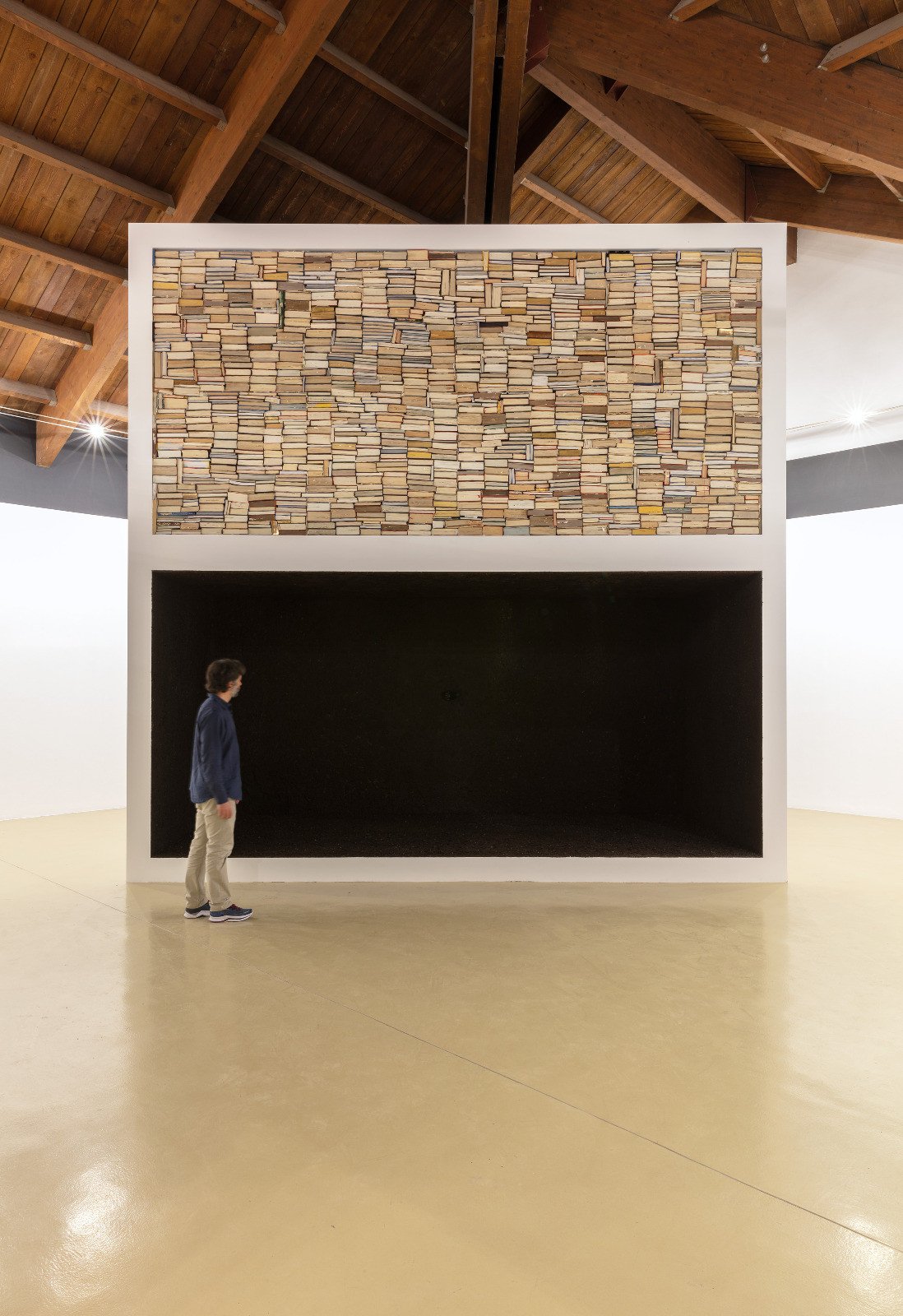
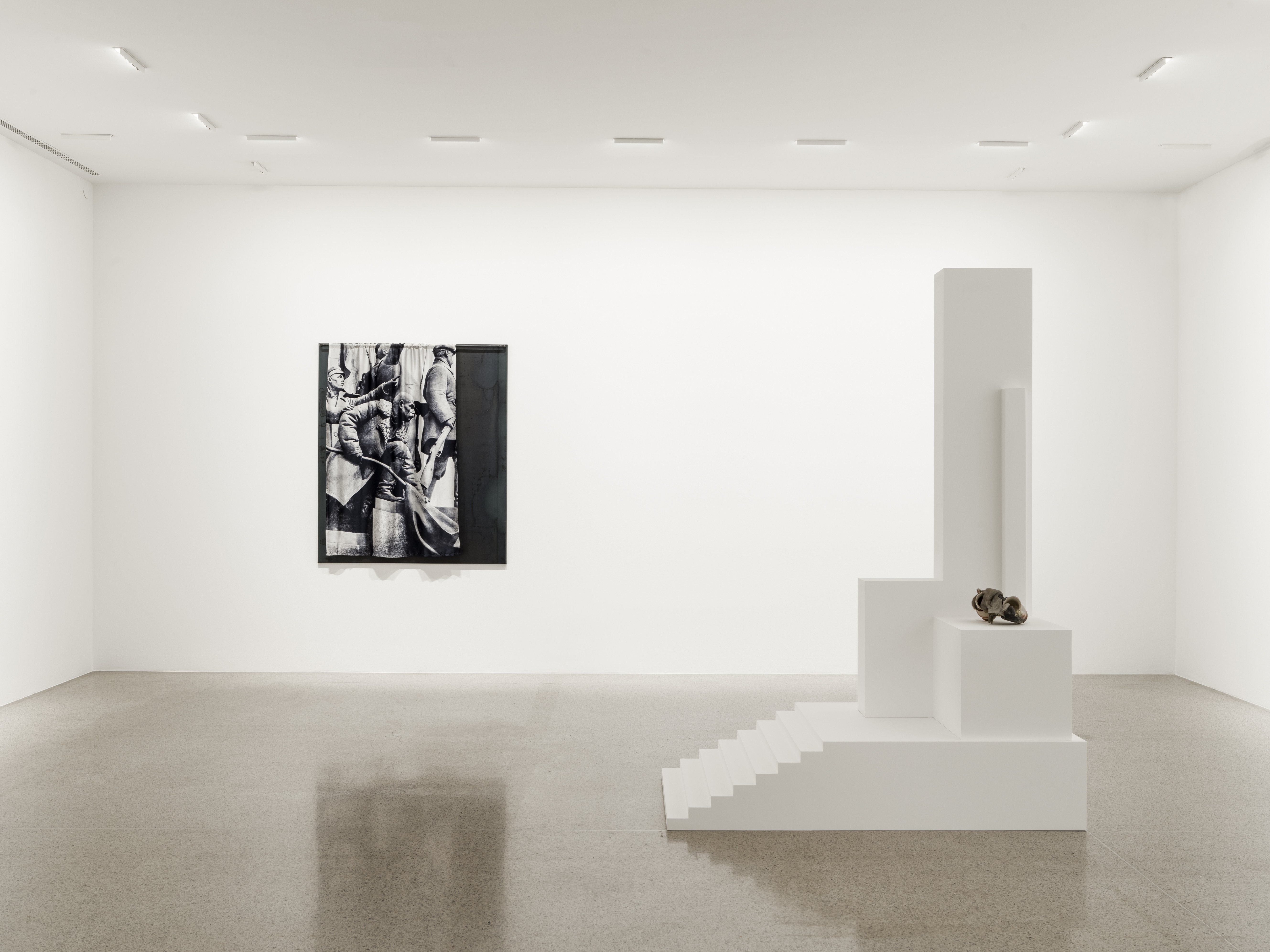
The project’s title points to a reconsideration of the body and identity after trauma. The artist suggests that in wartime, the line between one’s own experience and that of others becomes unstable—no one can be certain where they will stand tomorrow.
“The poetics of this work is very much about distance,” Kadan told us. He notes that it is impossible to fully understand another person’s experience of unbearable pain, and that what often passes for empathy can become a “ritual of compassion,” or a polite performance:
“Rather, it's honest to say that until my body is complete, we are in a bit different realities.” This divide is unstable, he says. “The border between these two realities turns so fragile.”
It is also like ‘be prepared.’ This war will not stop soon. It will change our country, it will change us.
Nikita Kadan
Ukrainian artist
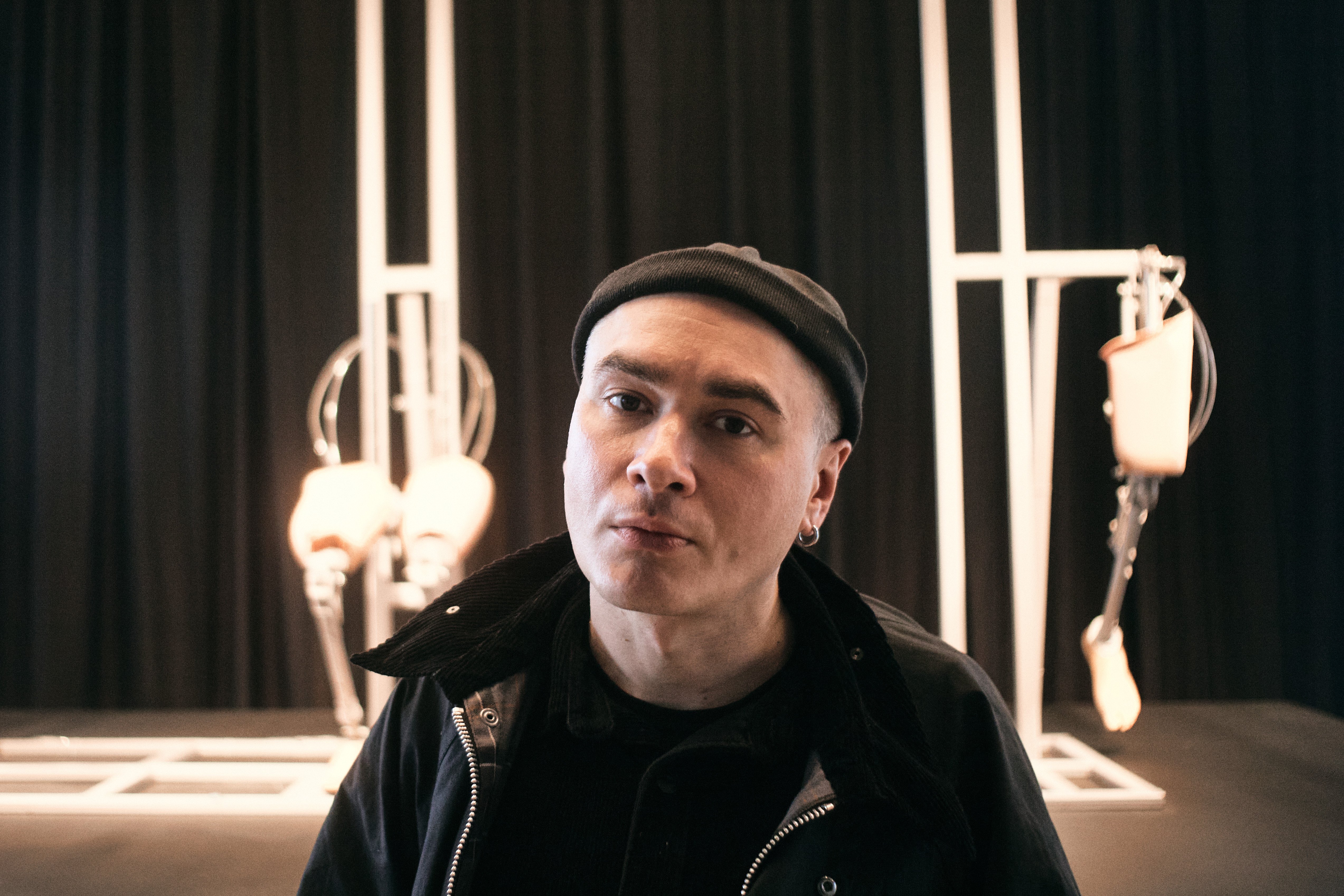
The work draws on the metaphor of the national body, equating the loss of a limb with the loss of territory that falls under occupation. Yet the physical body is absent from the installation. While the audio is built from real personal testimonies, no literal or metaphorical body mediates between the prostheses and the voices, leaving that space to the viewer. Almost like saying—this could be you, someone you know, the country you live in, or the collective mind of a nation.
But maybe reducing the work to this specific call would be too short-handed. The installation speaks on more levels than this: at its surface, it’s designed to make you revisit beliefs you might have about the reality that we got used to, a reality that is unnatural to get used to. It speaks from a place of the transcendental—reimagining integrity as a philosophical concept—and, at the same time, is very physical and vital: reintegrating people with trauma back into civilian society.
“When I was invited to make a work with the support of the Ribbon International , I had this idea in development, in continuation,” Kadan says. “It’s definitely impacted just by living in Ukraine, when you see more and more people on prostheses in the streets, young people.”
He also marks the boundary between traumatized people who go through rehabilitation and healing and those who have a complete body. “This boundary is not stable, it's moving,” says Kadan. “It's so clear that we live in constant loss, and it changes us mentally. There is this old metaphor about the body of a nation, the body of the state: when some parts of the territory are occupied, it's like a loss of a limb.”
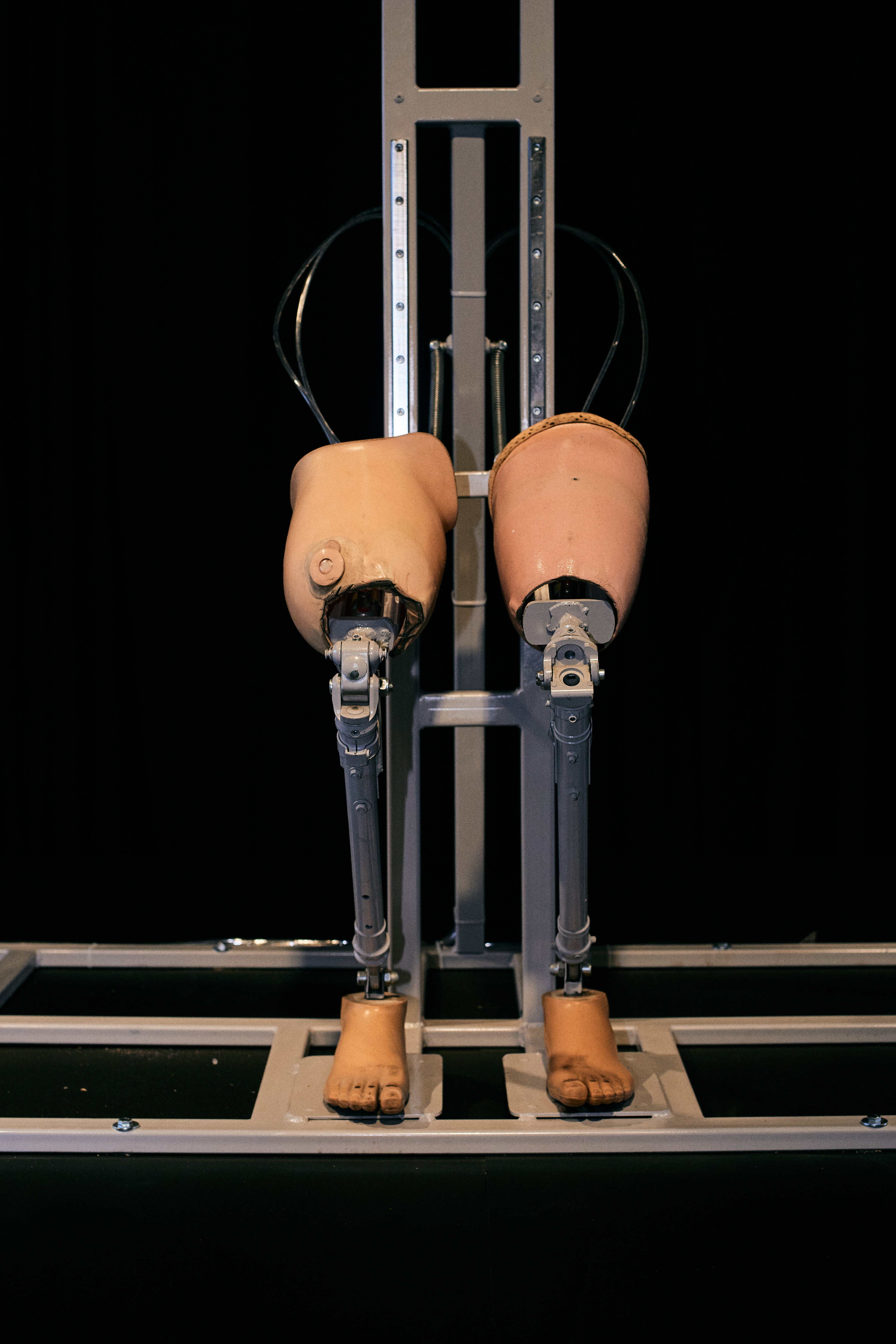
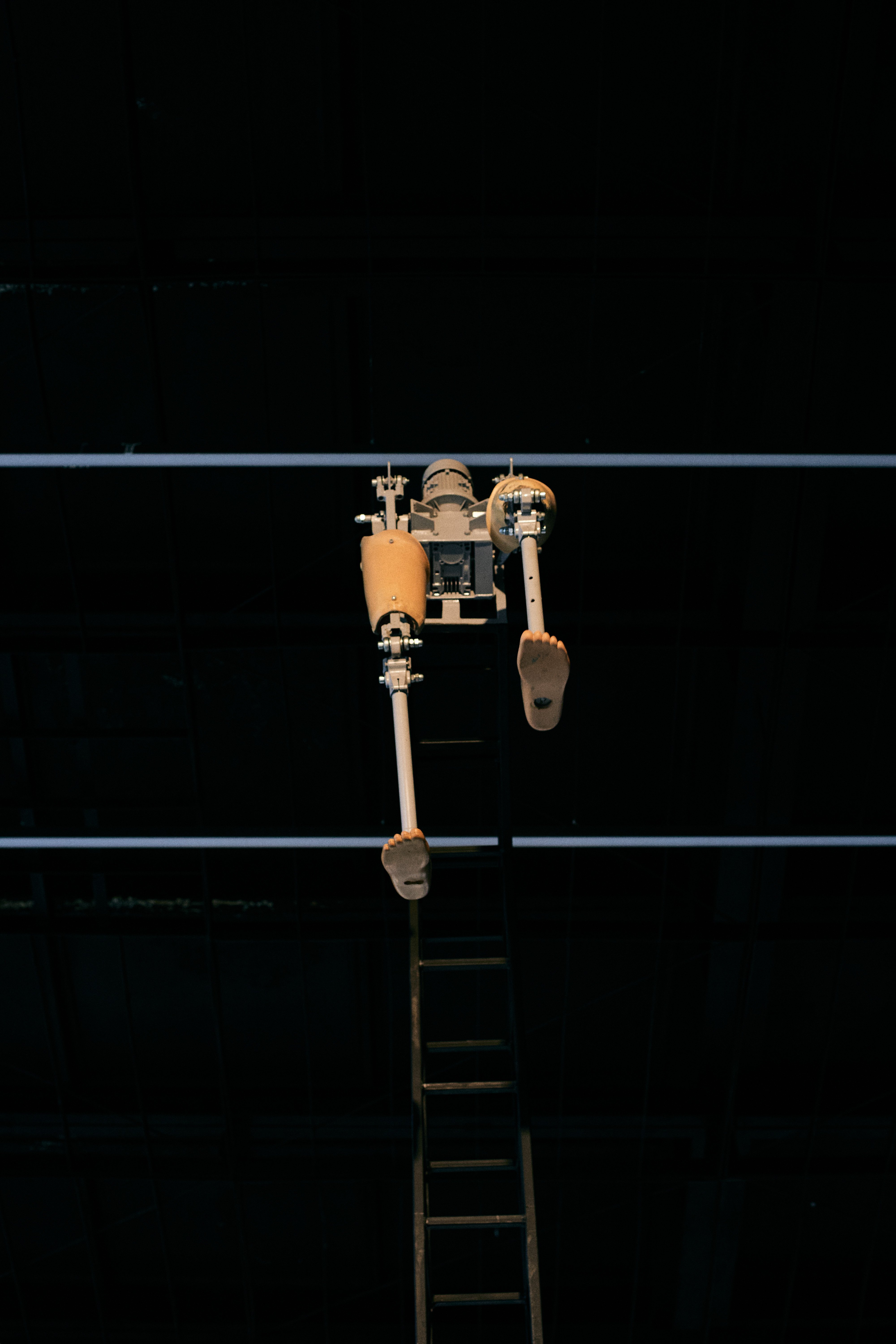
Estimates suggest that around 50,000 Ukrainians have lost limbs as a result of Russia’s war since 2022. Broader figures—including all procedures and cases—range as high as 90,000–120,000. In a text accompanying the installation, Ukrainian-born German writer and journalist Katja Petrowskaja talks about the paradoxical inclusivity of prostheses.
“Society attempts to integrate people with amputations by including them in the realm of beauty and the high-tech,” she writes. “The aesthetics of ‘inclusion’ directly borrows the language of cyberculture. The ‘new body’ does not arise from a desire for superpower, but from an experience of loss. The prosthesis turns out not to be a replacement, but a kind of promise; it speaks the language of the future.”
“The paradoxical names of Ukrainian rehabilitation centers—‘Unbroken’ or ‘Superhumans’—already formulate a radically different, futuristic context: a person receiving a prosthesis acquires a tool integrated into the body,” she writes. “Their lack almost turns into a ‘technological’ advantage; they appear better ‘equipped.’ But the main thing lies elsewhere: in order to move again, to become an active ‘part of society,’ a person must accept the absence of a part of themselves, endure the trials of surgeries, recovery, and training, and thus invest in their very being, in the simple act of ‘being human,’ a superhuman effort. Simply to live.”
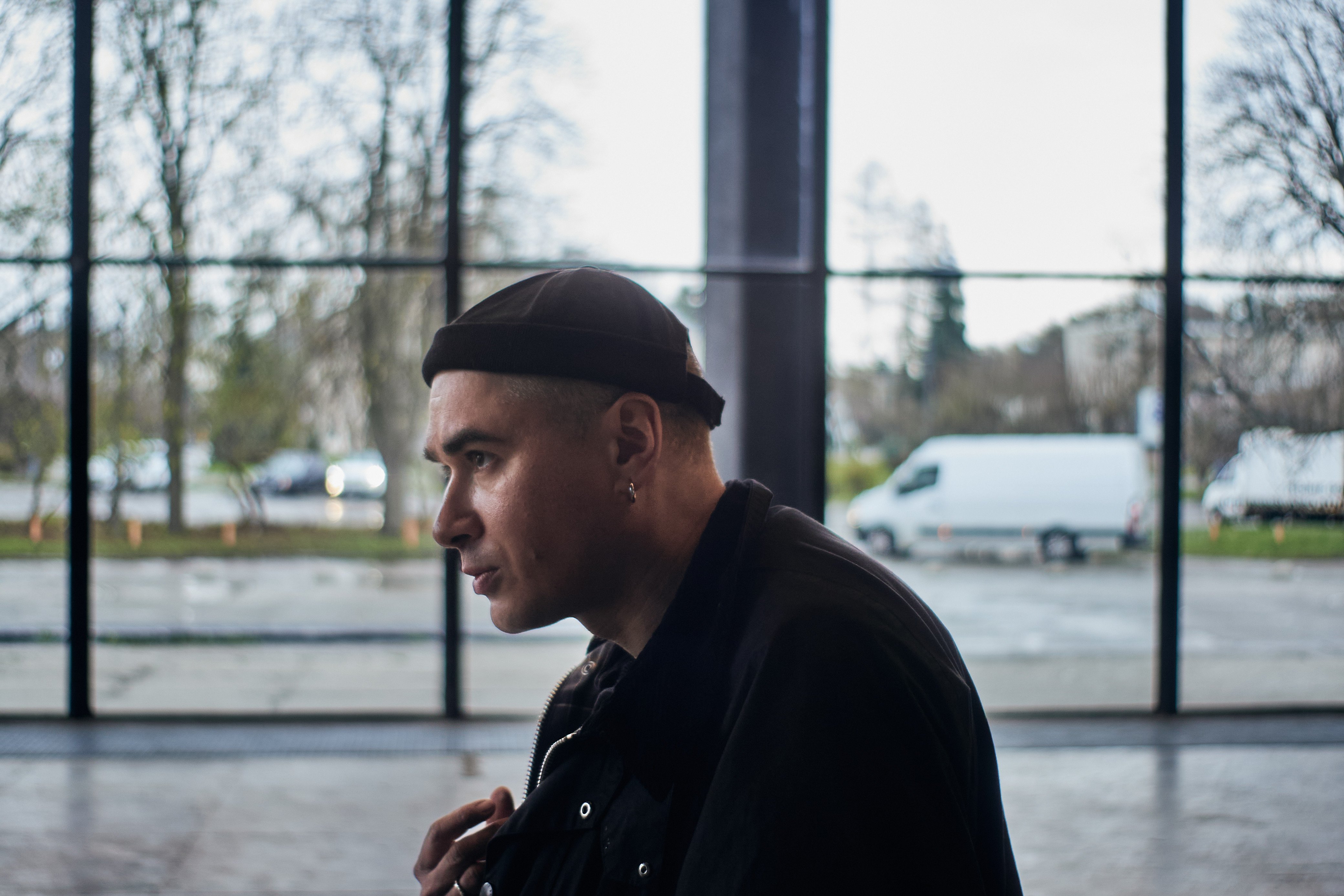
Kadan suggests that while some prepare for the prospect of a World War III, others distance themselves from it, finding even its possibility too overwhelming to confront. He notes that this second group often includes those in art and culture, despite the field’s frequent claims of political engagement.
What does it mean to be politically engaged when you lose nothing?” he asks. “When you can throw some radical phrases in the air, and there is no risk for you. Then you just lose the feeling that words have their weight.
Nikita Kadan
Ukrainian artist
Ukrainian artists have been processing the experience of war for over a decade — since the start of the Russian invasion in Ukraine’s east and attempted annexation of Crimea in 2014—and it will turn to it decades, if not centuries, after the war is over.
Kadan was never the one to shy away from the turbulences of history, but also isn’t aiming to shock anyone; he considers himself a realist, believing in “the pessimism of mind and optimism of will.”
“I cannot just afford to be pacifist,” he says. “Pacifism is a privilege. But on the other hand, I am not into any sort of militaristic flag-waving. I am afraid of these collective tendencies, these collective habits which can turn war into a normal mode of being. I don't want us to be infected by the war to the end of our lives. War is a disease. It is a shame of humankind. So I would rather sound pessimistic and not have enough patriotic enthusiasm, at least for so-called professional patriots, than work for this new consensus for which war is normal.
War is not normal.
War is a shame.”
Discuss this article:
-4a56a6b482ec132402c16ef6fcabf9a2.png)


-e00d178a31a987cd514e15ad3a8c2131.jpeg "Max Klymenko wearing the Etnodim, featuring embroidery inspired by traditional Ukrainian crafts. (Source: Ian Treherne)")
-e88c01988249cd60b6f04f79d29156b7.jpeg "Damage to “Cosmogony,” the largest painting in Ukraine, following a Russian drone attack on Lutsk on October 13, 2026. (Source: @sashyyna/Instagram)")
-480d70a36b9b34492b0b32ca04af4489.jpg "People attend the funeral ceremony of the famous Ukrainian writer Victoria Amelina at the Garrison Church, in Lviv, Ukraine, on July 5, 2023. (Source: Getty Images)")