- Category
- Investigations
The US Sanctioned This Russian Firm. It’s Still Working on Iran’s Spy-Capable Satellite
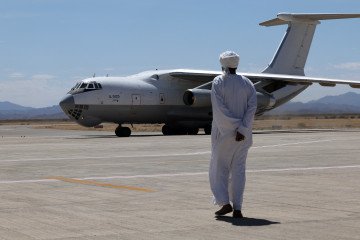
Three years after the US sanctioned BARL for supplying satellite imagery to Russia’s military, the company sent specialists to Iran to service the Russian-built Khayyam satellite system. Documents reviewed by UNITED24 Media expose continued cooperation and plans for new space projects worth hundreds of millions of dollars.
 Prefer U24 Media on Google
- Authors


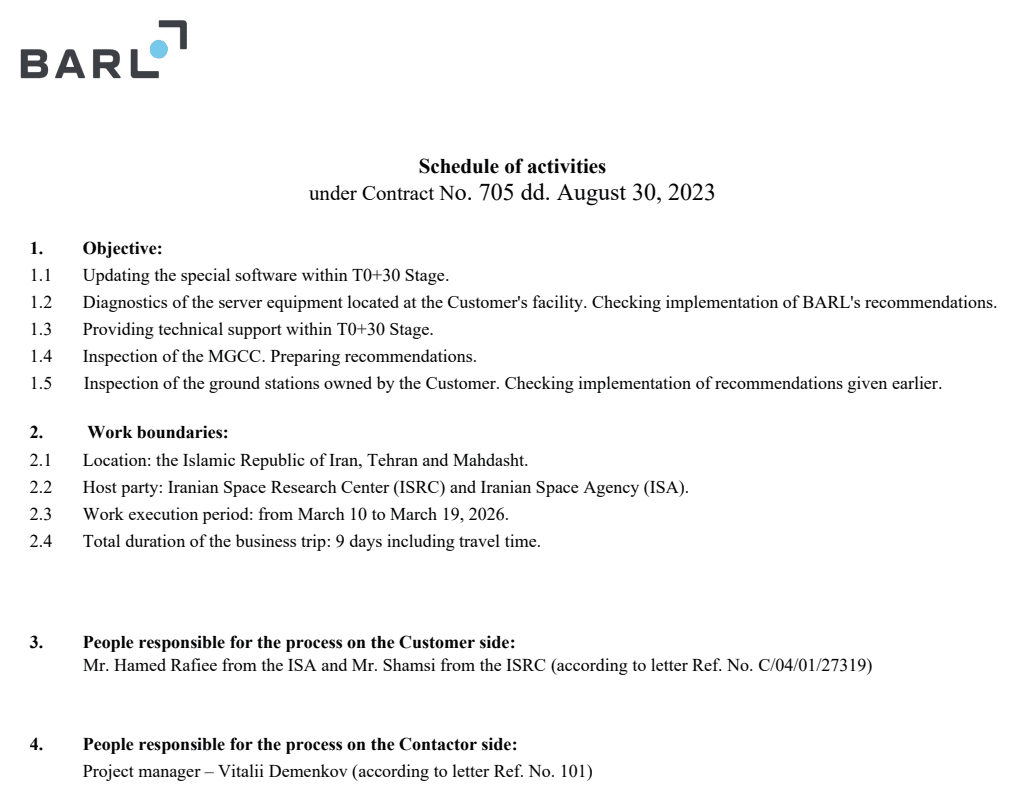
In March 2026, as the US and Israel carried out military operations against Iran targeting its missile capabilities and military infrastructure, specialists from Russia’s sanctioned BARL corporation were scheduled to travel to Iran to service the Khayyam satellite system. The timing coincided with Operation Epic Fury, the US military campaign aimed at degrading Iran’s military capabilities, and Israel’s parallel Operation Roaring Lion.
Documents reviewed by UNITED24 Media reveal how BARL maintained its role in Iran’s space infrastructure despite US sanctions—and pursued new satellite deals worth hundreds of millions of dollars.
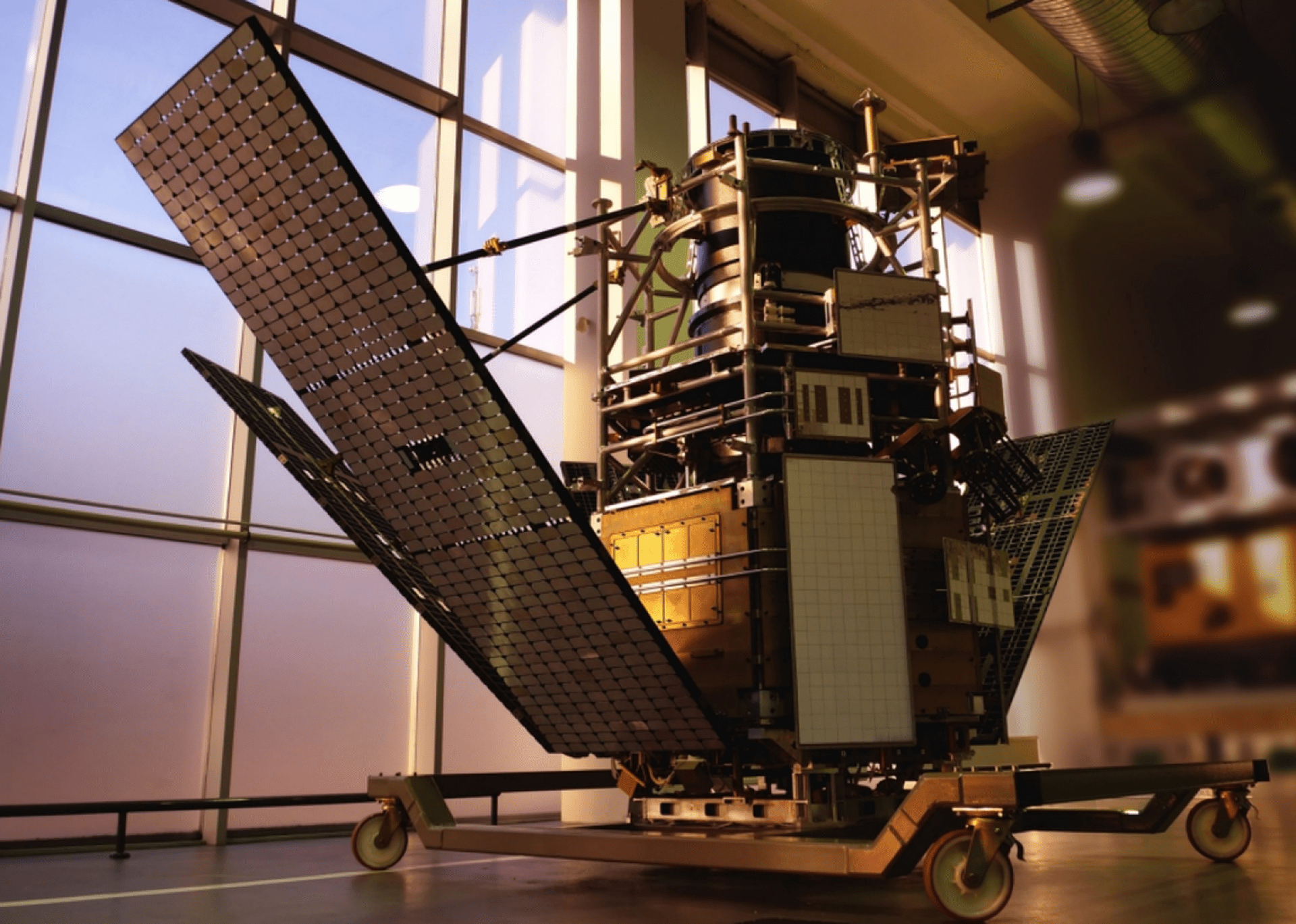
This was not a new project. Russia built Khayyam for Iran and launched it into orbit in August 2022. However, Russian contractors continued to operate the satellite system after its launch.
In January 2023, the US Treasury Department sanctioned BARL, stating that the company had supplied high-resolution satellite imagery to the Russian military and supported Russia’s military activities in Ukraine.
Despite these restrictions, documents from 2026 indicate that the company remained involved in maintaining Iran’s satellite system.
Moreover, BARL proposed independently scheduling Khayyam’s imaging operations, receiving data at its own facility in Moscow, processing the imagery, and selling it to potential Russian customers, including the Federal Security Service (FSB) and Russia’s Ministry of Defense. The company’s documentation states that the image quality makes the data suitable for certain Russian defense and security applications.
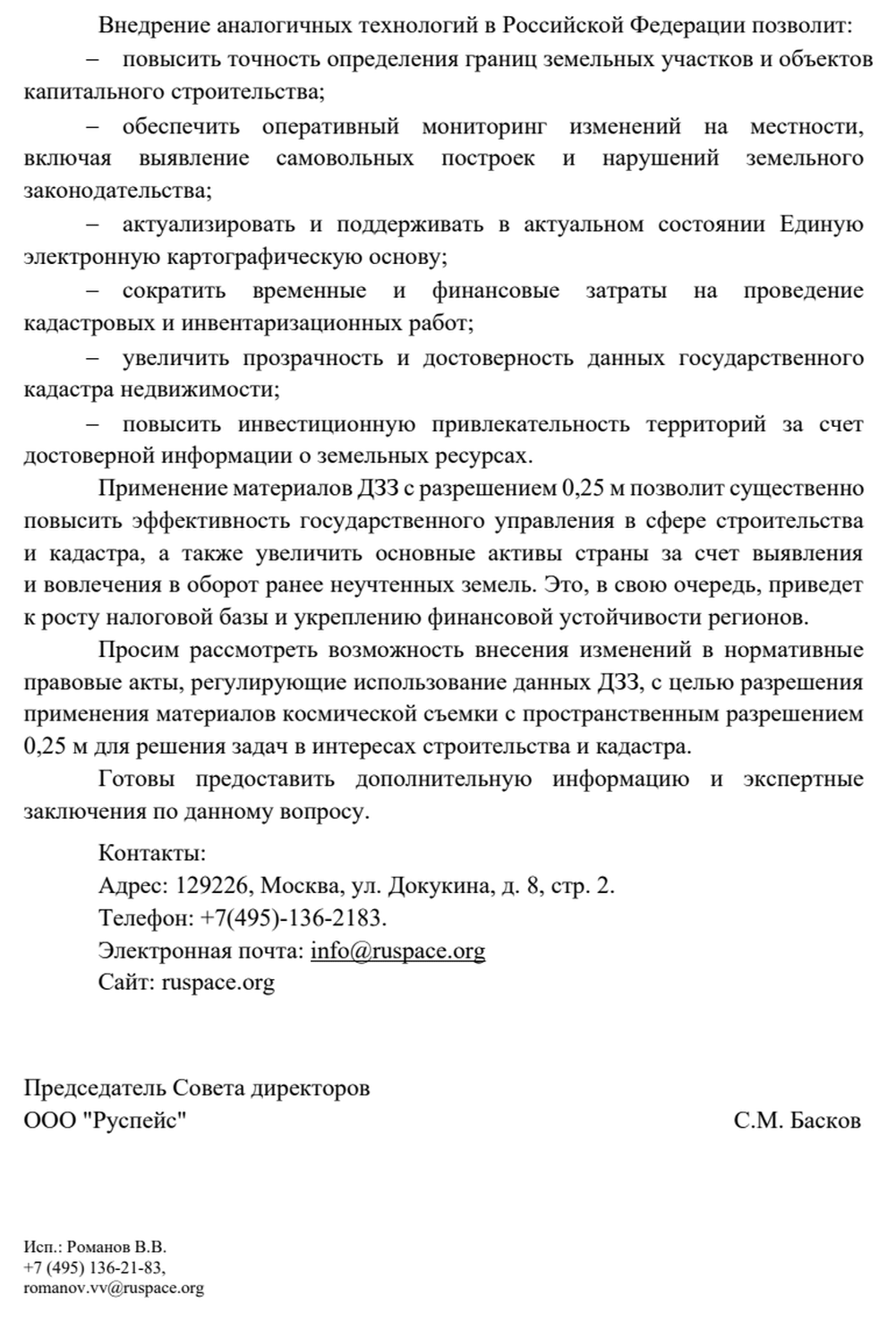
The materials also reveal plans to build additional satellites for Iran, incorporate Khayyam technologies into new Russian space programs, and involve a separate company, Ruspace, which was presented as a commercial partner without sanctions restrictions.
A satellite built for Iran by Russian companies
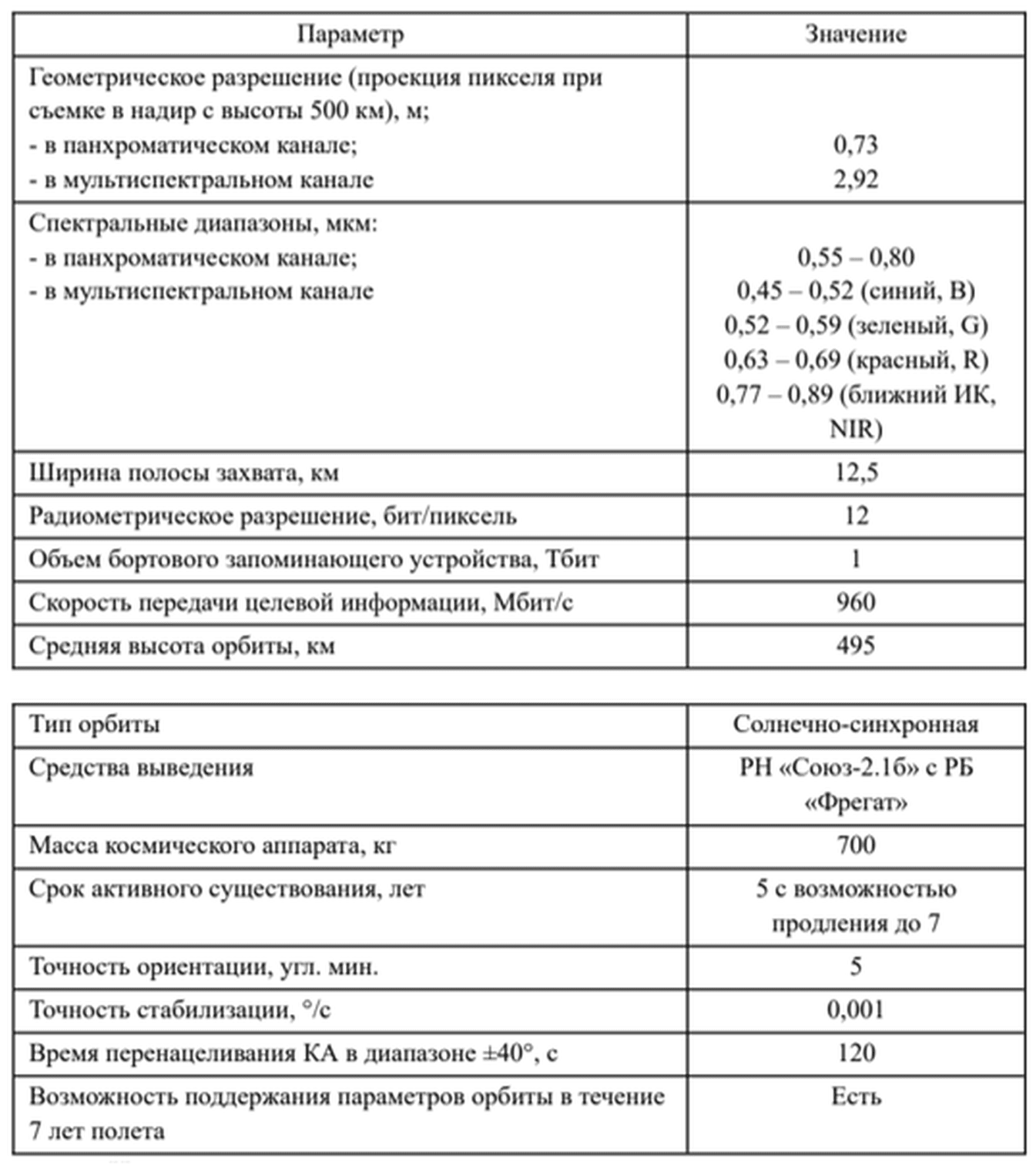
Khayyam is an Earth observation satellite developed by Russia for Iran and launched into orbit on August 9, 2022, aboard a Soyuz-2.1b rocket from the Baikonur Cosmodrome.
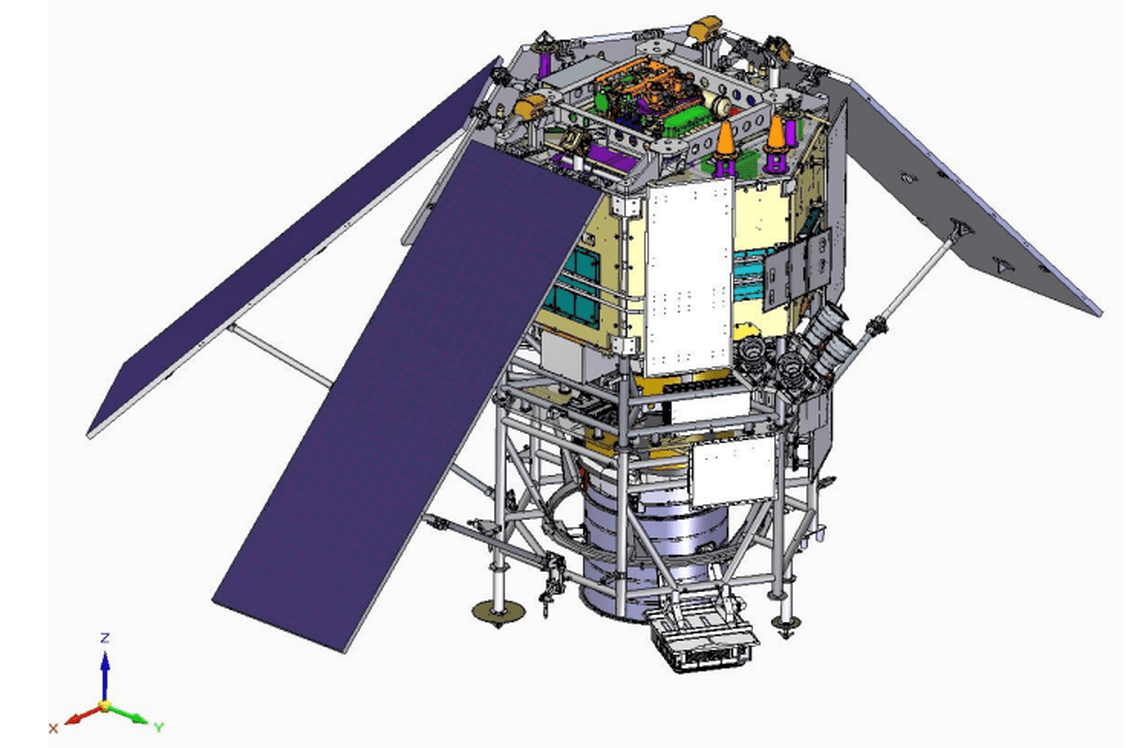
The satellite, weighing approximately 700 kilograms, was manufactured by Russia’s VNIIEM Corporation. BARL was responsible for integrating the space system and developing its ground infrastructure.
The satellite operates at an altitude of approximately 500 kilometers. Its stated spatial resolution in the panchromatic band is 0.73 meters.
These capabilities allow it to capture detailed images of transportation infrastructure, industrial facilities, military installations, and other areas of the Earth’s surface.
The system can be used for civilian monitoring but also has military applications, ranging from surveillance of specific sites to analyzing changes in infrastructure.
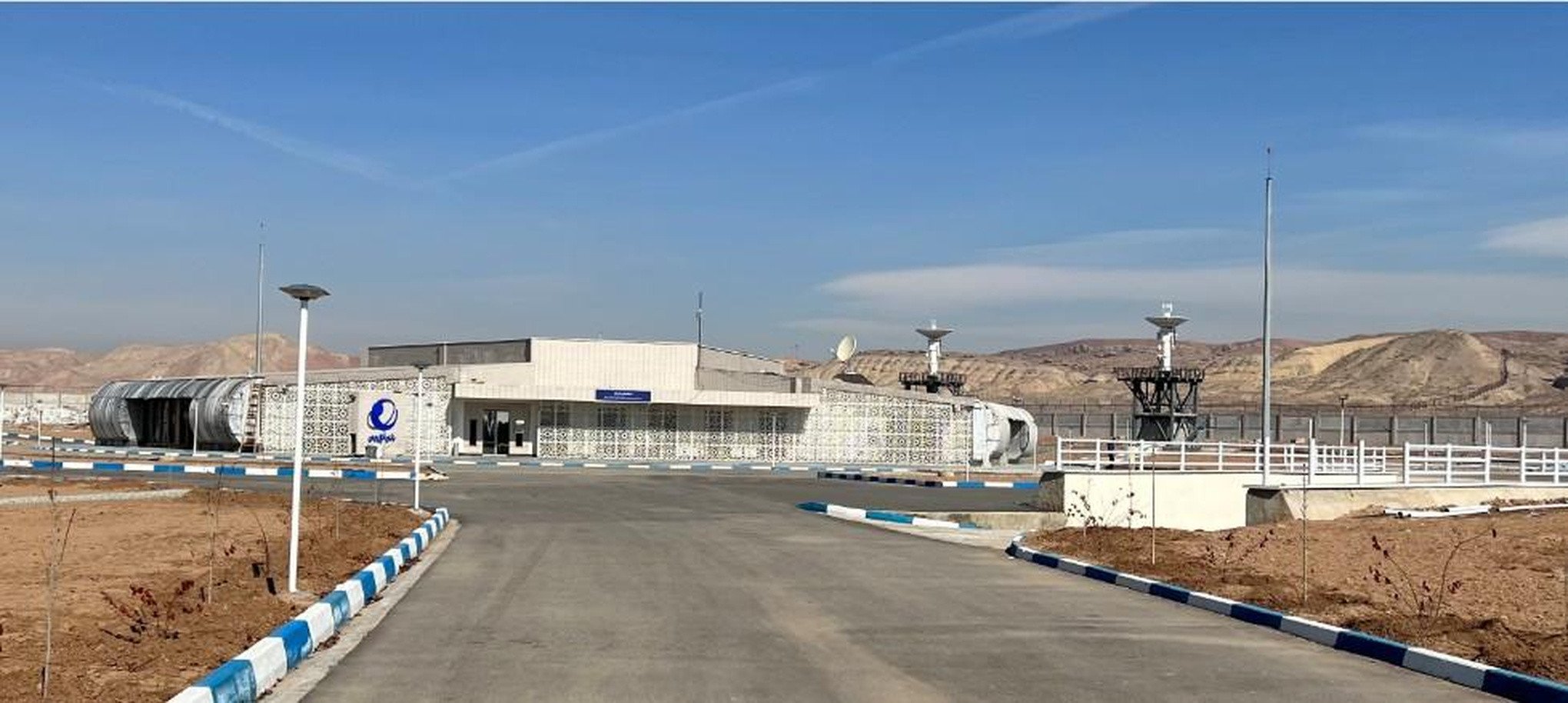
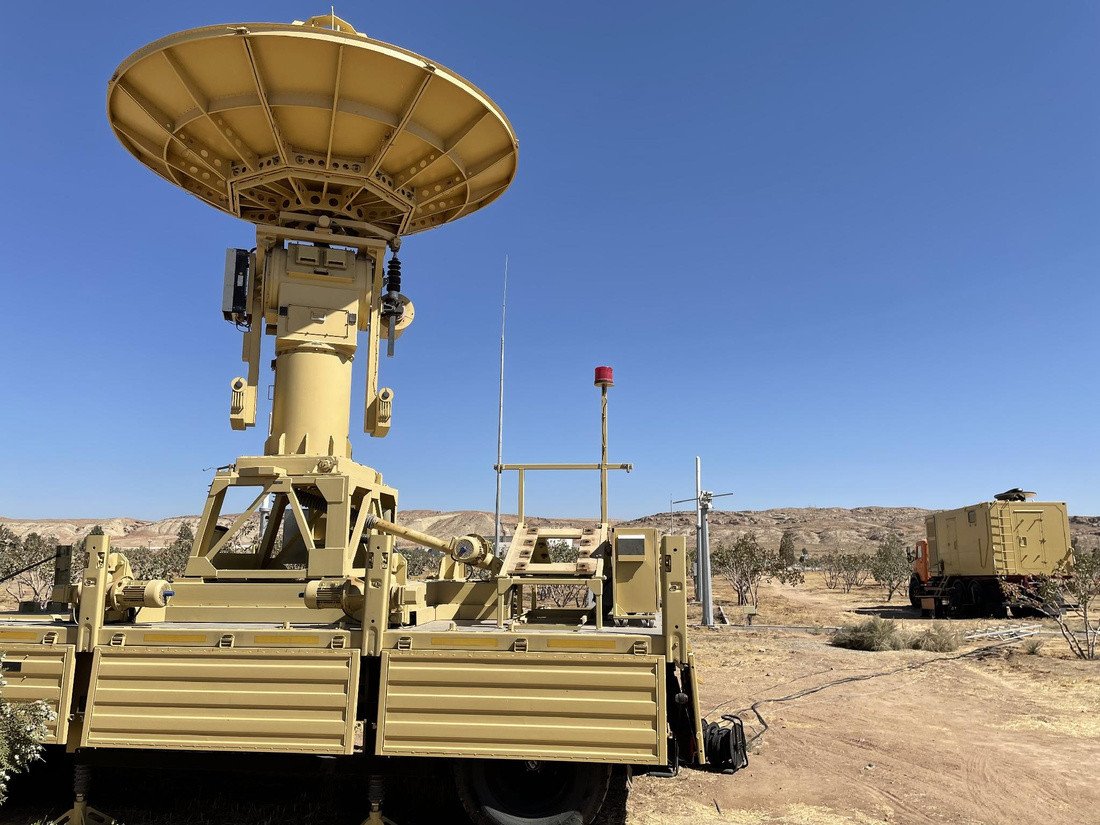
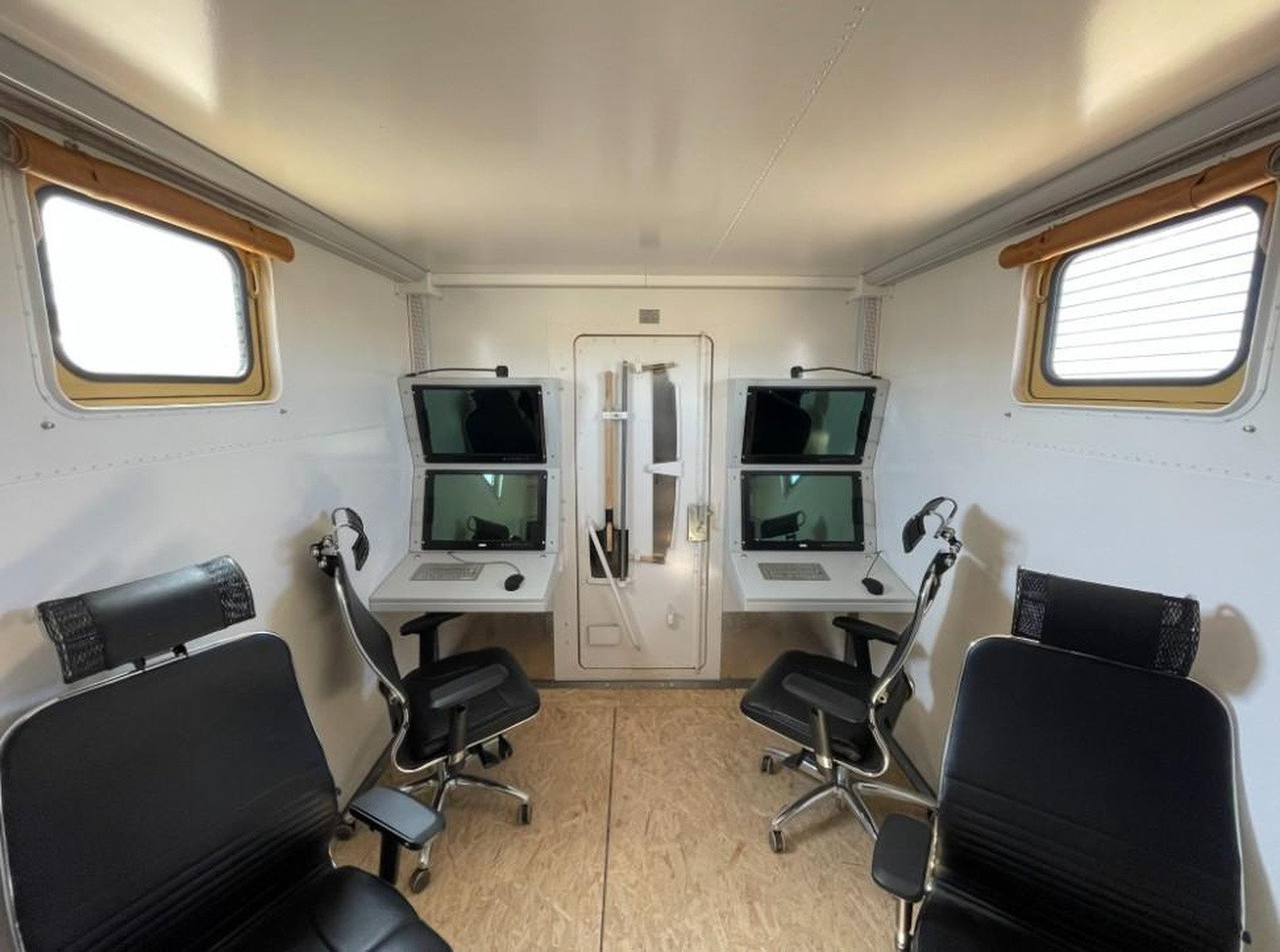
The ground segment developed by Russian contractors includes a flight control center and command-link station in Mahdasht, a backup facility in Tabriz, mobile stations, and satellite data processing centers.
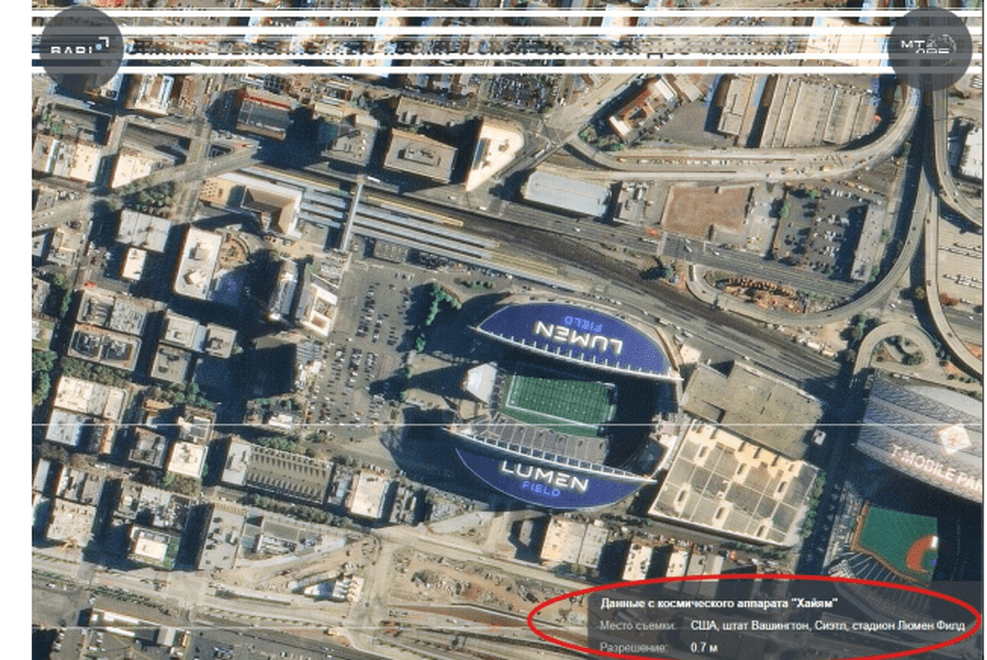
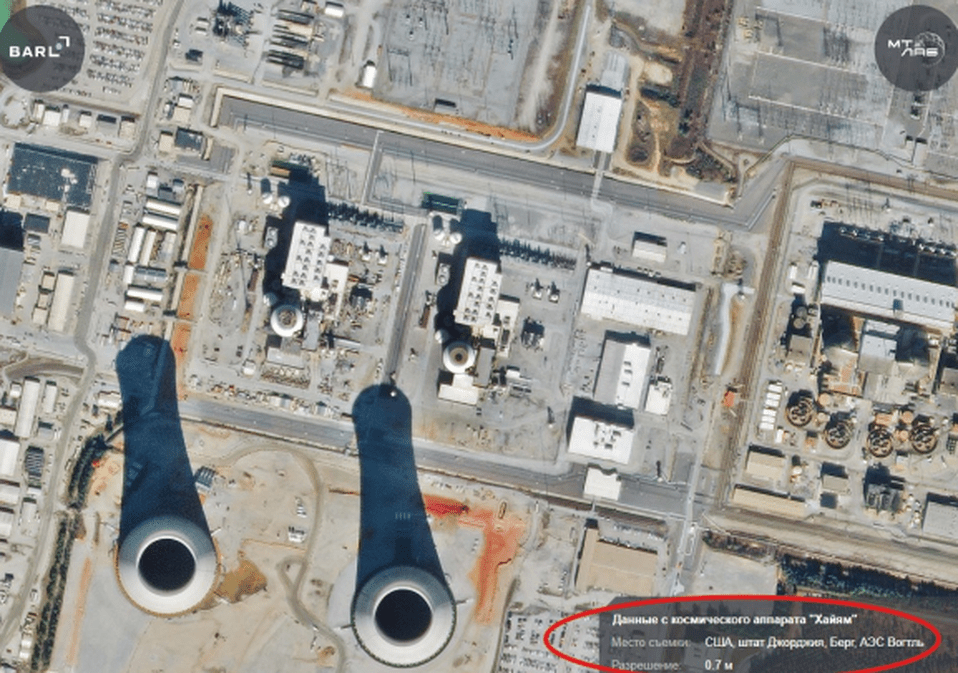
The project’s demonstration materials contain images of sites far beyond Iran’s borders, including the Vogtle nuclear power plant in Georgia, Lumen Field stadium in Seattle, and Dubai International Airport.
These materials demonstrate the system’s technical capabilities and geographic reach. However, the fact that these sites were photographed does not, in itself, establish that the imagery was collected for specific military operations.
How Russia planned to use Iran’s satellite
The company viewed Khayyam not only as a completed contract for Iran but also as a resource for its own customers, according to an internal BARL briefing document.
The Russian contractor proposed independently scheduling satellite imaging sessions, receiving the resulting data at its Moscow facility, processing the imagery, and delivering it to customers.
The document specifies pricing: $2.40 per square kilometer of panchromatic imagery and $3 per square kilometer of synthesized imagery.
Thus, the satellite built for Iran was also intended to become a source of commercial satellite data for the Russian market. However, potential customers were not limited to the civilian sector.
BARL’s materials explicitly state that the imagery’s technical characteristics make it suitable for certain Russian defense and security applications. This is particularly significant given the US sanctions imposed on the company.
On January 26, 2023, the US Treasury Department imposed sanctions on BARL, citing its provision of high-resolution foreign satellite imagery to the Russian military.
The company identified by US authorities as a supplier of intelligence-related information to the Russian military, therefore, remained involved in Iran’s satellite infrastructure and was exploring ways to use its data for Russian purposes.

Western technology in the Russian-Iranian space program
Khayyam was developed through cooperation among enterprises within Russia’s military-industrial complex.
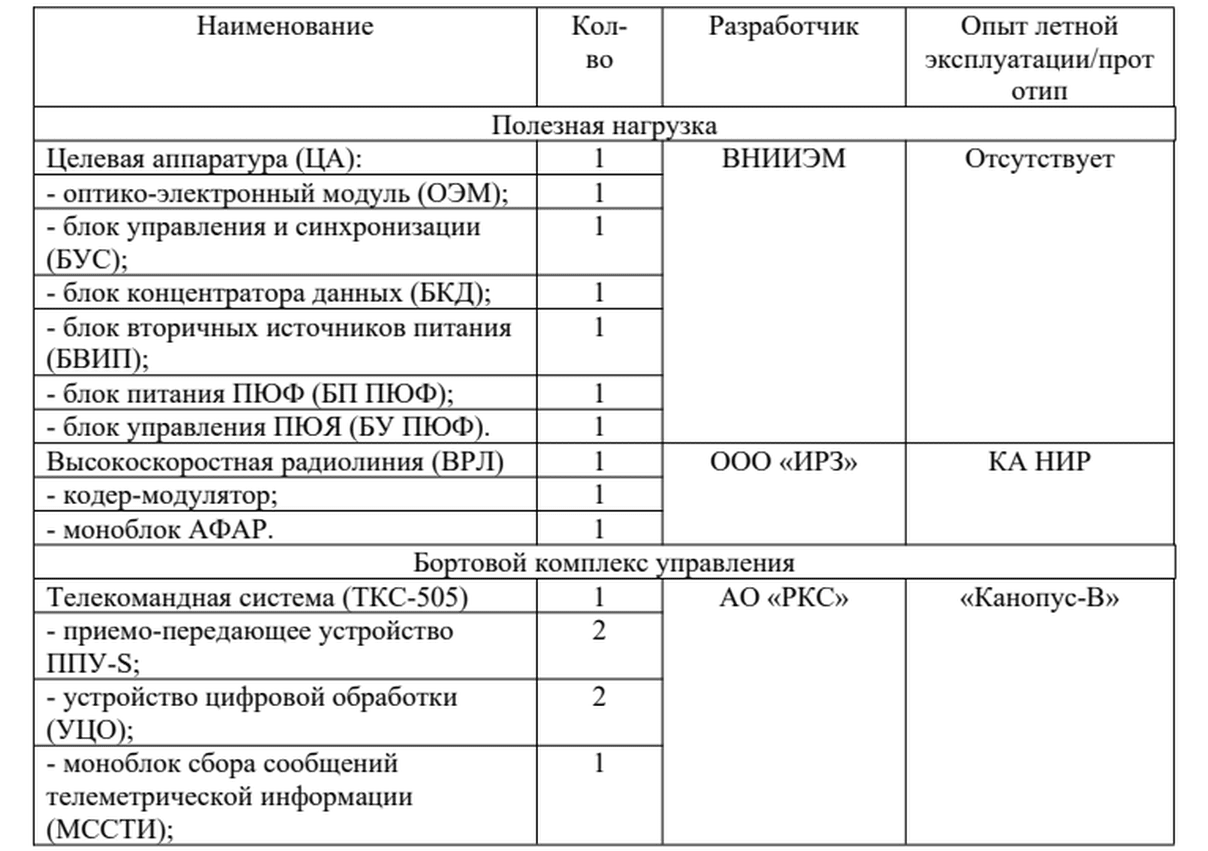
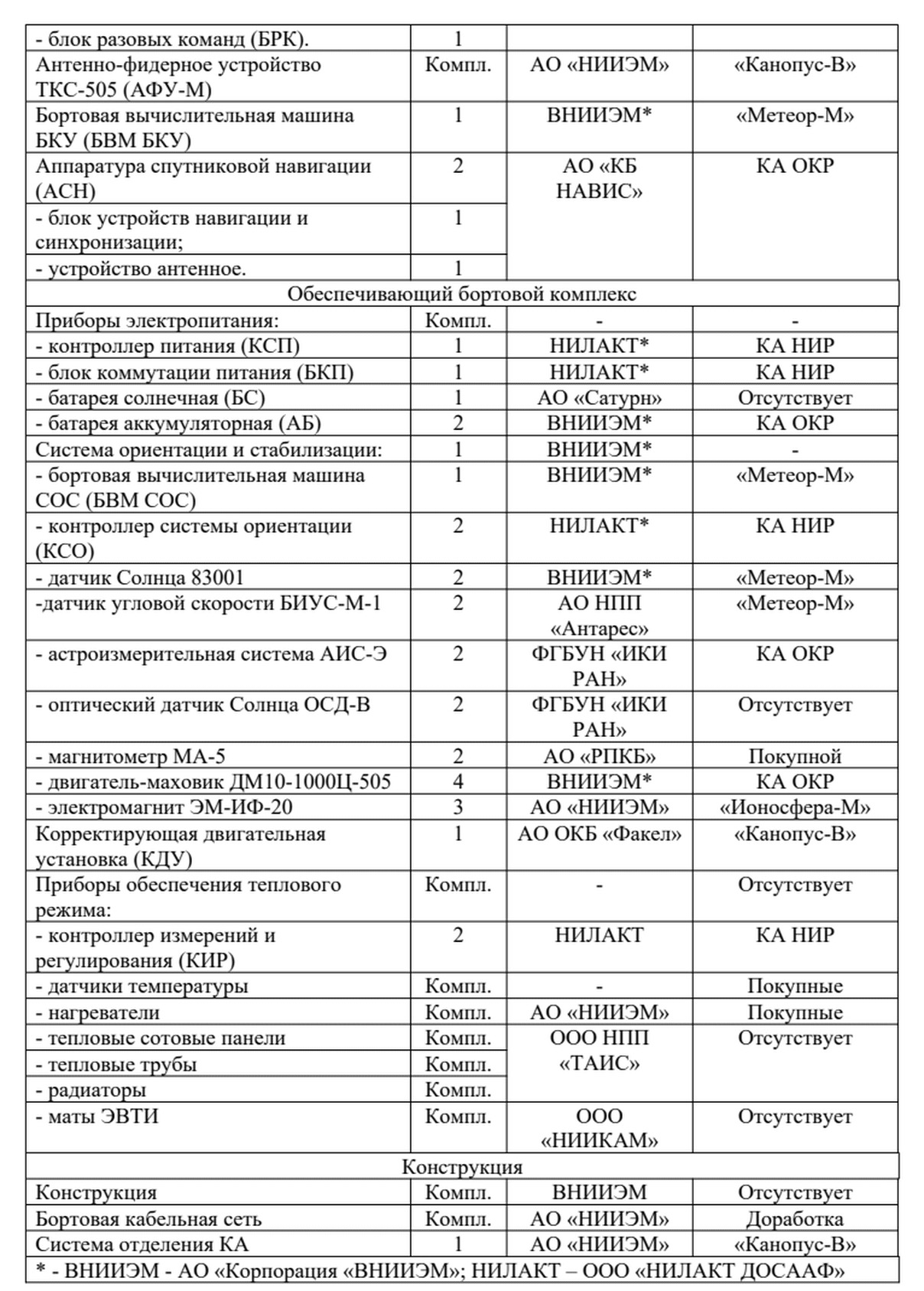
The project involved Izhevsk Radio Plant, Russian Space Systems, NAVIS, NILAKT DOSAAF, Antares, and the Fakel Design Bureau, according to information provided by the satellite’s chief designer, Aleksandr Khromov, in a document titled “Summary of Experience in Developing an Earth Remote Sensing Spacecraft by JSC VNIIEM Corporation Under a Commercial Contract During 2018–2023.”
These companies worked on radio links, navigation systems, power supplies, propulsion systems, sensors, and other components.
Despite the extensive involvement of Russian manufacturers, the satellite also depended on imported technologies.
Khromov’s document mentions Panasonic 18650 batteries and imported materials used in cable manufacturing.
The production of solar panels presented additional challenges. The Moscow-based company Kvant declined to supply them because of risks associated with the end customer, according to project documents.
The Krasnodar-based company Saturn was subsequently brought into the project. Khromov describes difficulties verifying end-user certificates within the raw-material supply chain.
This episode illustrates how important access to foreign materials and components remained for Russian space developers.

The document also shows that the Iranian contract competed for production resources with Russia’s state defense procurement program. In some cases, the manufacturing of satellite components was postponed to accommodate more urgent requirements of Russian military programs.
For example, at JSC NIIEM, components for the Iranian satellite were removed from production machines on the instructions of A. V. Vorontsov, BARL’s deputy chief designer for Earth observation satellites, to free up capacity for manufacturing parts for other satellites. He explained the reason explicitly: work under Russia’s state defense procurement program took higher priority.
New space contracts worth hundreds of millions of dollars
Cooperation between Moscow and Tehran extended beyond a single satellite.
During the initial phase, the Iranian Space Agency expressed its willingness to make an advance payment of $16.875 million. A bank guarantee was to be arranged through Post Bank Iran.
BARL subsequently discussed expanding Iran’s satellite constellation to five spacecraft.
The estimated cost of manufacturing and delivering four additional satellites was $225 million.
At the same time, Russian companies were developing a proposal for a separate satellite communications system for Iran.
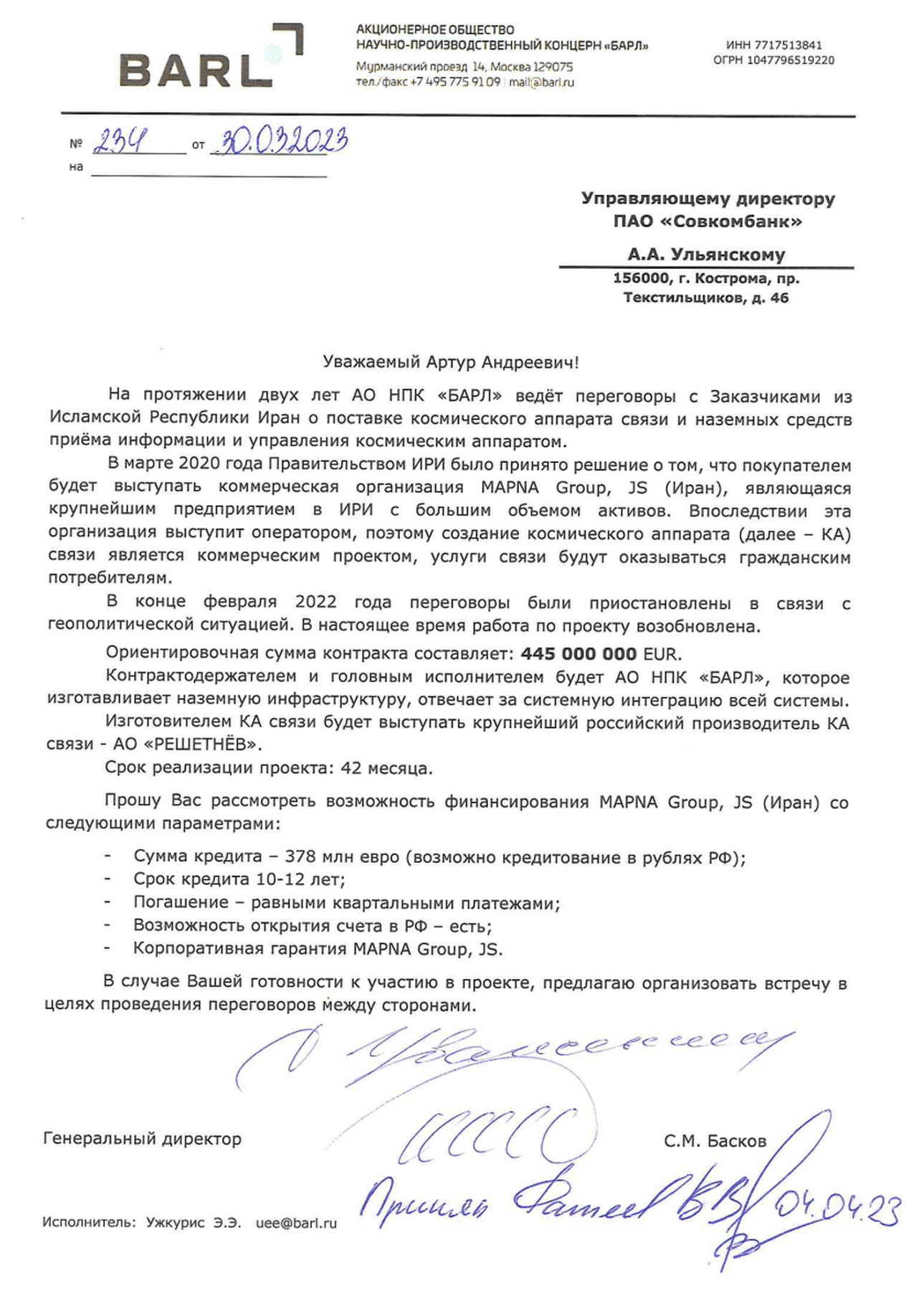
In March 2023, BARL CEO Sergey Baskov approached Sovcombank about financing the project. The total contract value was estimated at €445 million ($498 million). The requested loan amounted to €378 million (423 million), with a 10–12-year financing term.
The satellite was to be manufactured by Information Satellite Systems Reshetnev, while Iran’s MAPNA Group would serve as the buyer and operator. BARL would be responsible for system integration and ground infrastructure.
At the time of the request, Sovcombank was already under US sanctions.
The communications system’s project materials also mentioned the possibility of obtaining data from regional digital streams in the Middle East. Such capabilities could be of interest to intelligence agencies.
Lessons from the Iranian project for new Russian satellites
The documents indicate that Russian developers planned to incorporate technologies developed for Khayyam into their own space programs. BARL proposed integrating solutions developed under Project 505 into new Russian satellite systems.
These included EOS-O and EOS-R.
The EOS-O project envisioned a constellation of six optical satellites with a spatial resolution of 0.5 meters.
EOS-R called for three satellites capable of observation in the visible, infrared, and radar bands.
For EOS-O, the developers planned to use several technical solutions tested during Khayyam’s development, including a Korsch optical design, high-speed radio links, active phased-array antennas, ground infrastructure, and testing facilities.
There was also continuity in personnel. The chief designer and deputy chief designer involved in EOS-O had previously worked on the Iranian satellite.
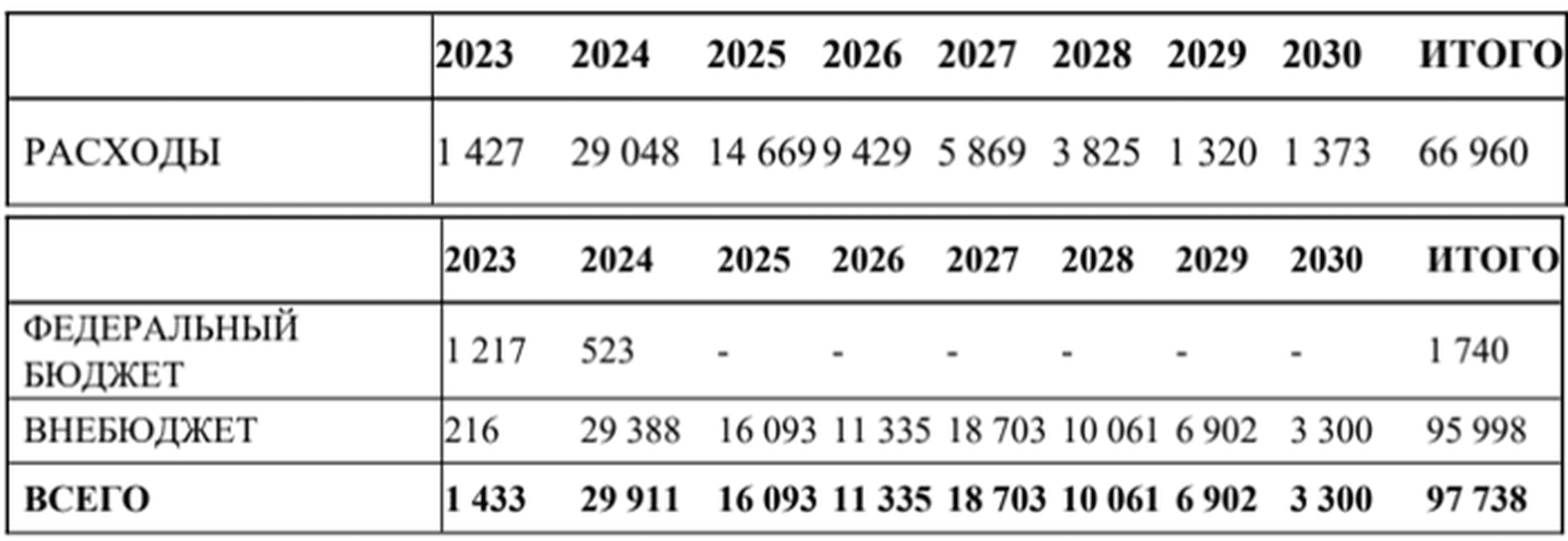
EOS-O and EOS-R required a combined $1.15 billion in financing, according to project estimates. The developers planned to recover their investments and service their debt through future contracts with Russian government customers for satellite imagery.
The Iranian contract, therefore, enabled Russian contractors to establish a manufacturing network, test technical solutions, and prepare proposals for subsequent satellite systems.
However, the existence of these plans does not mean that all the proposed satellites have already been manufactured or secured financing.
Ruspace: a new company without a direct sanctions designation
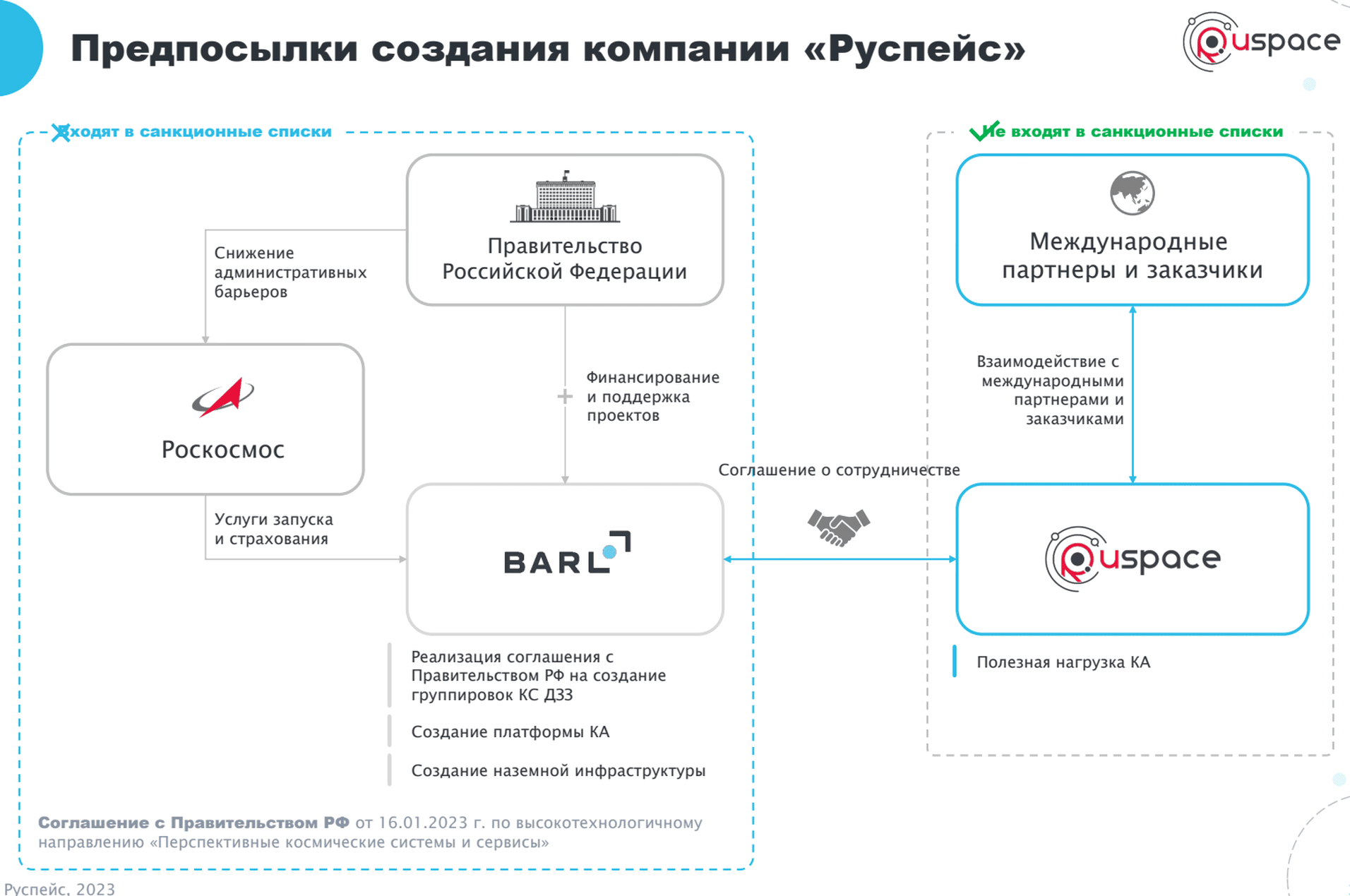
A separate set of documents concerns Ruspace, a company used to promote Russian space projects.
Its presentation materials emphasized the distinction between sanctioned enterprises within Russia’s military-industrial complex and a separate commercial entity positioned as a partner not subject to the same restrictions.
However, the documents point to direct links between Ruspace and BARL.
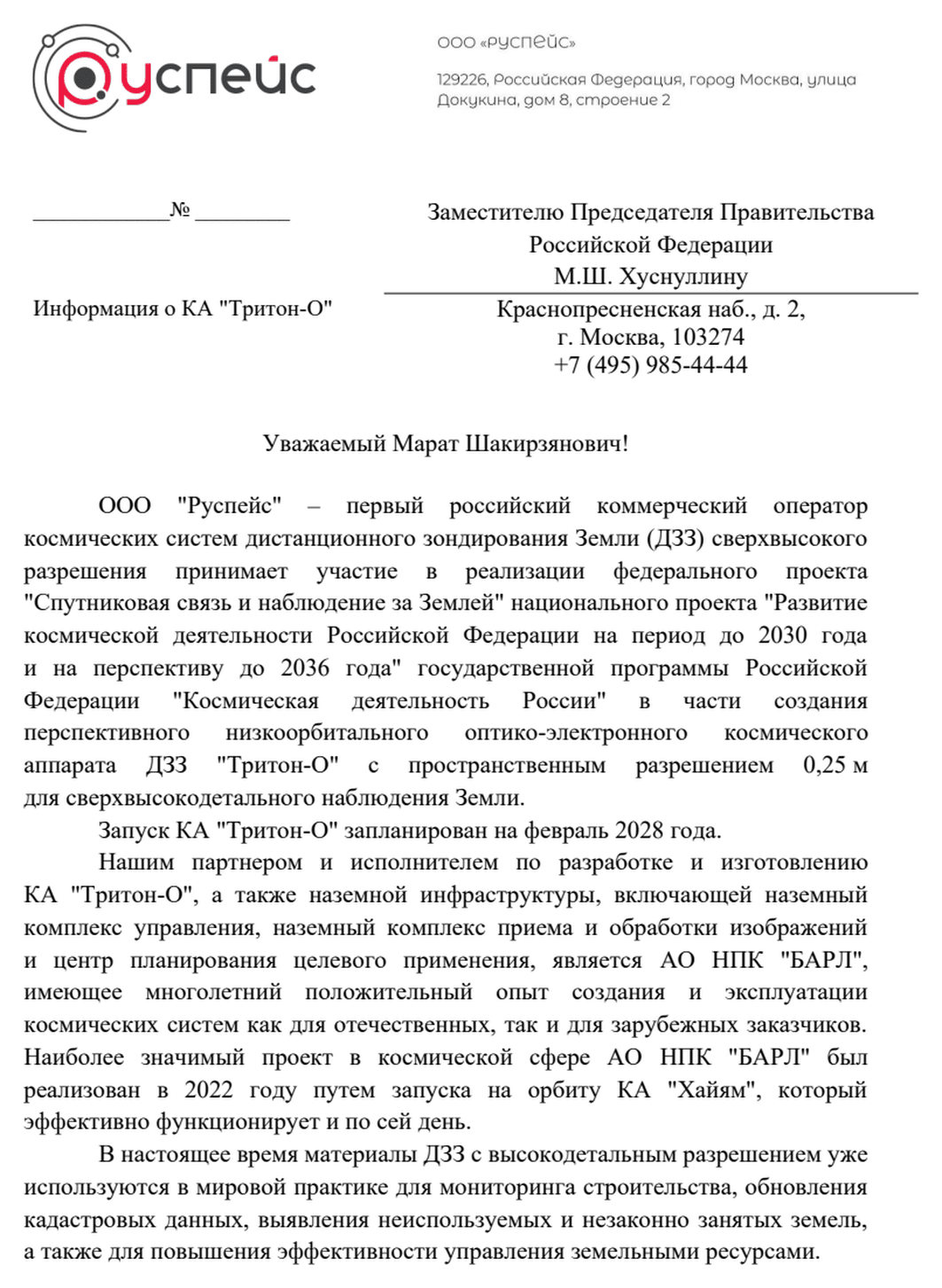
A draft letter to Russian Deputy Prime Minister Marat Khusnullin identifies Sergey Baskov, BARL’s CEO, as chairman of Ruspace’s board of directors.
The company promoted the Triton-O satellite project, which had a stated spatial resolution of 0.25 meters. Its launch was scheduled for February 2028.
At the same time, BARL itself was expected to develop the satellite and its ground infrastructure.
Thus, the entity presented as an independent commercial partner shared a senior executive with the sanctioned developer and planned to involve that company in the project’s technical implementation.
This created an opportunity to market BARL’s products and services through a separate legal entity.
In parallel, the company proposed amendments to Russian legislation that would allow satellite imagery with a resolution of 0.25 meters to be used for cadastral and construction purposes.
This could create an additional domestic market for high-resolution satellite data.
Why did US sanctions not end cooperation between Russia and Iran?
In January 2023, the United States imposed sanctions on BARL, citing its involvement in supplying satellite imagery to the Russian military.
Yet three years later, the Russian company remained involved in maintaining the satellite system developed for Iran. The documents also show that BARL viewed Khayyam as a potential source of satellite data for Russian customers, including those in the defense and security sectors.
Meanwhile, technologies developed for the Iranian project became the basis for proposals to build new Russian satellites, while Ruspace, a company linked to BARL’s leadership, promoted a commercial cooperation model that did not carry the developer’s direct sanctions designation.
These findings do not mean that US sanctions were entirely ineffective or that every transaction described violated the restrictions. They do, however, indicate that sanctions targeting an individual Russian contractor did not end its involvement in technological cooperation with Iran.
Khayyam demonstrates how, despite international sanctions, shared satellite infrastructure can simultaneously serve the needs of an Iranian customer, create opportunities for intelligence gathering, and provide a technological foundation for new Russian space systems.
Discuss this article:
-4a56a6b482ec132402c16ef6fcabf9a2.png)


-206008aed5f329e86c52788e3e423f23.jpg "Photo of Oleksandr Moiseienko")