- Category
- World
What Happens When Russia Has Enough RASSVET Satellites to Control Drones Across Europe?
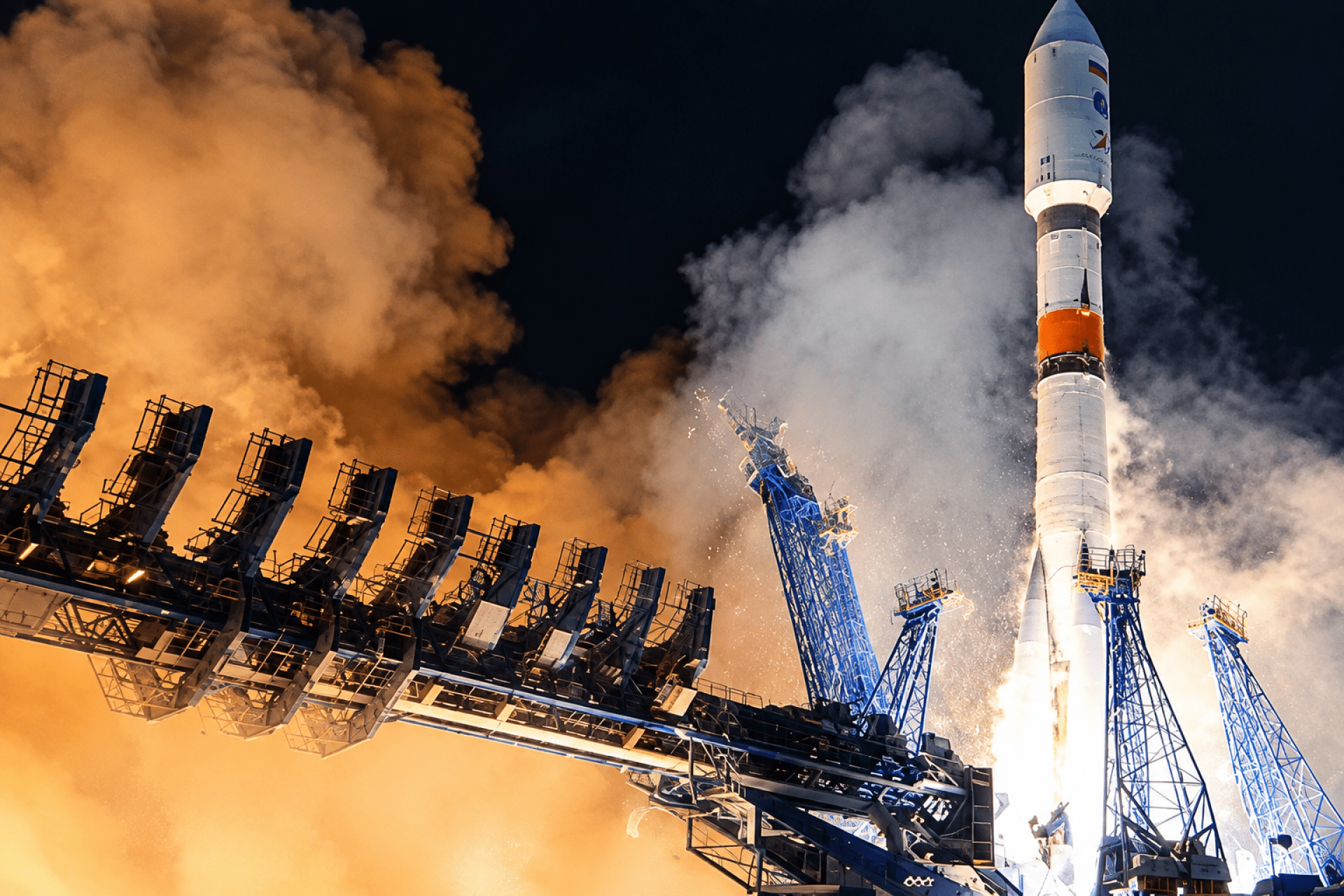
Russia is deploying its own satellite network, RASSVET—an analog of Starlink that the Kremlin portrays as a system for civilian use but that could give its military a powerful new tool for controlling drones across Ukraine. The same technology could also pose a direct security threat to Europe, facilitating Russia’s hybrid war.
 Prefer U24 Media on Google
- Authors

-29a1a43aba23f9bb779a1ac8b98d2121.jpeg "Photo of Illia Kabachynskyi")
When Elon Musk cut off Starlink access to Russian forces, the Kremlin faced a major problem: Russian troops were left without a critical communications tool, disrupting operations and causing confusion. Now Russia is developing a “Starlink” of its own—called RASSVET.
“Russian communications on the front lines will improve,” explains Ukraine’s presidential adviser Serhii “Flash” Beskrestnov, an expert in radio technologies. “They will be able to attack our entire country with UAVs controlled online through their own satellites.”
Flash has also noted that Russia could, in theory, already install satellite internet terminals on Shahed drones and time attacks to coincide with satellite passes.
“RASSVET already has the potential for broader battlefield applications,” says Viktoriia Vyshnivska, Senior Analyst at the Independent Anti-Corruption Commission (NAKO). These applications go beyond providing uninterrupted, sovereign communications to include drone control and targeting support.
If Rassvet expands, we could eventually see it in the hands of Iran, the Houthis, other terrorist groups, and organized crime. It could also potentially be used as a large-scale electronic warfare tool.
Viktoriia Vyshnivska
Senior Analyst at NAKO
This is why it is crucial for the International Telecommunication Union (ITU) to prevent RASSVET from operating over Ukrainian territory—and why the network’s expansion should concern other European countries as well.
Russia’s RASSVET’s military drone applications
RASSVET is a low Earth orbit satellite communications network that has been under development since 2023 by the private Russian company Bureau 1440 with state support. The project has already received $1.2 billion in funding, while Russia’s broader space program through 2030 provides for 481 billion rubles ($5.7 billion) in financing.

Rassvet deployment has been gradual. In 2023, the first three test satellites (RASSVET-1) were placed into orbit, followed by three more (RASSVET-2) in 2024.
The Starlink cutoff accelerated the program. In March 2026, Russia launched 16 third-generation satellites at once, followed by another 16 in July.
The Kremlin’s plans call for 250 satellites by 2027, 730 by 2030, and more than 900 by 2035.
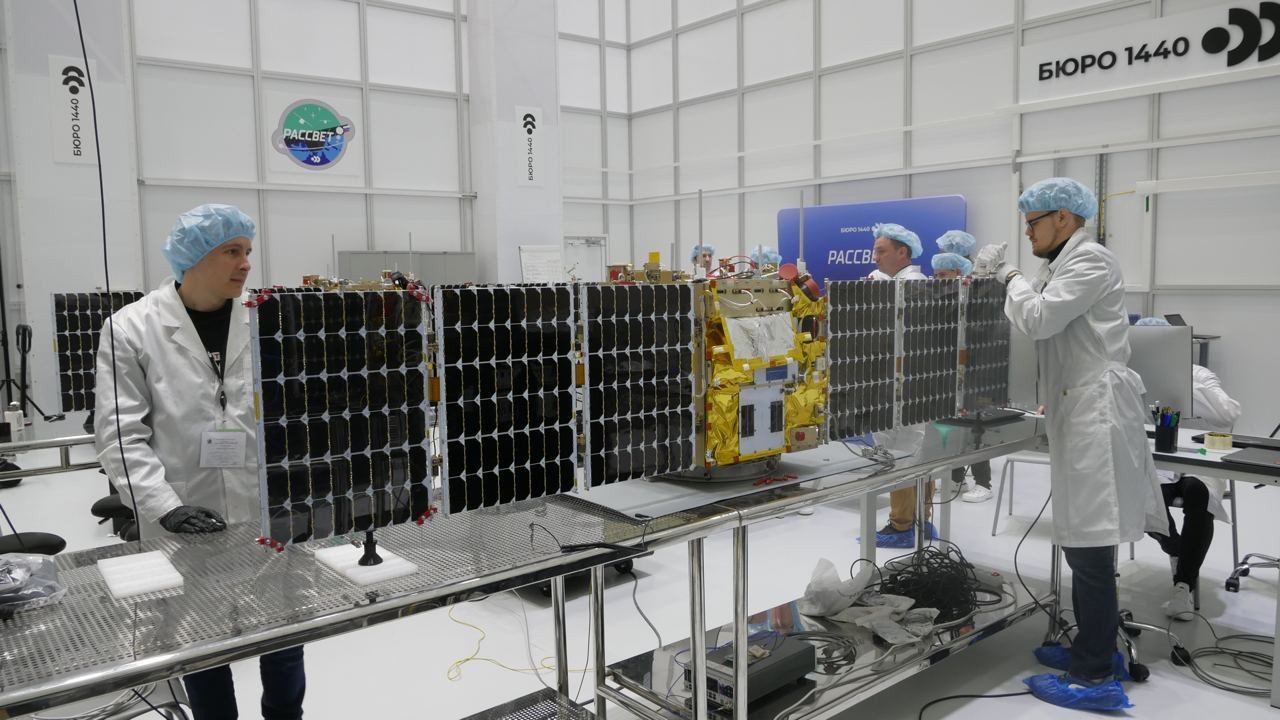
Although Moscow officially describes the system as intended for civilian use, its application is, in fact, military. Vladimir Putin said as early as 2023 that the system would enable drone control. Such capabilities include:
transmitting real-time video from unmanned aerial vehicles;
controlling drones beyond the operator’s direct line of sight;
building command networks for remote operations;
conducting reconnaissance.
In other words, RASSVET can be used for offensive operations.
In that scenario, Russia’s precision strike on a Security Service of Ukraine (SBU) headquarters in Kyiv would be only the first in a series of similar attacks: Russian operators could gain far greater control over their drones not only in Ukrainian airspace but potentially across European airspace as well, making targeted attacks and sabotage operations significantly easier to carry out.
How can RASSVET threaten European security?
The Kremlin has made no secret of its ambitions to exert influence over at least Central and Eastern Europe and the Nordic countries, where hybrid attacks in various forms have been taking place for years. Russian drones and missiles have also repeatedly entered the airspace of Romania, Moldova, and Poland.
One of the most recent such cases involved an FPV drone found at Germany’s Leipzig airport in August. The explosives-laden drone was directed at an An-124 aircraft. It later emerged that there had been three such drones, and the sabotage operation itself was linked to Russia.
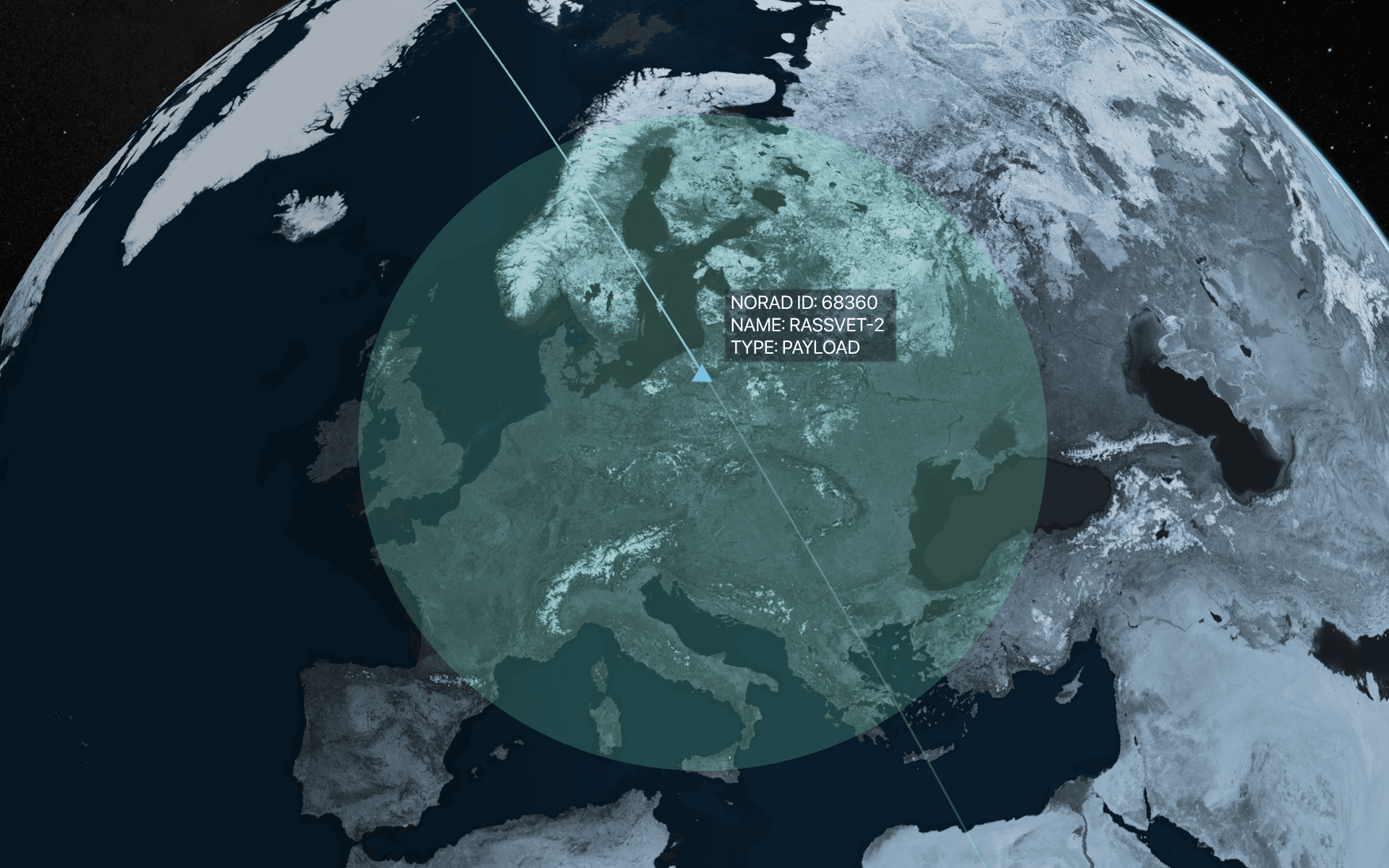
Once RASSVET reaches over 200 satellites in orbit, the threat could increase dramatically. Satellite connectivity could give Russian operators far greater control over drones beyond direct line of sight, potentially enabling targeted attacks and sabotage missions not only across Ukraine but farther into Europe.
The fact that Germany is already assessing ground-based systems capable of disrupting satellite communications and navigation signals—technology that could potentially be used against RASSVET—shows that the risks associated with Russia’s expanding satellite capabilities extend well beyond Ukraine.
How can RASSVET be restricted?
For now, the threat is constrained by the physical limitations of the constellation: there are still relatively few satellites, and windows of stable connectivity are brief.
“To date, the Russian Federation has launched 32 satellites,” Ukraine’s Defense Intelligence (HUR) chief Oleh Ivashchenko said on September 7.
For comparison, more than 12,000 Starlink satellites are currently in orbit, with the fleet continuing to expand by approximately 200 satellites each month.
For practical military use, Russia needs approximately 200–250 satellites in orbit—a threshold the Kremlin plans to reach as early as 2027. Ukraine’s objective is to protect its territory from a further escalation of Russian strikes.
The International Telecommunication Union has received documents from Russia stating that the service areas of the RASSVET-1 and RASSVET-3 networks include Ukrainian territory. For the reasons outlined above, Kyiv does not consent to this. Ukraine insists that the ITU exclude Ukrainian territory from the declared service areas of both networks.
Ukraine’s position in its submission to the ITU consists of two points:
Exclude Ukraine from the RASSVET-1 and RASSVET-3 service areas. Ukrainian territory must not be included in the operating areas that Russia has declared for these networks.
Objections concerning coordination and the risk of harmful radio interference. Ukraine is drawing the ITU’s attention to the fact that the operation of the frequency assignments declared by Russia poses a risk of interference with Ukrainian communications networks.
“The purpose for Russia to use such satellites over the territory of Ukraine is absolutely clear,” Ukrainian Foreign Minister Andrii Sybiha said. “It has nothing to do with civilian purposes. Rather, Moscow wants to use them to assist its war effort, murder of people and genocidal crimes.”
There is also a broader concern that the Russian system could threaten the stable operation of communications in Ukraine as a whole. Radio frequencies are a resource used for:
mobile communications;
radio networks;
satellite communications;
other telecommunications systems.
This is why Ukraine’s appeal to the ITU is critical: it concerns the security of the entire country. Ukraine is also urging other states whose territories Moscow has similarly included in its planned coverage areas to take the same step by submitting their own notifications to the Russian administration and the ITU Radiocommunication Bureau.

This is not merely about formally removing territories from a map. It is also about enshrining the relevant restrictions in international ITU procedures, creating an instrument that can be used for further pressure and as a basis for future arguments.
Discuss this article:
In a Nutshell


-c439b7bd9030ecf9d5a4287dc361ba31.jpg "Photo of Katherina Popilnichenko")



-72b63a4e0c8c475ad81fe3eed3f63729.jpeg "Photo of Cyril Barabaltchouk")