- Category
- Latest news
Azov Brigade Soldier Sentenced to 21 Years in Russia After Sham Trial on “Terrorism” Charges
 Prefer U24 Media on Google
- Authors

-72b63a4e0c8c475ad81fe3eed3f63729.jpeg "Photo of Cyril Barabaltchouk")
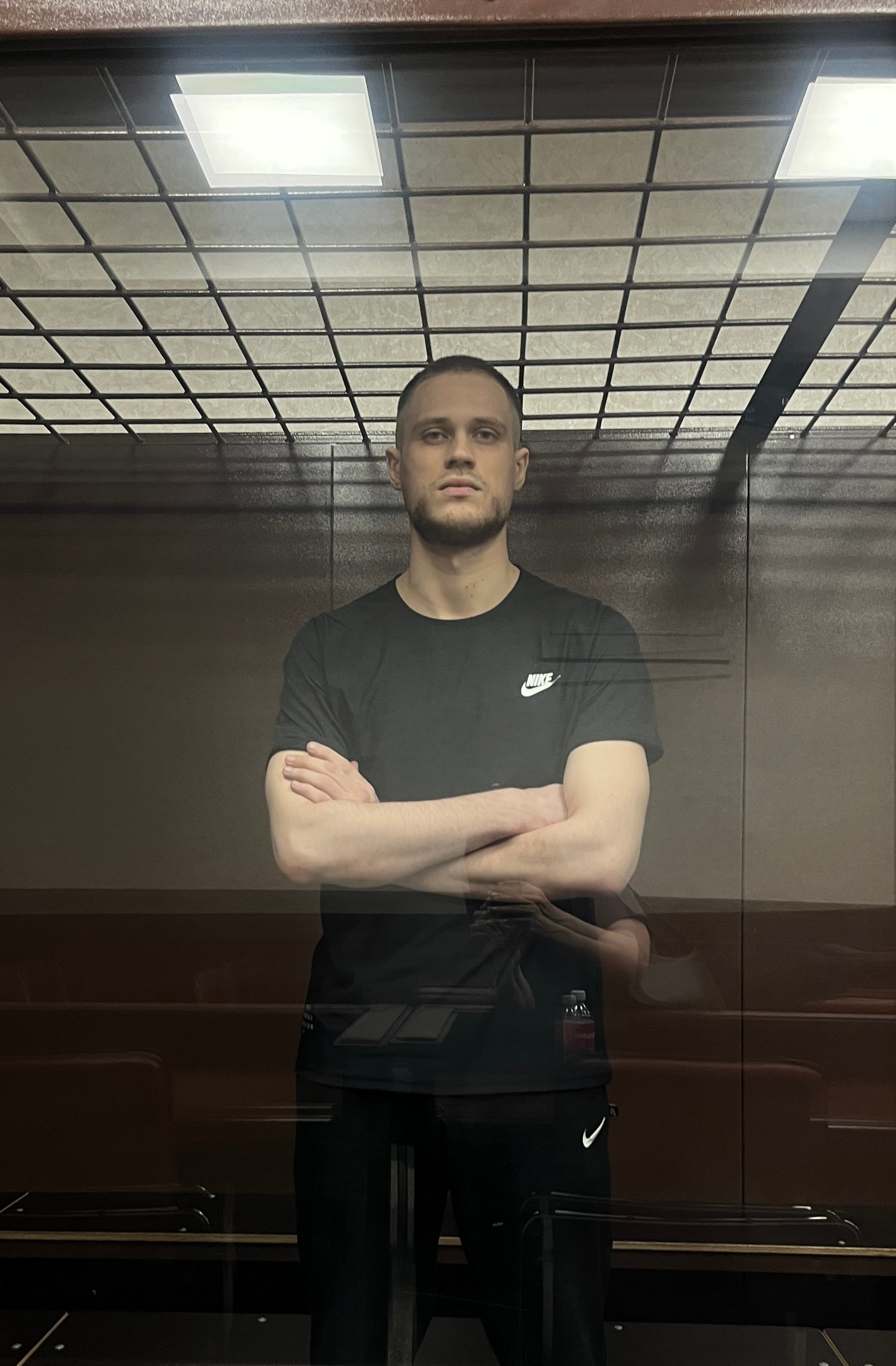
A military court in Rostov has sentenced Ukrainian Azov brigade prisoner of war, Vladyslav Shpak, to 21 years in a strict regime colony, Mediazona reported on August 8.
Shpak, a native of Melitopol, was convicted under two “terrorism” charges, including participation in a terrorist group (Article 205.4, part 2 of the Russian Criminal Code) and receiving training for terrorist activity (Article 205.3).
The prosecution argued that in June 2020, 20-year-old Shpak signed a contract with the Ukrainian National Guard and joined the Azov brigade in pursuit of both financial improvement and ideological reasons. The Russian authorities classified this as participation in a terrorist organization. Additionally, between April and June 2021, Shpak was accused of undergoing military training, which was deemed preparation for terrorism.
Ukrainian prisoners of war captured by Russia are entitled to protection under the Geneva Convention Relative to the Treatment of Prisoners of War, to which Russia is a signatory. As such, they should not face charges or sentencing simply for being part of Ukraine's Armed Forces.
Despite this, Russia continues to unlawfully impose lengthy prison sentences, and in some cases, life imprisonment, on Ukrainian POWs. These individuals are often sent to some of the most notorious penal colonies in the world, where torture is systematic.
Additionally, several units of Ukraine’s Armed Forces have been labeled by Russia as “terrorist organizations,” such as the aforementioned Azov brigade of Ukrainian Armed Forces, a designation that is used as the basis for charging Ukrainian POWs.
Shpak served in the Urzuf-based unit, and after Russia’s invasion of Ukraine in February 2022, he was sent to Mariupol. There, he participated in the defense of the Azovstal plant and, following the order from his commanders, surrendered on May 17, three months later.
Court materials did not fully clarify Shpak’s exact role in Azov, with documents describing him as a machine gunner, assistant grenade launcher, and reconnaissance driver.
During closing arguments, the prosecution originally requested a 19-year sentence for Shpak but later increased this to 22 years, citing a report from Amnesty International about violations of international law by Ukrainian soldiers. However, the judge reminded that Amnesty International is considered an undesirable organization in Russia, according to Mediazona.
When asked if he reportedly harbored any animosity towards Russian citizens or authorities, Shpak responded, “Not towards citizens, but yes, towards the Russian authorities.”
Previously, it was reported that since the start of Russia’s full-scale invasion, Ukraine managed to bring home 5,857 people from Russian captivity, with an additional 555 released outside of formal prisoner exchanges.
President Volodymyr Zelenskyy shared these figures following a meeting on July 28 with members of the Coordination Headquarters for the Treatment of Prisoners of War, agencies involved in prisoner swaps, and recently released Ukrainians.
Discuss this article:


-c439b7bd9030ecf9d5a4287dc361ba31.jpg "Photo of Katherina Popilnichenko")