- Category
- Latest news
China Challenged US F-16 Jets—Now F-35A Stealth Fighters Are Moving In Japan
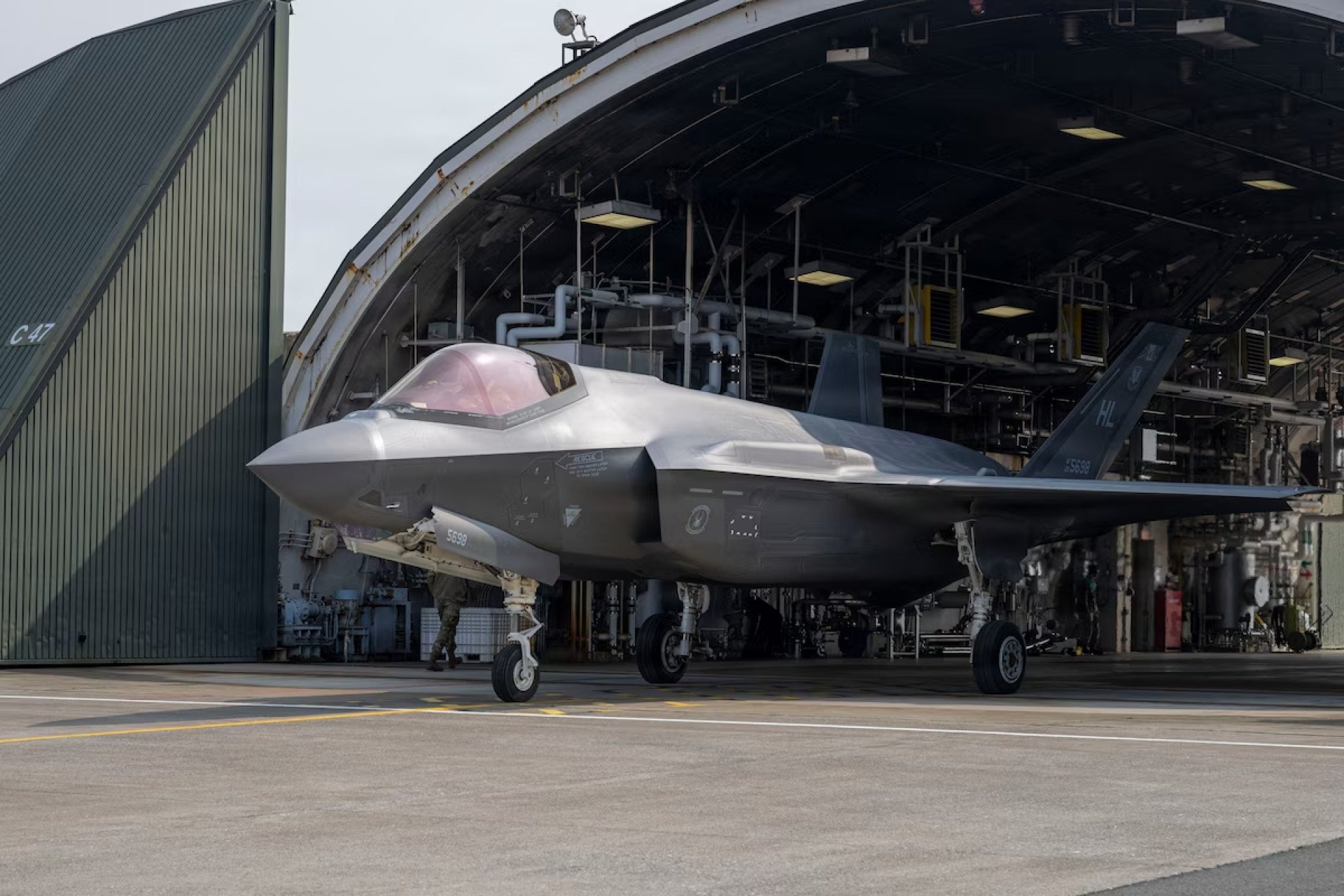
The deployment of F-35A stealth fighters to northern Japan is taking on new urgency following a recent aerial encounter between US and Chinese aircraft, highlighting how quickly tensions in Northeast Asia can escalate—and how the United States is adapting its airpower in response.
 Prefer U24 Media on Google
- Authors


The US is replacing its F-16 fighters in Japan with F-35A stealth jets, launching a major upgrade in frontline airpower as tensions continue to rise across Northeast Asia, according to the US Department of War on March 30.
The deployment signals a shift toward more survivable, longer-range, and harder-to-detect aircraft designed to operate in contested environments.
We bring you stories from the ground. Your support keeps our team in the field.
Earlier this year, US Air Force F-16s flying out of Osan Air Base in South Korea were intercepted by aircraft from China’s People’s Liberation Army during a routine training mission over international waters.
South Korean officials described the incident as a “short aerial confrontation,” stressing that no combat engagement occurred. Still, the encounter underscored the increasingly contested airspace between the two powers.
BREAKING: 🇺🇸🇯🇵 The U.S. Air Force has deployed F-35A stealth fighters to northern Japan, marking the start of permanent 5th-generation operations at Misawa Air Base.
— War Radar (@War_Radar2) March 28, 2026
The advanced jets will replace older aircraft, bringing stealth, sensor fusion, and long-range strike… pic.twitter.com/P5jAyYnei5
F-35A deployment shows modernization push
The arrival of F-35A fighters at Misawa Air Base did not occur in isolation. It follows the January 2026 delivery of specialized support equipment for the aircraft and the September 2025 retirement of F-16s previously operated by the 13th Fighter Squadron.
According to the US Air Force, the transition is part of a broader modernization effort valued at more than $10 billion, aimed at strengthening both the 35th Fighter Wing and the US-Japan alliance.
🇺🇸✈️ US Expands Air Power in Japan
— Defense News (@defensesignal) March 29, 2026
The US has permanently deployed 48 F-35A Lightning II stealth fighters to Misawa Air Base in northern Japan, replacing the previous fleet of 36 F-16s. Managed by the 35th Fighter Wing, this upgrade strengthens regional deterrence, improves… pic.twitter.com/c75dYrpGBb
Different kind of fighter for a different fight
Compared to the F-16, the F-35A introduces a fundamentally different operational profile.
Powered by the Pratt & Whitney F135-PW-100 engine, the aircraft can reach speeds of Mach 1.6, operate above 50,000 feet, carry roughly 18,000 pounds of payload, and achieve a combat radius exceeding 590 nautical miles on internal fuel. Aerial refueling can extend that range even further.
In a region where distance and response time are critical, these capabilities translate into greater reach, persistence, and the ability to penetrate defended airspace.
Flexible firepower and mission adaptability
The F-35A’s weapons configuration adds another layer to its versatility.
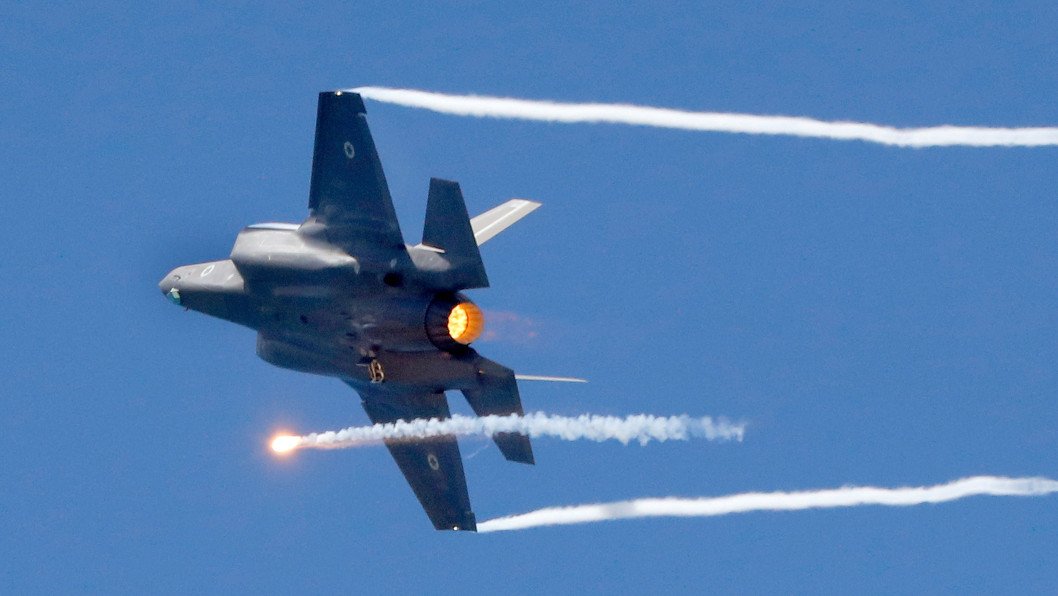
In its stealth configuration, the jet carries two AIM-120C/D AMRAAM air-to-air missiles along with either two 2,000-pound GBU-31 JDAMs or two 1,000-pound GBU-32 JDAMs internally. It also features a built-in 25 mm GAU-22/A cannon.
When stealth is less critical, external hardpoints can be used to significantly increase payload capacity. This allows commanders to tailor the aircraft for a wide range of missions—from first-strike penetration to sustained air operations—without switching platforms.
"A walk-around of a Japanese F-35A reveals the perfectly smooth surface of the stealth fighter jet.
— 𝔗𝔥𝔢 𝕯𝔢𝔞𝔡 𝕯𝔦𝔰𝔱𝔯𝔦𝔠𝔱△ 🇬🇪🇺🇦🇺🇲🇬🇷 (@TheDeadDistrict) October 9, 2025
Komatsu Air Base Air Festival 2025, 303rd Tactical Fighter Squadron (JASDF).
Via Mk18_MOD1 pic.twitter.com/KQpucO5RuO
Sensor fusion and the “Weasel” mission
What sets the F-35A apart is not just stealth, but its ability to integrate multiple combat functions into a single system.
Its advanced sensors combine radar, infrared tracking, targeting, and electronic warfare into one unified picture. This enables the aircraft to detect, track, and share threat data in real time across allied forces.
That capability aligns with the long-standing mission of the 13th Fighter Squadron, which specializes in suppressing enemy air defenses. US Air Force officials have emphasized that the F-35 was designed from the outset for this role, rather than adapted for it later.
From fighter jet to battlefield “quarterback”
Operationally, the F-35A is more than just a strike platform.
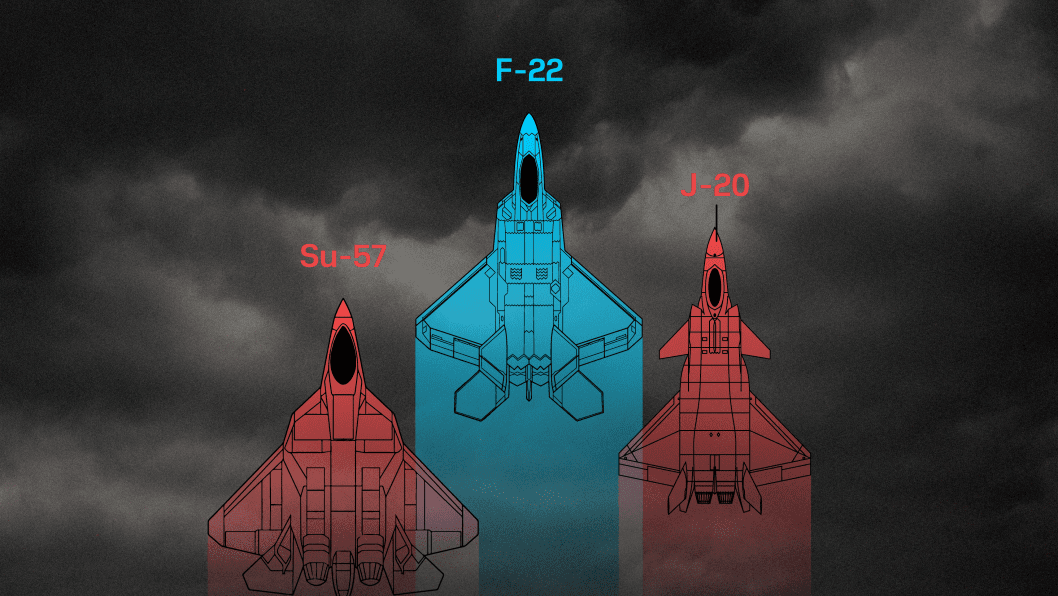
It can conduct offensive and defensive air missions, precision strikes, and reconnaissance-like sensing within a single sortie—while also coordinating other assets across the battlefield. In effect, it serves as a central node, enhancing the effectiveness of allied forces.
Exercises conducted by Pacific Air Forces in 2025 demonstrated these capabilities under realistic conditions, including degraded communications, rapid dispersal, and high-tempo operations.
A slice of lightning ⚡️ for this #FighterFriday!
— F-35 Lightning II (@thef35) September 20, 2024
A Japan Air Self-Defense Force F-35A sliced through the sky during Misawa Air Fest in Japan, showcasing it's aerial maneuverability and building on interoperability between U.S. and Japan forces. pic.twitter.com/s61qPvHe1A
Strategic positioning in Japan
Misawa Air Base plays a unique role in this deployment.
It is the only installation jointly operated by US forces and the Japan Air Self-Defense Force, and it already hosts Japanese F-35As. This creates immediate opportunities for deeper integration, shared logistics, and faster coordinated responses.
Joint activities in 2025, including cross-servicing and refueling between US and Japanese aircraft, validated the concept of a shared F-35 ecosystem.
Growing threat environment
Regional security trends further explain the timing of the deployment.
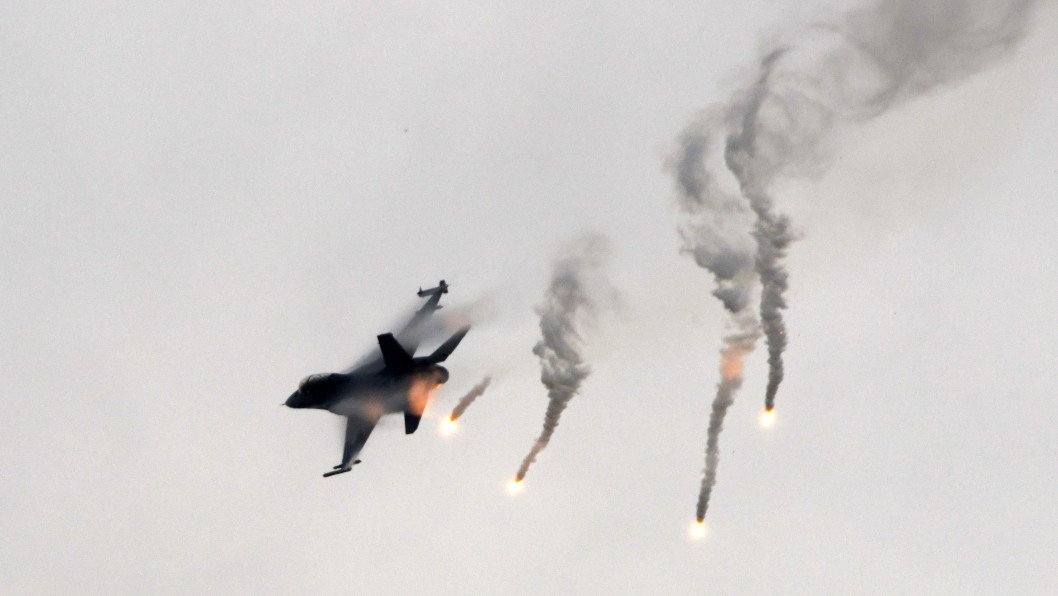
Japan’s Ministry of Defense has warned that Chinese military activity is becoming more frequent and more complex across key maritime and air domains. At the same time, North Korea continues to advance its ballistic and hypersonic missile capabilities.
Forward-based stealth fighters provide a critical early-response capability in this environment, allowing allied forces to contest airspace, suppress enemy systems, and strike defended targets at the outset of a crisis.
The transition at Misawa reflects more than just a platform upgrade.
Momentum continues. 🇯🇵
— F-35 Lightning II (@thef35) March 25, 2026
Three more Japanese F-35Bs delivered to Nyutabaru Air Base. pic.twitter.com/PC4GO53YUz
It marks a shift from fourth-generation aircraft, which are increasingly vulnerable in contested environments, to a fifth-generation force designed to operate in highly defended airspace and enable joint operations from the first moments of a conflict.
In that sense, the deployment is not just about reassuring allies—it is about reshaping deterrence by raising the cost and complexity of any potential challenge in Northeast Asia.
Earlier, Japan scrambled fighter jets after detecting a Chinese military aircraft operating over the East China Sea, with early assessments suggesting the platform may be a new or modified submarine-hunting variant.
Air Self-Defense Force’s response was triggered after a Chinese patrol aircraft was spotted flying southwest of Okinawa on March 28.
Discuss this article:
-9a7b3a98ed5c506e0b77a6663f5727c5.png)

-c439b7bd9030ecf9d5a4287dc361ba31.jpg "Photo of Katherina Popilnichenko")