- Category
- Latest news
China’s New Naval Drone Dwarfs Ukraine’s Sea Baby—But Does Bigger Mean Better at Sea?
 Prefer U24 Media on Google
- Authors


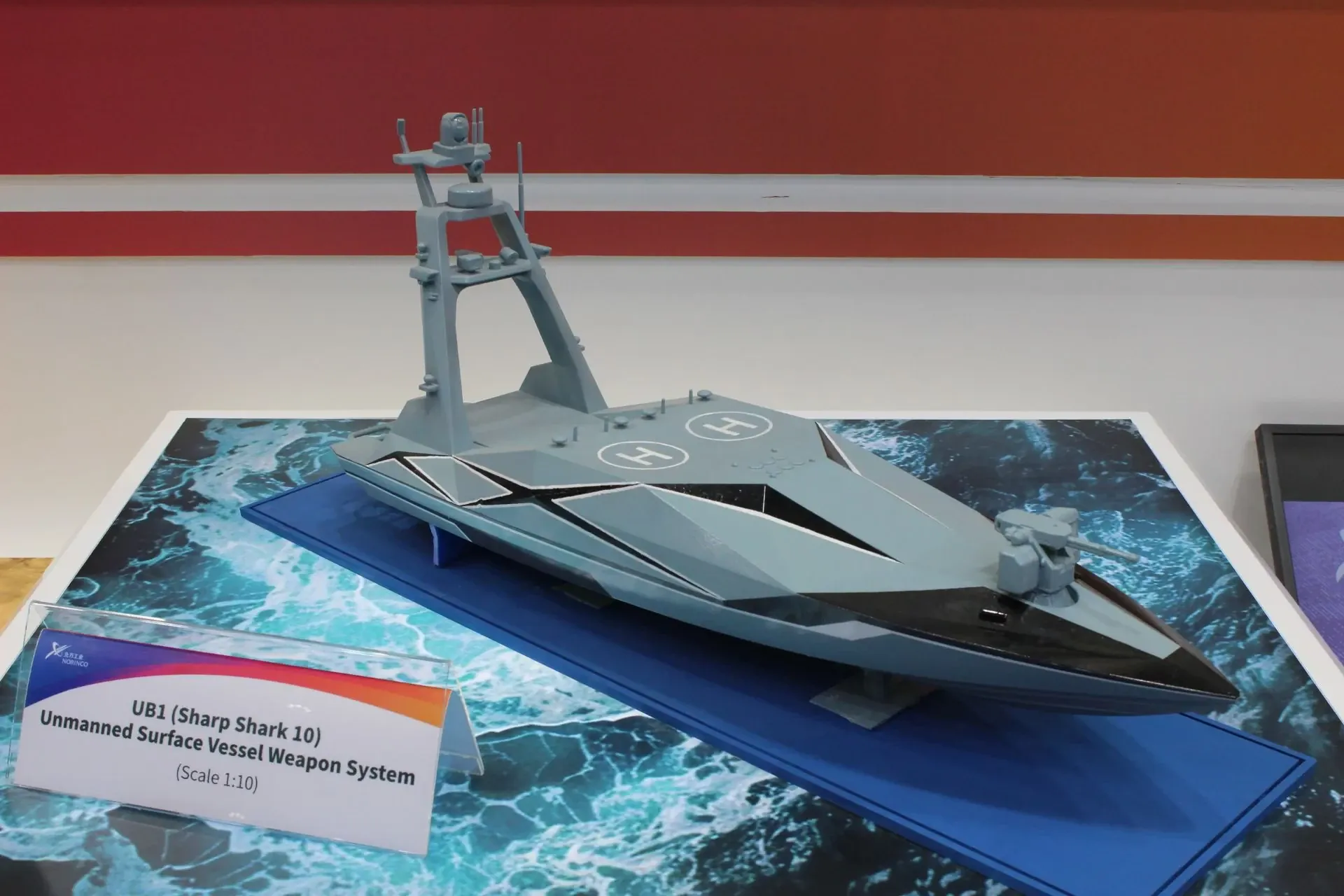
China’s defense industry has introduced a new unmanned surface vessel (USV), the UB1 Sharp Shark-10, which is nearly twice the size of Ukraine’s Sea Baby naval drone but carries similar types of weaponry.
The platform was presented by Norinco during the UMEX 2026 defense exhibition in the United Arab Emirates.
As reported by Defense Express on January 27, Norinco’s UB1 Sharp Shark-10 was publicly showcased with a visible remote-controlled weapon station, likely fitted with a 12.7 mm or 14.5 mm machine gun. The USV also featured six launch containers for loitering munitions or vertically-launched guided missiles.
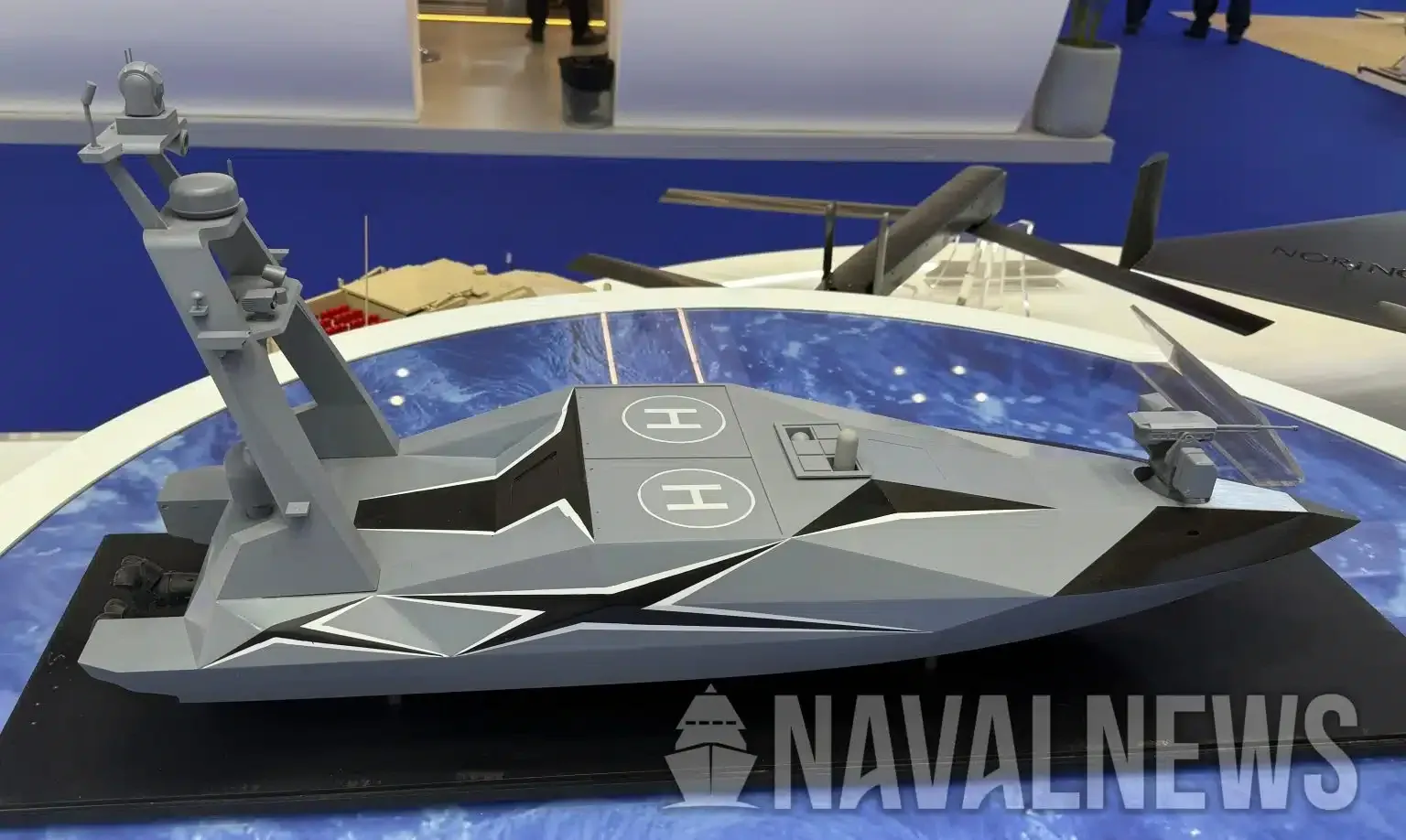
The report references open-source analyst H I Sutton, who noted additional features on the Sharp Shark-10 model, including two drone landing pads presumably intended for surveillance UAVs. These systems are designed to enhance the situational awareness of remote operators.
According to Defense Express, the UB1 Sharp Shark-10 displaces approximately 10 tons and has a top speed of 40 knots (74 km/h). It measures about 12.5 meters in length and is equipped with standard mission payloads such as an optical tracking station, a compact radar, a satellite communication antenna, and other sensors.
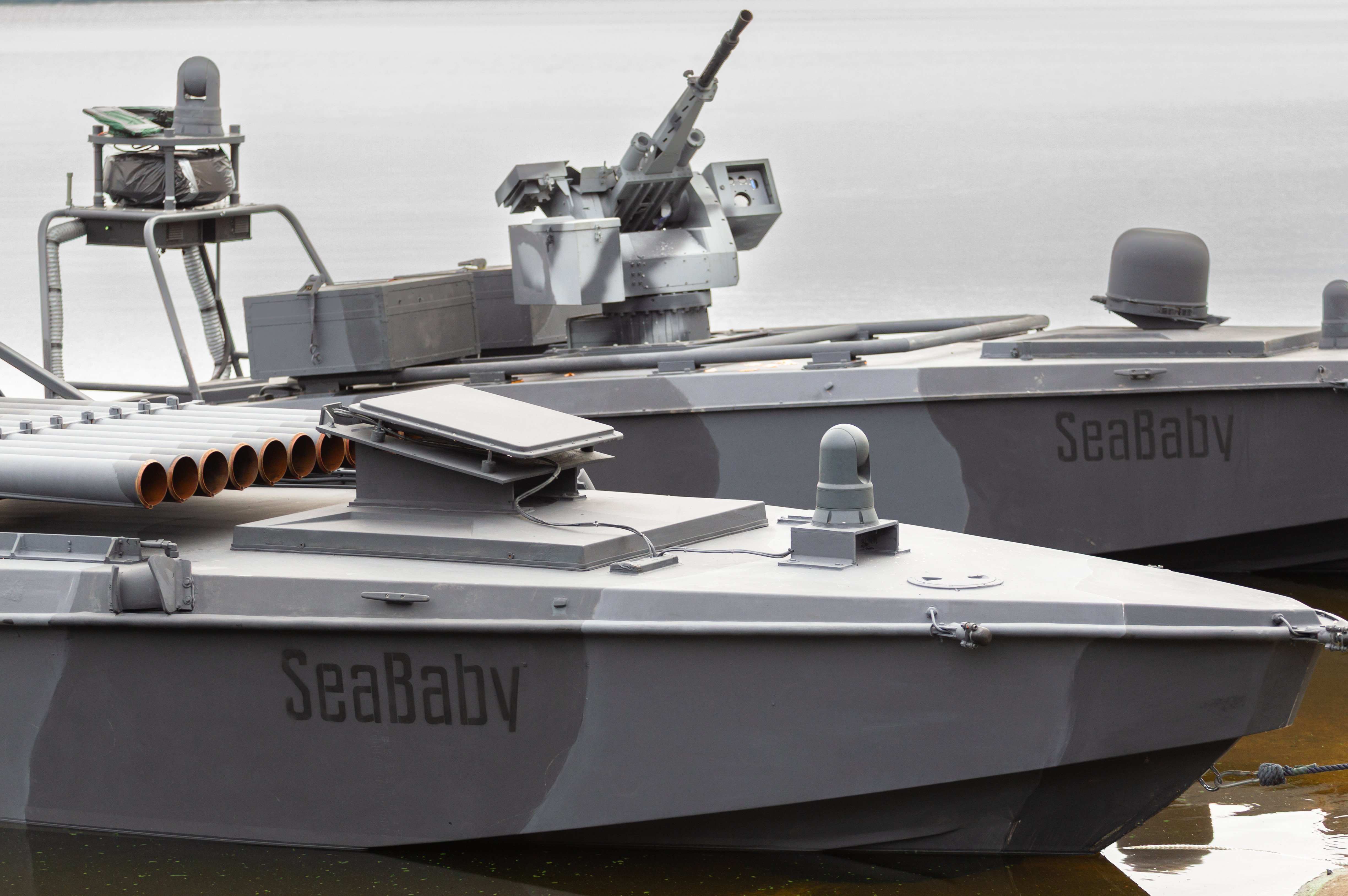
In comparison, Ukrainian Sea Baby drones are significantly smaller. Earlier versions were around 6 meters long, while the latest iterations are approximately 8 meters in length. Despite their more compact size, Ukraine’s Sea Baby units carry a comparable loadout, including a stabilized 14.5 mm “Tavria” combat module and options for FPV drones or multiple 122 mm Grad-type rocket launchers.
The Ukrainian platform has also demonstrated modular capabilities, reportedly allowing configurations with anti-ship warheads and a combat payload of up to 2 tons.
The maximum range of the newest Sea Baby model is estimated at 1,500 km.
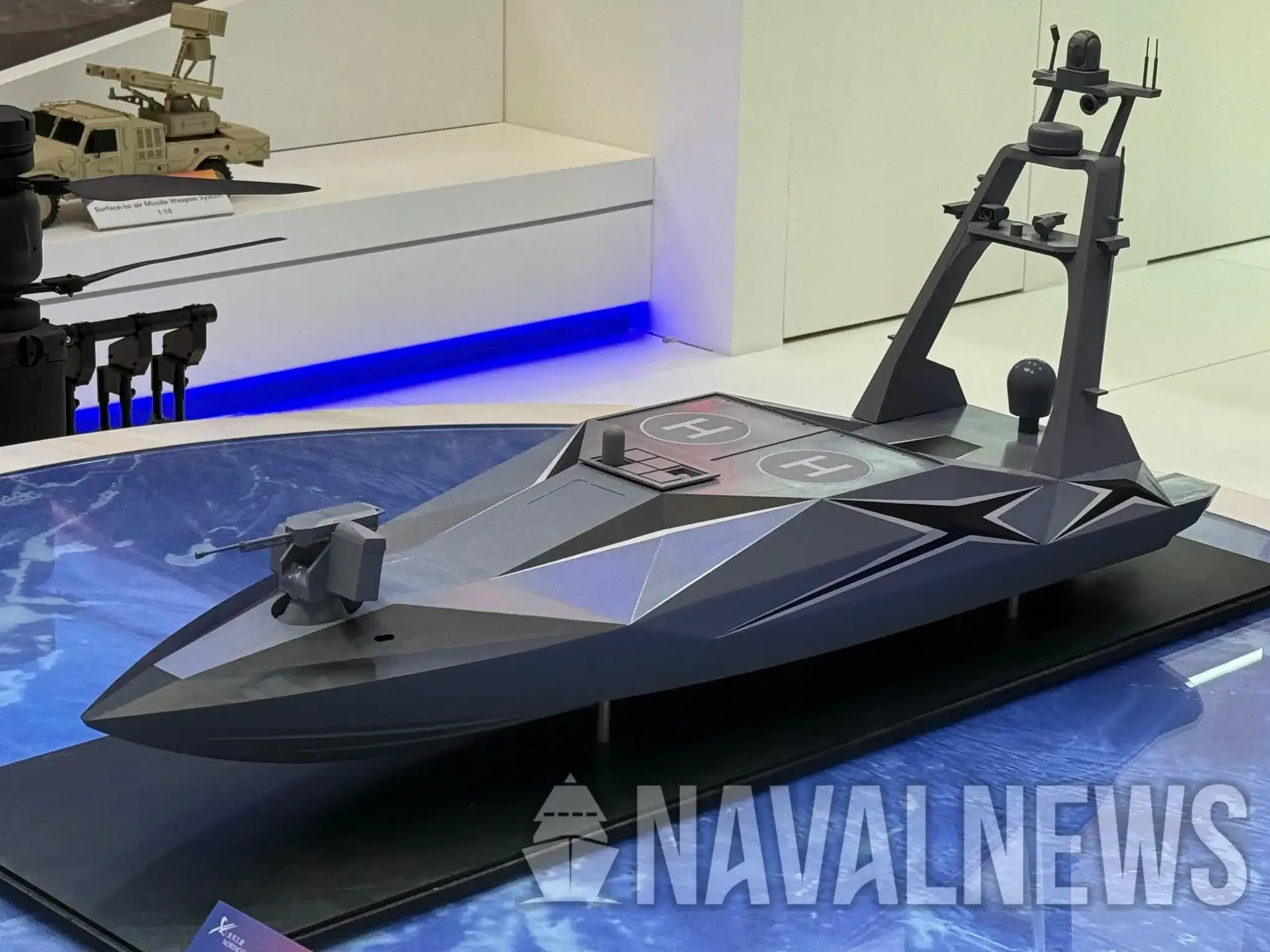
While both drones exhibit similar offensive configurations, the UB1 Sharp Shark-10’s larger size suggests different operational intentions. According to Defense Express, the Chinese vessel may be designed for longer-duration missions, particularly in scenarios involving potential regional conflict.
In the event of hostilities around Taiwan or beyond—to areas such as Japan or the Philippine Sea—greater fuel reserves and system endurance would be critical. This would also support China’s likely preference for reusable naval drones, requiring sufficient range for return trips.
Another potential rationale for the increased dimensions is the modular layout observed in the vessel’s rear section. As noted by Naval News, this area may be intended for future mission packages, including mine-laying modules or towed sonar systems for anti-submarine operations.
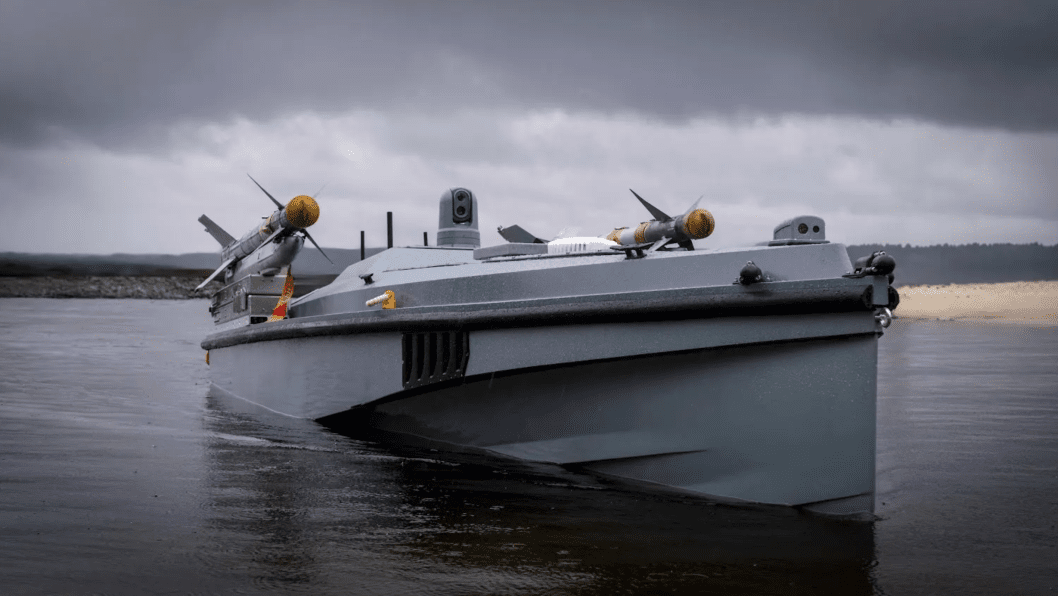
Meanwhile, Ukraine’s Sea Baby drones—developed and deployed during wartime—are optimized for stealth attacks and one-way missions against Russian naval assets in the Black Sea. Their smaller size supports rapid deployment and lower visibility, which has proven effective in the asymmetric maritime tactics employed by Ukrainian forces.
Earlier in January, China began sea trials of a civilian container ship converted into a mobile air defense platform. The vessel ZHONG DA 79 was equipped with modular containerized systems carrying up to 60 surface‑to‑air missiles, along with radar, close‑in weapon systems, and decoy launchers.
Discuss this article:
-4a56a6b482ec132402c16ef6fcabf9a2.png)