- Category
- Latest news
Cuba Brings Home 32 Special Forces Killed During US Capture of Maduro—Who Were They?
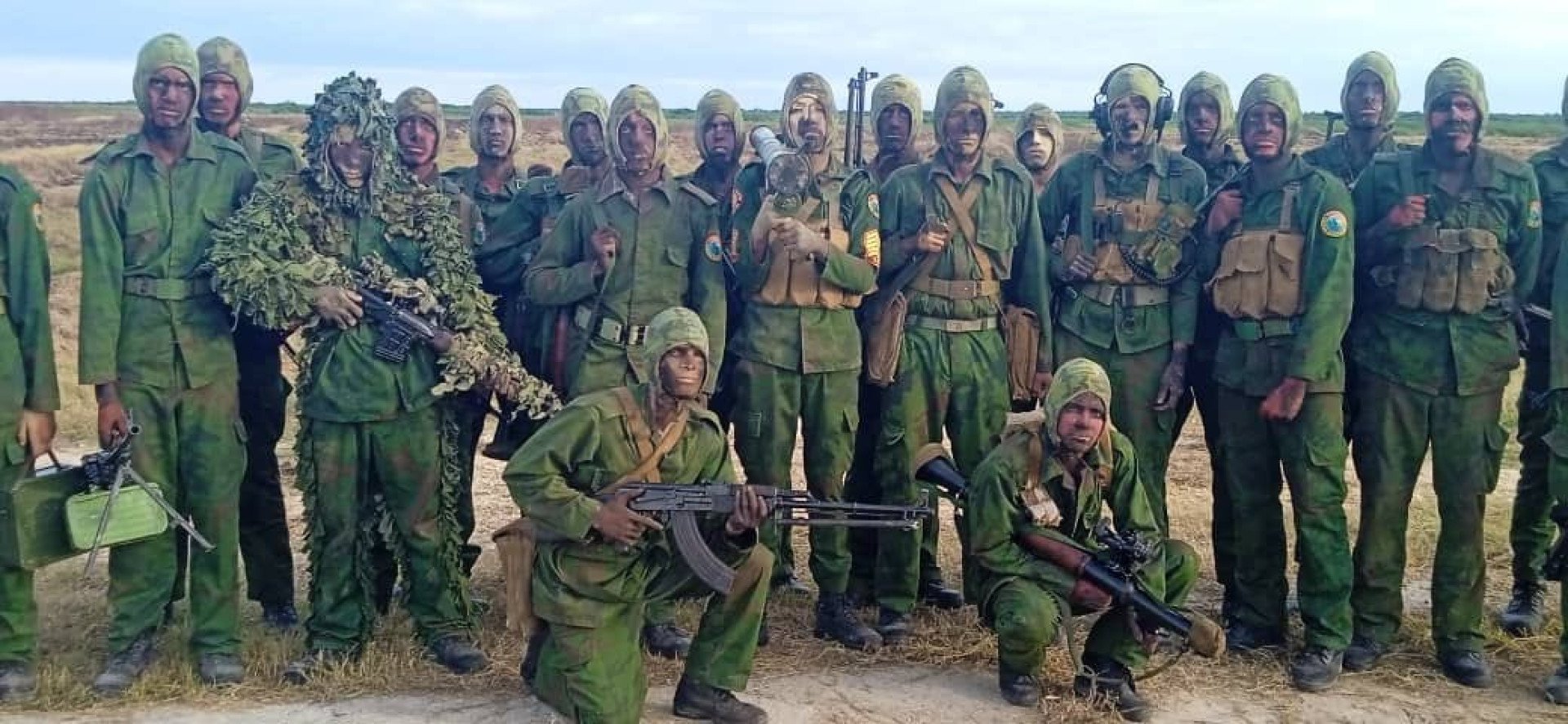
When US Delta Force operators breached Nicolás Maduro’s compound on January 3, they didn’t just face local resistance—they collided with the Avispas Negras, the “Black Wasps” of Cuba. Now, as Havana buries 32 of its finest officers, the secretive history and specialized arsenal of this elite praetorian guard are coming into the light.
 Prefer U24 Media on Google
- Authors


Cuba has officially repatriated the remains of 32 elite officers killed during the US military’s high-stakes operation to capture Nicolás Maduro earlier this month.
The fallen soldiers were not conventional troops, but the core of a specialized security detail protecting Maduro and his wife, Cilia Flores, when American Delta Force operators conducted a surgical raid on their residence on January 3.
The remains of 32 Cuban soldiers killed during the US raid on Venezuela to extract President Nicolas Maduro arrived in Havana to be returned to their families https://t.co/FUKK7Ly3Ru pic.twitter.com/SCRXTZ5pGQ
— Reuters (@Reuters) January 15, 2026
According to the Associated Press, during a solemn ceremony in Havana on January 16, Minister of the Interior Lázaro Alberto Álvarez Casas described the deceased as “heroes of the anti-imperialist struggle,” asserting that the dignity of the Cuban people cannot be bought with advanced weaponry.
State television broadcast images of military aircraft arriving in Havana, where uniformed personnel carried small urns rather than traditional caskets.
The 32 officers were the final line of defense at the Fort Tiuna compound when the US launched Operation Absolute Resolve.
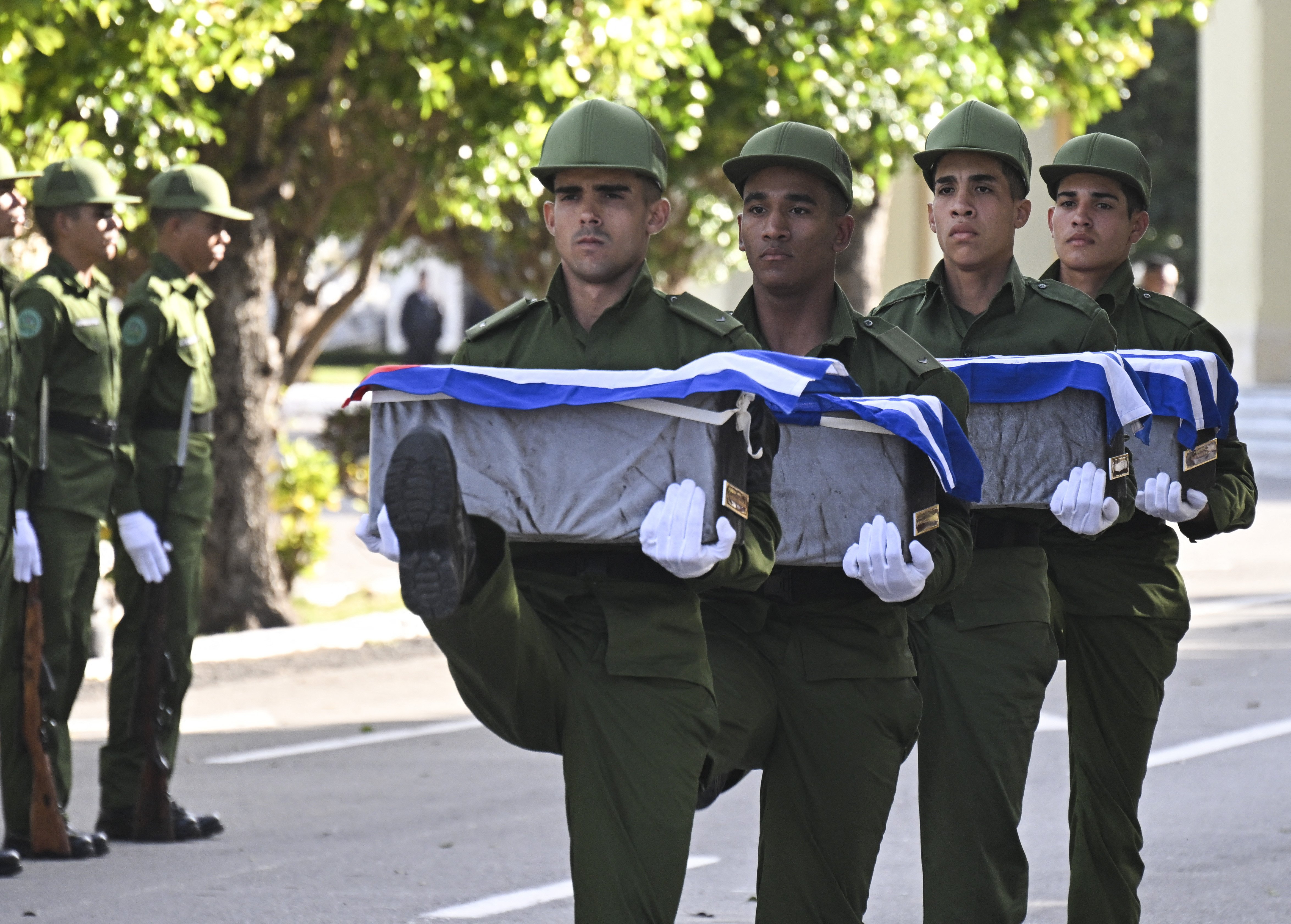
The raid, which lasted 2 hours and 28 minutes, resulted in the capture of Maduro and Flores, who were subsequently transferred to the USS Iwo Jima and then to New York.
Both now face federal charges in the United States, including narco-terrorism, cocaine trafficking, and illegal weapons possession.
Who were they? —the Avispas Negras explained
While initial reports simply described the deceased as “officers,” the published roster of names and ranks reveals a profile of highly professionalized, mid-to-senior level personnel.
The group included 12 members of the Revolutionary Armed Forces (FAR) and 20 members of the Ministry of the Interior (MININT). This distribution is significant: the heavy presence of MININT officers suggests their mission was as much about intelligence and counter-defection monitoring as it was about physical protection.
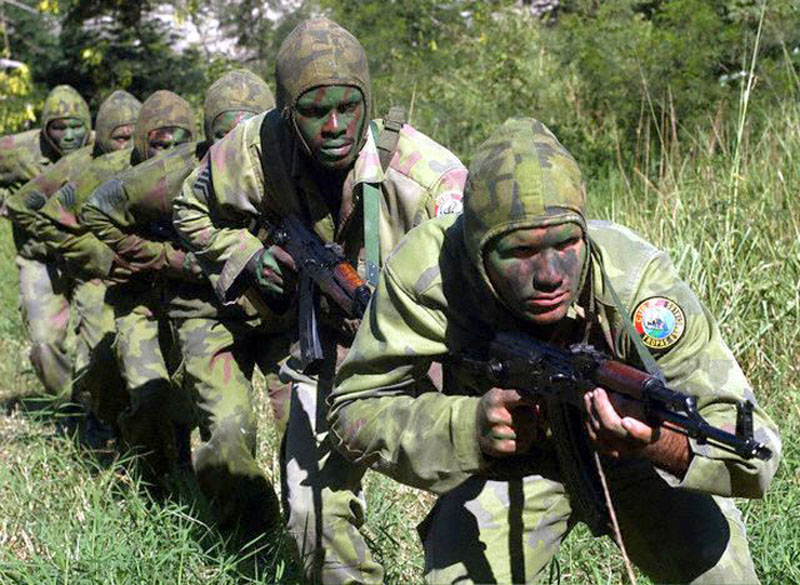
The ages of the fallen ranged from 26 to 60, including high-ranking figures like Colonel Humberto Alfonso Roca Sánchez, the former garrison commander of the complex where Fidel Castro once lived, and Colonel Lázaro Evangelio Rodríguez Rodríguez, who reportedly oversaw Cuba’s coast and border guards.
The legend of the “Black Wasps”
Most of these personnel belonged to the Avispas Negras (Black Wasps), formally known as the Mobile Brigade of Special Troops (BMTE). Founded on December 1, 1986, the unit was created by the Ministry of the Revolutionary Armed Forces (MINFAR) to establish an independent special operations capability after the hard-won lessons of the Battle of Quifangondo in Angola.
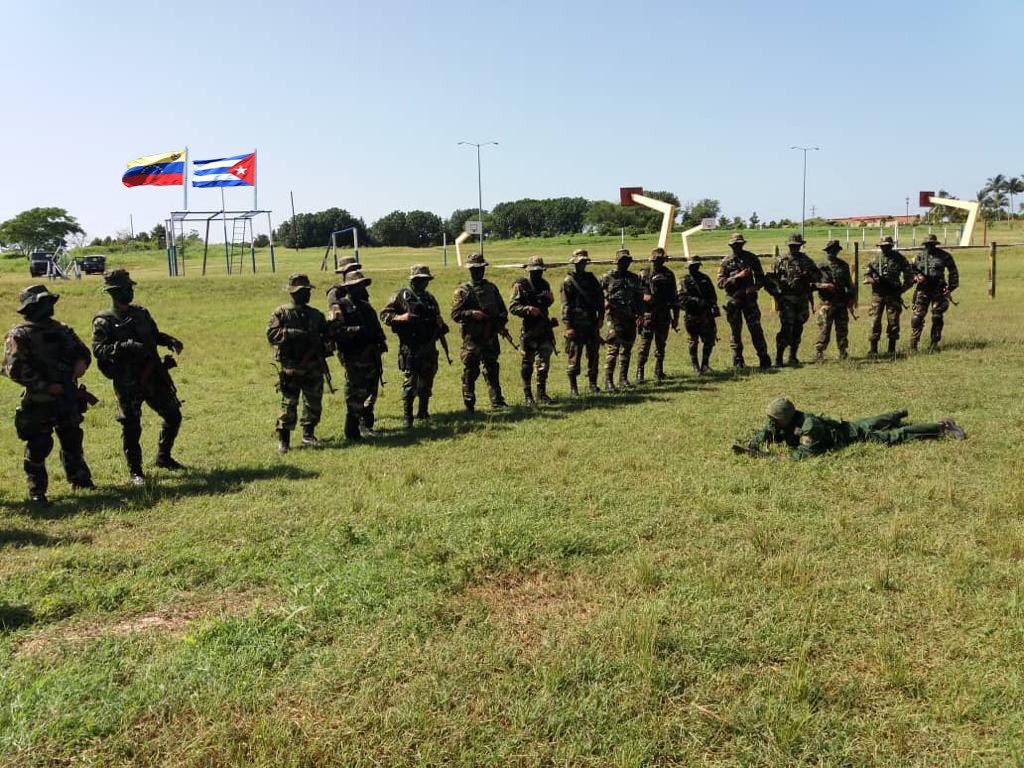
The unit’s identity is built on a “fierce resistance” doctrine, drawing from a historical crucible of internationalist missions in Angola (Operation Carlota) and Ethiopia (the Ogaden War). In Venezuela, they served as the “inner ring” of the Presidential Honor Guard, a role Maduro trusted only to foreign units with direct loyalty to Havana to prevent domestic military coups.
The crucible: training and tactics
The training for a Black Wasp is considered among the most grueling in Latin America. To graduate, officers must survive extended exercises in the Ciénaga de Zapata (Zapata Swamp) under strict survival conditions. Their tactical doctrine is a hybrid of global influences:
Vietnam: Techniques for guerrilla warfare and concealment in tropical environments.
Russia: Airborne (VDV) and Spetsnaz GRU training in urban combat and direct action.
North Korea: High-intensity drills and psychological conditioning for protective missions.
Specialized arsenal
The equipment recovered from the compound reflects the unit’s commitment to indigenous Cuban modernization of Soviet technology:
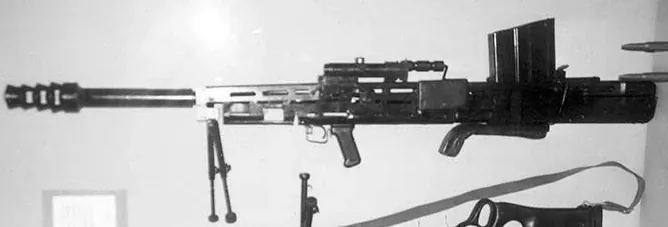
The Mambí 14.5mm Rifle: A Cuban-designed bullpup anti-materiel rifle. While technically for destroying radar and light armor, its massive 14.5mm caliber—more powerful than the standard.50 caliber—gives the unit an “anti-helicopter” capability.
")
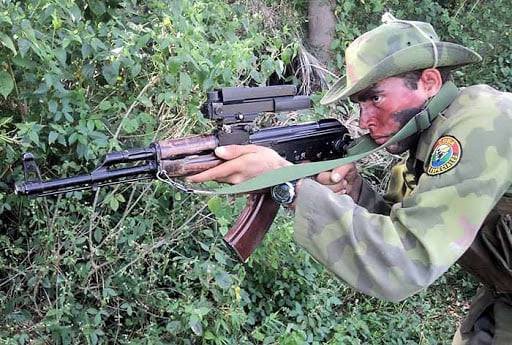
The Mambí 14.5mm anti-materiel rifle, a Cuban-developed weapon designed for long-range engagement of vehicles and fortified positions. (Photo: Open suurce) The “Vilma” Sight: An indigenous red-dot optic designed for AK-series rifles. It is an occluded eye sight (OES) that requires the operator to keep both eyes open—one focused on the target and the other on a red dot projected within the sight. Experts claim it increases hit probability by 95% at ranges up to 400 meters.
")
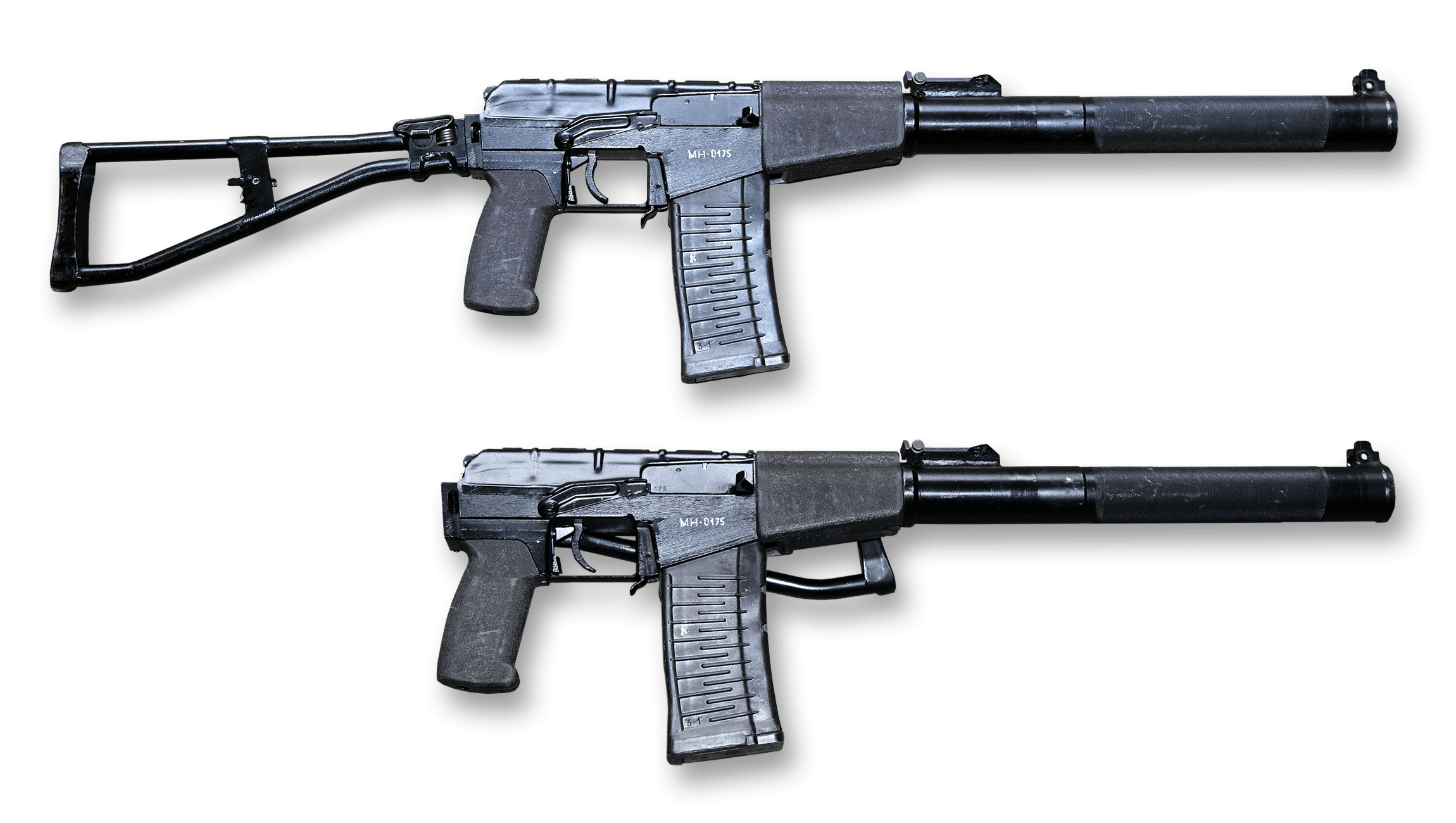
A Cuban soldier aims an AK-pattern rifle fitted with the indigenous “Vilma” optical sight, designed for enhanced targeting. (Photo: Open source) Silent Weaponry: The unit frequently utilizes suppressed versions of the Stechkin APS machine pistol and the AS Val suppressed assault rifle for close-in protection and “neutralization” missions.
")
AS “Val” special automatic rifle shown with stock extended and folded. (Photo: Wikimedia Commons)
Ultimately, while the Avispas Negras were combat-hardened, they faced an unprecedented technological gap. Reports indicate that US forces utilized “non-kinetic” sound-wave weaponry and total electronic spectrum dominance, which reportedly neutralized defenders before they could effectively deploy their specialized arsenal.
Earlier, Russian-supplied air defense systems in Venezuela—including the S‑300V, Buk-M2E, and Pechora‑2M—failed to respond as US forces launched a large-scale operation targeting Caracas. No intercept activity was observed in video footage from the capital, raising questions about the effectiveness of the Russian systems deployed to protect Venezuelan airspace.
Discuss this article:
-9bd5e1532102621f8fb1c4ba871a3171.png)

-111f0e5095e02c02446ffed57bfb0ab1.jpeg "Photo of Roman Kohanets")