- Category
- Latest news
France Is Building a 60-Strikes-a-Day Supercarrier—Here’s How
 Prefer U24 Media on Google
- Authors


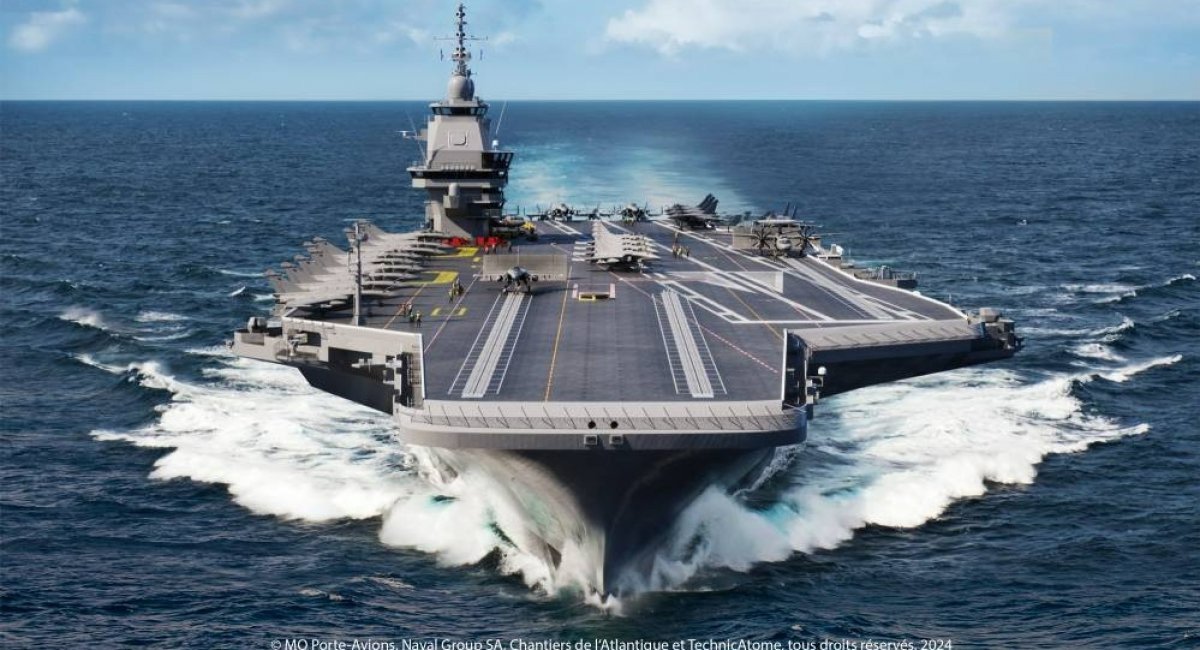
France’s future aircraft carrier program may incorporate an additional electromagnetic launch system to significantly increase operational tempo at sea.
We bring you stories from the ground. Your support keeps our team in the field.
According to Zone Militaire, as cited by Defense Express on March 17, France is considering equipping its next-generation aircraft carrier, Porte-Avions de Nouvelle Génération (PANG), with three EMALS (Electromagnetic Aircraft Launch System) catapults instead of the originally planned two.
The adjustment is intended to increase sortie generation capacity and maintain operational continuity if one system becomes unavailable.
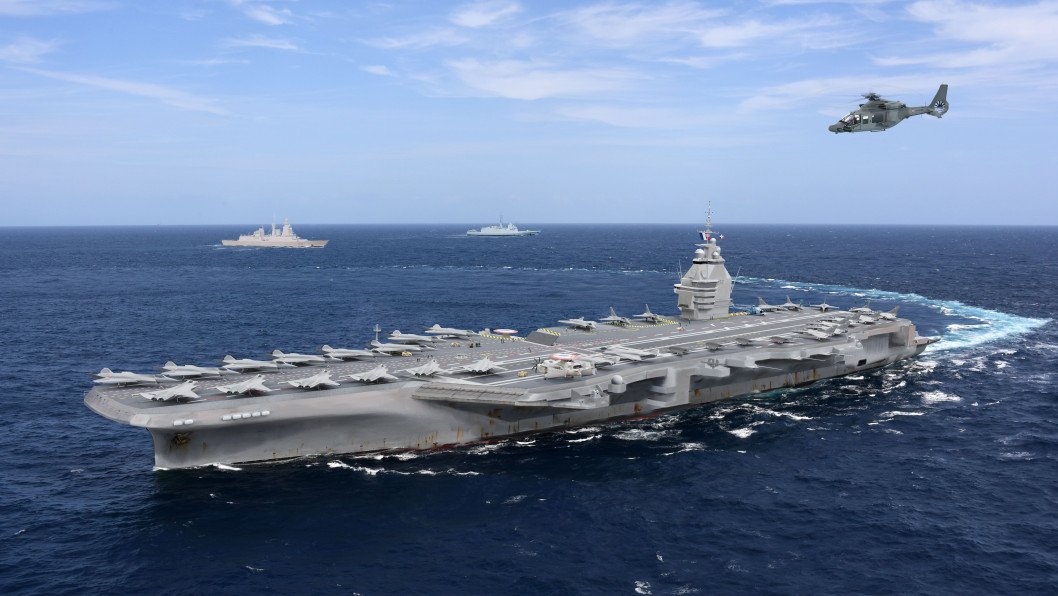
The report notes that the additional catapult could allow the carrier strike group to conduct up to 60 sorties per day. By comparison, France’s current aircraft carrier, Charles de Gaulle, uses two steam catapults and is capable of launching approximately 20 aircraft within a 15-minute window, before cycling operations over several hours.
According to Zone Militaire, the decision reflects a requirement for the French Navy to “deliver unprecedented air strike capability” by increasing both the number of sorties and the effectiveness of onboard aircraft payloads.
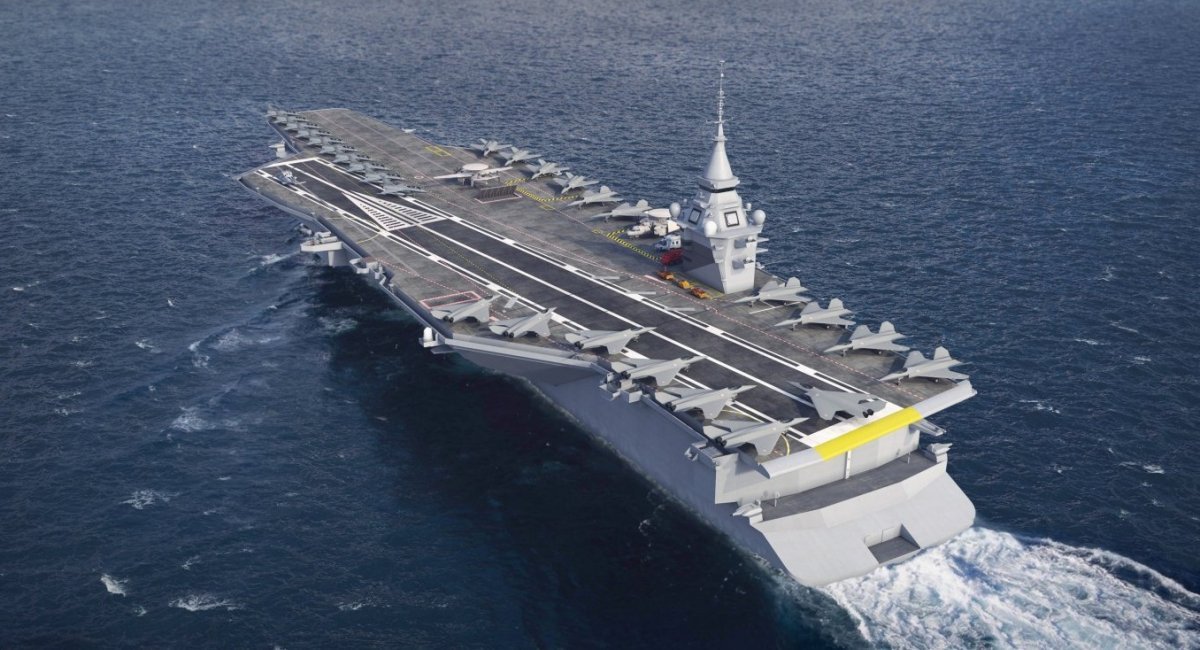
EMALS technology, developed in the United States, offers several operational advantages over traditional steam catapults. It enables smoother and more controlled aircraft acceleration, reduces structural stress on airframes, and supports heavier aircraft. It also simplifies maintenance due to the absence of steam-based systems and allows for shorter reset times between launches.
However, the system represents a significant cost factor. According to Defense Express, France previously agreed in 2021 to purchase two EMALS units from US manufacturer General Dynamics for approximately €1.2 billion, accounting for roughly one-tenth of the estimated total cost of the PANG program.
At the same time, Zone Militaire reports that French authorities are assessing potential risks related to reliance on US-supplied systems. This includes evaluating whether domestic industry could develop an alternative solution if procurement challenges arise.
France currently operates a single aircraft carrier, Charles de Gaulle, which entered service in 2001. Efforts to develop a second carrier date back to the early 2000s, including the Porte-Avions 2 project launched in 2003 and later canceled in 2013.
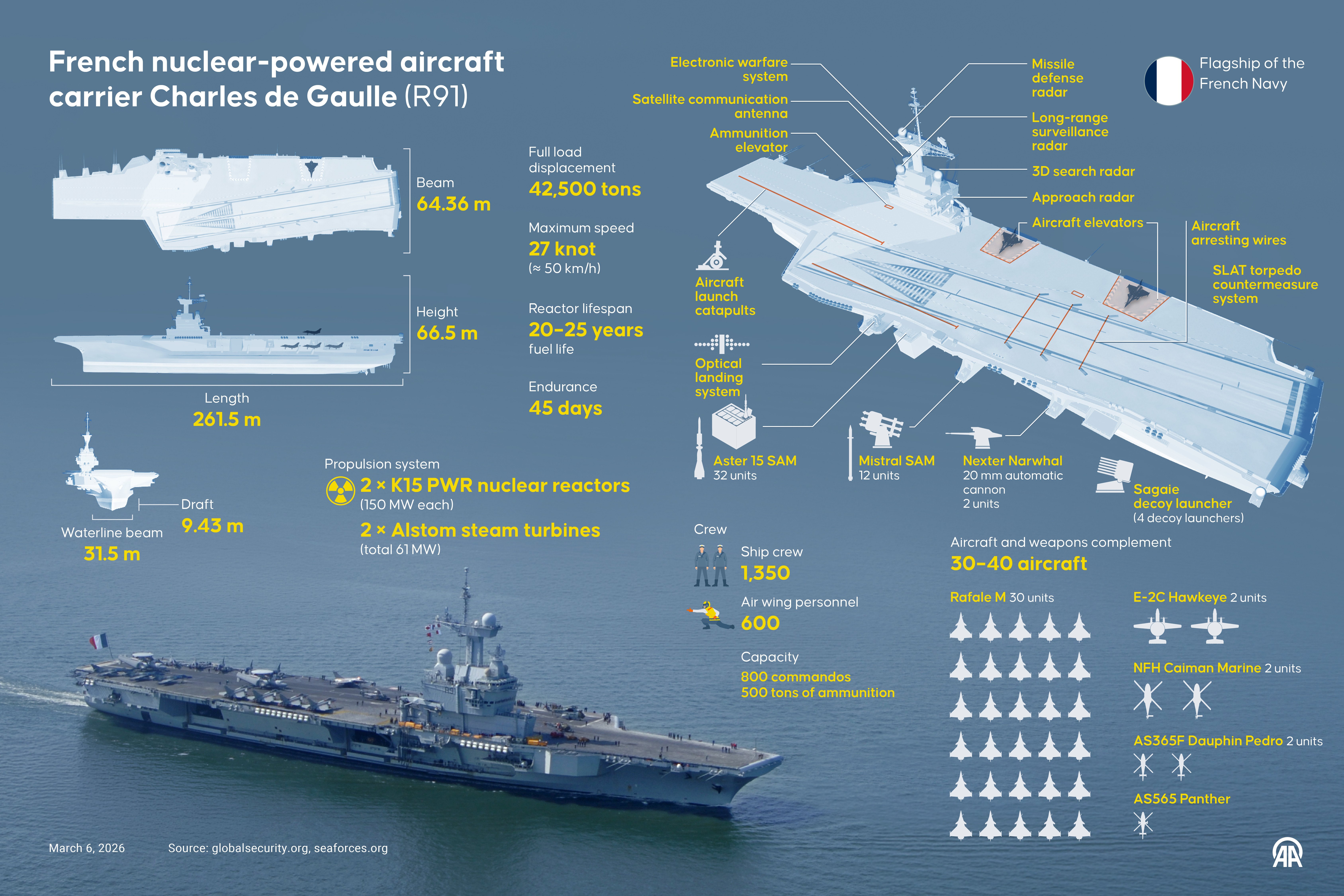
The current PANG program was formally initiated in 2020 following renewed planning efforts that began in 2018. According to Defense Express, construction of the new carrier is expected to begin around 2031, with sea trials projected within four years and entry into service anticipated by approximately 2038.
Previously, France successfully tested a suicide naval drone, inspired by Ukrainian MAGURA V5 drones, striking a decommissioned barge off the coast of Toulon in a live-fire experiment that underscores the growing interest in unmanned maritime warfare.
Discuss this article:
-4a56a6b482ec132402c16ef6fcabf9a2.png)


-c439b7bd9030ecf9d5a4287dc361ba31.jpg "Photo of Katherina Popilnichenko")