- Category
- Latest news
Inside Russia’s Ultra-Rare A-60 Laser Plane: The Soviet Space Weapon Ukraine Just Blew Up
 Prefer U24 Media on Google
- Authors




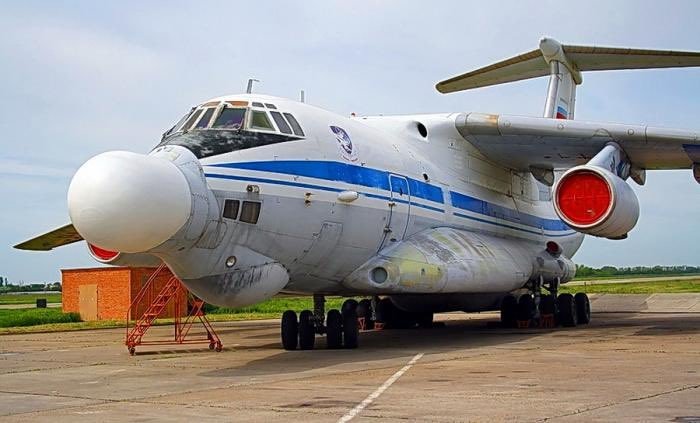
Ukrainian forces struck a major Russian aviation plant in the city of Taganrog overnight, destroying what defense analysts say was one of the most unusual and secretive aircraft in Russia’s inventory—the A-60 1A2, a Soviet-era airborne laser weapons platform intended to blind satellites and shoot down aircraft.
Geolocated footage shows the facility burning and the distinctive silhouette of the A-60 engulfed in flames, Ukrainian defense outlet Defense Express reported on November 25.
The strike targeted the Beriev Aviation Scientific-Technical Complex, known as TANTK, an enterprise long tied to Russia’s strategic aerospace programs.
✈️🔥 The A-60 was preliminarily destroyed in Taganrog! pic.twitter.com/FHlmCXFZ1E
— MAKS 25 🇺🇦👀 (@Maks_NAFO_FELLA) November 24, 2025
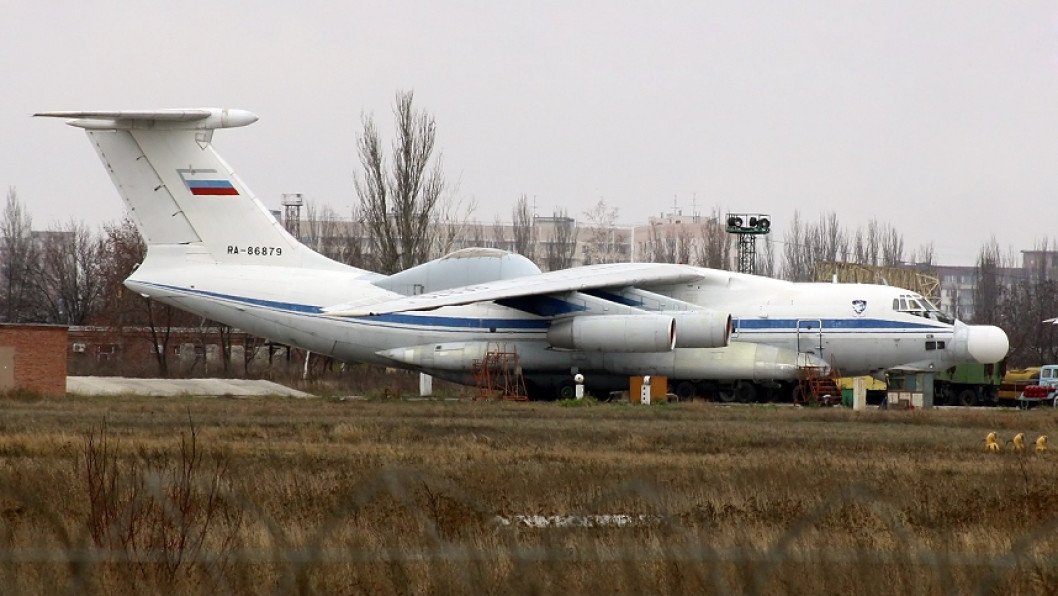
According to Defense Express, the plant has housed the A-60 1A2 for roughly two decades. Satellite imagery over the years showed the aircraft occasionally being moved around the airfield—always remaining within the perimeter of the Taganrog-Yuzhny base, which serves as Beriev’s main flight-test site.
What makes the destroyed aircraft notable, Defense Express emphasized, is that the A-60 1A2 was not simply a modified Il-76 transport, despite sharing its basic airframe. It carried a distinct, bulbous nose radome for target acquisition and a small dorsal fairing behind the wings—the housing for a retractable turret containing a one-megawatt airborne laser.
We bring you stories from the ground. Your support keeps our team in the field.
The system was originally developed to target high-altitude balloons, reconnaissance aircraft, and potentially to blind optical sensors mounted on satellites.
To power such a high-energy weapon, the A-60 1A2 was outfitted with two 2.1-megawatt turbo-generators positioned near the rear landing-gear bays — one of the easiest ways to identify the aircraft in open-source imagery. The platform’s origins date back to 1975, and the first prototype made its maiden flight in 1981.
Overnight, in Russia's Taganrog, a likely hit on the rare and irreplacable "laser" A-60 aircraft.
— SPRAVDI — Stratcom Centre (@StratcomCentre) November 25, 2025
A series of explosions were heard at night in the Russian city.
Locals complain that a fire outbreak was recorded near the runway at the Beriev aviation complex.
Preliminarily,… pic.twitter.com/M7Yn0PKJqW
Early tests reportedly included successful shots on stratospheric balloons and even a target plane, before the initial prototype was destroyed in a 1989 fire. A replacement—the A-60 1A2—flew in 1991, though the program stalled after the Soviet collapse.
According to Defense Express, Russia briefly revived testing in 2009. During one of those trials, Russian engineers reportedly directed the A-60’s laser beam at Japan’s AJISAI geodetic satellite, detecting a faint reflection. Moscow publicly framed the experiment as benign, though the system was widely assessed to be designed for anti-satellite operations, not research.
The Ukrainian outlet also notes that some of the A-60 program’s work likely fed into Russia’s newer ground-based “Peresvet” laser system—a platform that Moscow has promoted as a counter-space capability, though its actual performance remains unclear.
Before this week’s strike, the A-60 1A2 had not been seen flying for years. But the aircraft continued receiving periodic maintenance at Beriev, suggesting Russia had not abandoned it entirely. Now, after the attack on Taganrog, Defense Express reports the aircraft is believed to be destroyed or damaged beyond repair—potentially ending one of Russia’s longest-running experimental weapons programs.
Earlier, the Ukrainian General Staff confirmed that Ukraine’s Armed Forces carried out a series of coordinated long-range strikes hitting several strategic Russian military and industrial sites, including Tagangor air factory and multiple Russian oil refineries.
Discuss this article: