- Category
- Latest news
Iranian Strike Hits US Early Warning Radar in Qatar, Satellite Images Show Damage
 Prefer U24 Media on Google
- Authors


Satellite imagery appears to show damage to a US early-warning missile detection radar in Qatar following an Iranian strike, potentially affecting regional missile defense coverage across the Persian Gulf.
Defense analyst Sam Lair published satellite images from Planet Labs that appear to show visible damage to the AN/FPS-132 Upgraded Early Warning Radar (UEWR) facility on March 4.
We bring you stories from the ground. Your support keeps our team in the field.
According to the imagery analysis, debris from a damaged radar panel fell onto the roof of the main building. The images also show streaks consistent with water runoff after firefighting operations were carried out at the site.
The extent of the damage remains unclear. Analysts say two other radar panels may still be operational, depending on whether internal systems were affected by the strike.
Confirmed the AN/FPS-132 phased array radar in Qatar was damaged by Iran, thanks to an incredible image from our friends @planet
— Sam Lair (@sam_lair) March 3, 2026
Debris from the damaged face has fallen on the roof of the main building and there is water runoff from the firefighting effort pic.twitter.com/AxzteEug7P
If the station was significantly damaged, the incident could temporarily reduce missile defense monitoring capabilities across parts of the Persian Gulf region.
Shortly after the images circulated, Qatar’s Ministry of Defense confirmed that the radar station had been one of the targets of the Iranian strike. However, officials did not disclose the results of the attack or the current operational status of the facility.
The AN/FPS-132 Upgraded Early Warning Radar is a large fixed installation designed to detect both airborne threats and ballistic missiles. Data from the radar feeds into air defense and missile defense systems responsible for tracking and intercepting incoming threats.
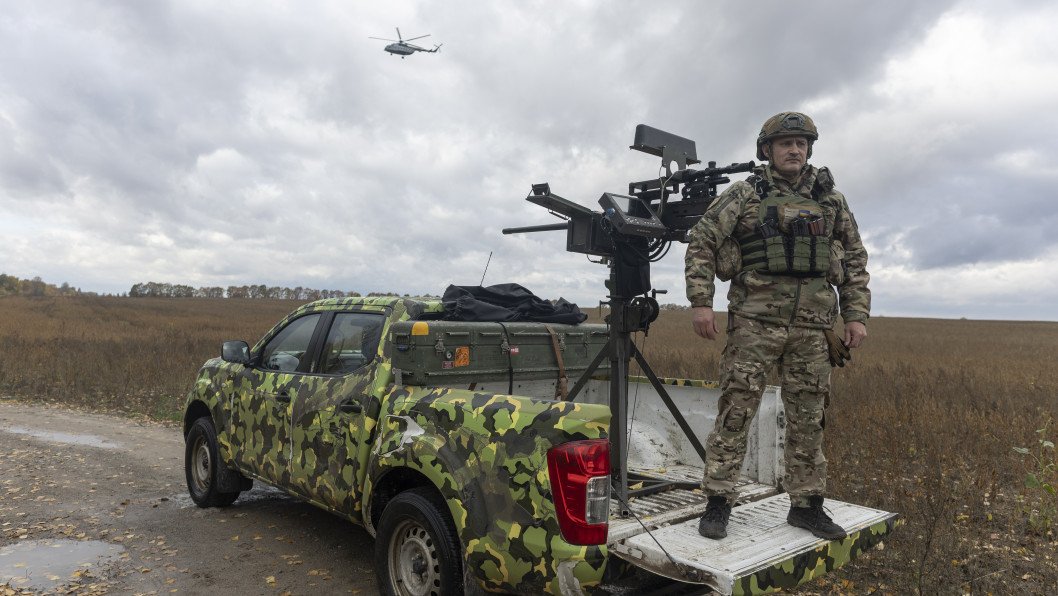
The radar complex is a massive structure with both above-ground and underground components reaching a total height of about 40 meters. A large multi-faceted antenna array sits on top of the building.
The installation in Qatar is equipped with three fixed active phased-array radar panels, each covering 120 degrees of azimuth, allowing the system to maintain continuous monitoring across a wide sector.
Operating in the ultra-high frequency band, the radar uses an over-the-horizon detection principle. Each array contains more than 2,600 transmit-receive modules, and the total system power exceeds 2.5 megawatts.
The radar can detect large airborne targets at distances of nearly 5,000 kilometers.
Its primary function is to identify ballistic missile launches and calculate their flight trajectories. This information is then transmitted to missile defense systems responsible for intercepting the threat.
The radar’s capabilities significantly exceed Qatar’s own air defense requirements. With its long detection range, the station can monitor not only Iran but also large portions of surrounding regions, making it a critical component of broader missile warning networks in the Middle East.
Earlier, reports emerged that American forces dealt heavy blows to Iran’s naval capabilities during the ongoing Operation Epic Fury, destroying multiple warships and forcing Iranian vessels out of critical maritime routes in the Middle East.
Discuss this article:


-111f0e5095e02c02446ffed57bfb0ab1.jpeg "Photo of Roman Kohanets")

-72b63a4e0c8c475ad81fe3eed3f63729.jpeg "Photo of Cyril Barabaltchouk")
-e88c01988249cd60b6f04f79d29156b7.jpeg "Damage to “Cosmogony,” the largest painting in Ukraine, following a Russian drone attack on Lutsk on October 13, 2026. (Source: @sashyyna/Instagram)")